Launching a PET wide-mouth bottle factory from zero is a deceptively technical project. Unlike a narrow-neck water bottle line where the bottle shape is standardized and the volumes are enormous, a wide-mouth jar plant serves a fragmented universe of food, nutraceutical, confectionery, and cosmetic customers who each demand a specific neck diameter, jar geometry, and closure system. The good news is that a minimum viable factory does not require a huge capital outlay or a football-field-sized building. With the right process route, a compact equipment set, and a disciplined phased expansion plan, an entrepreneur can begin commercial production inside a 500 to 800 square meter workshop and grow capacity in step with real order demand.
This guide is written for the buyer who needs a concrete, engineering-grounded blueprint rather than a marketing brochure. It focuses exclusively on what it takes to start and scale a PET wide-mouth bottle operation: the equipment list, the plant area and ceiling height, the electrical, compressed-air, and water utilities, the personnel organization, the permit and compliance landscape, and the staged path from a single trial machine to an integrated preform-and-filling plant. All investment levels in this article are expressed as relative index points with a baseline of 100, or as qualitative bands such as Low, Medium, High, Very High, and Premium, so that the comparison remains valid regardless of region, currency, or supplier quotation. A key partner in this journey is YuDa, a Wanplas factory that specializes in PET bottle blow molding machines and supplies both semi-automatic and fully automatic stretch blow molding lines suitable for wide-mouth jar production.
What a PET Wide-Mouth Bottle Factory Actually Produces
A wide-mouth bottle or jar is defined by its finish diameter. Where a standard water bottle uses a 28 mm or 30 mm neck that a consumer drinks through, a wide-mouth jar opens to a diameter large enough to admit a spoon, scoop, or even a hand. In PET packaging the common wide-mouth finish sizes are 38 mm, 48 mm, 63 mm, 70 mm, 89 mm, and 100 mm. Each step up in neck diameter changes the preform design, the heating profile, the stretch-blow mechanics, and the demolding geometry, which is why a wide-mouth plant is a distinct engineering discipline from a narrow-neck beverage plant.
The dominant end uses are dry and semi-solid products rather than carbonated or still liquids. Food cans made from PET wide-mouth jars include nuts, candy, biscuits, spices, dried fruit, and protein powder. Non-food uses include cosmetics such as body butter and scrubs, personal-care granules, and certain household products. A smaller but technically demanding segment is hot-fill applications, where the jar is filled with a product above roughly 85 degrees Celsius and must resist paneling and deformation. Hot-fill wide-mouth jars require heat-set PET or, in some cases, a PP material and a reinforced neck design, and they differ markedly from ambient-fill jars in both preform crystallinity management and mold cooling.
The table below maps the standard neck diameters to their typical jar volumes and applications. It also flags where hot-fill capability becomes a design consideration, because building hot-fill capability into the wrong phase of the project is one of the most common ways to overspend on a first factory.
Wide-Mouth Neck Specification vs Typical Application
| Neck Diameter (mm) | Typical Jar Volume | Typical Application | Hot-Fill Consideration |
|---|---|---|---|
| 38 | 100 to 500 mL | Condiments, sauce samples, cosmetic creams, single-serve powder | Possible with heat-set PET; often ambient |
| 48 | 200 to 750 mL | Spice jars, honey, cosmetic scrubs, sample nuts | Usually ambient; heat-set if filled warm |
| 63 | 500 mL to 1.5 L | Peanut butter, nuts, candy, protein powder, cereal | Ambient dominant; heat-set for warm fill |
| 70 | 750 mL to 2 L | Protein powder, pet treats, cereal, granola | Ambient; structural neck support needed |
| 89 | 1 to 3 L | Bulk nuts, powder, detergent (non-food), cereal | Ambient; wall stiffness critical |
| 100 | 2 to 5 L | Bulk food, industrial granules, food-service | Ambient; heavy base and neck design |
The structural difference between a wide-mouth jar and a narrow-neck bottle begins with the preform. A narrow-neck water preform is tall, thin-walled, and designed for a high axial stretch ratio. A wide-mouth jar preform is comparatively squat: the finish is already close to the final jar diameter, so there is far less radial expansion at the neck and far more material distributed across the body and base. Because the bottle neck is already wide, the preform neck must be molded to a precise, often threaded finish that survives both the stretch-blow process and later capping without stress cracking.
Heating is the second divergence. Wide-mouth preforms tend to have heavier walls and a more uniform mass distribution, so the oven must deliver a flatter, more controllable infrared profile to avoid over-heating the finish while still softening the body for biaxial orientation. The stretch ratio in wide-mouth jars is typically lower and more radial than in water bottles, which means the blow pin and the stretch rod geometry differ, and the mold cavity must accommodate a larger opening with a stable thread. Demolding, finally, is easier in one sense because the opening is large, but it is harder in another because the jar walls are often thicker and the base must be supported to avoid ovalization. These nuances are exactly why the equipment and the mold must be specified for wide-mouth work rather than adapted from a water-bottle line as an afterthought.
One-Step vs Two-Stage Process Route for Wide-Mouth PET
There are two fundamental process architectures for producing a stretch-blown PET jar, and the choice shapes every downstream decision about space, utilities, and staffing. The first is the one-step process, known in the industry as injection stretch blow molding, or ISBM. In this route, the preform is injection molded, conditioned, and stretch-blown into the jar within a single, integrated machine and a single thermal cycle. The second is the two-stage process, where preforms are first injection molded (often off-site or in a separate cell), then reheated and blow molded in a dedicated stretch blow molding machine. For wide-mouth jars, both routes are viable, but they serve different minimum-viable profiles.
The one-step ISBM route offers the advantage of the shortest material path. Because the preform never cools completely and is re-heated only to the conditioning temperature inside the same machine, energy per jar can be lower and the material stays in a tightly controlled thermal window. Contamination risk is also reduced because the preform is not handled, stored, or transported between stages. For a new operator who wants a single machine, a single process owner, and a compact footprint, one-step ISBM is attractive. The trade-off is flexibility: changing jar shape means changing the integrated mold set and re-qualifying the thermal cycle, and the machine is fully committed to one product at a time.
The two-stage route decouples preform making from jar blowing. In its minimum form, the operator simply purchases finished preforms from a supplier and runs them through a reheat stretch blow molding machine. This is the lowest-friction way to start, because the most capital-intensive and technically demanding step (injection molding of preforms) is outsourced. The blow molding machine itself becomes a specialized reheating and forming station. As volume grows, the operator can later add an in-house injection molding cell to make preforms, but the blow line keeps running throughout. Two-stage is the dominant architecture for scalable wide-mouth plants because it lets capacity grow by adding blow cavities and automating handling without disturbing the preform supply until the economics clearly justify self-production.
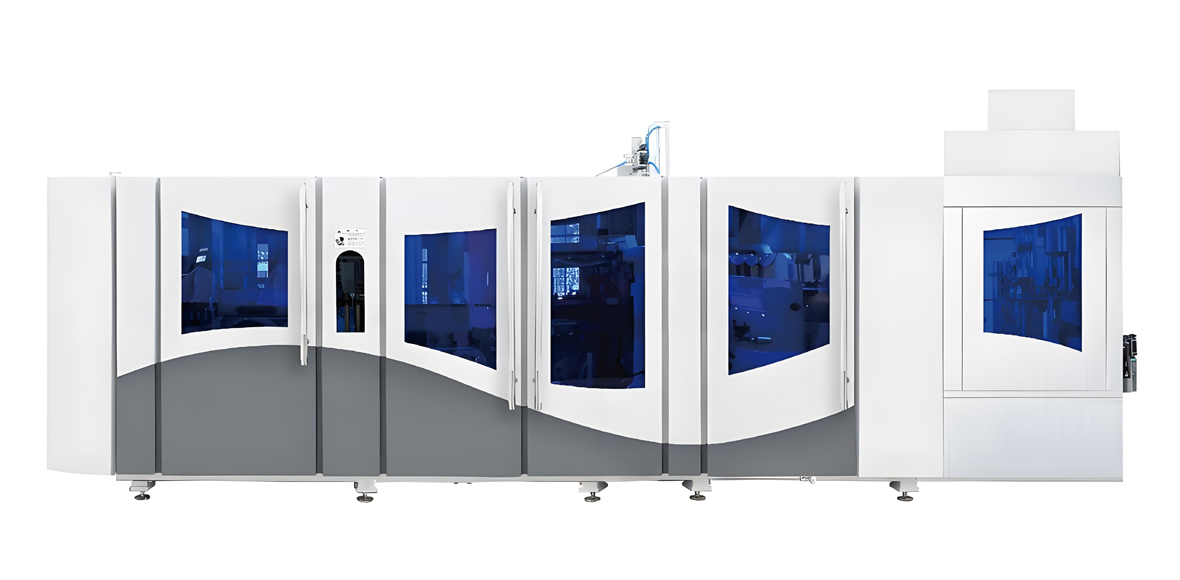
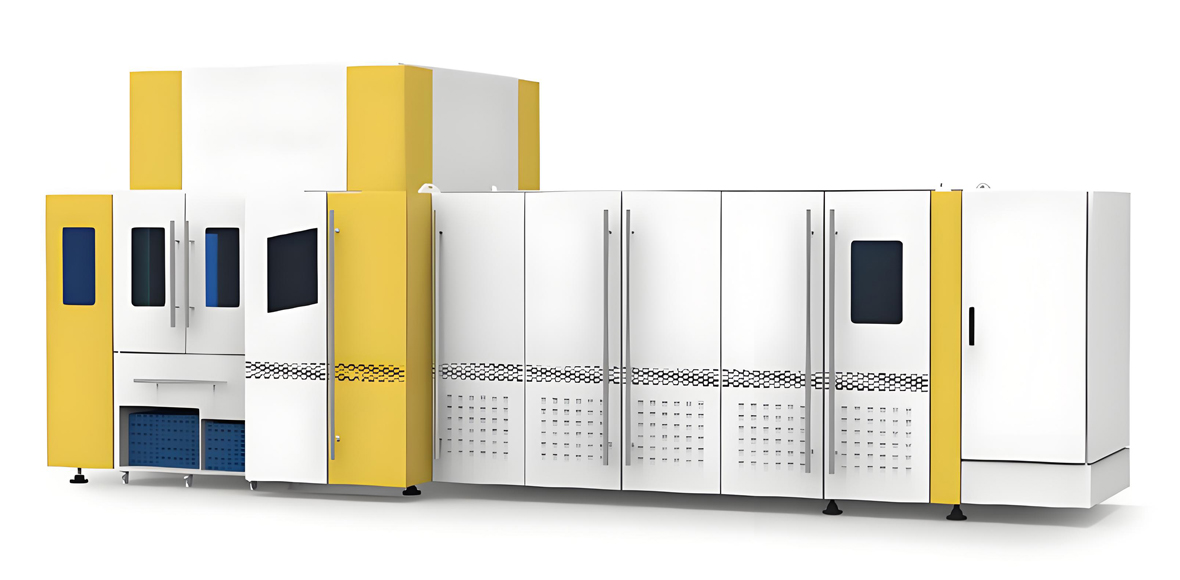
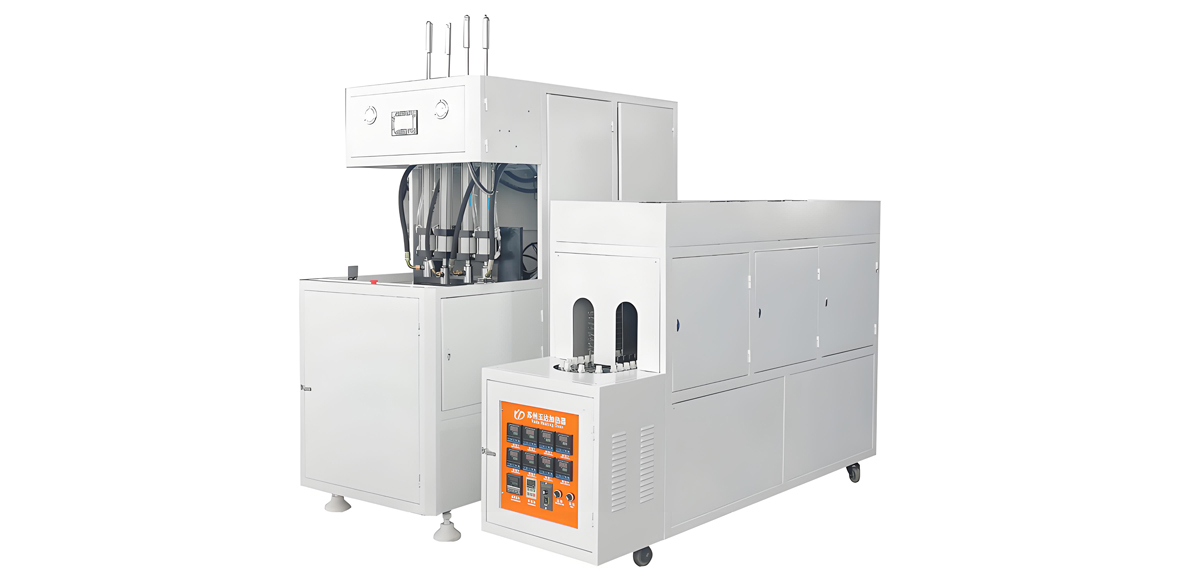
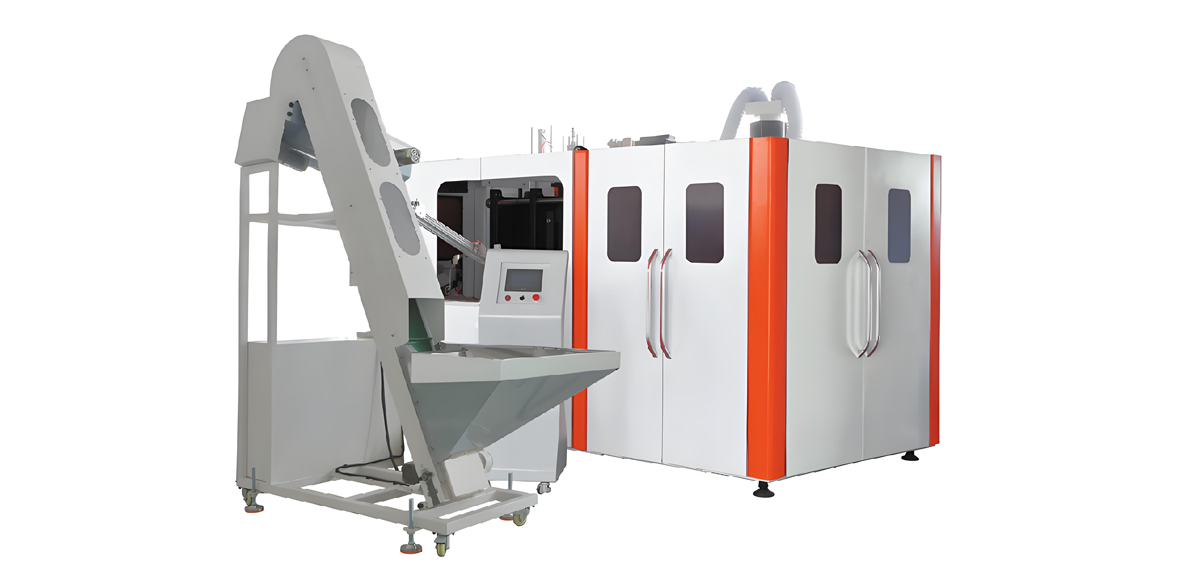
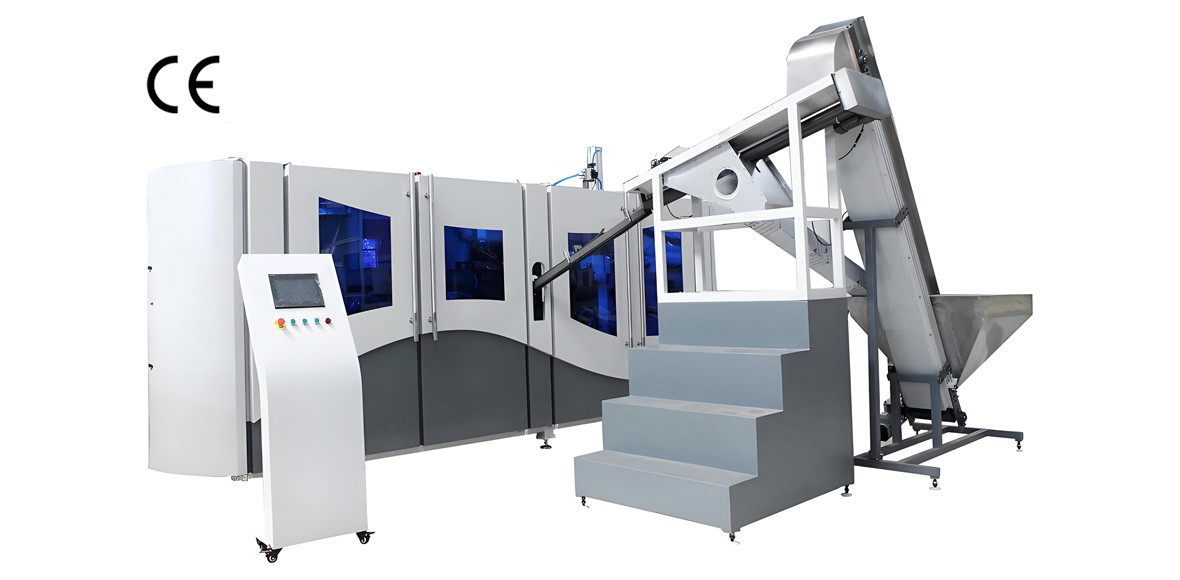
For a minimum viable factory, the practical recommendation is a two-stage start using purchased preforms, with a semi-automatic or compact automatic reheat stretch blow molding machine. YuDa, a Wanplas factory with more than 20 years in PET bottle blow molding, offers a semi-automatic series suitable for small enterprises and a standard-speed fully automatic series that fits naturally into a two-stage wide-mouth line. The Wanplas group’s broader portfolio means that if the operator later wishes to bring preform production in-house, the complementary injection molding capability is available within the same brand network.
Entry-Level Capacity Tiers, Equipment, Area, and Staffing
Capacity is the single variable that most strongly drives both the footprint and the staffing of a new plant. For wide-mouth PET jars, a semi-automatic 2-cavity machine typically delivers 800 to 1,500 bottles per hour, while a fully automatic 4-cavity line reaches 4,000 to 6,000 bottles per hour. A 6-cavity automatic line extends further, and once in-house preform production is added the plant becomes a different class of operation altogether. The table below consolidates four realistic starting and early-growth tiers, showing how the blow route, cavity count, floor area, per-shift personnel, and relative investment index move together.
Capacity Tier vs Equipment Configuration vs Area vs Personnel
| Capacity Tier | Blow Route & Cavities | Hourly Output (bph) | Floor Area (m2) | Personnel per Shift | Investment Index (baseline 100) |
|---|---|---|---|---|---|
| Micro / Trial | Semi-auto, 2-cavity, two-stage with bought preforms | 800 to 1,500 | 500 to 800 | 2 | 100 |
| Small | Full-auto, 4-cavity, two-stage | 4,000 to 6,000 | 800 to 1,200 | 3 | 180 |
| Medium | Full-auto, 6-cavity, two-stage, automated handling | 6,000 to 9,000 | 1,200 to 1,800 | 3 to 4 | 260 |
| Medium+ with Preform | 6-cavity blow + injection molding 130 to 250 T, 24 to 48 cavities | 6,000 to 9,000 plus preform | 1,800 to 2,500 | 4 plus preform shift | 340 |
| Integrated | Multiple lines + filling (BFC combiblock) | 15,000 plus | 2,500 to 4,000 | Multiple | 520 |
The investment index shown above is a relative scale with the semi-automatic 2-cavity micro plant set at 100 baseline index points. Moving to a 4-cavity automatic line roughly doubles the index to 180, reflecting the additional blow machine, mold, automation, and larger utility package. Adding in-house preform production pushes the index to about 340, because an injection molding machine, a dehumidifying dryer, a crystallizer, and a separate preform storage and handling zone must all be accommodated. The integrated scenario, which includes multiple blow lines and filling, sits at a Premium band near 520 index points. These figures deliberately avoid any currency amount; they exist only to show proportionality between configuration choices.
From a space perspective, the micro tier is the only one that fits comfortably into a shared or leased light-industrial unit. The small and medium tiers require a dedicated bay with truck access, while the preform and integrated tiers begin to look like purpose-built plants. The staffing numbers shown assume single-line operation with one operator tending the blow machine, one handling finishing and packing, and a floating role for quality checks and material movement; automated handling reduces manual packing labor but adds the need for a maintenance-aware operator.
The Minimum Equipment Checklist
A minimum viable wide-mouth PET jar plant is not just a blow molding machine. It is a system of interdependent equipment, and omitting any single element from the checklist below will either stop production or quietly degrade jar quality. The list below is the smallest defensible set for a two-stage operation starting from purchased preforms. Items required only when preforms are made in-house are marked accordingly.
Core Production and Finishing Equipment
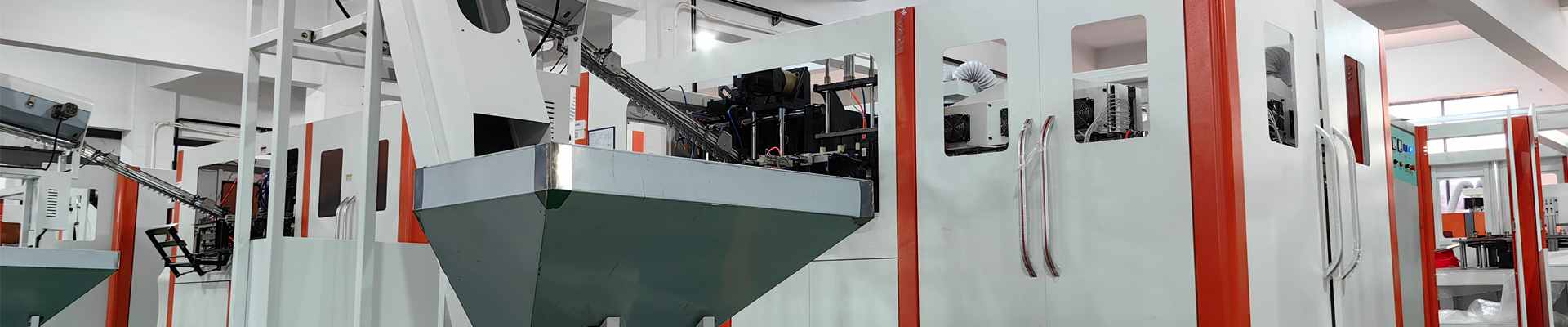
- Reheat stretch blow molding machine: the heart of the plant. For the micro tier, a semi-automatic 2-cavity machine; for the small tier, a fully automatic 4-cavity machine such as YuDa’s standard-speed series. Choose a model with a wide-mouth-compatible mold interface and a conditioning oven tuned for heavier preform walls.
- Blow mold set (one cavity configuration plus one spare bottle shape): at minimum, one production mold for the lead jar and one备用 bottle shape for a second SKU or for continuity when the first mold is serviced. Wide-mouth molds need precise thread geometry and a robust base support design.
- Low-pressure air compressor: supplies 0.8 MPa pneumatic air for actuators, conveyors, and ancillary equipment. Size from the estimated consumption in cubic meters per minute in the utility table.
- High-pressure blow air compressor: delivers 3.0 to 4.0 MPa air for the actual stretch-blow event. This is a dedicated machine, not the same unit as the low-pressure system, and it is the most frequently undersized item in a first plant.
- Refrigerated or desiccant air dryer plus air receiver: dry, stable-pressure air protects valves and ensures consistent jar formation. A desiccant dryer is preferred in humid climates; a refrigerated dryer is adequate where ambient humidity is moderate.
- Chiller (5 to 20 HP): cools the mold and, where present, the hydraulic and blow-system components. The exact horsepower depends on cavity count and cycle rate.
- Cooling tower: rejects the chiller’s heat to the environment in a circulating water loop, reducing municipal water draw.
- Conveying and bottle unscrambling system: moves finished jars from the blow machine to inspection and packing. Even semi-automatic lines benefit from a simple conveyor to decouple operator packing speed from machine output.
- Leak testing and vision inspection: at minimum a pressure-decay leak tester and a camera-based vision check for neck defects, black spots, and wall anomalies. These protect brand reputation far more cheaply than downstream recalls.
- Air piping and electrical control cabinet: a ring-main compressed-air network with proper sizing and a centralized distribution panel with surge protection. Under-sized piping causes pressure drop at the blow valve and directly produces malformed jars.
- Forklift and racking: wide-mouth jars are bulky, so internal logistics and vertical racking are essential even at the micro tier.
Equipment Needed Only for In-House Preform Production
- Injection molding machine: clamping force in the 130 to 250 tonne range, running 24 to 48 cavities depending on preform weight and output target.
- Preform mold: hot-runner, multi-cavity tool matched to the injection machine and the jar finish.
- Dehumidifying dryer: PET must be dried to a low moisture content before injection; a desiccant-based dehumidifying dryer is mandatory.
- Crystallizer (crystallizing dryer): prevents preform sticking and manages amorphous PET during the drying and storage phase.
- Preform cooling and transfer: conveyors and buffers between the injection cell and the blow line.
YuDa’s machines embed several features that reduce the auxiliary burden. The 38.1 mm heater spacing in its oven design lowers electricity consumption by more than 30 percent compared with conventional heating ovens, and a cam-linking system integrates mold-opening, mold-locking, and bottom-mold elevation into one movement for faster, more stable cycles. A remote monitoring system lets engineers at the China headquarters read PLC data and flag abnormalities, which is valuable for a first-time operator who may not yet have deep in-house maintenance expertise. As a Wanplas factory, YuDa shares the group’s quality standards and after-sales framework, including an annual spare-parts allowance and on-site installation support.
Plant Building, Floor Area, and Ceiling Height
The building is where first-time operators most often under-estimate requirements. A narrow-neck water bottle is light and packs densely; a wide-mouth jar is the opposite. Because the neck is already large, the jar’s empty volume per gram of PET is high, and finished goods consume storage volume disproportionate to their weight. This single fact drives both the floor area and the ceiling height.
For a starting plant, a production footprint of 500 to 800 square meters is realistic for the micro tier, expanding to 800 to 1,200 square meters for the small tier and 1,200 to 1,800 square meters for the medium tier. The internal zoning should allocate space roughly as follows: production zone 40 to 45 percent, finished-goods warehouse 25 to 30 percent, raw-material and preform buffer 10 to 12 percent, air-compressor and utility room 8 to 12 percent, and office plus quality lab 5 to 8 percent. When in-house preform production is added, the raw-material and preform buffer share grows, and the utility room expands because of the injection machine and crystallizer loads.
Ceiling height is the parameter that surprises newcomers. A clear height of 5 to 7 meters is recommended rather than the 4 meters typical of generic workshops. The reason is threefold. First, wide-mouth jars stack on pallets that are often two to three layers high in racking, and the racking plus handling clearance consumes vertical space quickly. Second, overhead conveyors and crane or hoist access simplify jar and mold movement. Third, heat rises; a taller volume helps buffer the thermal load from ovens, compressors, and chillers. A low ceiling forces horizontal sprawl, which inflates the floor area and lengthens material flow.
A useful planning heuristic for storage volume is to estimate the bulk volume per ten thousand jars. A 63 mm, 500 mL wide-mouth jar filled only with air occupies, including pallet and spacing inefficiency, on the order of 8 to 14 cubic meters per ten thousand units when racked in standard configurations; larger 89 mm or 100 mm jars can exceed 20 cubic meters per ten thousand. Multiply this by the daily and weekly output to size the finished-goods zone, then add a safety buffer of at least 30 percent for seasonal accumulation. This logic, rather than a rule-of-thumb square-meter number alone, prevents the common failure of a plant that can blow jars faster than it can store them.
Floor specification matters because compressors, injection machines, and racking impose point loads. A reinforced concrete slab with a load rating appropriate for racking and wheeled traffic is the minimum; avoid suspended or uneven floors near the blow line, where vibration can disturb mold alignment. Ventilation should maintain the workshop at 18 to 28 degrees Celsius with relative humidity at or below 65 percent, because PET preform conditioning and jar quality are sensitive to ambient moisture and temperature swing. For food-contact production, a positive-pressure, dust-controlled environment is advised; many food customers expect at least a 100,000-class (ISO Class 8) controlled zone for the filling-adjacent area, even if the blow hall itself is merely clean and positive-pressure. The Wanplas group’s experience across dozens of factory setups consistently shows that disciplined environmental control reduces scrap and customer complaints more cheaply than any post-process sorting.
Utility Load Estimation: Power, Compressed Air, and Water
Utilities are the hidden engine of a blow molding plant, and they are the most common source of start-up failure when under-specified. The single most frequent defect in a new wide-mouth line is malformed or incompletely blown jars caused by insufficient high-pressure air, followed by deformation caused by inadequate mold cooling. Both are utility problems, not machine problems. The table below gives order-of-magnitude estimates for the three tiers, expressed strictly in physical units so they remain valid across regions and suppliers.
Utility Load Estimation Table
| Parameter | Micro (semi 2-cav) | Small (4-cav auto) | Medium (6-cav + preform) | Unit |
|---|---|---|---|---|
| Total installed power | 35 to 55 | 90 to 140 | 220 to 320 | kW |
| Transformer capacity | 100 | 200 | 400 | kVA |
| High-pressure blow air | 1.5 to 2.5 | 4 to 6 | 8 to 12 | Nm3/min |
| Low-pressure air (0.8 MPa) | 0.5 to 1.0 | 1.0 to 2.0 | 2.0 to 3.5 | Nm3/min |
| Process circulating water | 1.5 to 3 | 4 to 8 | 12 to 20 | m3/h |
| Make-up water | 0.2 to 0.5 | 0.5 to 1.0 | 1.0 to 2.0 | m3/h |
The high-pressure blow air figure can be sanity-checked with a simple formula: required blow air in normal cubic meters per minute is approximately the jar internal volume in liters multiplied by the number of blow events per minute and a loss coefficient of roughly 1.2 to 1.5 to account for purge, dead volume, and pressure losses. For example, a 0.5 L jar at 4,000 bottles per hour equals about 67 blow events per minute, giving a raw air demand near 33 L/min of jar volume, which after the coefficient lands in the 4 to 6 Nm3/min band shown for the small tier. Operators should always size the high-pressure compressor with headroom of at least 20 percent above this calculated figure, because pressure drop across piping and wear in valves quietly raises demand over time.
The transformer capacity must exceed the total installed power because motors draw inrush current and the plant rarely runs every device at full load simultaneously; a diversity factor is applied, which is why a 90 to 140 kW installed load is paired with a 200 kVA transformer rather than a tightly matched one. Water is mostly recirculated through the chiller and cooling tower, so municipal make-up is small; the circulating volume is what sizes the pump and tower, not the water bill. The air-compressor room itself deserves dedicated design attention: it should be acoustically separated, mechanically ventilated for heat rejection (compressors reject several kilowatts of heat), and arranged so maintenance access does not disturb the clean production zone.
Personnel Organization and Shift Planning
A minimum viable wide-mouth jar plant is light on headcount but unforgiving on role clarity. At the micro tier, two people per shift can run the line: one tending the blow machine and overseeing the oven and mold, and one handling finishing, leak testing, packing, and palletizing. As automation increases, the packing role is reduced but the need for a quality-aware operator grows, because automated lines hide defects if nobody is watching the vision system’s reject stream.
A sensible minimum organization chart for the small and medium tiers includes: two to four machine operators per shift depending on cavity count and automation, one quality-control person per shift for sampling, leak verification, and vision-system oversight, one maintenance technician (who may be shared across shifts at the micro tier but dedicated from the small tier upward), and a warehouse and logistics function that may be part-time at the start. The quality lab, even if it is a single bench, needs a trained person who understands top-load, drop, and sealing tests relevant to wide-mouth jars.
Shift planning should anticipate three-shift operation as the most capital-efficient way to amortize the machinery once order volume justifies it. A blow molding machine that runs 20 hours a day recovers its cost far faster than one running a single shift, and the utility and floor-area overhead are largely fixed regardless of shift count. The practical constraint is staffing continuity and nighttime maintenance coverage. Many first plants begin with a single day shift, move to double shift once utilization passes roughly 60 percent, and adopt three shifts only after the Phase 2 trigger of sustained 80 percent utilization is met. Training should be cross-functional from day one so that an operator can cover quality sampling and a maintenance technician can run the line during absences; this resilience is cheaper than idle capacity.
Permits, Compliance, and Food-Contact Material Regulations
A PET wide-mouth jar plant that serves food customers operates at the intersection of machinery safety, workplace safety, environmental regulation, and food-contact material law. None of these should be treated as optional, and none are the machinery supplier’s responsibility to obtain, though a knowledgeable supplier such as YuDa can advise on line layout that simplifies compliance.
On the food-contact side, the governing frameworks are material and migration standards rather than machine standards. In the United States, PET resins and finished bottles intended for food contact must comply with FDA 21 CFR 177.1630, which sets the requirements for polyethylene terephthalate used in food-contact articles. In the European Union, EU 10/2011 regulates plastic materials and articles intended to come into contact with food, including overall migration limits and specific substance restrictions. In China, GB 4806.7 governs the safety of food-contact plastics. Compliance is normally demonstrated through the PET resin supplier’s declaration of conformity and third-party migration testing of the finished jar, not through the blow molding equipment itself. Operators should retain documentation for every resin lot and every jar SKU, because customers and auditors will request it.
Management-system certifications are optional but commercially powerful. ISO 9001 establishes a basic quality-management system and is almost expected by industrial buyers. ISO 22000 extends the framework into food-safety management along the supply chain, which is valuable when jars are filled in-house or supplied to food manufacturers. BRCGS Packaging provides a recognized benchmark for packaging materials intended for food and is frequently requested by multinational food brands. These certifications raise the operational discipline of the plant and should be planned for during the Phase 2 or Phase 3 window rather than bolted on under audit pressure.
Beyond food law, the plant must satisfy general factory regulation. Fire safety review and approval are mandatory for any production building with compressed gas, electrical load, and stored combustibles such as cardboard packaging. An environmental impact assessment or registration may be required depending on local thresholds, particularly where cooling-tower discharge, compressor noise, or plastic scrap handling are involved. Occupational health rules cap workplace noise; the air-compressor room and blow line should be engineered so that operator exposure stays at or below 85 dB(A), using enclosure, distance, and scheduled hearing protection. Properly isolating the compressor room and using silenced exhaust is both a compliance measure and a productivity measure, because a quieter plant retains staff better.
Preform Strategy: In-House Production vs Outsourcing
The decision to make preforms in-house or buy them is the largest single fork in the minimum-investment road map. Buying preforms keeps the first plant small, simple, and focused: the operator becomes a blow-and-finish specialist rather than also an injection molder and resin dryer. This is the correct choice for the micro and small tiers, where preform volume does not yet justify the capital and engineering overhead of an injection cell.
In-house preform production becomes attractive when annual volume crosses a threshold where the per-unit saving on preforms exceeds the cost of the injection cell, its utilities, its labor, and its quality overhead. The equipment addition is substantial: an injection molding machine with 130 to 250 tonnes of clamping force running 24 to 48 cavities, a hot-runner preform mold, a dehumidifying dryer, a crystallizer, and a preform handling and buffer system. This addition roughly triples the equipment footprint and pushes the investment index from about 100 to about 340, as shown earlier. It also introduces resin drying discipline, because PET must be dried to a low moisture content before injection or the preform will exhibit brittle spots, haze, and acetaldehyde elevation.
The strategic advantage of in-house preforms is control. The operator controls preform weight, color, barrier, and neck geometry, can respond to a new jar shape without waiting on a supplier, and removes a supply-chain dependency that can otherwise stall the whole line. The disadvantage is complexity: a second process owner, a second set of consumables, and a second quality loop. The recommended path is therefore to delay in-house preforms until Phase 3, when order stability and volume make the engineering investment low-risk. YuDa, as a Wanplas factory, can coordinate the blow line with an in-house or partner injection solution so the two stages are matched in output and preform geometry, which is exactly the kind of integration that protects jar quality during the transition.
Phased Capacity Expansion Roadmap
A minimum viable plant should be designed to grow without a forklift upgrade of everything at once. The phased model below lets the operator commit capital only when demand justifies it, keeping the early investment Low and the later steps predictable. Each phase has a clear trigger and a relative investment level, again expressed without currency.
Phased Expansion Route and Relative Investment Level
| Phase | Scope | Trigger Condition | Relative Investment Level |
|---|---|---|---|
| Phase 1 | Single semi or compact auto line, one bottle shape, trial and small orders, bought preforms | Launch; capacity utilization below 60 percent | Low |
| Phase 2 | Add cavities (2 to 4 or 4 to 6), automation, second mold, vision and leak integration | Utilization above 80 percent for three months, stable orders | Medium |
| Phase 3 | In-house preform (injection 130 to 250 T, 24 to 48 cavities), crystallizer, then filling line | Annual volume high, jar shape stable, margin pressure from preform cost | High |
| Phase 4 (optional) | Multiple lines, BFC combiblock, warehouse automation, export packaging | Multiple SKUs, export demand, 24/7 operation | Very High |
Phase 1 is the proving ground. Its only job is to validate that the operator can make a sellable jar, ship it, and collect payment. The machine should be a semi-automatic 2-cavity or a compact 4-cavity automatic, and the plant should be deliberately under-built so that no idle capacity sits unpaid. Phase 2 is where most plants should expect to live for a meaningful period; it converts a trial operation into a dependable supplier by adding cavities, automated handling, a second mold for a second SKU, and proper inspection. The trigger is not optimism but evidence: sustained utilization above 80 percent for at least three months, with order patterns stable enough to justify the next tranche of capital.
Phase 3 is the strategic crossing point. Bringing preform production in-house protects margin and lead time, and adding a filling line turns the plant from a jar maker into a filled-product supplier, which changes the customer relationship entirely. YuDa’s linear blowing-filling-capping combiblock is purpose-built for this step, saving plant area by integrating blowing, filling, and capping into a compact footprint. Phase 4 is the Premium band where the operation resembles a full packaging plant with multiple lines, automated warehousing, and export-grade logistics. Crucially, each phase reuses the utility and building envelope sized in earlier steps, which is why the 5 to 7 meter ceiling and the utility headroom mentioned above are worth paying for at the start.
Risk List and Practical Mitigation
Every first plant encounters a predictable set of risks. Naming them upfront lets the operator design them out rather than discover them in a crisis. The following list is ordered roughly by how frequently it derails a wide-mouth start-up.
Frequent Bottle-Shape Change
Wide-mouth customers are endlessly varied, and the temptation to chase every custom jar is strong. Each shape change consumes mold time, qualification effort, and inventory attention. Mitigation is to standardize on one or two lead neck sizes (commonly 63 mm and 89 mm) and resist low-volume custom work until Phase 3, when a second mold and stable volume make changeovers affordable.
Mold Lead Time and Single-Point Dependency
A mold is a long-lead, high-value item. If the only production mold fails and no spare exists, the line stops. Mitigation is the spare bottle shape mandated in the equipment checklist, plus a maintenance regimen for the production mold and a relationship with a mold repairer who can turn around within days rather than weeks.
Undersized Air Compressor Causing Non-Formed Jars
The most common quality catastrophe in a new line is insufficient high-pressure blow air, which yields jars that are short-filled, webbed, or structurally weak. Mitigation is to size the high-pressure compressor with at least 20 percent headroom over the calculated demand, monitor line pressure at the blow valve (not just at the tank), and never let the air receiver run chronically low during peak cycles.
Insufficient Cooling Causing Deformation
Wide-mouth jars have thick walls and large bases; if mold cooling is inadequate, jars distort after ejection or stick in the cavity. Mitigation is correct chiller sizing (5 to 20 HP depending on cavities), clean circulating water, and a cooling tower sized for summer ambient rather than annual average, because that is when failures occur.
Peak-Season Capacity Bottleneck
Food and confectionery demand is seasonal, and a line sized for average volume will choke at peak. Mitigation is to reserve a documented expansion path (Phase 2 cavities and automation) and, where possible, to pre-build finished-goods inventory in the off-season rather than promising impossible lead times at peak.
Resin and Preform Supply Disruption
For a two-stage plant buying preforms, a supplier outage is a full stop. Mitigation is dual-sourcing preforms with matched neck geometry and retaining qualification data so a second supplier can be switched in without revalidating the jar.
Frequently Asked Questions
What is the smallest practical capacity to start a PET wide-mouth bottle factory?
A single semi-automatic 2-cavity blow molding machine producing roughly 800 to 1,500 bottles per hour is the smallest practical entry point. It can operate inside a 500 to 800 square meter workshop with two operators per shift and a modest utility package, keeping the initial investment index near the 100 baseline point. This configuration is best for validating the market before committing to automation.
Should a new wide-mouth PET plant make preforms in-house or buy them?
In the earliest phase, buying preforms externally is strongly recommended. In-house preform production requires an injection molding machine with 130 to 250 tonnes of clamping force running 24 to 48 cavities, plus a dehumidifying dryer and crystallizer, which roughly triples the equipment and floor-area footprint and pushes the investment index from about 100 up to 340. Delay self-production until Phase 3, when volume and stability justify it.
How much ceiling height does a wide-mouth PET bottle plant need?
A clear ceiling height of 5 to 7 meters is recommended because finished wide-mouth jars are bulky and occupy far more storage volume than their preform weight suggests. Stacking pallets two to three high and allowing for overhead conveyors and crane clearance drives the height requirement beyond a typical 4-meter workshop. The extra volume also buffers heat from ovens and compressors.
What compressed air specifications are required for PET stretch blow molding?
Two air systems are needed. A low-pressure line at roughly 0.8 MPa supplies pneumatic actuators and conveyors, while a high-pressure blow line at 3.0 to 4.0 MPa delivers the stretch-blow air. For a 4-cavity automatic line, plan on 4 to 6 Nm3/min of high-pressure air and 1.0 to 2.0 Nm3/min of low-pressure air, supported by a refrigerated or desiccant dryer and an air receiver. Size the high-pressure compressor with at least 20 percent headroom.
Which food-contact compliance frameworks apply to PET wide-mouth jars?
For markets in the United States, PET resins and bottles must meet FDA 21 CFR 177.1630. In the European Union, EU 10/2011 governs plastic food-contact materials. In China, GB 4806.7 sets the food-contact plastics standard. These are typically verified through material supplier declarations and third-party migration testing rather than through the machinery itself, and lot-level documentation should be retained for every resin and jar SKU.
How much floor area should be reserved for the air compressor room?
The compressed-air room should account for roughly 8 to 12 percent of the production footprint at the entry level, expanding to 10 to 15 percent once in-house preform production and additional blow lines are added. It must be separated from the clean production zone for noise control, heat dissipation, and maintenance access, and it should be mechanically ventilated because compressors reject several kilowatts of heat.
What is the trigger to move from Phase 1 to Phase 2 expansion?
The standard trigger is sustained capacity utilization above 80 percent for at least three consecutive months combined with stable, repeatable order patterns. At that point, adding cavities from 2 to 4 or 4 to 6, introducing automation, and adding a second bottle mold becomes a low-risk, medium-investment upgrade that converts a trial operation into a dependable supplier.
Conclusion
A PET wide-mouth bottle factory is far more attainable than its industrial reputation suggests, provided the founder respects the engineering rather than the hype. The minimum viable plant begins as a two-stage operation built around a semi-automatic 2-cavity or compact 4-cavity reheat stretch blow molding machine, running inside a 500 to 800 square meter workshop with a 5 to 7 meter ceiling, two operators per shift, and a utility envelope sized for growth. The investment can be kept at the 100 baseline index point by buying preforms externally and resisting early customization, then scaled through disciplined phases: more cavities and automation in Phase 2, in-house preforms and filling in Phase 3, and multi-line integration in Phase 4 at a Very High to Premium band.
The pitfalls are well known and avoidable. Size the high-pressure blow compressor with headroom, cool the molds for summer ambient, isolate the noisy compressor room, keep a spare bottle shape, and qualify a second preform supplier. Treat food-contact compliance as documentation discipline from day one, and pursue ISO 9001, ISO 22000, or BRCGS when volume makes them commercially necessary rather than as a launch burden. YuDa, a Wanplas factory with more than 20 years in PET bottle blow molding and a portfolio spanning semi-automatic, standard-speed, and high-speed machines plus a linear blowing-filling-capping combiblock, is positioned to supply the exact line configuration each phase requires and to support installation, commissioning, and remote monitoring as the plant grows. The winning strategy is to start small, prove the jar, and expand only when utilization and order stability earn the next investment.