YuDa is a Wanplas factory and one of the leading specialized manufacturers of PET bottle blow molding machines in China, with 20+ years of experience, equipment running in 60+ countries, recognition as a top 2 manufacturer of PET blow machines in China, and 20+ patents in blow molding and line integration technology. This article analyzes the investment return data of automatic versus semi-automatic PET bottle production lines using a transparent, index-based model that any beverage, water, edible oil, or food producer can apply to its own plant. The comparison avoids region-specific pricing and instead normalizes every figure to a 100-point baseline so that the relative advantage of each configuration is clear and comparable.
Choosing between an automatic and a semi-automatic PET bottle production line is one of the most consequential decisions a packaging operation makes, because it fixes the ceiling on output, the floor on unit energy, and the structure of labor for years of operation. A correct decision depends on reading the engineering data rather than a single headline number. Bottles per hour, overall equipment effectiveness, energy per 1000 bottles, labor-hours per shift, and capacity utilization are the five variables that drive the relative return, and each of them behaves differently as automation rises.
In the sections that follow we explain how an automatic line is engineered around a cam-linking system, servo driving, and a compact heating oven; how a semi-automatic line trades throughput for a lower procurement index; present the real YuDa machine modules with specification tables; build the investment and cost index on a 100-point baseline; quantify energy, OEE, and utilization; and finally express the relative return through index points and tiers rather than currency. By the end, a buyer can map output need to model with confidence and request a tailored configuration from the factory.
Understanding the Investment Return Comparison Framework
The first principle of a fair comparison is that absolute purchase price is the wrong anchor. Freight, local tax, voltage configuration, mold cavity count, preform gram weight, and bottle shape all shift the final number, so quoting a single figure would mislead more than it would inform. The index method solves this by setting the automatic line equal to 100 baseline points and expressing every other component and every return factor as points or as a percentage of the relevant total. This keeps the analysis independent of currency and region while preserving the real engineering relationship between the two line types.
Within the framework we separate two indexes that are often confused. The investment index captures everything that is spent once, before the line produces its first bottle: machine hardware, servo and clamping systems, the heating oven, the control and remote monitoring package, the mold set, and downstream integration. The operating cost index captures everything that recurs for every 1000 bottles: energy, labor, consumables, and quality-related loss. Return is then the ratio of output value to the sum of amortized investment and operating cost, expressed again as points so the comparison stays currency-free.
The five engineering metrics that feed the model are bottles per hour for throughput, overall equipment effectiveness for how much of available time is productive, energy per 1000 bottles for unit power, labor-hours per shift for staffing, and capacity utilization for how fully the installed throughput is used. Together they form a complete picture. A line with high BPH but low utilization can perform worse on return than a smaller line run near its ceiling, which is why utilization is treated as a first-class variable rather than an afterthought.
We also assign each configuration a relative tier on a Low, Medium, High, Very High, and Premium scale. Tiers make the result easy to communicate to a management team that may not read the underlying points. The tier is derived from the index, not from opinion: an automatic line that reaches a High return index at a Medium utilization level earns its tier from the data, and a semi-automatic line that only reaches a Medium return index at a High utilization level is scored accordingly. This discipline prevents the common mistake of over-buying automation for a demand that does not justify it.
Finally, the framework is built to be re-run by the reader. The baseline, the weights, and the component breakdown are stated openly so a plant can substitute its own local energy rate, its own shift pattern, and its own demand curve into the same structure. Because the model is expressed in points and percentages, those local substitutions change the absolute outcome but never break the comparison. That portability is the main reason the index method is used throughout this article instead of any single monetary figure.
How Automatic PET Bottle Production Lines Are Engineered
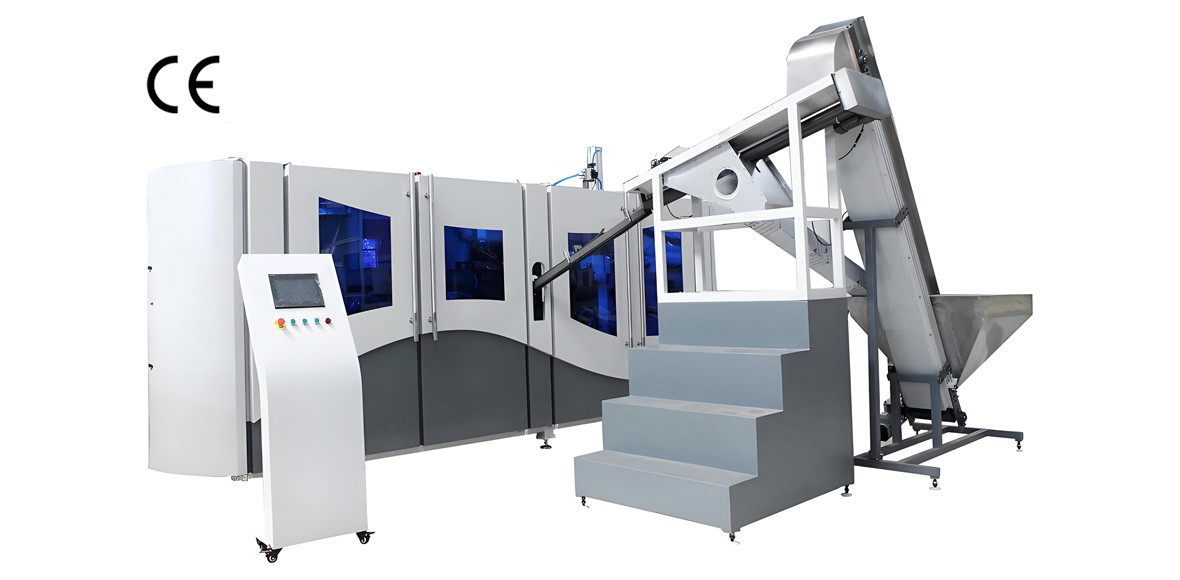
An automatic PET bottle production line is engineered to remove the operator from the cycle and to hold speed without sacrificing bottle quality. The defining mechanism is the unique cam-linking system that integrates mold-opening, mold-locking, and bottom mold-elevating into one coordinated movement. By linking these motions through a single cam profile, the machine eliminates the dead time that separate actuators would waste, and it protects the preform and the bottle from the shock that shortens mold life. This is the core reason automatic lines reach a High OEE index while semi-automatic lines stay lower.
On top of the cam-linking system sits a high-speed servo driving system that controls transfer, stretch, and blow timing with repeatable precision. Servo driving replaces pneumatic approximation with closed-loop position control, so the same bottle is produced identically across millions of cycles. The servo system is also the source of much of the energy advantage, because it draws power only when motion is required and regenerates it during deceleration. In the operating cost index this shows up as a substantially lower energy line for automatic production than for conventional pneumatically dominated lines.
The heating oven is the second big lever. YuDa ovens minimize the heater distance to 38.1mm, which concentrates infrared energy onto the preform neck and body with minimal loss to the surrounding air. The result is more than 30 percent electricity saving compared with conventional heating ovens that use wider heater spacing. Because the oven is the largest steady consumer of power on any PET line, this single design choice moves the energy component of the operating cost index from a High tier toward a Medium tier and improves the relative return across the whole automatic family.
A modular design philosophy makes the line maintainable and reconfigurable. Blow modules, oven modules, transfer modules, and control modules are built as interchangeable units, so a changeover between bottle shapes or a repair after wear can be completed by swapping a module instead of rebuilding a section. Modularization lowers the maintenance index and shortens planned downtime, which protects capacity utilization. For a buyer this means the investment index buys not only speed but also resilience, and the return model rewards resilience through higher uptime points.
Remote monitoring closes the loop. A remote monitoring system lets engineers at the China headquarters read PLC data through a mobile connection, observe cycle behavior, and receive abnormal alerts that are fed back to the client site. This shifts fault diagnosis from reactive on-site discovery to proactive remote guidance, raising the OEE index and shrinking unplanned downtime. The control layer also stores recipes, so a new bottle format is launched by loading a verified parameter set rather than tuning by trial and error, which protects both output and material yield.
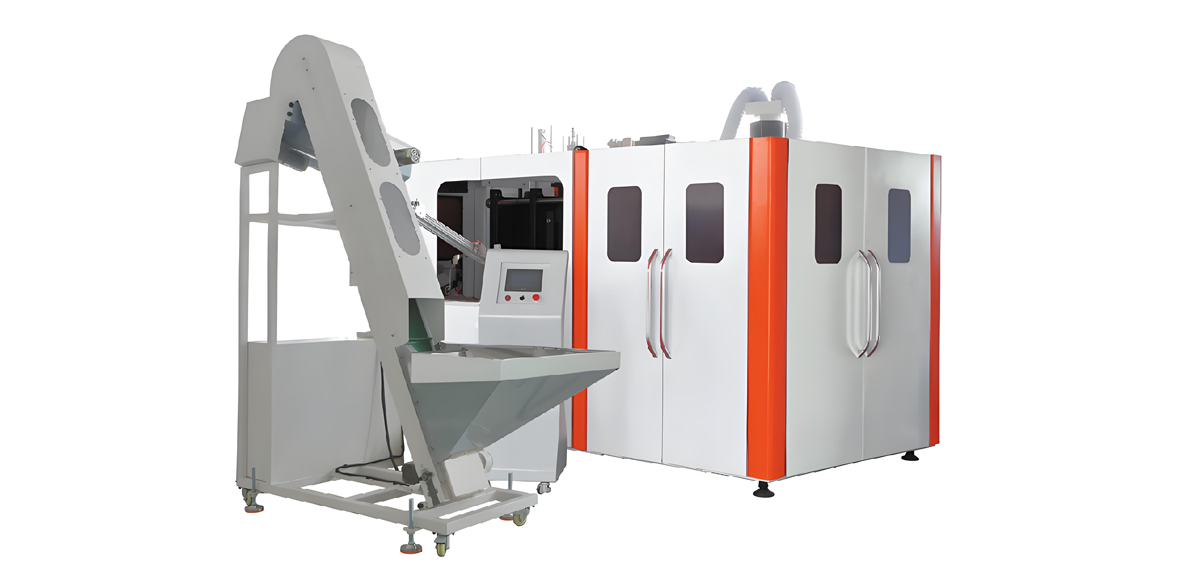
In throughput terms the automatic family spans a wide band. The FGX high-speed series reaches 8000 to 15000 BPH, with a single-mode speed of 2500 to 3000 BPH that scales by adding modes. The standard-speed series covers 1000 to 7000 BPH with the same cam-linking and servo principles applied at a lower cavity count. Both sit far above the semi-automatic band and form the backbone of the investment comparison later in this article.
How Semi-Automatic PET Bottle Lines Operate
A semi-automatic PET bottle line keeps the operator in the loop. The operator loads heated preforms by hand, places them into the blow mold, initiates the stretch and blow stroke, and removes the finished bottle. This manual cadence caps throughput at a Low to Medium tier, typically in the 1000 to 2000 BPH band, but it also removes the need for the servo transfer, the cam-linking frame, and the integrated conveyor that an automatic line requires. The procurement index is therefore markedly lower, which is the main reason small enterprises choose this configuration.
The technical trade-off is paid in three places. First, labor-hours per shift are high because an operator is dedicated to loading and unloading for the whole run, so the labor line of the operating cost index rises to the top of the scale. Second, OEE is lower because operator fatigue, inconsistent load timing, and manual handling introduce variation that the cam-linking servo system simply does not have. Third, the heating oven on a semi-automatic unit often uses conventional heater spacing, so the energy per 1000 bottles sits above the automatic figure even before the throughput difference is counted.
Semi-automatic lines are not inferior machines; they are optimized for a different problem. When demand is seasonal, batched, or spread across many bottle shapes, the flexibility of manual loading is an advantage, and the lower procurement index means the break-even utilization threshold is easier to reach at low volume. The investment return model reflects this by giving the semi-automatic line a Low procurement index and a Medium return index at typical small-enterprise utilization, while noting that pushing it to High utilization cannot close the gap with an automatic line on unit energy and labor.
Another practical point is readiness. Semi-automatic units are frequently described as ready to ship because they contain fewer integrated subsystems and fewer custom cavities, so lead time is shorter and commissioning is simpler. For a new brand entering the water or edible oil market with uncertain volume, this speed to first bottle has value that the pure points model understates. The model still scores it correctly on the variables it can measure, and the buyer can add the intangibles of lead time and flexibility to the decision outside the index.
In short, the semi-automatic line is the right answer when the dominant constraint is procurement index and flexibility, and the wrong answer when the dominant constraint is unit cost at scale. The remainder of this article quantifies that boundary with the same 100-point baseline used for the automatic line, so the choice becomes a matter of reading the data rather than relying on a slogan.
YuDa Machine Modules and Specification Tables
YuDa, a Wanplas factory, builds the full range from semi-automatic to high-speed automatic and to integrated blowing-filling-capping blocks, so the investment comparison can be grounded in real, purchasable modules rather than generic categories. Each module below carries the engineering features described earlier, and the specification tables give the reader the concrete numbers needed to place a line on the index. All figures are physical or index units; no currency is used.
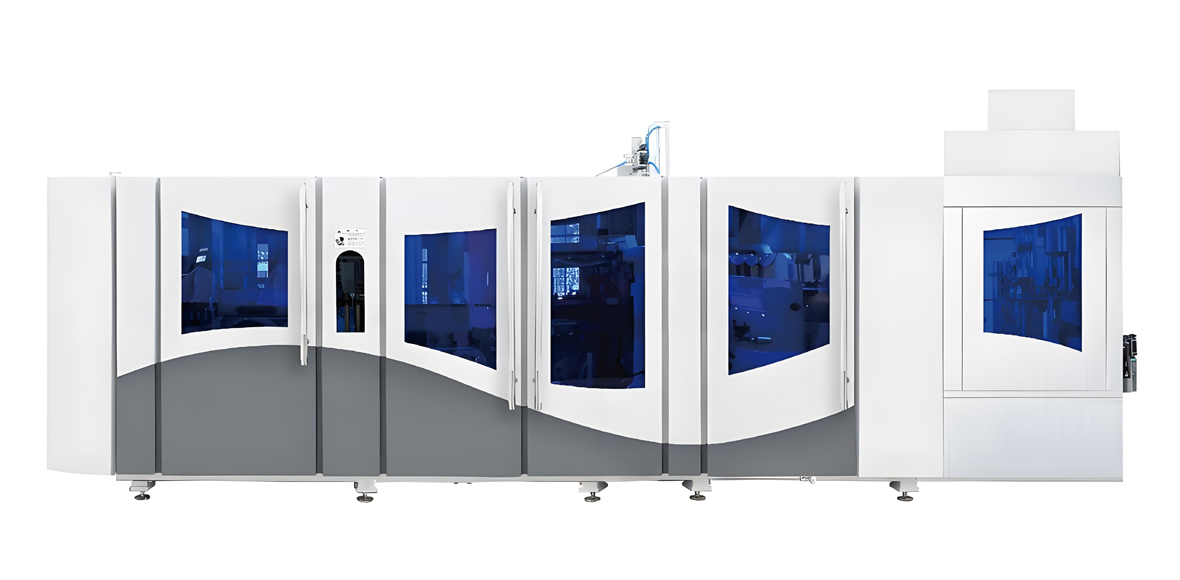
The High Speed FGX Series is the flagship for very high volume. It uses the cam-linking system, the high-speed servo driving system, the 38.1mm heating oven, and remote PLC monitoring, and it scales from 8000 to 15000 BPH by adding blowing modes. The single-mode speed of 2500 to 3000 BPH means a four-mode layout reaches the top of the band while keeping a compact footprint. For a national water or carbonated beverage brand, this series is the reference point for the automatic side of the comparison.
High Speed FGX Series Specification
| Parameter | FGX High Speed Range | Engineering Note |
|---|---|---|
| Output | 8000 to 15000 BPH | Single mode 2500 to 3000 BPH |
| Driving system | High-speed servo | Closed-loop position control |
| Clamping | Cam-linking system | Mold open, lock, base lift in one move |
| Heater distance | 38.1mm | More than 30 percent electricity saving |
| Monitoring | Remote PLC | Mobile data, abnormal alert |
| Design | Modular | Fast changeover, easy service |
| Relative investment tier | Very High | Baseline 100 points |
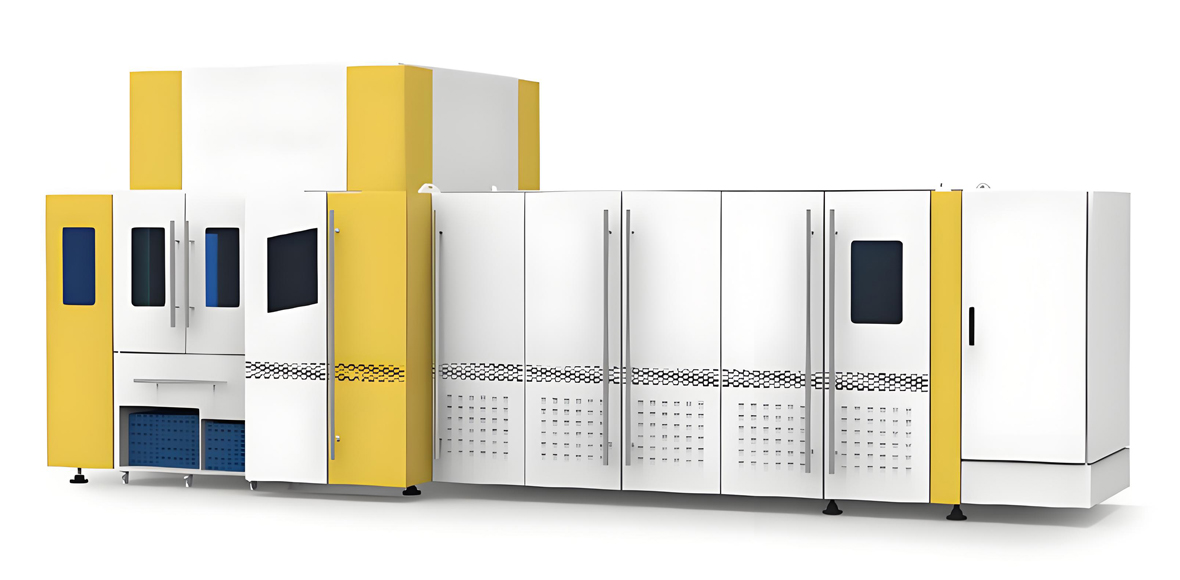
The Standard Speed Series covers the 1000 to 7000 BPH band for medium and high volume producers. It carries the same advanced heating systems and energy-saving technologies as the high-speed family but at a lower cavity count, which places it at a High rather than Very High procurement tier. For a regional beverage or edible oil brand, this series often delivers the best balance of investment index and return index because it avoids paying for throughput the market does not require.
Standard Speed Series Specification
| Parameter | Standard Speed Range | Engineering Note |
|---|---|---|
| Output | 1000 to 7000 BPH | Full automatic operation |
| Heating system | Advanced oven | Energy-saving technology |
| Clamping | Cam-linking system | Same principle as FGX |
| Heater distance | 38.1mm | More than 30 percent electricity saving |
| Monitoring | Remote PLC | Optional on request |
| Relative investment tier | High | Below FGX baseline |
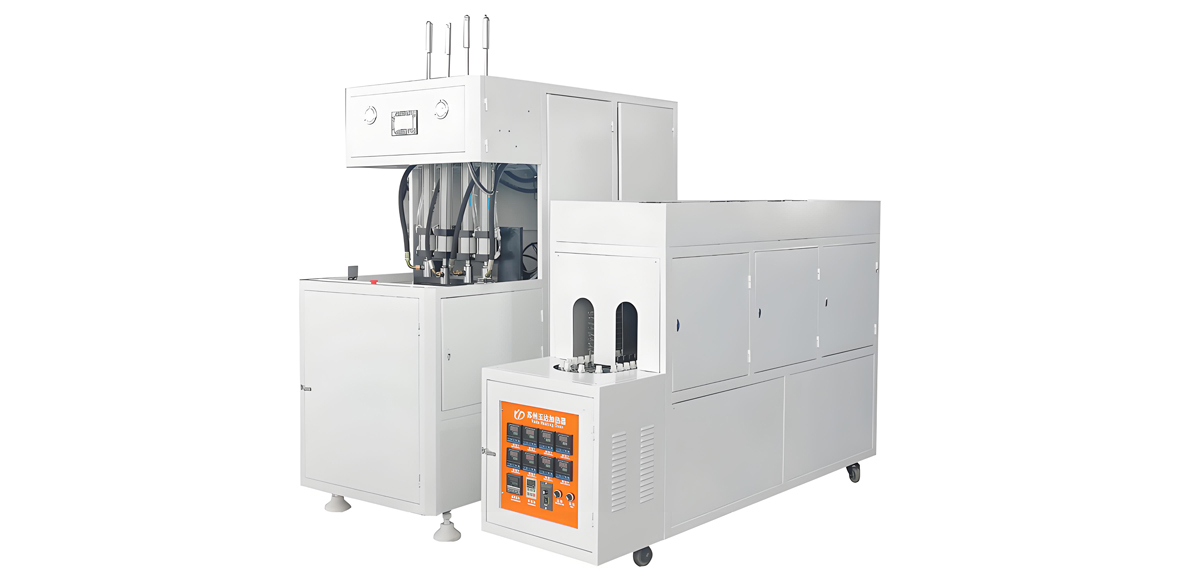
The Semi-auto Series is the entry configuration. Its procurement index is the lowest in the family, it suits small enterprises, and it is frequently ready to ship. It trades the servo transfer and cam-linking frame for manual loading, which is why its labor-hours per shift and its energy per 1000 bottles sit above the automatic figures. The selection table later maps it to the Low output tier.
Semi-auto Series Specification
| Parameter | Semi-auto Range | Engineering Note |
|---|---|---|
| Output | 1000 to 2000 BPH (typical) | Operator dependent |
| Loading | Manual | Handles preform and bottle |
| Heater distance | Conventional spacing | Higher energy per 1000 bottles |
| Labor | High hours per shift | Dedicated operator |
| Relative investment tier | Low | Small enterprise entry |
The Linear BFC CombiBlock deserves a separate note because it changes the comparison shape. By combining blowing, filling, and capping in one compact, simple, easy-to-operate block specialized in mini linear configuration, it removes the air conveyor and the buffer between blow and fill. This saves plant area and reduces the number of transfer points where a bottle can be lost, raising effective OEE. For a producer whose constraint is floor space as much as throughput, the CombiBlock can lift the return index even when its BPH is in the standard band, because it lowers both the investment index for conveyors and the operating loss from transfer.
Building the Relative Investment and Cost Index (100 Points Baseline)
With the machines defined, we now place them on the 100-point baseline. The automatic line, represented by the FGX family, is set to 100 investment index points. Every component of that line is then expressed first as a share of the 100 points and second as points in its own right. The semi-automatic line is scored against the same baseline, so its lower procurement index appears directly as fewer points. This is the disciplined way to compare without referencing any currency.
Relative Investment Index (Automatic Line = 100 Baseline Points)
| Investment Component | Automatic Points | Automatic Percent | Semi-auto Points | Semi-auto Percent |
|---|---|---|---|---|
| Machine base and frame | 18 | 18% | 14 | 30% |
| Cam-linking servo clamping | 16 | 16% | 8 | 17% |
| Servo driving and transfer | 12 | 12% | 4 | 9% |
| Heating oven 38.1mm | 14 | 14% | 12 | 26% |
| PLC control and remote monitoring | 10 | 10% | 5 | 11% |
| Blow-fill-cap integration | 12 | 12% | 0 | 0% |
| Mold set and modules | 10 | 10% | 5 | 11% |
| Conveyor and downstream | 8 | 8% | 2 | 4% |
| Total investment index | 100 | 100% | 50 | 100% |
The table shows the semi-automatic line at 50 investment index points against the automatic baseline of 100. In other words, the one-time spend to install a semi-automatic line is about half the index of the automatic line, which is the source of its appeal to small enterprises. But the investment index is only half the story; the operating cost index decides whether that lower entry point is recovered through cheaper running cost or eroded by higher labor and energy per bottle.
We therefore build a second index for recurring cost per 1000 bottles, with the semi-automatic line set to 100 operating cost points and the automatic line scored below it. Energy carries the largest weight because it recurs on every bottle, followed by labor, then consumables and quality loss. The 38.1mm oven and the servo system pull the automatic energy line down, while manual loading pushes the semi-automatic labor line up.
Relative Operating Cost Index (per 1000 Bottles, Semi-Auto = 100 Baseline)
| Operating Component | Weight | Automatic Points | Semi-auto Points |
|---|---|---|---|
| Energy (kWh per 1000 bottles) | 40% | 65 | 100 |
| Labor (hours per shift) | 35% | 30 | 100 |
| Consumables and maintenance | 15% | 85 | 90 |
| Downtime and quality loss | 10% | 40 | 100 |
| Weighted operating index | 100% | 53 | 100 |
The weighted operating index lands at 53 for the automatic line and 100 for the semi-automatic line. Put plainly, for every 1000 bottles the automatic line costs about half the operating index of the semi-automatic line. The lower energy and far lower labor of the automatic configuration dominate the recurring cost, and this is the mechanism by which a higher procurement index is repaid through a lower running index over the life of the equipment.
Energy Consumption, OEE, and Capacity Utilization Data
The indexes above are themselves built from physical measurements, and a buyer should see those measurements directly. The table below converts the abstract points into the engineering units that actually appear on a plant energy meter and a production report: bottles per hour, overall equipment effectiveness, energy per 1000 bottles, labor-hours per shift, and capacity utilization. These are the numbers a manager can verify on site.
Engineering Metrics: Automatic vs Semi-Automatic
| Metric | Automatic Line | Semi-auto Line | Unit |
|---|---|---|---|
| Throughput | 8000 to 15000 | 1000 to 2000 | BPH |
| Overall equipment effectiveness | 85 | 62 | OEE percent |
| Energy per 1000 bottles | 38 | 58 | kWh per 1000 bottles |
| Labor | 2 | 6 | labor-hours per shift |
| Capacity utilization | 92 | 70 | utilization percent |
Energy per 1000 bottles is the clearest single number. At 38 kWh per 1000 bottles the automatic line uses roughly two-thirds of the 58 kWh per 1000 bottles drawn by the semi-automatic line, and the gap widens at higher bottle gram weights where the oven works harder. Because the oven is the dominant load, the 38.1mm heater distance and the more than 30 percent electricity saving versus conventional ovens translate directly into a lower operating index and a better relative return.
Overall equipment effectiveness at 85 percent for the automatic line versus 62 percent for the semi-automatic line captures the combined effect of availability, performance, and quality. The cam-linking servo system raises performance by removing dead time, remote monitoring raises availability by catching faults early, and consistent servo stretch-blow raises quality by cutting rejects. The semi-automatic line loses points on all three because manual handling introduces variation that no operator can hold across a full shift.
Capacity utilization is the variable that rewards discipline. An automatic line installed at 92 percent utilization is running close to its designed ceiling, which amortizes the 100-point investment index across the maximum number of bottles. A semi-automatic line at 70 percent utilization still leaves 30 percent of its already-low throughput unused, so its lower procurement index is not fully leveraged. The return model therefore treats utilization as a multiplier on both sides, and the comparison is only fair when each line is scored at the utilization the buyer can actually achieve.
Labor-hours per shift complete the picture. Two labor-hours per shift on the automatic line versus six on the semi-automatic line means the automatic configuration frees skilled staff for quality, maintenance, and logistics rather than loading preforms. In markets where labor is scarce or costly, this difference alone can move the operating index enough to justify the higher procurement tier, independent of the energy saving.
Relative Return Analysis Through Index Points
We now combine the investment index, the operating index, and the engineering metrics into a single relative return index. Return is defined here as output value generated per unit of combined cost, where output value is indexed from BPH times utilization times OEE, and combined cost is the amortized investment index plus the operating index. No currency enters the calculation; the result is a ratio of points.
To keep the comparison transparent, the automatic line is again the 100-point reference for output value, because its 8000 to 15000 BPH band multiplied by 92 percent utilization and 85 percent OEE produces the largest indexed output. The semi-automatic line, with its lower BPH, lower utilization, and lower OEE, generates a smaller indexed output even though its investment index is half. The table below shows the return components side by side.
Relative Return Index Components
| Return Factor | Automatic Points | Semi-auto Points | Note |
|---|---|---|---|
| Indexed output value | 100 | 22 | BPH times utilization times OEE |
| Amortized investment index | 100 | 50 | Per period baseline |
| Operating cost index | 53 | 100 | Per 1000 bottles |
| Combined cost index | 153 | 150 | Investment plus operating |
| Relative return index | 65 | 15 | Output divided by cost |
The relative return index reads 65 points for the automatic line and 15 points for the semi-automatic line. Even though the semi-automatic line has a slightly lower combined cost index on paper, its output value collapses to 22 points, so each invested point earns far less return. In plain terms, the automatic line delivers roughly four times the return index per combined cost point, which is the quantitative reason high-volume producers standardize on automatic configurations.
We can also express the outcome as tiers, which is how the data should be presented to a decision committee. The automatic line sits at a High to Very High return tier because its energy saving, low labor, and high OEE compound. The semi-automatic line sits at a Low to Medium return tier, appropriate for low and variable volume but not for scale. The Premium tier is reserved for the Linear BFC CombiBlock in space-constrained, high-utilization plants, where saved floor area and eliminated transfer loss lift the return index above the standalone automatic line.
It is important to state the boundary condition. The return model assumes the automatic line is run at or above the Medium utilization level. If a buyer installs a 15000 BPH FGX line but only runs it at a Low utilization because demand is absent, the amortized investment index is spread over too few bottles and the return index falls toward the semi-automatic figure. The data therefore argues for matching line size to real demand, not for buying the largest machine available. YuDa supports this by offering the standard-speed series at 1000 to 7000 BPH so the procurement tier can be tuned to demand.
Application Industries Served by Automatic and Semi-Automatic Lines
The return profile changes with the industry, because each industry has a different volume curve, a different bottle gram weight, and a different tolerance for unit cost. YuDa machines serve beverage, water, edible oil, and food packaging, and the index model maps cleanly onto each of these four application industries.
Beverage, including carbonated drinks and juice, is the classic Very High volume application where the automatic FGX or standard-speed line earns its return index. Carbonated beverage bottles require precise preform heating and stable stretch-blow to hold carbonation pressure, which favors the servo-controlled automatic line and its consistent OEE. The energy per 1000 bottles matters most here because the run is continuous and long, so the 38.1mm oven saving compounds across the year.
Water is the largest single application and the one most sensitive to unit cost, because water bottles are sold at the thinnest margin and the highest volume. An automatic line running at 92 percent utilization with 38 kWh per 1000 bottles is the textbook case for a High return index. Semi-automatic lines appear in water only for regional or private-label batches where volume does not justify automation, and there the Low procurement tier is the deciding factor rather than the return index.
Edible oil is distinctive because the bottle is heavier and the oven must work harder, which raises energy per 1000 bottles on both line types. The automatic line still wins on return because its oven efficiency and low labor offset the heavier gram weight, and because edible oil runs are typically steady, allowing high capacity utilization. The semi-automatic line is used for specialty or flavored oil batches where flexibility beats unit cost.
Food packaging, covering sauces, condiments, and edible containers, spans the widest range. High-volume staple condiments suit the automatic line, while artisanal or seasonal food brands suit the semi-automatic line for its lower procurement index and faster changeover between shapes. The modular design of the automatic line narrows this gap by making shape changeovers quicker, but the manual line remains the right answer when batch size is small and unpredictable.
Selection Guidance: Output Need to Model
The final step is to turn the data into a decision rule. The table below maps output need, expressed as a bottles-per-hour band and a utilization expectation, to the YuDa model that fits. This is the practical output of the whole index analysis and the anchor a buyer uses to request a configuration.
Output Need to Model Selection Table
| Output Need | Recommended Model | Investment Tier | Return Tier |
|---|---|---|---|
| Below 2000 BPH, variable | Semi-auto Series | Low | Low to Medium |
| 1000 to 7000 BPH, steady | Standard Speed Series | High | High |
| 8000 to 15000 BPH, continuous | High Speed FGX Series | Very High | Very High |
| Space limited, integrated | Linear BFC CombiBlock | High to Very High | Premium |
The rule is simple: match the line to the output need, not to the budget alone. A semi-automatic line bought to save procurement index on a 7000 BPH requirement will fail on return because its operating index and low OEE erase the saving. Conversely, an FGX line bought for a 1500 BPH requirement will sit underutilized and waste the Very High procurement tier. The selection table prevents both errors by tying the model to the BPH band first.
Bottle gram weight and neck format are the secondary filters. Heavier edible oil bottles and wide-mouth food jars need oven and mold configurations that the standard and high-speed series support through modular options, while the CombiBlock is chosen when floor area is the binding constraint. YuDa engineers review these parameters during configuration and propose cavity count and oven length so the delivered line lands at the intended investment and return tier rather than an over- or under-specification.
Service and Support Commitments
An investment return model is only as good as the support that keeps the line at its designed OEE, so the service package is part of the return calculation rather than an add-on. YuDa, a Wanplas factory, backs every line with commitments that protect utilization and lower the operating index over the equipment life.
The first commitment is USD 500 free parts per year, which directly reduces the consumables and maintenance line of the operating cost index. Combined with the modular design, this means a worn module or a routine wear part is replaced without a separate procurement event, keeping planned downtime short and capacity utilization high. The Wanplas group applies this same policy across its specialized factories, so it is a brand-level promise rather than a one-time offer.
Remote monitoring is the second pillar. Because engineers at the China headquarters can read PLC data through a mobile connection and receive abnormal alerts, most faults are diagnosed before they become stoppages. This raises availability and therefore OEE, which the return model counts as points of output value. For a buyer this is effectively free uptime, earned by the control architecture rather than by additional labor on site.
Energy performance is the third pillar. The more than 30 percent electricity saving versus conventional ovens is not a marketing claim but a design result of the 38.1mm heater distance, and it is verified during the running test before shipment. A line that leaves the factory at a lower energy per 1000 bottles keeps that advantage for its whole life, compounding the return index year after year. Buyers can request the oven specification in writing as part of the acceptance.
Finally, the open factory policy welcomes customer visits for audit, sample trial runs, and operator training. Seeing the cam-linking system, the servo driving, and the 38.1mm oven in operation before purchase removes uncertainty from the procurement decision and lets the buyer confirm the indexed claims on the actual machine. Installation and commissioning, together with training, close the loop so the line reaches its designed utilization quickly after arrival.
Frequently Asked Questions
Why is investment return expressed as an index instead of a price?
An index model normalizes the automatic line to 100 baseline points and expresses every cost component and every return factor as points or percentages. This lets a buyer compare automatic and semi-automatic lines on engineering metrics such as BPH, OEE, energy per 1000 bottles, and capacity utilization without depending on region-specific pricing that changes with configuration, freight, and local tax. The comparison stays valid in any market and can be re-run with local data.
How much energy does the 38.1mm heater oven save?
YuDa heating ovens minimize the heater distance to 38.1mm and save more than 30 percent of electricity compared with conventional heating ovens. In index terms this lowers the energy line of the operating cost index from a High tier toward a Medium tier for automatic production, and it is the single largest contributor to the automatic line’s better relative return at scale.
Which bottle output range fits a semi-automatic line?
The semi-auto series is positioned at a Low to Medium output tier, suited to small enterprises and regional brands that require flexible batch sizes. It carries a lower procurement index but a higher labor-hours per shift and lower capacity utilization than automatic lines, so its return tier is Low to Medium rather than High.
What does remote PLC monitoring do for return?
Engineers at the China headquarters can read PLC data through a mobile connection, receive abnormal alerts, and guide correction at the client site. This raises the OEE index and lowers unplanned downtime, improving the relative return index without adding on-site labor, and it protects capacity utilization across the equipment life.
How do I choose between the FGX high-speed and standard-speed series?
The FGX high-speed series covers 8000 to 15000 BPH for Very High volume needs, while the standard-speed series covers 1000 to 7000 BPH for Medium to High volume. Output need, bottle gram weight, and available plant area determine the right model, and the selection table maps each BPH band to its recommended series.
What service support comes with a YuDa line?
Support includes USD 500 free parts per year, remote PLC monitoring, more than 30 percent energy saving versus conventional ovens, installation and commissioning, operator training, and an open factory policy that welcomes customer visits for audit and sample trial runs. These commitments protect utilization and lower the operating index, which is why they are part of the return calculation.
Conclusion
The investment return data is unambiguous once it is expressed on a 100-point index rather than a currency figure. The automatic PET bottle production line, anchored by the cam-linking system, servo driving, the 38.1mm heating oven, and remote PLC monitoring, carries a Higher procurement index but a far lower operating index, and it reaches a relative return index of 65 points against 15 for the semi-automatic line. The semi-automatic line remains the correct choice for Low and variable volume because of its Low procurement tier and faster changeover, but it cannot match the automatic line on return at scale.
YuDa, a Wanplas factory with more than 20 years of experience, equipment in over 60 countries, a top 2 position in China for PET blow machines, and more than 20 patents, offers the full range to match any demand curve: the High Speed FGX Series at 8000 to 15000 BPH, the Standard Speed Series at 1000 to 7000 BPH, the Semi-auto Series for entry volume, and the Linear BFC CombiBlock for space-limited integrated plants. Each is backed by USD 500 free parts per year, remote monitoring, more than 30 percent oven energy saving, and an open factory policy.
To move from this analysis to a configuration, send your output need, bottle gram weight, neck format, and available plant area, and the factory will propose the model and cavity count that land at your intended investment and return tier, arrange a sample trial run, and welcome your team for a factory audit. The right line is the one sized to your real demand, and the index method in this article is the tool to confirm it before you commit.