Table of Contents
- Executive Overview: Plant-Based Milk Packaging and PET Blow Molding Equipment Demand
- 2026 Global Plant-Based Beverage Packaging Industry Trends
- 1.1 Oat Milk and Vegan Drinks Become Mainstream Beverage Categories
- 1.2 1L PET Plant-Based Milk Bottle Enters Retail and Café Channels
- 1.3 Clean Label, Light Protection and Cold Chain Stability Drive Requirements
- 1.4 Plant Protein Drinks Raise Food-Grade Packaging Standards
- 1.5 Regional Demand Differences for Plant-Based Milk Blow Machines
- YuDa Standard Automatic PET Blow Machine Product Profile
- 2.1 Standard Automatic Series Configuration for 1L Plant-Based Milk Bottles
- 2.2 Machine Advantages for Vegan Drink Bottle Production
- 2.3 Clarity, Wall Uniformity and Food-Grade Control
- 2.4 Typical Overseas Plant-Based Beverage Factory Application Scenario
- Independent In-Depth Analysis: 1L PET Plant-Based Milk Bottle Industrial Chain
- 3.1 Global Market Size and Growth Drivers of 1L Oat Milk Bottles
- 3.2 Material, Light Protection and Low-Temperature Resistance Requirements
- 3.3 Production Cost Structure for 1L PET Plant-Based Milk Bottles
- 3.4 Neck Finish, Base Stability and Shelf-Life Technology
- 3.5 Equipment Comparison for Medium-Scale Plant-Based Drink Production
- YuDa Blow Machine Portfolio for Different Plant-Based Factory Scales
- 4.1 Semi-Automatic Series: Small Vegan Drink Brand Trial Production
- 4.2 Standard Automatic Series: Mainstream 1L Plant-Based Milk Bottle Production
- 4.3 FGX High-Speed Linear Blow Machine: Large-Scale Plant-Based Beverage Lines
- 4.4 Blowing-Filling-Capping CombiBlock: Integrated Vegan Drink Solutions
- Global Plant-Based Beverage Factory Buyer Pain Points and YuDa Solutions
- 5.1 Europe and North America Vegan Plant-Based Milk Expansion
- 5.2 Southeast Asia Plant Protein Drink Market Growth
- 5.3 East Asia Café and Retail Oat Milk Demand
- 5.4 Contract Manufacturers Need Flexible Multi-Product Lines
- 2027–2032 Market Outlook for Plant-Based Milk Blow Molding Equipment
- Procurement Guidance for Global Plant-Based Beverage Investors
Executive Overview: Plant-Based Milk Packaging and PET Blow Molding Equipment Demand
In 2026, the global plant-based beverage market continues to expand rapidly, driven by rising vegan diets, lactose intolerance awareness, health-conscious consumption, and café culture. Oat milk, almond milk, soy milk, and other plant protein drinks have moved from niche health products to mainstream retail categories. Among various packaging formats, the 1L PET plant-based milk bottle has become one of the most important high-volume specifications, suitable for supermarkets, convenience stores, coffee chains, and home consumption.
This article provides an independent analysis focused specifically on 1L PET plant-based milk bottles as a distinct food and beverage packaging category. It examines the industrial chain, material requirements, cost structure, quality control challenges, and equipment selection logic for plant-based beverage factories. It also explains how YuDa standard automatic PET blow machines can serve oat milk producers, vegan drink brands, and contract packaging manufacturers worldwide. Unlike high-speed FGX linear blow machines designed primarily for large-volume water production, and unlike semi-automatic machines suitable for small-batch specialty containers, the YuDa standard automatic series offers a reliable and flexible solution for medium to large-scale 1L plant-based milk bottle production.
The analysis further covers 2026 global plant-based beverage packaging trends, regional market differences, and practical procurement guidance for factory investors. It is intended to help B2 buyers, packaging engineers, plastic machinery distributors, and plant-based beverage production managers make more informed decisions when selecting blow molding equipment for 1L PET plant-based milk bottle production.
2026 Global Plant-Based Beverage Packaging Industry Trends
1.1 Oat Milk and Vegan Drinks Become Mainstream Beverage Categories
Plant-based milk is no longer only for vegan consumers. It has become a daily beverage choice for people with lactose intolerance, dietary restrictions, and health-oriented lifestyles. Oat milk, in particular, has grown rapidly because of its neutral taste, creamy texture, and suitability for coffee, tea, and cereal consumption. This trend has created a large and stable demand for high-quality packaging that can protect plant protein drinks during storage and distribution.
For beverage factories, this means growing demand for high-speed, stable, and hygienic bottle production. Unlike ordinary water bottles, plant-based milk bottles require very precise molding because even minor defects in transparency, neck finish, or base stability can affect brand appearance and product safety perception.
YuDa standard automatic blow machines are designed to support this requirement through stable preform heating, precise stretching, and consistent blow molding pressure. This helps plant-based beverage factories produce clear, dimensionally stable 1L PET plant-based milk bottles that meet modern food packaging standards.
1.2 1L PET Plant-Based Milk Bottle Enters Retail and Café Channels
The 1L PET plant-based milk bottle is widely used in both retail and food service channels. Supermarkets prefer it for family consumption, convenience stores for daily purchases, and coffee chains for barista use. Compared with carton packaging, PET bottles offer better transparency, allowing consumers to see the creamy color and texture of plant-based milk. Compared with glass bottles, PET bottles are lighter, safer, and less expensive to transport.
However, plant-based milk packaging places higher demands on appearance than many other beverages. Oat milk and almond milk are often positioned as premium health products, so consumers expect clean, glossy, and consistent bottles on retail shelves. Any haze, stretch marks, neck deformation, or base tilt can reduce consumer confidence and affect sales performance.
Therefore, plant-based beverage factories need blow molding equipment that can consistently produce high-clarity bottles with accurate neck dimensions and stable bases. The YuDa standard automatic series helps achieve this through automated production and precise process control.
1.3 Clean Label, Light Protection and Cold Chain Stability Drive Requirements
In 2026, clean labeling has become a core purchasing factor for plant-based beverage consumers. They prefer short ingredient lists, recognizable raw materials, and minimal processing. This trend also affects packaging requirements because consumers associate clean, transparent packaging with healthier products.
At the same time, plant-based milk is sensitive to light and temperature. Light exposure can cause flavor changes and discoloration, while temperature fluctuations can affect product stability, especially during cold chain transportation and refrigerated storage. Therefore, PET bottles must balance transparency with sufficient light protection and uniform material distribution.
YuDa standard automatic blow machines help control these quality factors through stable mold clamping, precise stretching, and consistent blow air pressure. These technical features contribute to better neck finish, more uniform wall thickness, and stronger bottle bases, which are essential for plant-based milk packaging.
1.4 Plant Protein Drinks Raise Food-Grade Packaging Standards
Plant-based milk contains proteins, fats, fibers, and natural emulsifiers. These ingredients can be more sensitive to contamination and oxidation than water or carbonated drinks. Therefore, the entire bottle manufacturing process must maintain a high level of hygiene to avoid foreign particles, odor, and microbial risks.
PET plant-based milk bottles must also be free of residual odor, black spots, and visible defects. If the blow molding machine generates excessive dust, burnt preforms, or inconsistent heating, the factory may face quality complaints, product recalls, or retailer rejection.
YuDa standard automatic blow machines help reduce these risks through automated preform feeding, enclosed heating zones, and stable production cycles. This lowers manual contact with preforms and finished bottles, improving overall hygiene and quality consistency.
1.5 Regional Demand Differences for Plant-Based Milk Blow Machines
The global demand for plant-based milk blow molding equipment varies significantly by region. In Europe and North America, vegan and plant-based beverage markets are mature, with strong demand for clean-label and sustainable packaging. In East Asia, Japan and South Korea have growing oat milk and soy milk markets. In Southeast Asia, plant protein drinks are expanding rapidly with local and international brands.
For most medium to large plant-based beverage factories, the YuDa standard automatic blow machine is often the most suitable choice. It offers higher output than semi-automatic machines, better quality consistency, and enough flexibility to support multiple plant-based milk bottle designs.
YuDa Standard Automatic PET Blow Machine Product Profile
2.1 Standard Automatic Series Configuration for 1L Plant-Based Milk Bottles
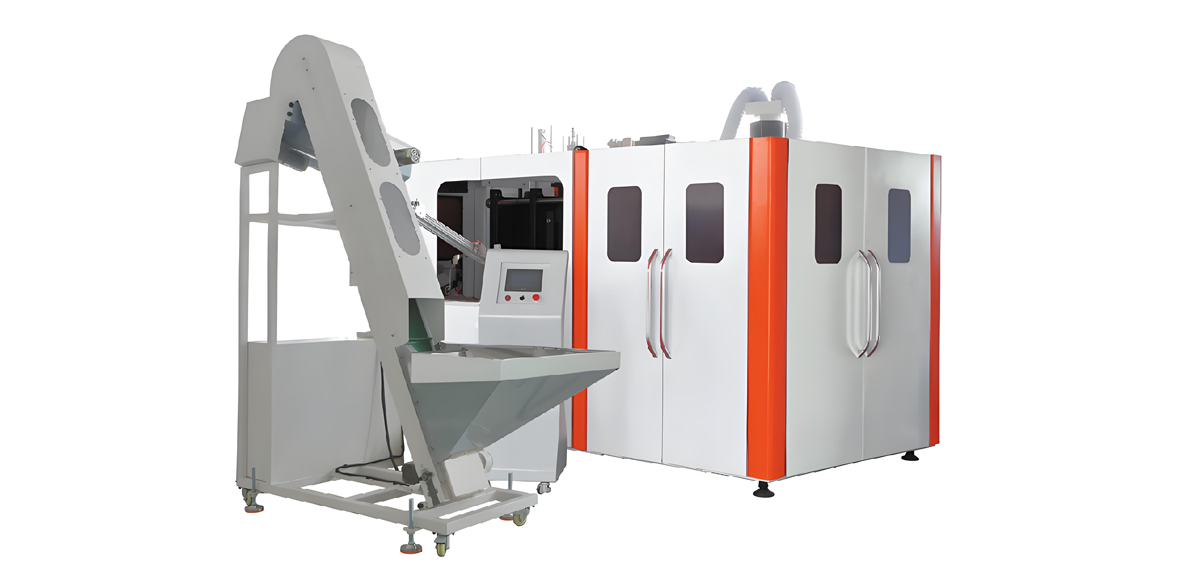
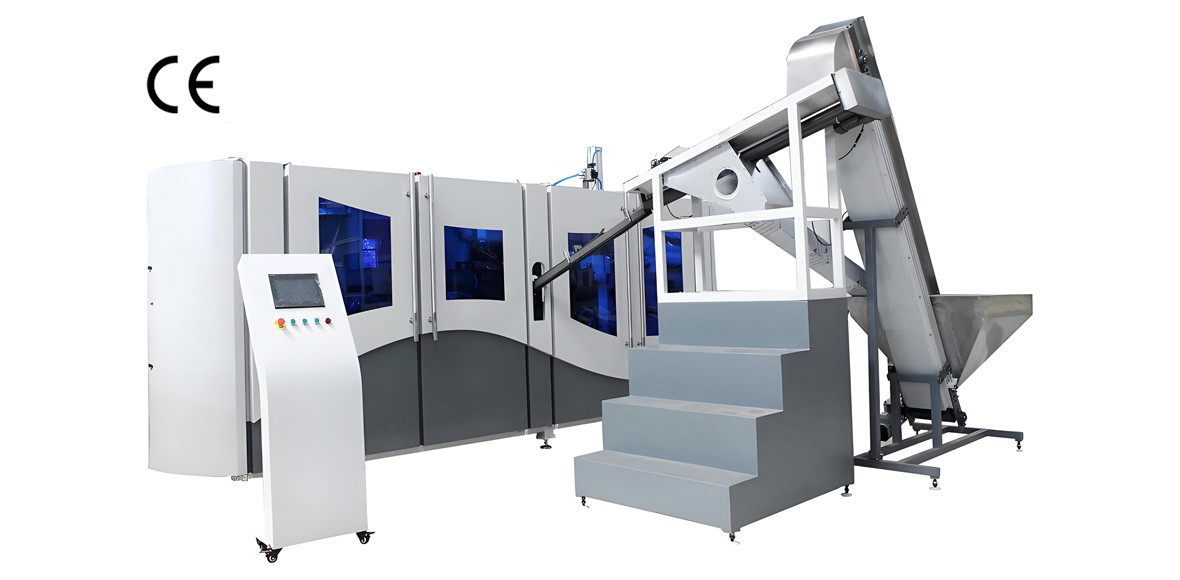
YuDa standard automatic PET blow machine series is designed for medium to high-capacity bottle production, covering a wide range of food, beverage, and plant-based packaging applications. The equipment is suitable for factories that require stable mass production but do not yet need the extremely high output of large linear systems. The standard automatic series typically supports multiple cavity configurations and can be adjusted according to bottle shape, preform weight, and production requirements.
Key configuration features include automatic preform feeding, automatic heating, automatic stretching and blowing, and stable mold clamping. The machine is built with a focus on durability, easy maintenance, and consistent bottle quality. It supports the production of PET bottles for water, carbonated drinks, juice, dairy products, and plant-based milk.
For 1L plant-based milk bottle production, the standard automatic series offers a balanced output range that fits many medium to large plant-based beverage factories. It can help manufacturers achieve higher production efficiency compared with semi-automatic equipment while maintaining a reasonable capital expenditure level.
2.2 Machine Advantages for Vegan Drink Bottle Production
Producing 1L plant-based milk bottles is different from producing ordinary water bottles. Plant-based milk bottles require higher transparency, better cold resistance, and more reliable sealing performance. The bottle must be able to withstand refrigerated storage, transportation, and pouring without deformation or leakage.
YuDa standard automatic blow machines are suitable for 1L plant-based milk bottle production because they provide stable stretching and blowing control. The equipment helps produce bottles with clearer surfaces, more uniform walls, and more reliable dimensional stability, which is essential for plant-based beverage brands that sell products through supermarkets and café chains.
Additionally, the machine’s heating system can be adjusted to match preforms commonly used for 1L plant-based milk bottles. This reduces the risk of overheating, underheating, or uneven crystallization, which can cause bottle defects and production losses.
2.3 Clarity, Wall Uniformity and Food-Grade Control
Plant-based milk packaging requires a higher level of hygiene and quality control than general non-food packaging. Every stage of bottle production, from preform loading to heating, stretching, blowing, and bottle discharge, must avoid contamination, dust, and abnormal particle generation. The final PET bottle must be clean, transparent, odor-free, and suitable for direct contact with plant-based milk.
YuDa standard automatic blow machines are built to support food-grade production environments. The machine structure allows for easier cleaning and maintenance, and the production process reduces manual handling compared with semi-automatic systems. This helps lower the risk of human contamination and improves overall production consistency.
For plant-based beverage factories, this means fewer quality complaints, fewer rejected batches, and stronger confidence from brand owners and retail partners. When combined with proper factory hygiene management, the equipment can contribute to a more reliable food packaging production system.
2.4 Typical Overseas Plant-Based Beverage Factory Application Scenario
A typical application scenario is a medium-sized plant-based beverage factory in Europe that produces oat milk, almond milk, and soy milk for local supermarkets and coffee chains. The factory previously used older semi-automatic blow machines to produce 1L PET bottles. As order volume increased, the factory faced problems such as low output, high labor demand, inconsistent bottle clarity, and frequent neck dimension errors.
By introducing YuDa standard automatic blow machines, the factory can increase production capacity, reduce manual intervention, and improve the consistency of 1L plant-based milk bottles. The equipment can be integrated with existing preform feeding, filling, labeling, and packaging systems, allowing the factory to upgrade gradually without replacing the entire production line at once.
In this scenario, the standard automatic series becomes a practical midpoint between small semi-automatic production and large high-speed production. It allows plant-based beverage factories to scale up capacity while maintaining control over investment, operation, and maintenance.
Independent In-Depth Analysis: 1L PET Plant-Based Milk Bottle Industrial Chain
3.1 Global Market Size and Growth Drivers of 1L Oat Milk Bottles
The global demand for 1L PET plant-based milk bottles is driven by several long-term factors. First, vegan and flexitarian diets continue to grow worldwide. Second, lactose intolerance and health-conscious consumption increase demand for plant protein drinks. Third, coffee chains and supermarkets are expanding their plant-based product shelves.
Among all plant-based milk packaging sizes, 1L bottles are particularly suitable for family consumption and café use. They offer lower cost per liter than small single-serve bottles and better transparency than carton packaging. For plant-based beverage brands, this makes 1L PET bottles an excellent format for mass distribution.
As a result, 1L PET plant-based milk bottles are expected to remain one of the fastest-growing segments in the global beverage packaging industry over the next five years. This sustained demand creates stable opportunities for blow molding equipment manufacturers that can deliver reliable, efficient, and food-grade production solutions.
3.2 Material, Light Protection and Low-Temperature Resistance Requirements
1L plant-based milk bottles require careful attention to material quality and mechanical performance. Plant-based milk is often stored under refrigeration, so the bottle must maintain good impact resistance and dimensional stability at low temperatures. If the bottle material or wall thickness is not properly controlled, it may crack, deform, or leak during cold storage and transportation.
Light protection is also critical. Plant protein drinks can be sensitive to light, which may cause flavor changes and discoloration. Therefore, the bottle must provide sufficient barrier performance while still maintaining a transparent appearance for product display.
YuDa standard automatic blow machines support this requirement through precise preform heating, controlled stretching, and stable air pressure. These functions help reduce common defects such as haze, stretch marks, uneven wall thickness, and bottle base deformation.
3.3 Production Cost Structure for 1L PET Plant-Based Milk Bottles
The production cost of 1L PET plant-based milk bottles consists mainly of preform cost, energy cost, labor cost, mold cost, maintenance cost, and rejection loss. Preform cost is usually the largest single expense, followed by energy and labor. For this reason, even small improvements in machine efficiency can lead to significant cost savings over large production volumes.
Energy efficiency is especially important in medium-capacity beverage production because 1L bottles require careful heating control. Older semi-automatic machines often consume more electricity per thousand bottles because of less optimized heating structures and lower automation levels. In contrast, modern automatic blow machines can improve heating efficiency and reduce energy waste through better oven design and process control.
Labor cost is another important factor. Semi-automatic machines require more manual loading, unloading, and quality inspection, while standard automatic machines reduce labor dependence. For plant-based beverage factories operating 24-hour production lines, this difference can have a substantial impact on overall production cost.
Maintenance cost and rejection loss also affect long-term profitability. Reliable equipment with modular components can reduce downtime and maintenance expenses. Lower defect rates mean fewer wasted preforms, less rework, and faster order fulfillment.
3.4 Neck Finish, Base Stability and Shelf-Life Technology
1L plant-based milk bottles must perform reliably under filling, capping, cold storage, and transportation conditions. The neck finish must be accurate to ensure proper cap sealing. The bottle body must be clear and free of streaks or haze. The base must be stable enough for high-speed conveying and refrigerated storage. If any of these elements are poorly controlled, the factory may face leakage complaints, product returns, and brand damage.
YuDa standard automatic blow machines help control these quality factors through stable mold clamping, precise stretching, and consistent blow air pressure. These technical features contribute to more uniform material distribution, which is essential for neck strength, sidewall clarity, and bottle base stability.
For plant-based beverage producers, this means fewer sealing problems, fewer leakage incidents, and more consistent packaging quality. In the long run, these improvements help protect brand reputation and reduce after-sales losses.
3.5 Equipment Comparison for Medium-Scale Plant-Based Drink Production
When selecting blow molding equipment for 1L plant-based milk bottle production, factories usually consider three main options: semi-automatic machines, standard automatic machines, and high-speed linear machines. Each option has different advantages depending on production volume, budget, and product mix.
Semi-automatic machines are suitable for small plant-based beverage factories with limited capital and low daily output. They are more affordable but require more labor, and their output is relatively low. Standard automatic machines are suitable for medium to large plant-based beverage factories that need higher output, better consistency, and lower labor dependence. High-speed linear machines are suitable for very large production lines, but they require higher investment, larger factory space, and more complex maintenance.
For most medium to large plant-based beverage factories, the YuDa standard automatic blow machine offers the best balance. It provides enough automation to improve efficiency, enough flexibility to support multiple bottle sizes, and enough capacity to meet growing retail demand without overinvesting in unnecessary high-speed infrastructure.
YuDa Blow Machine Portfolio for Different Plant-Based Factory Scales
4.1 Semi-Automatic Series: Small Vegan Drink Brand Trial Production
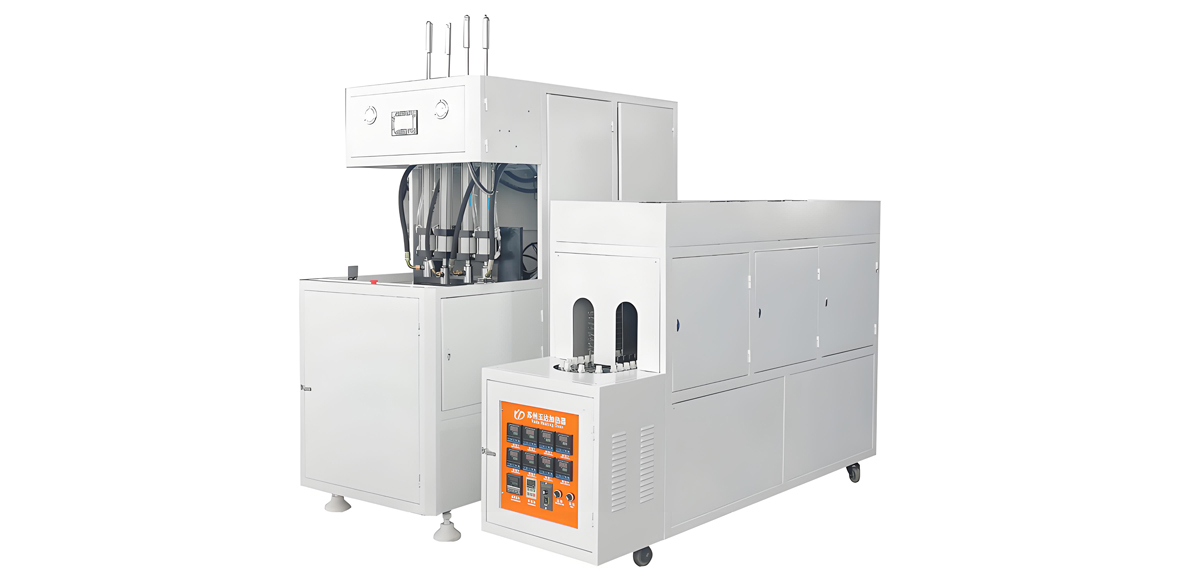
YuDa semi-automatic blow machines are suitable for small plant-based beverage factories, new vegan brand launches, or low-volume contract packaging work. These machines require lower initial investment and are easier to install in limited workshop spaces. They are ideal for factories that produce 1L plant-based milk bottles in small batches or that frequently switch between different brand designs.
However, semi-automatic machines are not the best choice for large-scale mass production. They require more manual operation, and their output per hour is lower. Therefore, they are more suitable for early-stage plant-based beverage brands or regional producers with relatively small order volumes.
4.2 Standard Automatic Series: Mainstream 1L Plant-Based Milk Bottle Production
The YuDa standard automatic blow machine series is the most recommended option for medium to large plant-based beverage factories producing 1L PET bottles. It balances output, quality, automation, and cost. This series can handle stable mass production while still allowing factories to adjust for different bottle designs and preform specifications.
For plant-based beverage factories that have outgrown semi-automatic machines but are not yet ready for full large-scale high-speed lines, the standard automatic series provides a practical upgrade path. It helps factories improve production capacity, reduce labor intensity, and enhance overall bottle quality.
4.3 FGX High-Speed Linear Blow Machine: Large-Scale Plant-Based Beverage Lines
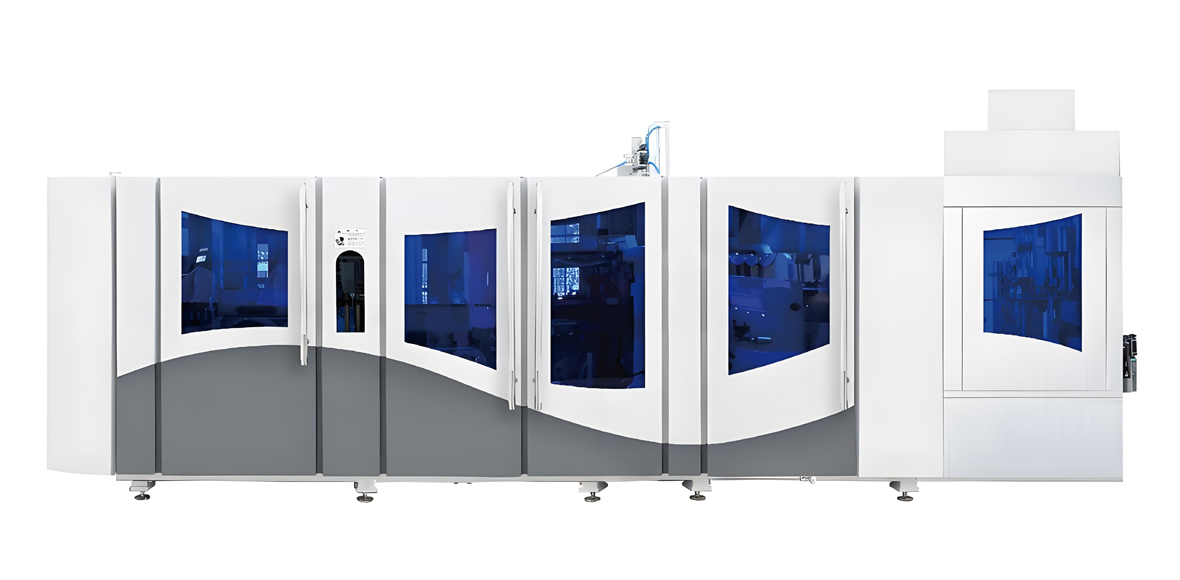
YuDa FGX high-speed linear blow machines are designed for large-volume production environments. These machines are more suitable for major plant-based beverage groups, large food factories, and very large packaging plants that require extremely high output and continuous operation. For plant-based beverage factories with daily output of hundreds of thousands of bottles, FGX series equipment can be considered as part of a long-term large-capacity expansion plan.
However, for most medium to large plant-based beverage producers, the FGX series may exceed actual production needs and budget. Therefore, it is usually evaluated only when the factory has already achieved stable large-volume orders and requires a fully automated high-speed production system.
4.4 Blowing-Filling-Capping CombiBlock: Integrated Vegan Drink Solutions
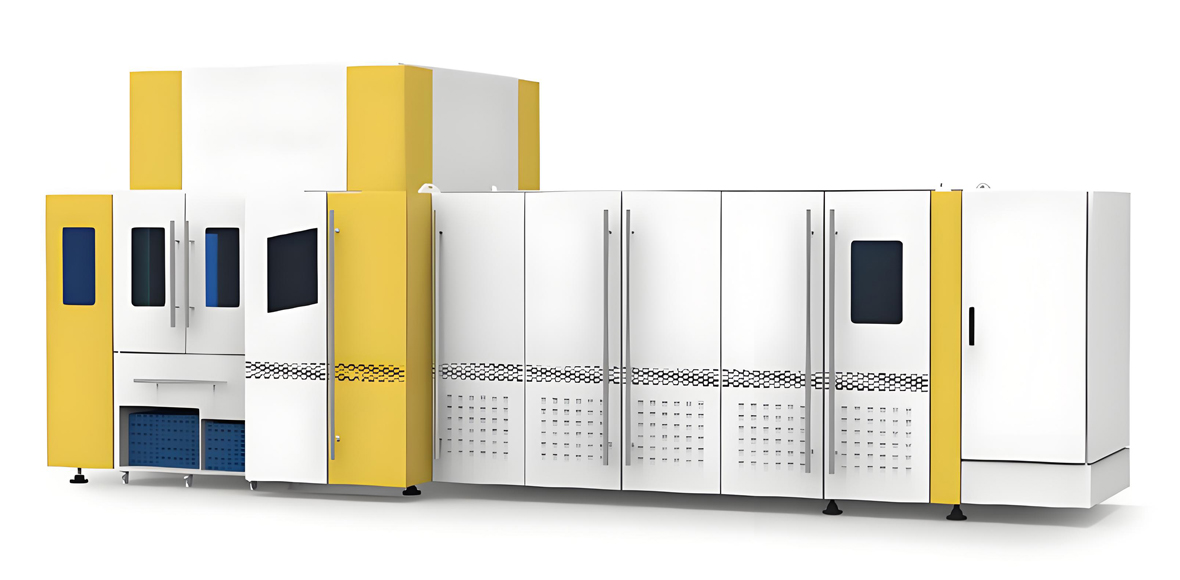
YuDa blowing-filling-capping combiblock systems integrate bottle blowing, filling, and capping into a more compact and automated production unit. This type of solution is suitable for modern plant-based beverage factories that want to reduce manual handling, lower contamination risk, and improve line efficiency. For vegan brands with high-end positioning or strict food safety requirements, combiblock technology can enhance overall production automation and quality control.
Nevertheless, combiblock systems require higher investment and more careful production planning. They are most suitable for mature factories with stable product formulas, standardized bottle designs, and continuous large-volume orders.
Global Plant-Based Beverage Factory Buyer Pain Points and YuDa Solutions
5.1 Europe and North America Vegan Plant-Based Milk Expansion
Europe and North America are mature plant-based beverage markets. Vegan and flexitarian consumers demand clean-label, sustainable, and high-quality products. Factories supplying these markets must meet strict food safety regulations, retail quality standards, and sustainability requirements.
YuDa standard automatic blow machines, when installed and operated according to good manufacturing practices, can help plant-based beverage factories produce PET bottles with consistent quality and low odor. The equipment’s automated operation helps reduce manual handling, while its stable heating and blowing system helps maintain consistent bottle quality.
5.2 Southeast Asia Plant Protein Drink Market Growth
Southeast Asia is one of the fastest-growing plant protein drink markets in the world. Countries such as Indonesia, Thailand, Vietnam, and Malaysia have growing demand for soy milk, oat milk, and local plant-based beverages. Many local plant-based beverage factories are upgrading from traditional semi-automatic equipment to more automated blow molding systems.
Common pain points include limited workshop space, high electricity cost, inconsistent bottle clarity, and difficulty scaling up production. YuDa standard automatic blow machines can help these factories increase output, improve bottle clarity, and reduce labor dependence. For many medium to large plant-based beverage producers, this upgrade directly improves competitiveness in both local and regional markets.
5.3 East Asia Café and Retail Oat Milk Demand
Japan, South Korea, and other East Asian markets have strong café cultures and growing demand for oat milk and soy milk. Consumers in these regions are highly sensitive to product quality, packaging appearance, and brand reputation. Therefore, plant-based beverage factories need blow molding equipment that can deliver high-clarity bottles with consistent dimensions.
YuDa standard automatic blow machines can support this requirement through precise heating and stable stretching. The equipment helps produce bottles with fewer visible defects, which is important for plant-based beverage brands competing in highly saturated retail and café markets.
5.4 Contract Manufacturers Need Flexible Multi-Product Lines
Contract plant-based beverage manufacturers often need to produce bottles for multiple brands and multiple product categories. They may switch between oat milk, almond milk, soy milk, and other vegan drinks. This requires blow molding equipment that can handle frequent mold changes and quick parameter adjustments.
YuDa standard automatic blow machines are suitable for contract packaging environments because they support flexible mold configurations and can be adjusted for different bottle sizes and shapes. This allows contract manufacturers to serve multiple customers without investing in separate dedicated lines for each product.
2027–2032 Market Outlook for Plant-Based Milk Blow Molding Equipment
From 2027 to 2032, the global plant-based beverage packaging market will continue to offer stable opportunities for PET blow machine manufacturers. Several trends will shape equipment demand during this period. First, vegan and flexitarian diets will continue to expand, supporting steady demand for 1L plant-based milk bottles. Second, food safety regulations will become stricter, requiring better process control and documentation in bottle production. Third, energy efficiency and low-carbon production will become more important purchasing factors.
At the same time, competition in the plant-based beverage industry will intensify. Factories will need to improve both product quality and production efficiency to remain profitable. This will drive demand for more reliable automatic blow molding equipment that can reduce production costs, lower defect rates, and support food-grade packaging requirements.
YuDa is positioned to benefit from these trends through its diversified product portfolio, which includes semi-automatic, standard automatic, FGX high-speed, and combiblock solutions. This allows the company to serve different customer segments, from small plant-based beverage startups to large food groups.
Procurement Guidance for Global Plant-Based Beverage Investors
For plant-based beverage factory investors planning to produce 1L PET plant-based milk bottles, equipment selection should be based on daily production volume, budget, factory space, product mix, and long-term expansion plans.
If the factory is in the early stage of development and daily output is relatively low, a semi-automatic blow machine may be a suitable starting point. It requires lower initial investment and is easier to operate with limited technical staff.
If the factory already has stable orders and plans to increase 1L plant-based milk bottle production, the YuDa standard automatic blow machine is usually the most recommended option. It provides a good balance between output, quality, automation, and investment control.
If the factory is a large-scale plant-based beverage producer with daily output of hundreds of thousands of bottles and long-term expansion plans, FGX high-speed linear blow machines or combiblock systems may be considered. These solutions are more suitable for mature industrial production environments with stable capital and technical support.
In all cases, investors should evaluate not only the machine price but also energy consumption, labor requirement, mold compatibility, maintenance cost, after-sales support, and the ability of the equipment to produce clear, food-grade 1L PET plant-based milk bottles consistently. For plant-based beverage packaging, quality stability and food safety compliance are often more important than the lowest initial equipment price.