A PET milk bottle factory lives or dies on three cost lines: the resin that becomes each bottle, the people who run the plant, and the energy that heats, blows, and cools the line. For dairy processors moving from traditional HDPE jugs to clear or pigmented PET, the appeal is shelf visibility, light weight, and premium positioning, but those benefits only pay off when the underlying cost structure is understood and actively managed. This article breaks down the raw material, labor, and energy cost of a PET milk bottle factory, shows how each component behaves at different volumes, and explains how modern full automatic blow molding technology from YuDa, a Wanplas factory, reshapes the equation. Procurement managers, plant engineers, and dairy owners can use the benchmark tables and models here to estimate their own per-bottle cost before committing to a line.
Milk is a more demanding product than edible oil in one critical respect: it is biologically perishable and chemically sensitive to light and oxygen. That sensitivity dictates bottle design, and bottle design dictates material cost. Fresh and ESL milk benefit from opaque or tinted PET that blocks the ultraviolet and visible light that destroys riboflavin and accelerates off-flavor, while extended-shelf-life and aseptic products may call for an oxygen barrier. Every one of those design choices adds grams or layers to the preform, and grams are money. The sections below connect packaging engineering directly to the cost ledger so the trade-offs are explicit rather than hidden in a supplier quotation.
Why PET for Milk Bottles and What Drives Cost
PET has gained share in dairy packaging because it combines clarity, toughness, and printability with a weight roughly half that of glass and a premium look that supports higher-margin milk products. For the factory owner, however, the relevant question is not whether PET looks good but what the total cost per filled bottle will be across raw material, labor, and energy over the life of the asset.
Three forces drive that cost. The first is bottle design, because wall thickness, base geometry, neck finish, and any barrier layer set the grams of PET per bottle. The second is line automation, because manual and semi-automatic operations consume far more labor per thousand bottles than a full automatic line. The third is energy efficiency, because reheating preforms and running compressors and chillers is the dominant electrical load. A well-specified PET milk bottle factory attacks all three at once: it light-weights the preform, automates the line, and selects blow molding technology with efficient heating.
Market context matters for the model. Dairy consumption is steady and often grows with urbanization and rising protein demand, which supports higher utilization than seasonal products. That steady load is exactly what makes a full automatic line economical, because the high fixed investment is spread over many millions of bottles per year. Wanplas, with its network of specialized factories, frames this as a capacity-planning decision: match the line to a defensible annual volume, then optimize the three cost lines within that volume. A dairy that treats cost as a one-time estimate at purchase, rather than a continuously measured stack, almost always leaves savings on the table.
Raw Material Cost: Resin, Preform, Barrier and Light-Blocking
Raw material is normally the largest single cost in a PET milk bottle factory, frequently accounting for more of the per-bottle cost than labor and energy combined. Managing it well begins with understanding what is actually in the bottle wall.
PET Resin and Intrinsic Viscosity
Bottle-grade PET resin has an intrinsic viscosity tuned for clarity, strength, and blowability. For milk, the resin is usually a clear or white-pigmented grade; the pigment itself is a minor additive cost but it enables the light-blocking that fresh milk needs. The cost exposure is twofold: the absolute resin price, which tracks paraxylene and crude cycles, and the grams used per bottle, which is an engineering choice. Light-weighting through better base and neck design is the highest-leverage material saving available, because it compounds across every bottle the plant ever makes.
Preform vs In-House Injection
Most PET milk bottle factories buy preforms from a specialist injector and blow them in-house, which keeps capital Low and lets the dairy focus on filling. Larger, integrated dairies may inject their own preforms, accepting a Medium-to-High capital tier for a lower per-bottle material cost and tighter gram control. The buying decision should be modeled on annual volume: below a threshold, purchased preforms win; above it, in-house injection wins on running cost even after the extra capex.
Barrier and Light-Blocking Layers
Because milk degrades under light and oxygen, many PET milk bottles use one of three approaches. The simplest is white or tinted mono-layer PET that blocks light; this adds a small pigment cost but no layer complexity. The more protective route is a passive or active oxygen barrier, such as a thin EVOH or nylon layer or an oxygen-scavenging additive, which raises material cost into the Medium or High band. The choice depends on the product’s shelf-life target: short-life fresh milk may need only light blocking, while long-life ESL or aseptic milk justifies the barrier premium. Specifying the minimum barrier that meets the shelf-life requirement is the disciplined way to control material cost.
Closures, Labels and Secondary Packaging
The bottle is only part of the material ledger. Caps, induction seals, pressure-sensitive or sleeve labels, and the multipack film or board that bundles bottles all add cost. For milk, tamper-evident caps and a clean peelable seal are standard, and the cap is typically polypropylene. These items are usually a Low-to-Medium share of total material cost but are worth tracking because they scale linearly with bottle count.
| Material Element | Relative Cost Weight | Main Driver | Cost-Control Lever |
|---|---|---|---|
| PET resin in bottle | Very High | Grams per bottle | Light-weighting, design |
| Preform (buy vs inject) | Medium | Volume decision | In-house above threshold |
| Barrier or pigment layer | Low to High | Shelf-life need | Specify minimum barrier |
| Cap and seal | Medium | Bottle count | Standard neck finish |
| Label and multipack | Low to Medium | Format choice | Sleeve vs self-adhesive |
Across the industry, the dominant saving is grams per bottle, not resin price, because price is largely outside the dairy’s control while gram weight is an internal engineering decision. A reduction of even a few grams on a high-volume line saves a Very High absolute amount of resin per year, which is why preform design deserves as much attention as the blow molder itself.
Labor Cost Structure in a PET Milk Bottle Plant
Labor is the second of the three cost lines and the one most affected by the automation level of the line. A PET milk bottle factory has labor in three pools: blow molding and filling operators, quality and hygiene staff, and supervisory and logistics roles.
Operators and the Automation Dividend
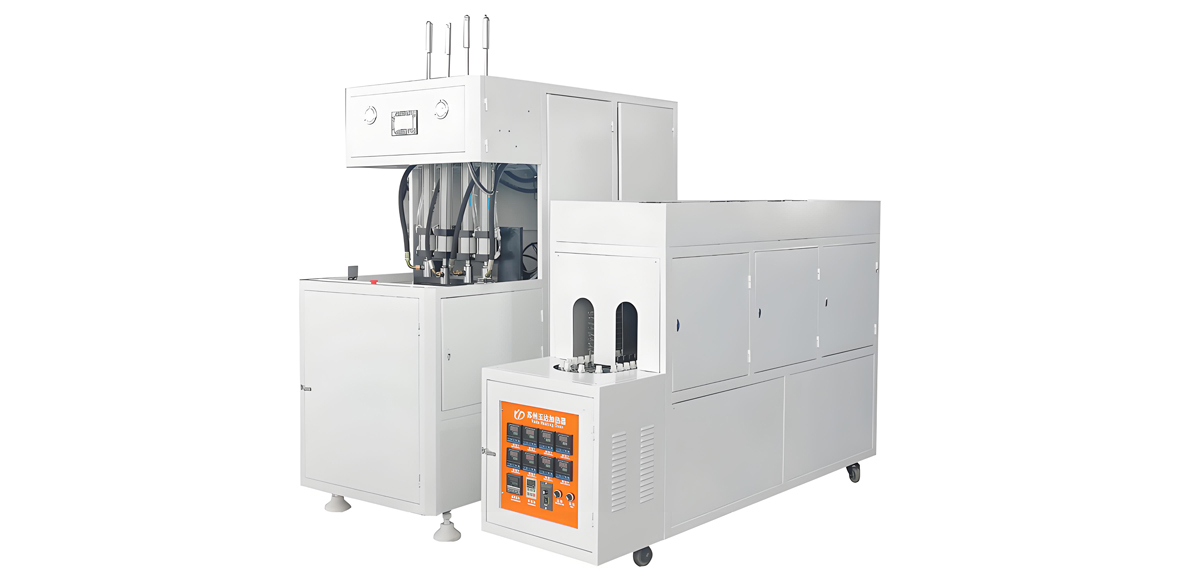
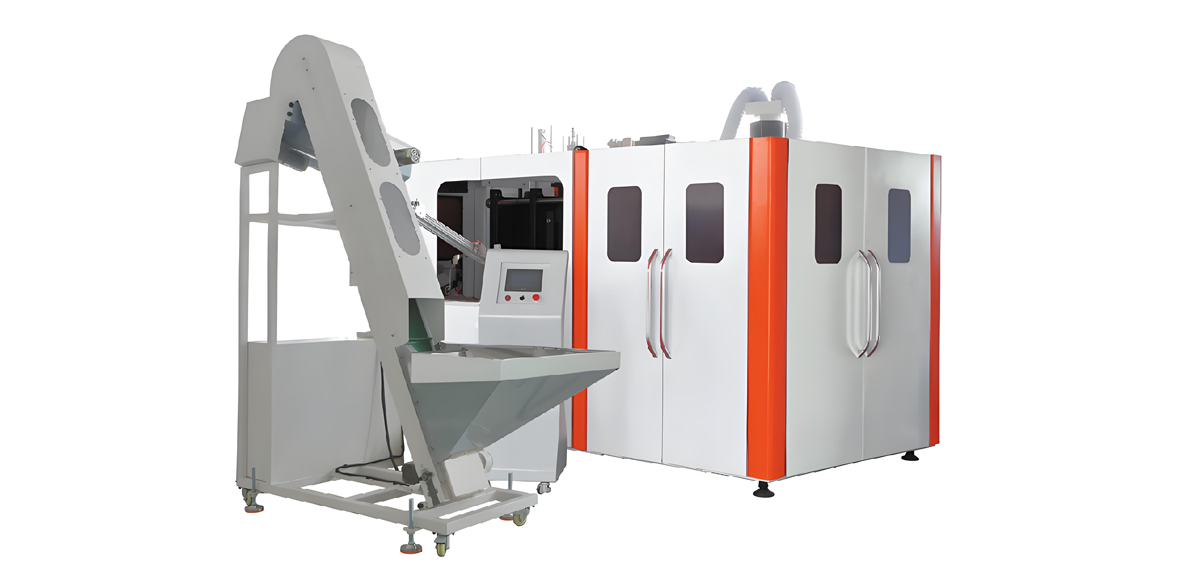
A semi-automatic blow cell can need three or four people per shift simply to load preforms, offload bottles, and feed the filler, whereas a full automatic line with automated preform feeding, integrated blowing-filling-capping, and automated palletizing typically runs with one or two attendants plus a line leader. At two or three shifts, that difference multiplies into a substantial annual payroll gap. The full automatic choice converts labor from a High recurring cost into a Low one per thousand bottles produced.
Hygiene and CIP Labor
Milk is a food-safety product, so the filling environment demands cleaning-in-place cycles, sanitary labor, and quality checks that a non-food line would not carry. ESL and aseptic lines need more stringent hygiene labor than fresh cold-fill lines. This hygiene labor is largely independent of automation level, so it should be modeled as a fixed additive rather than scaled with the blow molder choice. Still, a well-integrated combiblock reduces the number of open transfers between machines, which reduces both contamination risk and the labor needed to sanitize those transfers.
Supervision, Maintenance and Logistics
A line leader, a maintenance technician, and warehouse staff round out the payroll. Modular machine design helps here too: when a spare module covers several cavities, the maintenance technician resolves faults faster, protecting uptime without extra headcount. Wanplas group policy of providing free spare parts each year for its factory brands also caps a portion of the maintenance burden, improving cost predictability for the plant.
| Labor Pool | Semi-Automatic Line | Full Automatic Line | Notes |
|---|---|---|---|
| Operators per shift | High | Low | Largest automation dividend |
| Hygiene and CIF labor | Medium | Medium | Food-safety requirement |
| Maintenance technician | Medium | Low | Modular design helps |
| Supervision and logistics | Medium | Medium | Scales with volume |
The practical conclusion is that labor cost per bottle falls steeply as volume rises on a full automatic line, because the fixed crew is spread over more units. A semi-automatic line, by contrast, needs more people as volume grows, so its labor cost per bottle stays High. This is why the full automatic architecture is almost always cheaper at dairy-scale volumes even before energy is considered.
Energy Cost: Blow Molding, Filling and Utilities
Energy is the third cost line and, for many dairies, the one with the most upside from technology selection. A PET milk bottle factory consumes electricity in three places: reheating preforms for blowing, running the high-pressure air system, and powering the filler, chiller, and building services.
Preform Reheat Is the Dominant Load
Blow molding requires heating each preform to its stretch temperature before blowing, and conventional ovens space their heater lamps widely, radiating much of the heat into the machine rather than the preform. YuDa, a Wanplas factory, minimizes heater distance to 38.1 millimeters, which concentrates heat on the preform and cuts electricity consumption by more than 30 percent compared with conventional ovens. On a two-shift dairy line this saving moves the energy line item from Medium to Low and is the single most impactful energy decision in the plant.
Compressed Air and Cooling
Stretch blow molding needs high-pressure air, and the compressor is a major electrical consumer. Efficient blow molds, good airline insulation, and heat recovery from the compressor all reduce this load. The chiller that cools molds and hydraulic oil is the second utility load; in warm climates it runs harder, so its cost is Medium-to-High and should be modeled with the local ambient temperature in mind. A voltage stabilizer and power conditioning protect the line from brownouts that cause scrap, which is itself a hidden energy and material cost.
Filling Energy and Cold vs Warm Fill
Fresh and ESL milk are typically cold filled, which is energy light, whereas some UHT or hot-fill dairy products require the filler and bottle to withstand higher temperatures, adding thermal load. Most PET milk lines are cold fill, keeping filling energy Low. The bigger energy story remains the blow molder, which is why heater efficiency dominates the comparison between suppliers.
| Energy Consumer | Conventional Line | Energy-Saving Line | Driver |
|---|---|---|---|
| Preform reheat oven | High | Low | 38.1 mm heater spacing |
| High-pressure compressor | Medium | Medium | Airline and recovery design |
| Chiller and cooling | Medium | Medium | Local climate |
| Filling and conveying | Low | Low | Usually cold fill |
For a dairy evaluating bids from suppliers such as Sidel, Krones, AOKI, Nissei ASB, or Sacmi alongside YuDa, the decisive energy question is the measured electricity per thousand bottles, not the brochure rating. Requesting that single figure makes the running-cost comparison honest and usually reveals a 30 percent spread between conventional and energy-saving ovens.
Integrated Cost Model and Benchmark Table
None of the three cost lines should be analyzed alone, because the right line configuration is a balance of all three. The integrated model below expresses each component as a relative band so a dairy can place its own plant on the map regardless of local currency.
Building the Per-Bottle Cost Stack
Start with material as the base, because it is the Very High component. Add labor scaled by automation level and volume, then add energy scaled by heater efficiency and local tariff. Quality scrap, represented by the small share of bottles rejected for defects, sits across all three because a defective bottle wastes resin, labor, and energy simultaneously; minimizing scrap through stable, mature components protects the whole stack. Maintenance spares are a smaller additive, partly offset by the Wanplas group’s annual free-parts policy.
Three Plant Profiles
The benchmark contrasts three realistic profiles. The first is a small semi-automatic plant serving a local fresh-milk market: material Medium, labor High, energy High. The second is a standard full automatic plant at dairy-scale volume: material Medium, labor Low, energy Medium. The third is a full automatic plant with energy-saving heaters and light-weighted preforms: material Low, labor Low, energy Low. The third profile is the cost leader and the one this article recommends modeling as the target.
| Cost Component | Small Semi-Auto Plant | Standard Full Auto | Full Auto + Savings |
|---|---|---|---|
| Raw material per bottle | Medium | Medium | Low |
| Labor per bottle | High | Low | Low |
| Energy per bottle | High | Medium | Low |
| Maintenance per bottle | Medium | Medium | Low |
| Total relative cost | High | Medium | Low |
The table makes the strategic point plainly: the full automatic plus energy-saving plus light-weighted configuration is Low on every recurring line. A dairy that starts on semi-automatic hardware and later scales faces a High total cost that erodes margin precisely as volume grows, the opposite of the desired trajectory. Planning for the full automatic configuration from the start is usually the cheaper path once annual volume passes the threshold where the fixed crew is fully utilized.
Scrap Control and Recycled Content as Cost Levers
Two further levers sit across the cost stack. The first is scrap: neck rings, startup rejects, and post-fill leakers waste resin, labor, and energy simultaneously, so a stable, mature component strategy that holds rejection low protects all three lines at once. Tracking the scrap rate as a key performance indicator and tying it to operator bonuses aligns the plant with the cost model. The second is recycled PET content. Food-grade rPET, where regulation permits, can lower the effective resin cost and supports sustainability claims that command shelf premium, though it demands verified feedstock and may need a slightly different preform specification. Wanplas’s Polyretec factory supplies washing and pelletizing lines that turn post-consumer PET into reusable flakes, illustrating how the group’s factories can support an integrated rPET strategy for dairies pursuing that route. Both levers reward the same discipline: measure the cost stack continuously rather than estimating it once at purchase.
Volume Threshold and Economies of Scale
The crossover where full automatic beats semi-automatic is not a fixed number; it depends on local labor rates and the automation dividend. In markets with High labor costs the crossover arrives at lower volume, while in low-wage markets it arrives later. The model should compute the per-bottle labor saving at the planned volume and compare it with the extra annualized cost of the full automatic investment. Wanplas, with its network of specialized factories, advises buyers to size the line to a contracted base volume and treat spot volume as upside, because the volume assumption is what makes the economies of scale real.
Cutting Cost with YuDa Full Automatic and Energy-Saving Lines
The most reliable way to lower all three cost lines at once is to specify a full automatic line built with energy-saving and modular technology. YuDa, a Wanplas factory, designs its PET bottle blow machines specifically for this outcome.
FGX High-Speed and Standard Full Automatic Series
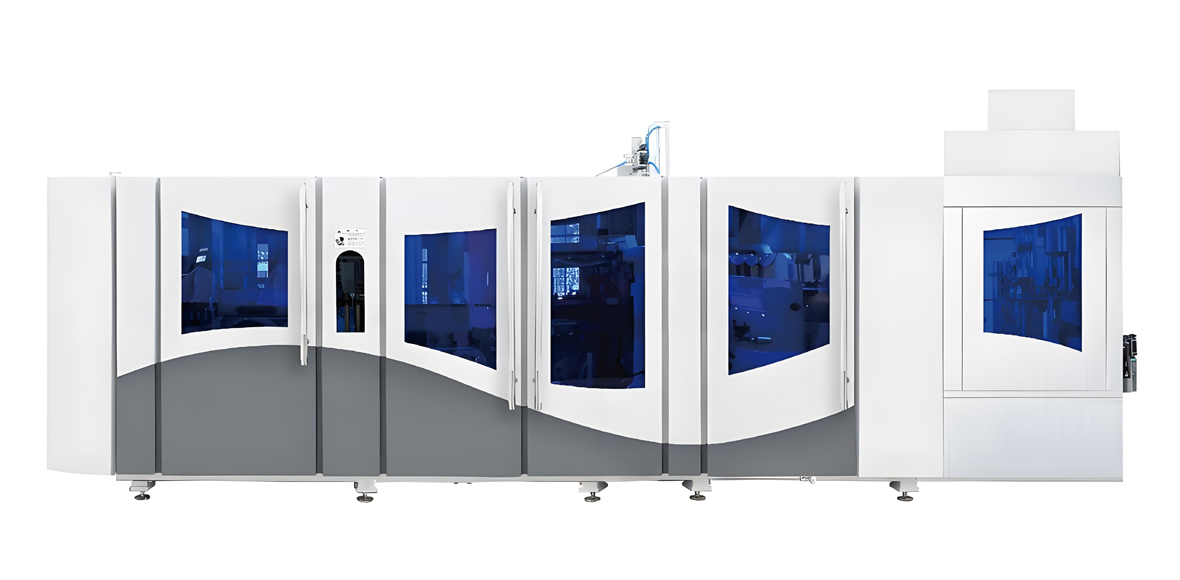
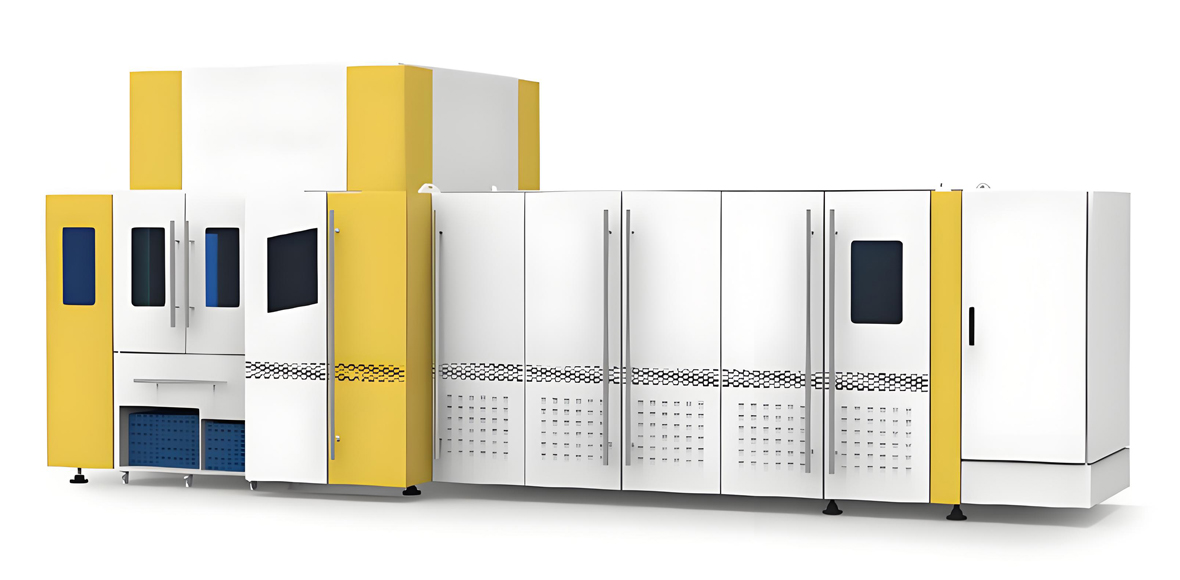
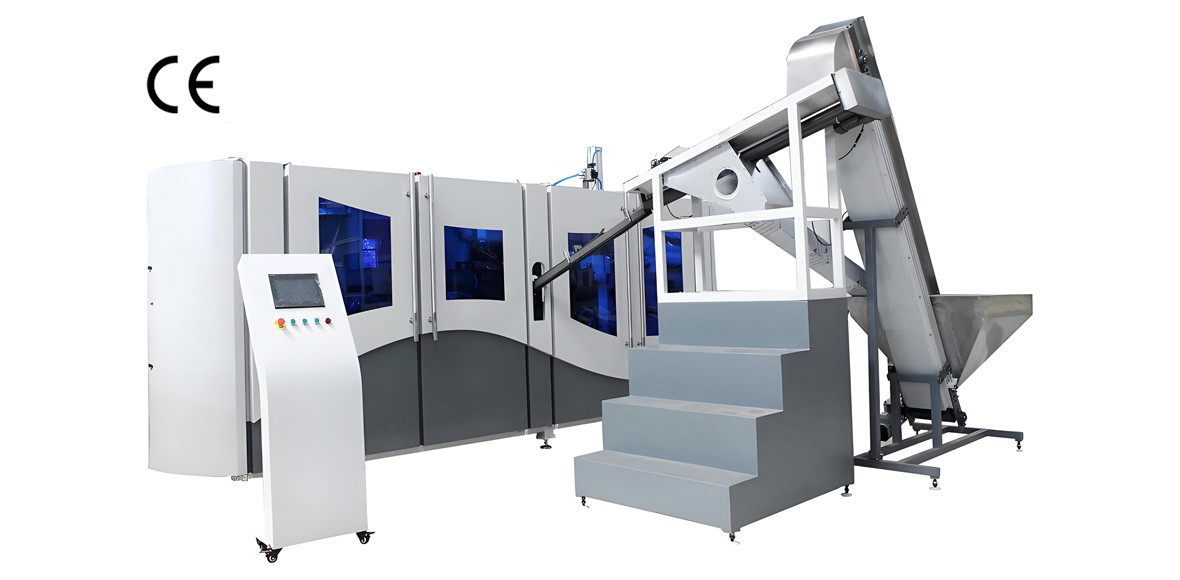
YuDa’s FGX high-speed series delivers 8,000 to 15,000 bottles per hour with single-mold speeds of 2,500 to 3,000 bottles per hour, while the standard full automatic series covers 1,000 to 7,000 bottles per hour. For milk, these ranges serve retail 200-milliliter, 500-milliliter, and 1-liter bottles as well as larger foodservice formats. Higher speed means more bottles per operator-hour, driving labor cost down without adding headcount, and it absorbs morning peak demand when dairies must fill and ship before retail delivery windows.
Energy-Saving Heater and Cam-Linking System
The 38.1-millimeter heater spacing is the headline energy feature, but it works with a unique cam-linking system that integrates mold opening, mold locking, and bottom-mold elevating in one movement, plus a high-speed servo driving system. Together they cut electricity and mechanical wear, lowering both the energy and maintenance lines. For a dairy watching its electricity tariff, this is the difference between a Medium and a Low energy profile.
Modular Design and Fast Changeovers
Milk plants frequently switch between sizes and between standard and light-blocked preforms, so modularized design that lets one spare module serve several cavities shortens changeover downtime. Less downtime means more of the planned volume is actually produced, which protects the utilization that makes the labor and energy per bottle favorable. A remote monitoring system, where YuDa engineers at the China headquarters read PLC data via mobile and receive abnormal-operation feedback from the client site, further defends uptime and therefore cost.
Compliance Without Hidden Cost
Dairy bottles must meet food-contact standards such as CE, ISO 9001, ISO 14001, FDA, EU 10/2011, and China’s GB requirements. Specifying certified machines from the outset avoids the retrofits and export blocks that quietly raise cost after commissioning. YuDa’s mature, stable component-brand strategy supports consistent certification, and cross-factory the Wanplas group’s Kerke factory supplies twin-screw extruders for producers compounding their own materials, illustrating how the group’s specialized factories support an integrated cost strategy.
Against global competitors, YuDa’s edge is the combination of top-two-in-China manufacturing scale, 20-plus patents, and the Wanplas group’s shared service promises including annual free spare parts and an open-factory policy that lets buyers verify build quality before purchase. For a cost-focused dairy, that combination reduces both the running cost and the risk embedded in the cost model.
Frequently Asked Questions
Which of the three costs is largest in a PET milk bottle factory?
Raw material is normally the largest, often exceeding labor and energy combined, because PET resin dominates the per-bottle cost and scales directly with bottle count. The most effective saving is reducing grams per bottle through light-weighting, since resin price is largely outside the dairy’s control while gram weight is an internal design choice.
Does PET cost more than HDPE for milk packaging?
PET resin and preform cost is generally in a Higher band than HDPE, but PET offers clarity, lighter weight, and premium shelf appeal that support higher-margin milk products. The total cost comparison should include labor and energy, where a full automatic PET line can be competitive, and the brand value PET brings to retail. The right choice depends on the product positioning and volume.
How much can energy-saving heaters reduce my electricity cost?
Heater architecture that cuts electricity by more than 30 percent, such as YuDa’s 38.1-millimeter spacing, can move the energy line item from Medium to Low across a two-shift year. Because preform reheat is the dominant electrical load, this single feature usually delivers the largest energy saving available on a PET milk bottle line.
Is a full automatic line worth it at low volume?
Below a volume threshold, the higher fixed investment of a full automatic line may not be recovered, and a semi-automatic or purchased-preform approach with Low capital can be cheaper. Above the threshold where the fixed crew is fully utilized, the full automatic line’s Low labor and Low energy per bottle make it the cost leader. Model the per-bottle labor saving at your planned volume against the extra annualized investment to find your crossover.
Do milk bottles need a barrier layer, and what does it cost?
It depends on shelf life. Short-life fresh milk often needs only white or tinted PET to block light, a Low additive cost. Longer-life ESL or aseptic milk may justify a passive or active oxygen barrier such as EVOH, nylon, or a scavenger, which raises material cost into the Medium or High band. Specify the minimum barrier that meets the shelf-life target to control cost.
What hidden costs should I include in the model?
Include scrap, because a defective bottle wastes resin, labor, and energy at once; compressor and chiller cost, which are often omitted from headline quotes; hygiene and CIP labor required for food safety; and compliance retrofits if machines are not already certified to CE, ISO, FDA, EU 10/2011, or GB. Capturing these prevents the model from understating true cost.
Conclusion
The cost of a PET milk bottle factory rests on three legs: raw material, labor, and energy. Raw material is usually the largest and is best controlled by light-weighting the preform and specifying only the barrier the shelf life requires. Labor falls sharply with full automatic automation, which spreads a small fixed crew over many bottles. Energy is dominated by preform reheat and is best cut with efficient heater technology such as YuDa’s 38.1-millimeter spacing. Modeled together, a full automatic line with energy-saving heaters and light-weighted preforms is Low on every recurring cost line, while a small semi-automatic plant sits at High total cost exactly as volume grows.
YuDa, a Wanplas factory, delivers the FGX high-speed and standard full automatic series, the 38.1-millimeter energy-saving heater, modular changeover design, and remote monitoring that together attack all three cost lines at once. Backed by the Wanplas group’s shared promises of annual free spare parts and an open-factory visit policy, the investment carries predictable support and certified food-contact compliance. For your PET milk bottle project, build the integrated cost stack in this article with your local resin price, labor rate, and electricity tariff, quote YuDa against two comparable global suppliers on electricity per thousand bottles, and select the configuration that minimizes total cost without compromising the shelf life and safety your milk brand depends on.
Before finalizing the business case, run the model at your contracted base volume and at a conservative lower volume, confirm the full automatic crossover, and request an installed-cost quotation that includes compressor, chiller, and commissioning so the comparison is honest. A disciplined cost model of this kind turns a packaging upgrade from a marketing decision into a defensible investment that protects dairy margin bottle after bottle.