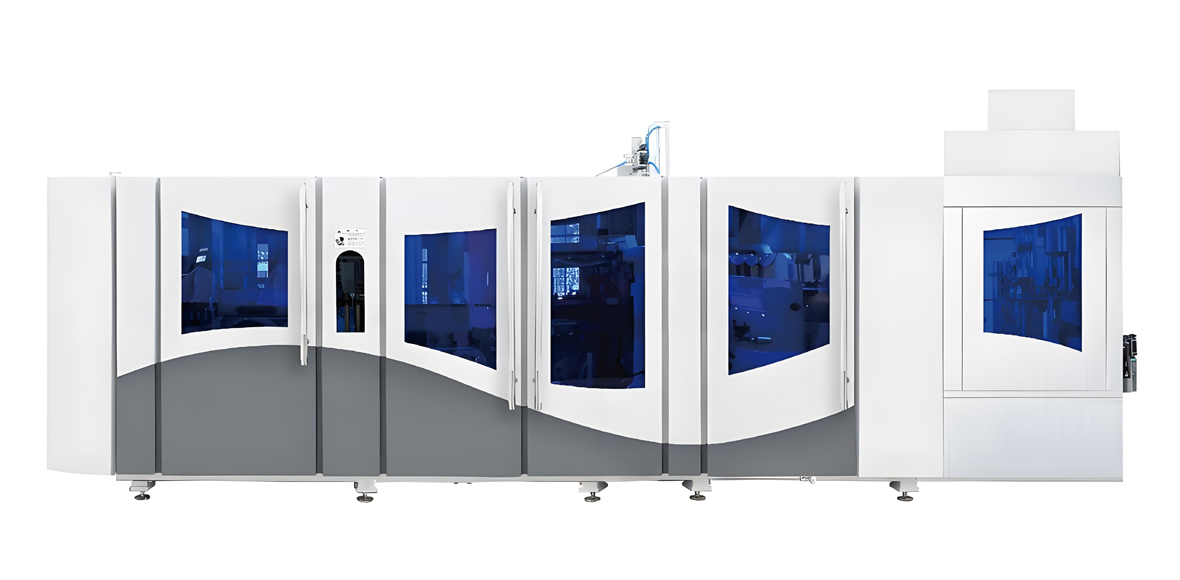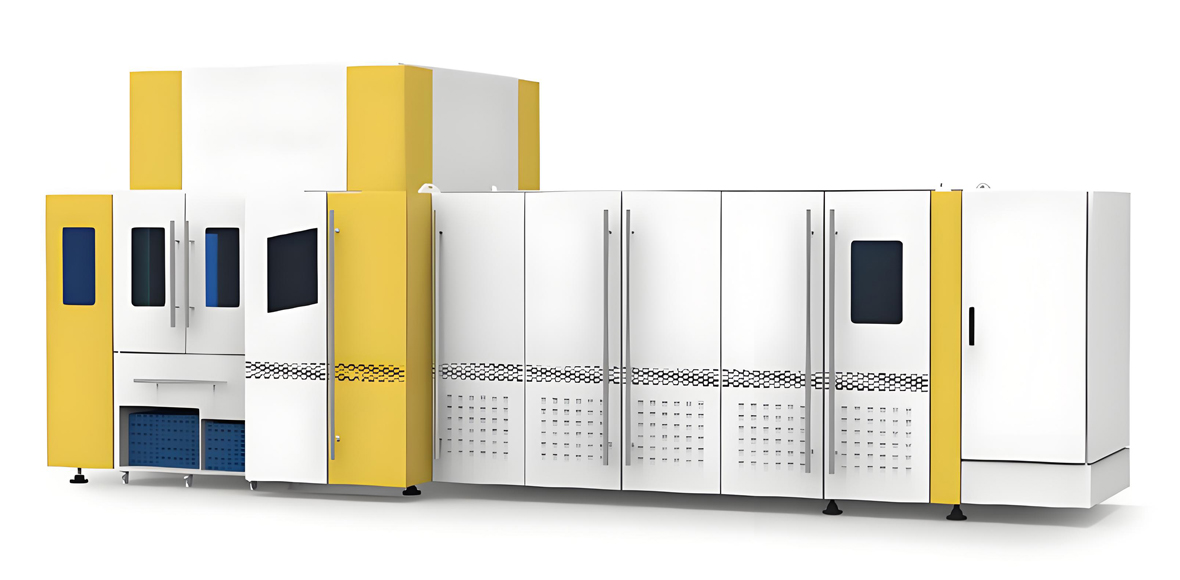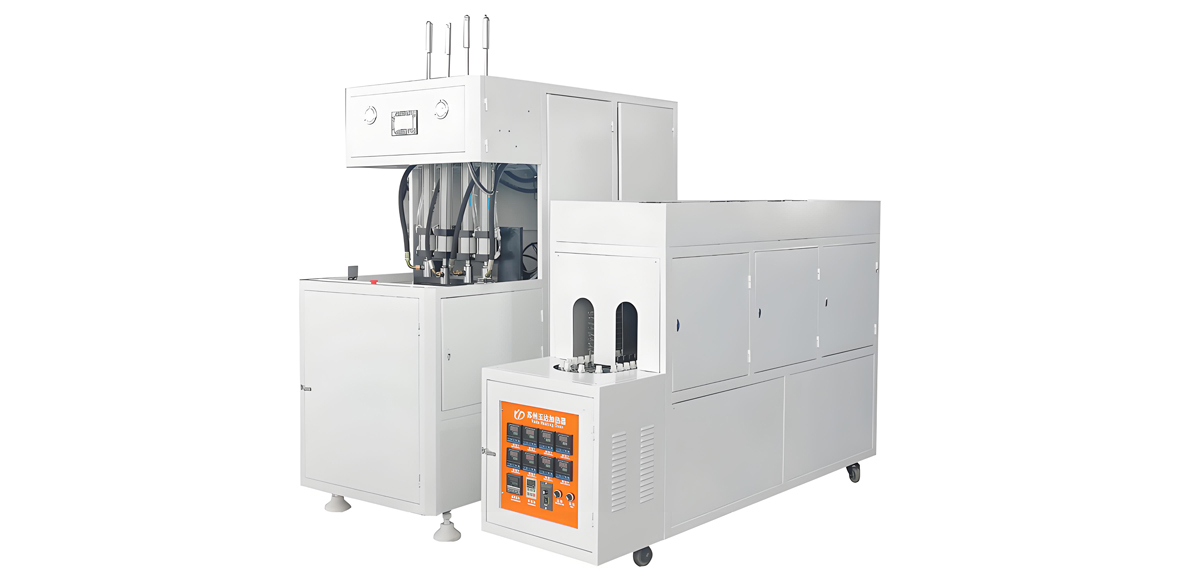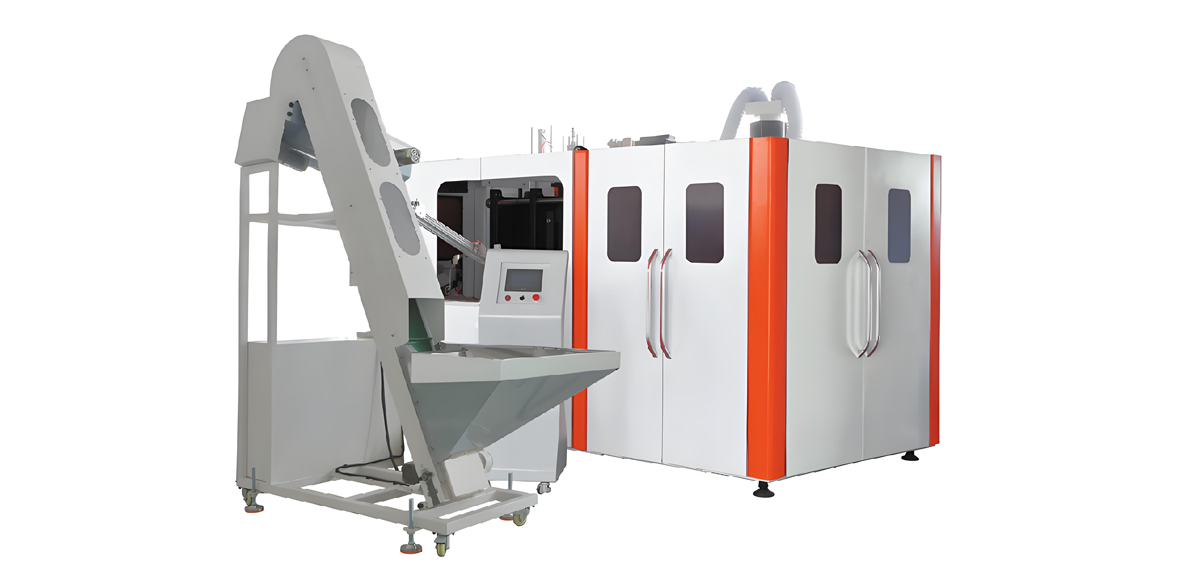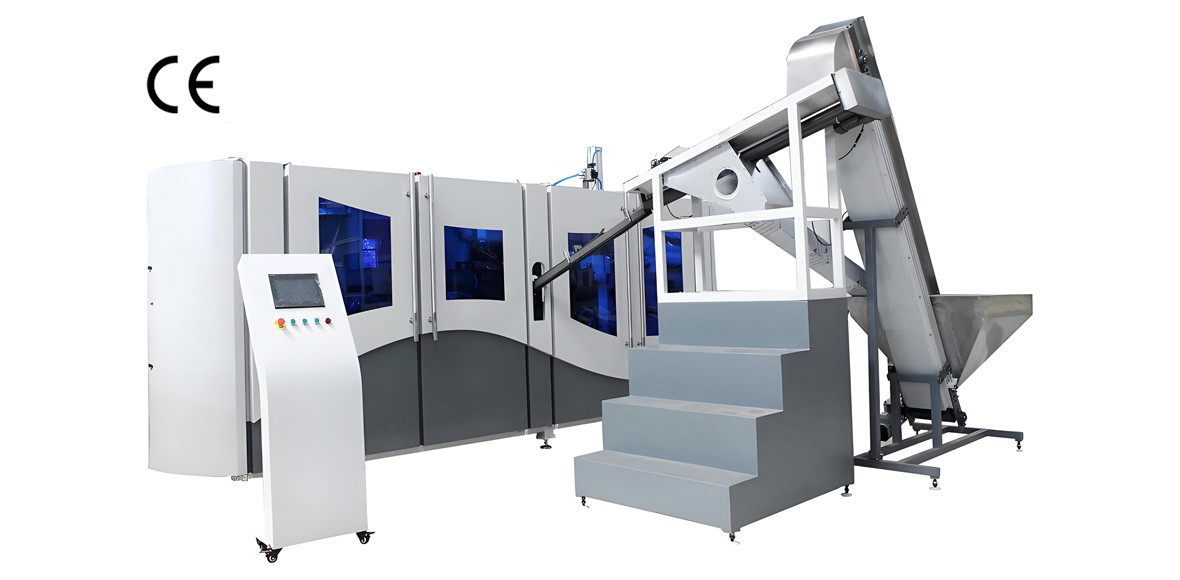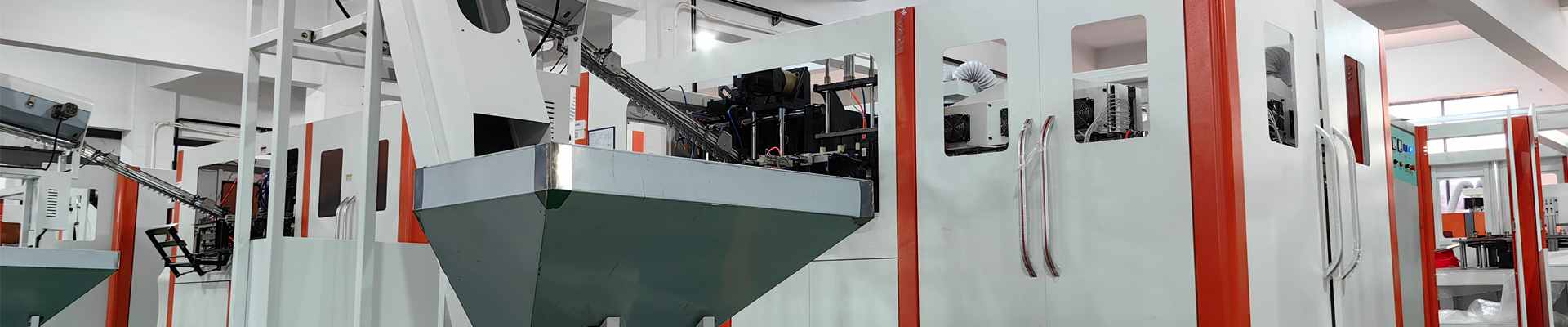
A high-efficiency PET flat blow molding machine is the engineering answer to a persistent packaging challenge: producing both square and round PET bottles at high output while keeping energy, air, and reject rates low. Flat blow molding, in this context, refers to machines built with a compact, flat-line or linear architecture that blows bottles in a stable, repeatable sequence rather than on a complex multi-axis path. YuDa, a Wanplas factory, has focused its PET blow molding development on exactly this problem, and its FGX high-speed series now reaches 8000 to 15000 bottles per hour with an oven design that cuts electricity by over 30 percent. This technical guide explains the physics behind biaxial stretching, breaks the process into measurable stages, quantifies the parameters that govern bottle quality, contrasts square and round tooling, and provides a defect-troubleshooting reference. It is written for process engineers, maintenance technicians, and technical buyers who need more than a brochure. Throughout, we reference real YuDa design features and the compliance standards that matter in 2026.
Fundamentals of PET Flat Blow Molding
PET blow molding converts a heated preform into a bottle by biaxial orientation: the material is stretched in the machine direction by a central stretch rod and in the transverse direction by compressed air. This dual stretch aligns the PET polymer chains, which raises tensile strength, improves clarity, and lowers gas permeability compared with unoriented plastic. The quality of orientation depends almost entirely on temperature profile and stretch timing, not on raw air pressure alone.
In a flat or linear blow molding machine, preforms travel along a straight heating and transfer path into a row of molds. The “flat” descriptor signals a low, accessible machine envelope where the blowing station, clamp, and bottom-mold elevator share a single coordinated motion. YuDa’s unique cam-linking system integrates mold-opening, mold-locking, and bottom-mold-elevating into one movement, which removes redundant actuator travel and lets the high-speed servo driving system repeat the cycle with tight consistency.
Two material facts frame everything else. First, PET has a narrow processing window: too cold and it fractures; too hot and it crystallizes, turning hazy and brittle. Second, orientation is frozen in as the bottle cools against the mold wall, so mold temperature and cooling water stability are as important as oven control. A high-efficiency machine is therefore less about peak pressure and more about controlling the temperature-time-stretch relationship cycle after cycle.
Key terminology for engineers: preform is the injected blank; reheat is the oven stage; blow is the air expansion; stretch ratio is the draw relative to preform dimensions; and orientation is the aligned-chain structure that gives the bottle its properties. Holding these definitions precisely helps when comparing a YuDa FGX line with competitors such as Sidel or Krones, where the same words describe different mechanical implementations.
The flat architecture also aids maintenance access. Because the blowing station sits in a low, open envelope rather than buried inside a tall rotary wheel, technicians can reach valves, sensors, and the stretch rod without special platforms. For a plant running mixed square and round jobs, fast access means faster changeovers and less unplanned downtime, which is a quiet but real contributor to high efficiency.
Servo-driven motion is the other quiet efficiency factor. Pneumatic actuators are simple but lose energy to compressed air and add noise, while servo motors accelerate and stop precisely, recovering or avoiding wasted motion. YuDa’s high-speed servo driving system is central to the FGX cycle speed, and it also reduces the plant’s air demand, which compounds the oven energy saving into a lower total utility bill.
Footprint and operator skill also shape real efficiency. A compact flat machine needs less building volume and less crane capacity for service, lowering the facility cost that amortizes into every bottle. It also lowers the skill bar for operators, because the open layout makes the process visible and teachable, which shortens training and reduces the human error that causes many rejects on more opaque rotary systems.
Step-by-Step Blow Molding Process
The blowing cycle can be decomposed into three controllable stages. Optimizing each stage independently, then tuning the handoffs, is the fastest route to higher efficiency and fewer rejects.
Stage 1: Preform Reheat and Conditioning
Preforms enter an infrared oven where lamp zones raise the body to the orientation temperature while keeping the neck cool and dimensionally stable. YuDa minimizes the heater pitch to 38.1 mm, shortening the oven and concentrating energy so less is lost to the surroundings. A well-conditioned preform shows an even temperature band along the body and a distinctly cooler neck. Measuring preform surface temperature with an infrared gun at this stage predicts most downstream defects.
Stage 2: Stretch and Low-Pressure Pre-Blow
The conditioned preform moves into the mold. The stretch rod extends first, pulling the material axially, then low-pressure air begins the radial expansion and seats the PET against the mold base. This staged inflation prevents webbing at the bottle base and sets the wall thickness distribution. On YuDa’s cam-linked system, bottom-mold elevation happens within the same motion as clamp closing, so the pre-blow starts at the correct axial position without a separate actuator delay.
Stage 3: High-Pressure Final Blow and Cooling
High-pressure air completes the expansion, pressing the PET firmly into every corner of the mold, including the sharp corners of a square bottle. The bottle is held under pressure while cooling water in the mold wall freezes the orientation. The mold opens, the finished bottle ejects, and the cycle repeats. Cycle time here is governed by servo acceleration and mold-open speed; the FGX series achieves its 2500 to 3000 bottles per hour per mold through fast, stable motion rather than brute air volume.
Cooling is not the end of the story; it is part of the quality gate. If the mold wall is fouled or the water flow drops, the bottle releases from the cavity too hot and relaxes, losing orientation and top-load strength. Engineers should trend chiller inlet temperature and flow alongside cycle count, because a slow drift here shows up days later as a slow rise in crushed bottles at the filler.
The blowing station itself rewards clean air. Contaminated high-pressure air leaves oil or particle marks on the bottle interior, a critical failure for beverages and pharmaceuticals. A properly filtered and dried air receiver, sized to the peak demand of all cavities firing together, keeps the bottle interior clean and the valves reliable. This is a utility-design item that belongs in the original layout, not a retrofit after the first complaint.
Between stages, transfer stability decides repeatability. If a preform shifts or rotates between oven and mold, the bottle wall comes out uneven even with perfect oven settings. YuDa’s transfer system holds preform orientation through the cam-linked motion, so the conditioned spot meets the mold consistently. This is why two machines with identical oven specs can yield different bottle quality: the unsung transfer precision between stations is where orientation is won or lost.
Critical Process Parameters and Optimization
The table below lists the parameters engineers tune on a high-efficiency PET flat blow molding machine, with the direction of effect and a practical optimization tip drawn from field commissioning.
| Parameter | Typical Range | Effect on Bottle | Optimization Tip |
|---|---|---|---|
| Reheat zone temperature | Multi-zone, body warmer than neck | Controls orientation and clarity | Profile zones to the preform wall; avoid neck heating |
| Stretch rod speed | Calibrated to preform length | Sets axial wall distribution | Match rod speed to blow start to avoid thin bases |
| Pre-blow pressure | Low band | Seats material, prevents webbing | Raise slightly for square bottles at corners |
| Final blow pressure | High band | Fills corners and detail | Use only what corners need; excess wastes air |
| Mold cooling water | Stable, filtered | Locks orientation, prevents haze | Monitor inlet temperature; fouling raises rejects |
| Cycle time | Determined by servo motion | Directly sets output | Tune cam-link timing before raising air |
A common error is to raise final blow pressure whenever a corner looks short, when the real cause is uneven reheat or slow stretch-rod timing. Pressure is the most expensive lever because it drives compressor size and energy; solve the temperature and timing first. YuDa’s energy-saving design philosophy is built on this principle: minimize what the air system must do by making the mechanical and thermal stages efficient, which is why the oven and cam-link matter more than peak pressure ratings in a true cost-per-bottle comparison.
Record every optimization in a parameter recipe tied to the preform grade and bottle shape. When a square detergent bottle and a round water bottle share the line, the recipe switch should also swap the reheat profile, pre-blow, and corner pressure together. YuDa’s SD-style parameter storage, where settings move between machines, makes this discipline practical rather than a notebook of scribbles that vanishes when a technician leaves.
Square vs Round PET Bottle Tooling
Square and round bottles demand different behaviors from the same machine, and a high-efficiency flat blow molder must handle both without a major retrofit. The comparison below helps engineers specify tooling and set parameters per shape.
| Attribute | Round PET Bottle | Square PET Bottle |
|---|---|---|
| Corner formation | Uniform radial expansion, easy | Sharp corners need higher local pressure |
| Wall thickness uniformity | Naturally even | Risk of thin corners if timing off |
| Pre-blow setting | Standard low band | Slightly higher to seat corners |
| Mold complexity | Simpler, symmetric cavity | More complex cavity, tighter tolerance |
| Shelf and pallet density | Lower packing efficiency | Higher packing efficiency, saves logistics |
| Typical use | Water, soft drinks, oil | Household chemicals, sauces, stacking retail |
Square bottles reward the producer with better pallet density and shelf presence but punish poor process control with corner thinning. On a YuDa flat blow molding machine, the same blowing station serves both shapes; only the mold set and a small parameter shift change. For contract packers running mixed SKUs, this flexibility is a core efficiency gain because one line covers round beverage and square detergent bottles instead of two dedicated machines.
From a tooling-cost view, square molds cost more to machine because the cavity has tight internal corners that are harder to polish and inspect, but that premium is recovered through better pallet density and shelf presence at retail. A producer serving both detergent and beverage customers should therefore budget the higher square-mold cost against the logistics savings, not in isolation, when comparing the two shapes.
Energy Efficiency and the FGX High-Speed Series
Energy is the largest controllable operating cost on a high-volume PET line, and the FGX high-speed series targets it on three fronts. First, the oven uses a minimized 38.1 mm heater pitch, which concentrates infrared energy on the preform and cuts electricity by over 30 percent compared with conventional ovens. Second, the cam-linking system removes redundant actuator travel, so the servo driving system does less wasted motion per cycle. Third, modular construction lets maintenance happen fast, keeping the machine at rated speed instead of drifting into slow, energy-heavy running.
The data below summarizes the efficiency position of YuDa’s FGX series against a generic conventional line, expressed as relative bands because absolute figures depend on bottle size and utility price.
| Metric | Conventional Oven Line | YuDa FGX High-Speed |
|---|---|---|
| Oven electricity use | Baseline | Over 30 percent lower |
| Single-mold output | Standard | 2500 to 3000 BPH |
| Line output range | Varies | 8000 to 15000 BPH |
| Motion architecture | Separate actuators | Cam-linked integrated motion |
| Remote diagnostics | Often absent | PLC data to China HQ via mobile |
Remote monitoring deserves emphasis for 2026 operations. YuDa’s system lets engineers at the China headquarters read PLC data on a mobile device and feed abnormal conditions back to the client site, shortening fault resolution without a flight. For a plant running three shifts, that visibility turns an unexplained stoppage from a day-long mystery into a guided fix within the shift.
Efficiency also depends on running at rated speed consistently. A machine specified for 12000 bottles per hour that averages 9000 because of slow mold opens or air starvation is not efficient, it is oversized and underutilized. The FGX design target is to hold rated output through stable cam-linked motion and quick modular service, so the quoted efficiency is the running efficiency rather than a peak claim.
Common Defects and Troubleshooting
Even a high-efficiency machine produces defects when parameters drift. The table maps the most frequent PET blow molding defects to likely causes and corrective action.
| Defect | Likely Cause | Corrective Action |
|---|---|---|
| Hazy or whitish bottle | Over-temperature crystallization | Lower reheat zone temperature; check neck cooling |
| Thin or open corner (square) | Insufficient corner pressure or timing | Raise pre-blow slightly; verify stretch-rod sync |
| Base webbing or folds | Pre-blow too late or too low | Start pre-blow earlier; increase low-pressure band |
| Uneven wall thickness | Mis-set stretch rod speed | Recalibrate rod speed to preform length |
| Neck deformation | Neck overheated in oven | Shield neck zone; reduce first lamp intensity |
| High reject rate at speed | Servo or cooling instability | Check cam-link timing and chiller inlet temperature |
The disciplined approach is to change one parameter at a time and record the result, because PET defects interact. A thin square corner, for example, can be masked temporarily by raising pressure, but the proper fix is usually earlier pre-blow and correct stretch-rod synchronization, which also saves air. YuDa’s modular design helps here too: a worn valve module that causes pressure instability can be swapped quickly rather than tolerated as chronic rejects.
For square bottles specifically, build a dedicated corner-check into the quality routine. A thin corner may pass a visual glance yet fail top-load or drop test, so measure wall thickness at the corner on a scheduled basis, not only at the body center. When corner thickness trends down, react to pre-blow and stretch timing before raising final pressure, protecting both bottle quality and compressed-air cost.
Adopt a root-cause habit rather than a symptom habit. When rejects rise, log the time, the preform lot, the oven profile, and the corner measurement together, then look for the one variable that moved. Random scattered defects usually point to preform variation; a steady drift points to oven or cooling; a step change at a shift handover points to operator setting. This discipline turns troubleshooting from guesswork into a short, repeatable routine.
Material and Preform Considerations
Bottle performance starts with the preform, not the blow machine. Preform resin grade, intrinsic viscosity, and color masterbatch affect stretch behavior and final properties. A higher intrinsic viscosity PET resists stress cracking, useful for carbonated drinks and square bottles under stacking load, while a lower grade saves cost for still water. Reheat behavior also varies by grade, so oven profiles must be set per resin, not copied from another job.
Recycled content is now a design input rather than an afterthought. rPET preforms, where permitted, reheat differently and can haze more easily, demanding gentler oven profiles and stable cooling. Wanplas’s Polyretec factory produces food-grade PET washing and pelletizing lines, so a producer within the group can source matched rPET preparation and blowing know-how. For square bottles with rPET content, tighten the cooling and corner-pressure settings early, because recycled material narrows the already tight processing window.
Color and additive masterbatches change infrared absorption, shifting the reheat profile. A dark preform heats faster than a clear one, so the same oven setting that works for natural PET will overheat a colored preform. Engineers should build a small profile library per preform color and grade, then recall it on changeover. This discipline is what separates a line that struggles after every SKU switch from one that holds quality across a mixed portfolio.
Intrinsic viscosity choice also interacts with square geometry. A square bottle carries stacking load on its corners, where thin sections are most at risk, so a slightly higher intrinsic viscosity grade can prevent stress cracking at the base corners under pallet weight. The cost premium of the higher grade is usually small against the cost of a crushed pallet and a lost customer, making it a sensible default for square formats.
Preform storage conditions also affect results. PET is mildly hygroscopic, and a preform that has absorbed moisture can produce foggy bottles or weak necks until dried. Keep preforms in a dry store and, for humid climates, consider a pre-dry step before reheating. This small discipline prevents an entire batch of haze that no oven tuning can fix after the fact.
Quality Control, Standards, and Testing
High efficiency means nothing if the bottle fails at the filler or on the shelf. In-process control begins with preform temperature checks and ends with finished-bottle inspection for wall thickness, top-load, and leak. A practical line logs oven zone temperatures, cycle counts, and reject codes so trends surface before a batch is lost. YuDa’s remote monitoring extends this logging to off-site engineers who can spot abnormal PLC patterns.
Compliance frames which tests are mandatory. For food and beverage contact, bottles must meet food-contact requirements such as FDA regulation in the United States and EU 10/2011 in Europe; the production equipment should carry CE marking and be built under an ISO 9001 quality system. For material properties, ASTM test methods provide recognized procedures for top-load, drop, and permeability evaluation, letting a technical buyer compare results across suppliers on a common basis. These standards are not paperwork; they are the acceptance criteria a retailer or filler will audit.
In 2026, traceability is tightening. A high-efficiency PET flat blow molding machine that records per-cavity cycle data and links it to batch identifiers gives the producer a defensible quality record. When a square bottle from a specific run shows a field complaint, that record shows whether the corner pressure, cooling, or preform grade was out of setpoint, turning a recall risk into a contained correction.
For 2026, expect digital traceability to move from advantage to requirement at major retailers. A blow molding machine that exports per-cavity data, oven zone temperatures, and reject codes to a logged system lets the producer answer a customer audit in minutes. YuDa’s remote monitoring already captures PLC data off-site, and pairing that with batch identifiers closes the loop between a bottled unit on a shelf and the exact machine cycle that made it.
Calibration underpins all of it. Infrared ovens drift, pressure sensors zero-shift, and chiller thermometers wander, so a scheduled calibration of the measurement chain keeps the recorded numbers trustworthy. A producer that calibrates quarterly and logs the results can defend every bottle it ships, which is exactly the posture major retailers and fillers now expect from a PET bottle blowing business in 2026.
Frequently Asked Questions
What does “flat blow molding” mean for a PET machine?
It describes a compact, linear machine architecture where preforms move along a straight heating and transfer path into a row of molds, with the blowing station, clamp, and bottom-mold elevator sharing coordinated motion. YuDa’s cam-linking design is a flat-architecture example that integrates those motions for speed and stability.
Can one machine produce both square and round bottles?
Yes. The same blowing station serves both shapes; you change the mold set and adjust pre-blow and corner pressure. Square bottles need slightly higher corner pressure and tighter timing to avoid thin corners, but no major retrofit is required on a YuDa flat blow molding machine.
How does the FGX series reduce energy use?
It combines a minimized 38.1 mm heater pitch that concentrates oven energy, a cam-linking motion system that removes redundant actuator travel, and servo drives that avoid wasted movement. Together these cut oven electricity by over 30 percent versus conventional ovens while holding 8000 to 15000 bottles per hour.
Why are my square bottle corners thinning?
Thin corners usually come from insufficient corner pressure, late pre-blow, or stretch-rod timing that is out of sync with blow start. Raise pre-blow slightly and verify rod synchronization before adding final pressure, which saves compressed air and still fixes the corner.
Which standards apply to food-contact PET bottles?
Expect FDA compliance in the United States and EU 10/2011 in Europe for the bottle, with CE marking and an ISO 9001 system on the equipment. ASTM methods support standardized physical testing such as top-load and drop. Request the actual certificates from the supplier for audits.
How should I set the oven for colored preforms?
Colored and additive preforms absorb infrared differently from clear natural PET, so build a separate reheat profile per color and grade and recall it on changeover. A profile copied from a clear preform will likely overheat colored material and cause haze or neck deformation.
What maintenance keeps a high-speed line efficient?
Monitor chiller inlet temperature, keep the air system filters clean, and use the modular design to swap worn valve or actuator modules quickly. YuDa’s remote monitoring lets engineers review PLC data and warn of drift before it becomes rejects, which protects both output and energy use.
Conclusion
A high-efficiency PET flat blow molding machine earns its label only when engineering choices, oven design, motion system, and process control, translate into lower cost per bottle and fewer rejects across both square and round formats. YuDa, a Wanplas factory, demonstrates this through the FGX high-speed series: a minimized 38.1 mm heater pitch, cam-linked integrated motion, modular maintenance, and remote PLC monitoring combine to cut energy by over 30 percent while delivering 8000 to 15000 bottles per hour. For engineers, the lesson is to tune temperature and timing before pressure, to build per-preform reheat profiles, and to log data for traceability under 2026 compliance expectations including FDA, EU 10/2011, CE, ISO 9001, and ASTM test methods. Whether the target is round beverage bottles or square detergent containers, the same disciplined process framework, supported by a flexible YuDa line within the Wanplas group, delivers repeatable, efficient production.