Profit in the global PET beverage bottle market is won or lost long before a bottle reaches the shelf. It is decided in the blowing room, where gram weight, scrap rate, energy use, machine uptime, and the resin mix are locked into every container that leaves the line. For bottlers serving water, carbonated soft drink, juice, edible oil, and personal care segments, the difference between a thin margin and a healthy one is rarely a single heroic decision. It is the sum of many small, repeatable engineering choices made at the machine level. This guide explains how the PET bottle profit equation actually works, quantifies each cost component with index points and percentages rather than shifting spot numbers, and shows how YuDa PET blow molding lines, a Wanplas factory, turn those levers into measurable margin.
YuDa is a Wanplas factory and one of China’s top manufacturers of PET bottle blow molding machines, with more than 20 years of experience, exports to over 60 countries, and more than 20 patents in high-speed blowing, servo drive, and energy-saving oven design. The Wanplas group covers the full plastic machinery value chain, and YuDa focuses exclusively on PET bottle blowing for beverage, edible oil, and personal care packaging. Whether you run a regional water brand or a multi-segment contract filler, the principles below apply directly to your bottom line, and the machine recommendations later in this article are drawn from YuDa’s real product series rather than generic machinery.
In the sections that follow you will learn how to read your own cost structure, benchmark segment profitability with a base-100 index, use a capacity-utilization curve to find your true unit cost, and pull five concrete engineering levers, resin blending, servo energy saving, speed and OEE, wall thinning, and lightweighting, that move margin without changing your selling price. By the end you will be able to match a YuDa line to your volume and margin target with confidence.
The Profit Equation Behind Every PET Beverage Bottle
Every PET beverage bottle carries an invisible profit equation. On one side sits the selling price, which in competitive beverage categories is largely set by the market and by retail negotiation. On the other side sits the fully loaded conversion cost, which the bottler controls. Because the price side is hard to move, sustainable profit comes from compressing the cost side while protecting quality, safety, and brand appearance. The conversion cost of a PET bottle is best understood as five stacked layers: resin, energy, labor, depreciation, and loss. Resin is by far the heaviest layer, which is why lightweighting and recycled-content blending dominate any serious margin program.
Consider a representative 500 ml still-water bottle. The polymer in the preform accounts for the majority of the cost, the blowing process adds electricity and compressed air, labor adds a per-unit wage burden, the machine and mold amortize as depreciation, and scrap, startup waste, and rejects add loss. A bottler who reduces gram weight by a small amount, improves oven efficiency, and lifts overall equipment effectiveness by a few points can lower the unit cost index by a double-digit amount without touching the resin purchase price. That same gain flows almost entirely to margin because the bottle still sells at the same shelf price.
The discipline that separates profitable bottlers from marginal ones is measurement. You cannot optimize what you do not track. The first step is to build a per-bottle cost model in your plant, expressed in relative terms so it stays valid as raw material indices move. Use a base of 100 for the total conversion cost of your current reference product, then break each layer into its share. When you later change a parameter, such as heater distance or cavitation, you can recalculate the index and see the margin impact immediately. This article gives you the reference tables to build that model, and the YuDa line features to act on it.
A second discipline is treating profit as a rate, not a one-time saving. A single gram of resin removed from a bottle looks tiny. Multiplied across millions of bottles per year, it becomes one of the largest recurring line items on the income statement. The same is true for a one-percentage-point drop in scrap rate, or a five-percent improvement in OEE. Margin is a compound effect, and the machines that make these gains automatic, through stable heating, precise stretch blowing, and remote monitoring, are the machines that pay for themselves many times over the ownership period.
Breaking Down the PET Bottle Production Cost Structure
To manage cost you first have to see it. The table below presents a typical cost-structure distribution for a 500 ml still-water bottle produced on a two-step PET line. The numbers are illustrative reference shares expressed in percent of total conversion cost, and they will vary with bottle size, preform design, local energy tariff, and wage level. What does not vary is the ordering: resin sits at the top, energy and loss sit in the middle, labor and depreciation sit lower. Use this as a template and replace the shares with your own measured values.
Table 1: Typical PET Bottle Conversion Cost Structure (percent of total)
| Cost Layer | Share (percent) | Primary Control Lever | Controllability |
|---|---|---|---|
| Resin (virgin PET preform) | 62 to 70 | Gram weight, rPET blending | High |
| Energy (oven, compressor, chiller) | 8 to 11 | Servo oven, recovery | High |
| Loss (scrap, startup, reject) | 5 to 9 | Stable process, OEE | Medium to High |
| Labor | 6 to 9 | Automation, Changeover | Medium |
| Depreciation (machine, mold) | 7 to 10 | Utilization, lifespan | Low to Medium |
The takeaway from Table 1 is simple but powerful. Because resin is 62 to 70 percent of cost, a one-percent reduction in gram weight cuts total conversion cost by roughly 0.6 to 0.7 percent. A ten-percent gram-weight reduction, which modern preform and bottle design routinely achieves versus legacy molds, lowers conversion cost by about 6 to 7 percent, almost all of it margin. Energy, at 8 to 11 percent, is the second most controllable layer, and that is exactly where YuDa’s oven design delivers its headline saving.
Loss deserves special attention because it hides. A scrap rate that looks acceptable at the shift level, say 4 percent, becomes a very large annual tonnage when multiplied by high output. Worse, scrap often arrives in bursts during mold changeover, startup, and color or material switch, which means it is concentrated in exactly the moments when the line is least stable. A blowing process that reaches temperature quickly, holds it steadily, and recovers fast after a stop is worth more than its energy number alone suggests, because it also flattens the loss curve.
Depreciation is the layer you manage with utilization rather than with the machine purchase. Two identical lines with identical purchase cost show very different per-bottle depreciation if one runs at 90 percent utilization and the other at 55 percent. That is the bridge to the capacity-utilization curve later in this article. For now, note that the three layers you can move most directly, resin, energy, and loss, are precisely the layers that good blowing engineering addresses.
Segment Profitability Index Across Beverage Categories
Not all beverage bottles are equally profitable. A still-water bottle competes almost entirely on price, which compresses margin and pushes bottlers toward the lowest achievable gram weight and the highest line speed. A carbonated soft drink bottle needs thicker walls and a stronger base to hold pressure, which raises gram weight but also supports a higher shelf price. A juice or functional drink bottle may require hot-fill or pressure-sensitive design, barrier considerations, and a premium position, which changes the profit profile again. To compare segments on one scale, we use a profitability index with a base of 100 assigned to the still-water reference.
The index below is a relative profitability measure that combines achievable selling premium, process complexity, gram weight, and loss sensitivity into a single comparable number. It is intended for strategic benchmarking, not as a substitute for your own plant finance. Where the index is higher than 100, the segment carries more margin headroom; where it is lower, margin must be defended through cost discipline. Each segment is also graded on a Low to Premium scale for quick reading.
Table 2: Segment Profitability Index (still water base = 100)
| Beverage Segment | Profit Index (base 100) | Margin Grade | Dominant Cost Driver |
|---|---|---|---|
| Still water (500 ml) | 100 (reference) | Medium | Resin gram weight |
| Carbonated soft drink | 118 | Medium | Wall thickness, base |
| Juice (cold or hot fill) | 138 | Premium | Barrier, design |
| Functional, sports, energy | 150 | Premium | Specialty preform |
| Edible oil (PET) | 128 | Medium to Premium | Barrier, gram weight |
| Personal care (shampoo, detergent) | 144 | Premium | Decoration, shape |
The pattern in Table 2 is the reason many profitable bottlers diversify beyond water. Water anchors volume but squeezes margin; value-added segments such as juice, functional drinks, edible oil, and personal care carry a Premium grade and reward bottlers who can hold quality at higher gram weights and more complex shapes. The strategic implication is clear: a single flexible blowing line that can serve both water and premium segments lets you load low-margin volume during off-peak demand and shift cavitation and preform spec toward premium products when the order book allows.
For a YuDa line this flexibility is built in. The FGX high-speed series and the standard full-automatic series both accept a wide range of preform and bottle specifications through modular mold sets, so the same machine base can produce a 9.5 g water bottle in the morning and a barrier juice bottle in the afternoon. That ability to swing between segments is itself a margin lever, because it raises effective utilization, the next topic.
Capacity Utilization and the Unit-Cost Curve
Fixed cost behaves like a stone in a river: the more water flows over it, the less visible it becomes per unit. For a PET blowing line, the fixed portion of conversion cost, depreciation plus a large share of labor plus standby energy, is nearly constant whether you run the line at half speed or full speed. Spread that fixed cost across more bottles and the unit cost falls. The curve below expresses this relationship as a unit-cost index with a reference of 100 at 90 percent utilization, which is a realistic strong-operating target for a well-run plant.
Read the table as a planning tool. If your line currently runs at 65 percent utilization, your unit-cost index is about 116, meaning every bottle costs roughly 16 percent more than it would at 90 percent. Closing that gap, through better shift planning, faster changeover, or adding a second shift, is often cheaper than buying resin at a discount. Conversely, pushing from 90 to near-full utilization only trims the index from 100 to about 94, because you are by then squeezing the variable layers, not the fixed ones. The biggest prize sits between 50 and 80 percent utilization.
Table 3: Capacity Utilization versus Unit-Cost Index (reference 100 at 90 percent)
| Utilization (percent) | Unit-Cost Index | Index vs Reference | Action Priority |
|---|---|---|---|
| 50 | 132 | +32 | Very High |
| 65 | 116 | +16 | High |
| 80 | 105 | +5 | Medium |
| 90 | 100 | reference | Target |
| 95 | 96 | -4 | Maintain |
| 100 | 94 | -6 | Optimize |
Two corollaries follow. First, the right machine size matters more than the cheapest machine. A line sized for 15,000 BPH that you only load to 50 percent utilization is a depreciation trap; a line sized for 7,000 BPH that you load to 95 percent often beats it on unit cost even at a higher per-bottle resin figure. Second, speed alone is not profit. Speed only helps if the extra output is sold and if scrap stays low at high rate. That is why OEE, the product of availability, performance, and quality, belongs in the same sentence as speed.
YuDa’s high-speed FGX series reaches single-mold speeds of 2,500 to 3,000 BPH and series output of 8,000 to 15,000 BPH, but the more important feature for utilization is stability. The cam-linking system integrates mold opening, mold locking, and bottom-mold elevating into one motion, and the high-speed servo drive keeps cycle time repeatable, which protects both performance and quality scores of OEE. A line that rarely stops is a line that sits high on the utilization curve.
Five Engineering Levers That Expand Your Margin
With the cost structure, segment index, and utilization curve in hand, the practical question is what to change. Five levers move PET bottle margin the most, and all five are within the control of the blowing engineer rather than the resin market. The table summarizes them, and the paragraphs after explain the mechanism and the expected index movement.
Table 4: Five Margin Levers and Their Relative Impact
| Lever | Cost Layer Touched | Typical Save (index points) | Difficulty |
|---|---|---|---|
| rPET blending | Resin | 6 to 14 | Medium |
| Servo energy saving | Energy | 3 to 5 | Low (machine feature) |
| Speed and OEE | Depreciation, loss | 5 to 16 | Medium |
| Wall thinning | Resin | 4 to 8 | Medium |
| Lightweighting (gram weight) | Resin | 8 to 24 | High (design) |
Lever 1, rPET blending. Food-grade recycled PET, when properly washed, crystallized, and dried, can replace a controlled share of virgin preform resin. The cost layer touched is the largest one, resin, so even a moderate blend ratio moves the index by 6 to 14 points. The engineering guardrails are strict but manageable: crystallizing drying must drive moisture low enough to avoid hydrolytic degradation, intrinsic viscosity must stay within the bottle specification, and acetaldehyde and color must remain inside food-contact limits. YuDa lines accept rPET-capable preforms, and the stable oven protects the molecular orientation that recycled content can threaten. Used well, rPET blending is a Medium-grade cost lever that also satisfies brand sustainability targets.
Lever 2, servo energy saving. The blowing oven is the largest energy consumer on the line. YuDa minimizes heater spacing to 38.1 mm and pairs it with a high-speed servo drive, which cuts electricity consumption by more than 30 percent compared with conventional heating ovens. Because energy is 8 to 11 percent of conversion cost, that saving translates to roughly 3 to 5 index points with no change to the bottle at all. It is the lowest-effort lever on the list, delivered entirely by the machine design rather than by operator behavior.
Lever 3, speed and OEE. Raising effective output from 65 to 90 percent utilization, as Table 3 showed, drops the unit-cost index by about 16 points. The mechanism is fixed-cost spreading, and the enablers are availability and quality. Availability improves with reliable components and fast mold changeover; quality improves with a repeatable stretch-blow process that holds the same blow pressure and temperature every cycle. Remote monitoring, which YuDa builds into its lines, turns abnormal trends into early warnings so stops are shorter and rarer.
Lever 4, wall thinning. Within a given gram weight, redistributing material toward the load-bearing zones and thinning non-critical walls reduces resin use while keeping top-load and drop performance. This is a design-and-process lever worth 4 to 8 index points and is best done with the preform and blow mold supplier together, because the preform gate, cooling, and stretch ratio all interact. YuDa’s modular mold design makes the required changeovers convenient and cost-saving to execute.
Lever 5, lightweighting. The headline lever. Moving a 500 ml water bottle from a 12.5 g legacy gram weight to a 9.5 g optimized design lowers the material index by about 24 points, the single largest move available, at a High design difficulty because it touches preform, mold, and filling-line handling. Done with biaxial orientation discipline and base support design, the bottle keeps its function. This is where segment premium matters: water bottlers depend on lightweighting to stay profitable, while premium segments can afford slightly heavier, differentiated bottles.
YuDa FGX High-Speed PET Blow Molding Lines
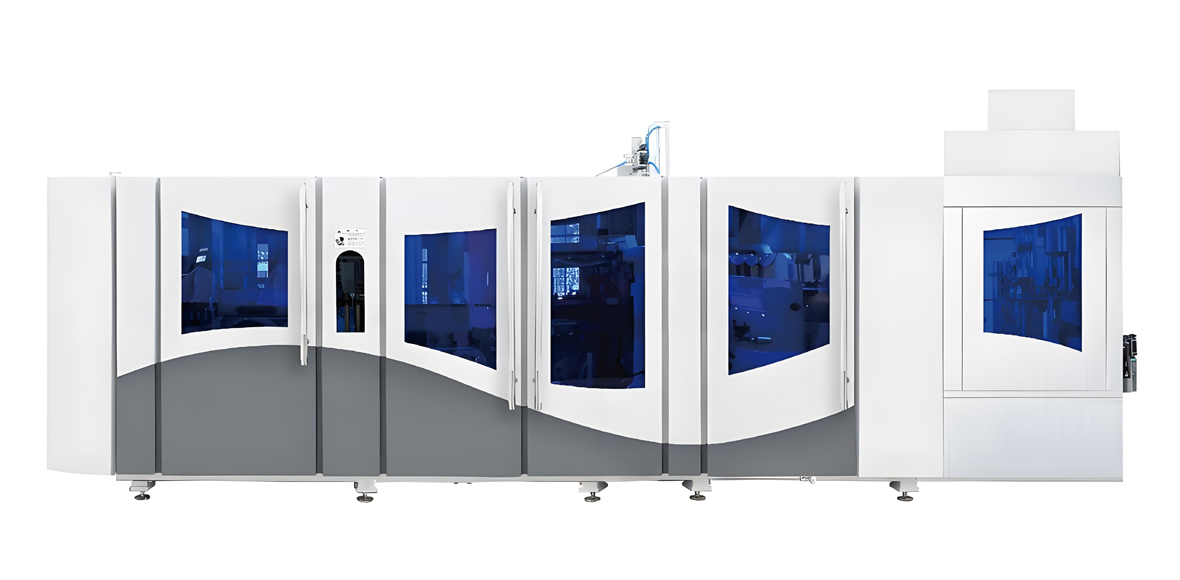
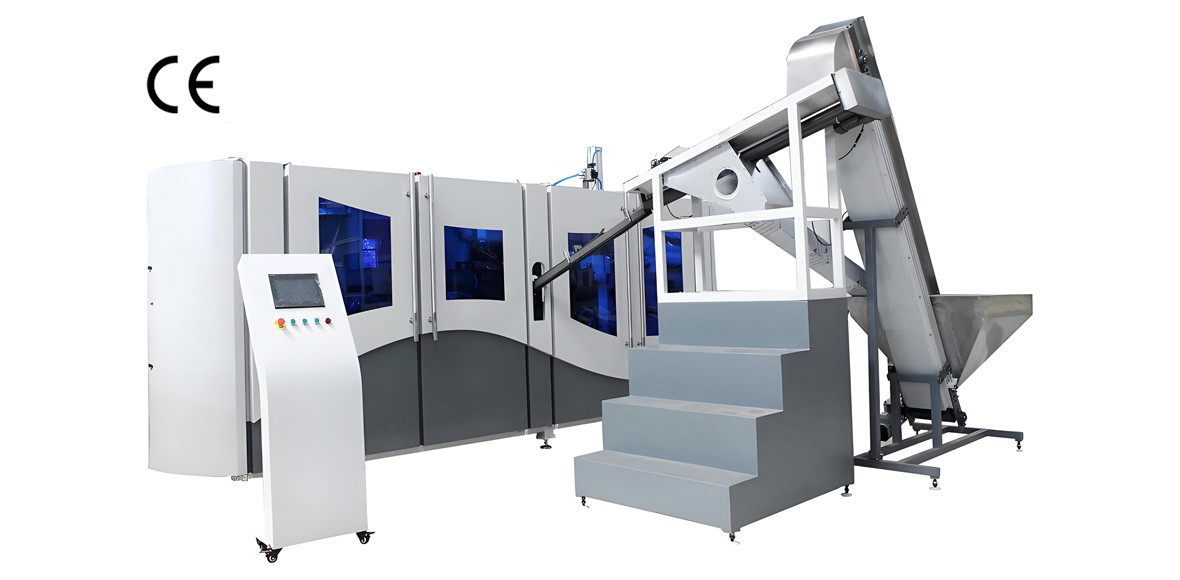
When volume and margin both matter, the YuDa FGX series is the line to specify. It is YuDa’s high-speed PET bottle blow molding series, built for the 8,000 to 15,000 BPH band that serves national water, carbonated, and contract-filling operations. The engineering signature is the cam-linking system, which integrates mold opening, mold locking, and bottom-mold elevating into one synchronized motion, combined with a high-speed servo driving system that holds cycle time steady across long runs. Steady cycle time is what protects OEE, and OEE is what protects the utilization curve from Table 3.
The FGX series is configured in multiple cavity layouts, so a single machine platform scales from mid to high output simply by changing cavitation. Each layout keeps the same oven architecture, the same 38.1 mm heater spacing, and the same remote-monitoring connection, which simplifies spare parts and operator training. For bottlers running several segments, the modular mold sets let the line swing from a lightweight water bottle to a barrier juice bottle without a platform change.
YuDa FGX Series Specification (example high-speed configuration)
| Parameter | FGX-8 Cavity | FGX-10 Cavity | FGX-12 Cavity |
|---|---|---|---|
| Output (BPH) | 8,000 to 10,000 | 10,000 to 12,500 | 12,500 to 15,000 |
| Single-mold speed (BPH) | 2,500 to 3,000 | 2,500 to 3,000 | 2,500 to 3,000 |
| Heater distance (mm) | 38.1 | 38.1 | 38.1 |
| Electricity saving vs conventional oven | 30 percent plus | 30 percent plus | 30 percent plus |
| Drive system | High-speed servo | High-speed servo | High-speed servo |
| Bottle volume range | 0.2 to 2.0 L | 0.2 to 2.0 L | 0.2 to 2.0 L |
| Monitoring | Remote PLC data | Remote PLC data | Remote PLC data |
The FGX series is the line to choose when your strategy is built on Lever 3 and Lever 5 together: run it near full utilization on a lightweight water bottle, and the unit-cost index falls to the 94 to 100 band while the resin layer shrinks through gram weight. For contract fillers, the same line absorbs premium segment orders thanks to its modular molds, lifting the segment index from Table 2 without a second machine.
Standard, Semi-Auto, and CombiBlock Lines for Flexible Entry
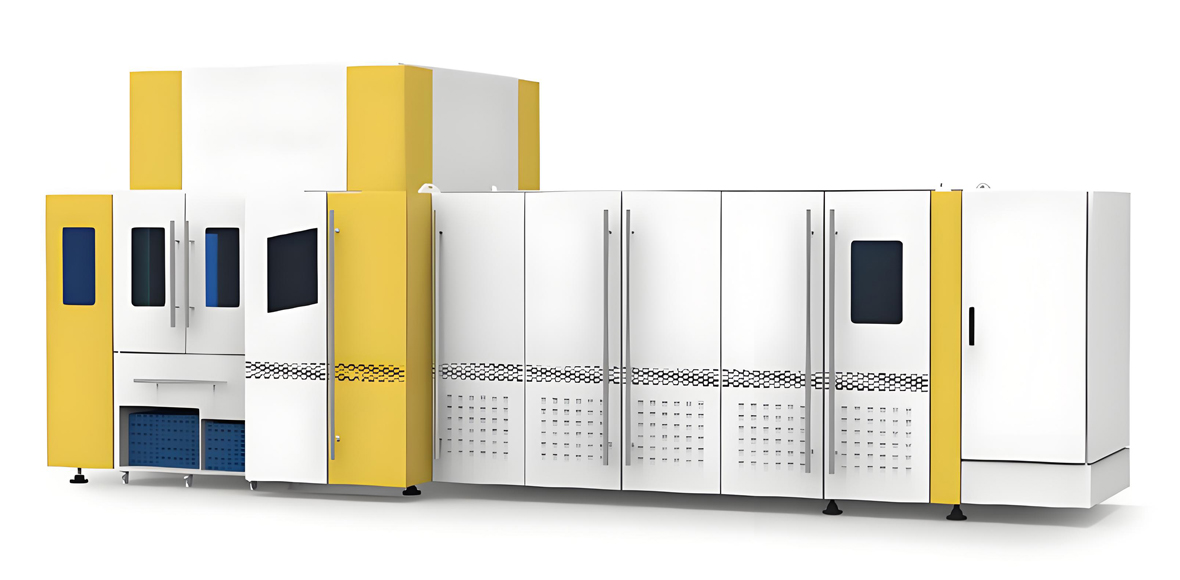
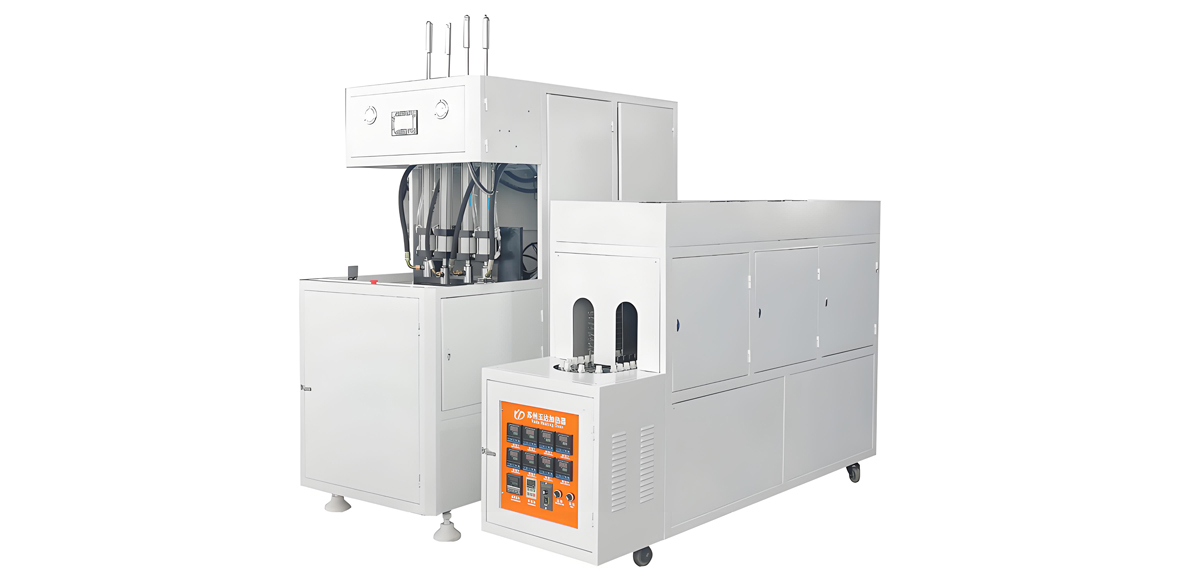
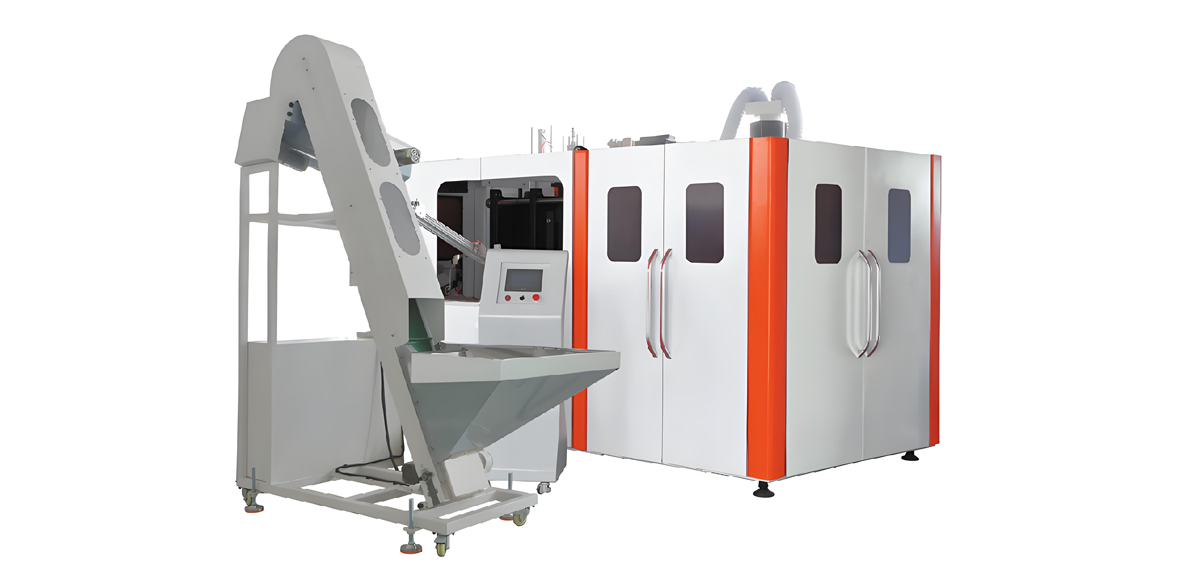
Not every bottler needs 15,000 BPH on day one. YuDa’s range covers the full entry-to-scale path, and choosing the right starting point protects utilization, which as Table 3 showed is the cheapest margin you can buy. The standard full-automatic series covers 1,000 to 7,000 BPH with advanced heating and energy-saving technology, ideal for a growing regional brand. The semi-automatic series offers the lowest procurement cost, suits small enterprises, and ships ready to run, which matters when a startup needs to prove the market before scaling.
For operations where floor space is the binding constraint, YuDa offers a linear blowing-filling-capping combiBlock and a bottle blow-fill-cap (BFC) machine. These integrate blowing, filling, and capping into one compact footprint, saving plant area and removing the air-conveyor transfer loss between a standalone blower and filler. In a high-rent or space-limited plant, that floor-space and transfer saving is itself a High-value lever even if the raw BPH is lower than a separated line.
YuDa Standard, Semi-Auto, and CombiBlock Comparison
| Line Type | Output Band (BPH) | Procurement Cost | Best Fit |
|---|---|---|---|
| Semi-auto PET line | sub 1,000 | Low | Startup, pilot, small enterprise |
| Standard full-automatic | 1,000 to 7,000 | Medium | Growing regional brand |
| FGX high-speed | 8,000 to 15,000 | High | National, contract filler |
| Linear combiBlock / BFC | compact, integrated | Medium to High | Limited floor space |
Notice the procurement cost is shown as a level, not a number, because the absolute figure moves with configuration, voltage, and destination. The point for margin planning is the relative step: a semi-auto line lets a new bottler enter at the Low level and defend utilization from the start, then upgrade to a standard or FGX line as volume climbs the curve. Wanplas, as the parent brand, supports this upgrade path across its specialized factories, so a bottler can grow from a single PET line toward a full filling and packaging setup without changing supplier relationships.
Where YuDa PET Lines Create Value: Applications and End Products
YuDa PET blow molding lines serve the full span of rigid plastic packaging for liquids, and the application mix is where the segment index from Table 2 becomes real revenue. The core applications are beverage, edible oil, and personal care, each with distinct bottle shapes, barrier needs, and margin grades. Mapping the machine to the end product is the final step before selection.
In beverage, YuDa lines produce still-water bottles, carbonated soft drink bottles, juice bottles, and functional or sports drink bottles. Water bottles run at the lowest gram weight and highest speed; carbonated bottles need a stronger base and thicker walls; juice bottles may need hot-fill or barrier design; functional drinks often use specialty preforms and premium shapes. Because the FGX and standard series accept modular mold sets, one line serves all four, which is how a bottler captures both the 100 reference water index and the 138 to 150 premium indexes in the same building.
In edible oil, PET bottles must resist oil migration and hold a stable panel over shelf life, so gram weight and barrier are the levers. YuDa lines produce edible-oil bottles in the 128 index band, a Medium-to-Premium grade, and the stable oven protects the orientation that keeps the panel from oxidizing the oil. In personal care, shampoo, conditioner, and detergent bottles reward shape and decoration more than gram weight, sitting at a 144 Premium index. Here the margin comes from differentiated design rather than lightweighting, and YuDa’s flexible mold platform supports the asymmetric and handled shapes these products use.
Across all three applications, the Wanplas group’s shared quality standards apply. YuDa is a Wanplas factory, which means the same brand promise of free parts, transport guarantee, production-capacity guarantee, and quality standards backs every line. For bottlers who later add filling, the group’s filling capability integrates with YuDa blowing through the combiBlock concept, keeping the brand architecture simple as the plant grows.
Selecting the Right YuDa Line for Your Margin Target
The selection table below turns the earlier analysis into a direct recommendation. Start from your target output and your segment mix, then read the recommended YuDa line. The logic follows the utilization curve: size the machine so you can load it to 80 to 95 percent, not so you can hit a peak you will never sustain. A line that matches your realistic order book beats a bigger line that sits at 65 percent utilization and carries a 116 unit-cost index.
Table: Requirement to YuDa Model Recommendation
| Your Requirement | Recommended YuDa Line | Why |
|---|---|---|
| Sub 1,000 BPH, proving market | Semi-auto PET line | Lowest procurement cost, ready to ship |
| 1,000 to 7,000 BPH, regional brand | Standard full-automatic series | Advanced heating, energy saving, scalable |
| 8,000 to 15,000 BPH, national or contract | FGX high-speed series | 30 percent plus oven saving, stable OEE |
| Limited floor space, blow-fill-cap | Linear combiBlock or BFC | Saves plant area, cuts transfer loss |
| High rPET ratio, hot-fill juice | FGX with adjusted heating and mold | Stable oven protects orientation |
| Multi-segment swing (water plus premium) | FGX or standard with modular molds | Raises utilization across segments |
If your plan includes filling, ask YuDa about the combiBlock path early, because designing blow and fill as one integrated cell changes the floor layout and the loss math. Wanplas, as the parent brand, can coordinate the filling side of the project so the blowing and filling stay on one quality standard and one service promise. The selection is never only about peak speed; it is about the index you will actually run at, day after day.
YuDa Service and Support for Continuous Profit
A margin plan fails if the line stops. YuDa’s service model is built to keep the utilization curve high and the loss layer low for the whole ownership period. Before shipment, every line passes factory acceptance testing, where the machine runs under load and the process is verified against the agreed bottle specification. This catches issues at the source instead of in your plant, which protects the quality score of OEE from the first day.
After arrival, YuDa engineers handle installation and commissioning on site, so the line reaches stable production quickly rather than through a long local learning curve. Operator training is part of the handover, which lifts the labor and availability scores by making changeover and routine care repeatable. For ongoing support, YuDa supplies USD 500 free parts every year under the Wanplas group parts policy, and warranty covers damaged parts within the agreed period, with free replacement. Spare parts are kept simple because the FGX platform shares components across cavity layouts.
The remote monitoring system is the quiet margin protector. Engineers at YuDa’s China headquarters can read the line’s PLC data through a mobile connection, watch for abnormal trends, and feed back to your site before a stop becomes a shutdown. Combined with the mature, stable component brands used throughout the machine, this keeps availability high and the unit-cost index near its 100 reference. YuDa also operates an open-factory policy: customers are welcome to visit the plant, audit the build, and run a sample trial on their own preform before committing, which de-risks the purchase decision.
All of these promises, free parts, transport guarantee, production-capacity guarantee, and quality standards, are the shared Wanplas brand commitments. Because YuDa is a Wanplas factory, you get a specialized PET-focus supplier backed by a group that covers the full plastic machinery chain, from blowing through filling and beyond, without ever leaving the Wanplas quality framework.
Frequently Asked Questions
Why does resin dominate the cost of a PET beverage bottle?
For a typical 500 ml still-water bottle the polymer typically represents 62 to 70 percent of the total conversion cost, so gram weight reduction and rPET blending move the margin far more than labor or depreciation adjustments. Any profit program should start with the resin layer before touching the smaller layers.
How much can lightweighting improve bottle profitability?
Reducing gram weight from a 12.5 g reference to a 9.5 g optimized wall brings the material index down by roughly 24 index points while keeping top-load and drop performance, which lifts segment margin by a Medium to High grade. The difficulty is High because it touches preform, mold, and filling-line handling together.
What role does capacity utilization play in unit cost?
Fixed cost is spread across more units as utilization rises. At 50 percent utilization the unit-cost index sits near 132, while at 90 percent it returns to a 100 reference, and pushing toward full load lowers it to roughly 94. The largest saving sits between 50 and 80 percent utilization.
Does rPET blending help margin or hurt quality?
Blending food-grade rPET at a controlled ratio lowers virgin resin demand and supports compliance targets. With proper crystallizing drying, IV retention, and acetaldehyde control, a Medium grade of cost saving is achievable without sacrificing clarity, though the washing and drying step must meet food-contact limits.
How much energy can a modern servo heating oven save?
YuDa lines minimize heater spacing to 38.1 mm and use a high-speed servo drive, cutting electricity consumption by more than 30 percent compared with conventional heating ovens, which is the single largest variable utility saving and requires no operator behavior change.
Which YuDa line fits a startup bottler with low volume?
A semi-automatic YuDa line offers the lowest procurement cost and is ready to ship, suited to sub-1000 BPH pilots, while a standard full-automatic line covers the 1000 to 7000 BPH band for growing regional brands. Both protect utilization better than an oversized high-speed line would.
Is a combiBlock worth it for limited floor space?
The YuDa linear blowing-filling-capping combiBlock integrates blow, fill, and cap in one compact footprint, saving plant area and reducing transfer losses, making it a High value choice where floor space is the binding constraint even if raw BPH is lower than a separated line.
How does YuDa protect uptime after installation?
YuDa runs factory acceptance testing before shipment, sends engineers for installation and commissioning, supplies USD 500 free parts every year, trains operators, and offers remote monitoring of PLC data from China HQ for fast abnormal feedback, all under the Wanplas group quality promise.
Conclusion
Profit in the global PET beverage bottle market is an engineering outcome, not a pricing accident. The bottlers who win are the ones who read their cost structure, benchmark their segment on a base-100 index, run their line high on the utilization curve, and pull the five levers that actually move margin: rPET blending, servo energy saving, speed and OEE, wall thinning, and lightweighting. Resin is 62 to 70 percent of cost, so the biggest gains live in gram weight and recycled content, while the oven and the drive system quietly return 3 to 5 index points with no bottle change at all.
YuDa, a Wanplas factory and one of China’s top PET bottle blow molding manufacturers with more than 20 years of experience, 20 plus patents, and exports to over 60 countries, builds exactly the machines this strategy needs. From the FGX high-speed series with its 38.1 mm heater spacing and 30 percent plus energy saving, through the standard and semi-auto lines for flexible entry, to the combiBlock for space-limited plants, the range lets you match machine size to realistic utilization and grow without leaving the Wanplas quality framework. If you are planning a new line or upgrading an existing one, send YuDa your bottle specification, target output, and segment mix, and the team will prepare a tailored configuration, welcome you to the open factory for a sample trial, and support commissioning and remote operation for the life of the equipment.
How do regional market differences change the margin strategy?
Different regional markets present different segment mixes and cost pressures, so the same YuDa line should be tuned differently by region. In mature markets with strong rPET mandates and high energy tariffs, the margin plan leans on rPET blending and servo energy saving, which together return a Medium to High grade of index improvement while meeting compliance targets. In emerging, high-growth regions where water volume dominates, lightweighting toward a 9.5 g reference and high utilization carry the margin, because the segment index sits near the 100 reference and only gram weight plus speed move it. Beverage categories also vary by region: juice and functional drinks reach a 138 to 150 index band where premium positioning is accepted, while edible oil and personal care sit in the 128 to 144 band. A bottler serving several regions from one plant should use modular molds to swing the FGX line between a low-gram water bottle and a barrier juice or oil bottle, lifting effective utilization above 90 percent and pulling the unit-cost index toward the 94 to 100 band. The discipline is the same everywhere: read the local cost structure, benchmark the segment on a base-100 index, and size the machine so it runs high on the utilization curve rather than buying peak speed it cannot load.
What is the link between cavitation count and unit cost on a high-speed line?
Cavitation, the number of molds blowing in parallel, sets both output and the fixed-cost base of a high-speed line, so it directly moves the unit-cost index. A YuDa FGX platform scales output by changing cavity count rather than changing the machine footprint, with single-mold speed held at 2,500 to 3,000 BPH across the FGX-8, FGX-10, and FGX-12 layouts. Because the oven architecture, 38.1 mm heater spacing, and remote monitoring stay identical, adding cavities spreads the same fixed depreciation and labor across more bottles, which lowers the per-bottle index as utilization rises. The trap is over-cavitation: a 12-cavity line loaded to only 55 percent utilization carries a unit-cost index near 122 and wastes the resin-layer saving, while an 8-cavity line loaded to 92 percent often shows a lower true unit cost. The right choice depends on the realistic order book, not the nameplate rate. For a multi-segment bottler, moderate cavitation plus high utilization beats maximum cavitation at low load, because speed only helps when the extra output is sold and scrap stays low. YuDa remote PLC monitoring supports this by flagging stops early, protecting the availability and quality scores that keep the index near its 100 reference.