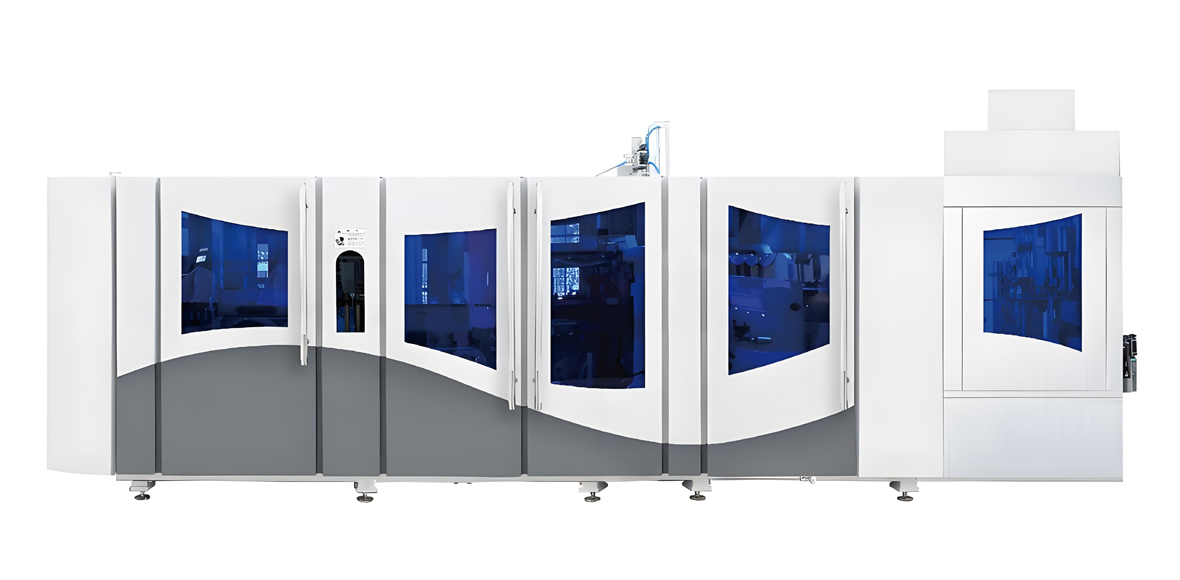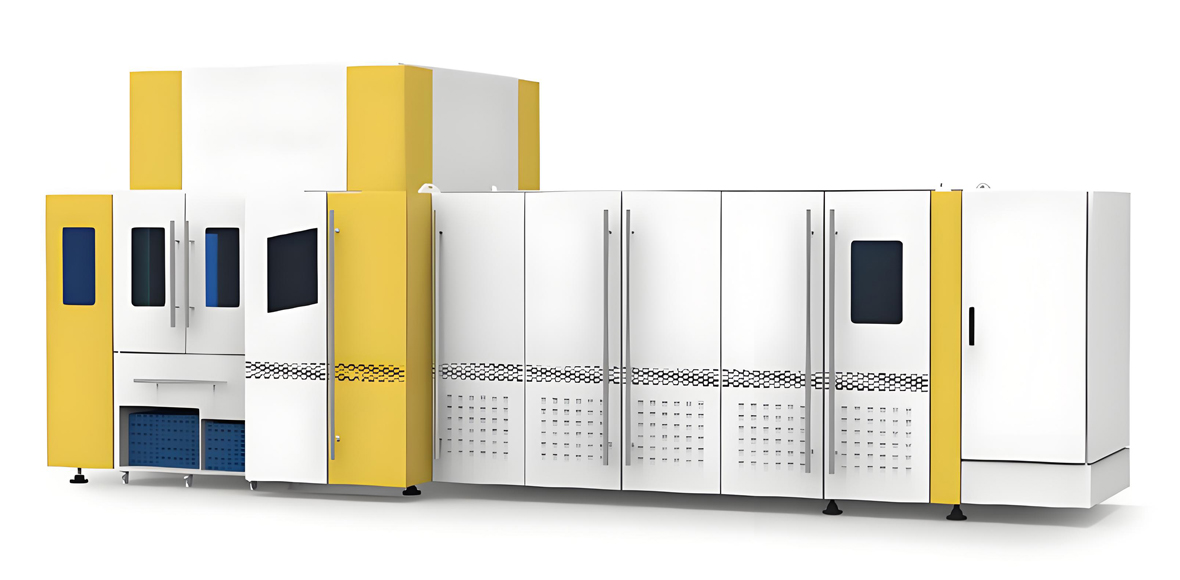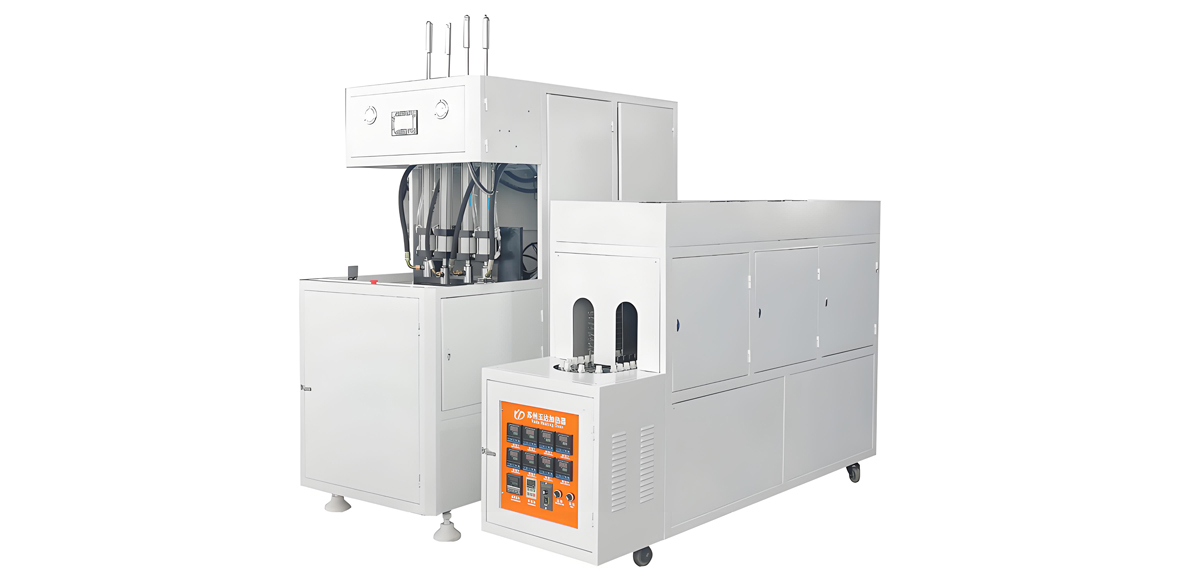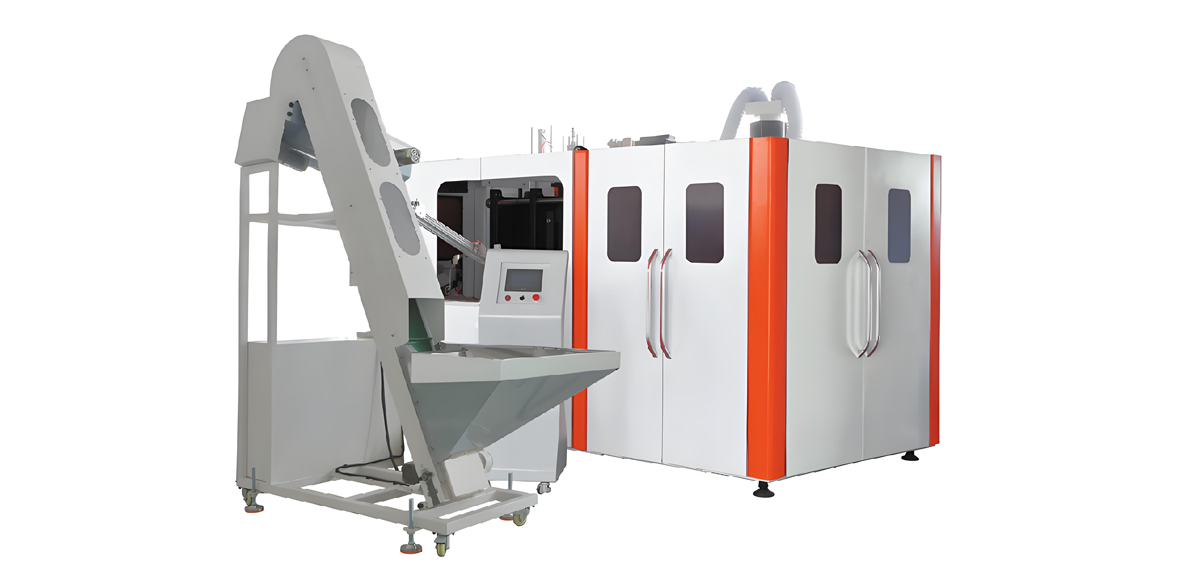
A low loss PET raw material formula is the foundation of profitable industrial PET bottle manufacturing, because the resin grade, drying condition and recycled-content share decided at the recipe stage determine how much material becomes saleable bottles versus scrap, haze, brittleness or off-taste complaint. Bottlers often focus on the blow molding machine and forget that the preform they feed it is already 70 to 80 percent of the final bottle’s quality and cost. This article sets out a complete, data-backed raw material formula for industrial PET bottle production, covering intrinsic viscosity, acetaldehyde control, crystallization and drying, preform design, stretch ratio and biaxial orientation, rPET blending and the food-contact certifications that gate market access.
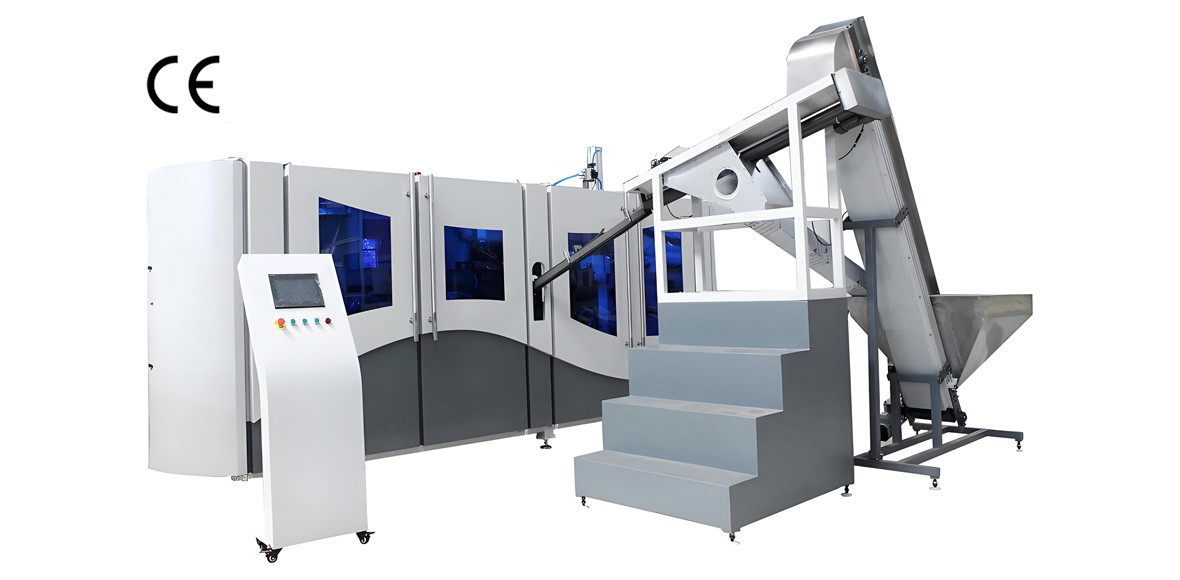
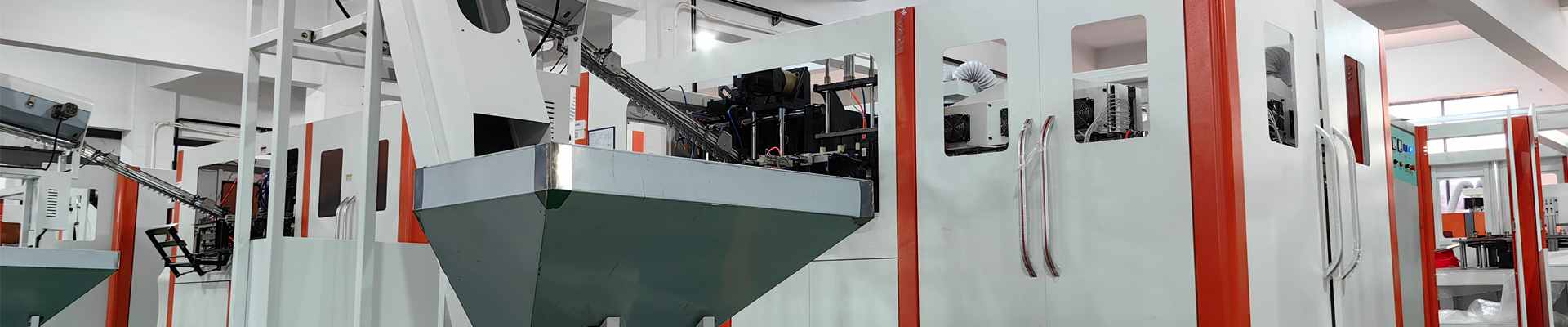
YuDa, a Wanplas factory with more than 20 years in PET bottle blow molding machines and exports to 60-plus countries, builds its FGX high-speed and full-automatic lines to run the preform recipes described here, tuning oven lamp zones and servo stretch-rod timing to the specific preform weight and PET grade. The company holds more than 20 patents and ranks among the top two PET blow molding manufacturers in China. The formula below is written so that a materials engineer can hand it to a preform molder and a plant manager can validate it on a YuDa line, Sidel line, Krones line, Tech-Long line or any comparable stretch-blow equipment.
Understanding PET Resin for Bottle Manufacturing
Polyethylene terephthalate for bottles is a semi-crystalline thermoplastic supplied as amorphous pellet or chip with a small cobalt or blue tint for UV protection and a small level of copolymer or nucleating additive depending on the grade. Its defining property for bottle making is intrinsic viscosity, a measure of molecular chain length that sets how much the material can be stretched and how much pressure or heat the finished bottle withstands. The raw material formula begins by selecting the correct IV band for the target product rather than buying the highest possible grade, because over-specifying IV increases degrade risk and cost without benefit.
PET is also hygroscopic, absorbing ambient moisture that must be removed before melting, and it is thermally sensitive, generating acetaldehyde when overheated. Both behaviors are controlled by the drying and processing parts of the formula. Finally, PET is highly recyclable, and modern food-grade recycling lets a meaningful share of recycled PET be blended back into preforms, which is now a regulatory and commercial requirement in many markets rather than an optional green claim.
The practical levers of the formula are therefore four: resin IV and grade, drying and crystallizing condition, recycled-content share, and the preform geometry that sets the stretch window. Mastering these four levers is what separates a line running at 1 to 2 percent material loss from one bleeding 6 to 10 percent into scrap, haze and rework. The remainder of this article details each lever with concrete parameters.
Beyond these four levers, modifiers and colorants are part of the formula and must be specified, not assumed. A small copolymer such as isophthalic acid or cyclohexanedimethanol can be added to raise the glass-transition temperature for hot-fill bottles, but each modifier changes the melt and orientation behavior and therefore the loss profile, so it is treated as a recipe change requiring re-validation rather than a silent substitution. The blue or green tint that most water bottles carry is a carefully dosed masterbatch, typically a few hundred parts per million of cobalt or organic blue, chosen because it blocks UV that would otherwise accelerate acetaldehyde formation in the filled bottle; over-dosing tint wastes masterbatch and can shift the shade outside brand spec, while under-dosing raises taste risk, so the formula fixes the let-down ratio with a tolerance band.
Slip agents, processing aids and anti-blocking additives are usually unnecessary in bottle PET and are omitted to keep the recipe simple and the migration declaration clean. When a label or sleeve is applied, its material is outside the bottle formula but its adhesive must not contaminate the reclaim stream, which is why the formula documentation also records the downstream decoration so that rPET recovered later remains food grade. In short, the raw material formula is a controlled specification covering resin, modifier, tint and the two reuse streams, and any deviation triggers a re-check of IV, acetaldehyde and clarity before the lot is approved for blowing.
Intrinsic Viscosity Selection and Its Impact on Loss
Intrinsic viscosity, expressed in deciliters per gram, typically ranges from 0.70 to 0.84 dl/g for bottle-grade PET. Still water and edible-oil preforms are molded from 0.70 to 0.78 dl/g, carbonated soft drinks from 0.80 to 0.84 dl/g, and hot-fill or wide-mouth jars from 0.82 to 0.86 dl/g or with copolymer modification. Selecting the lowest IV that meets the performance target minimizes thermal degradation during injection and blow, because thinner chains degrade faster and the dryer residence is shorter, directly lowering material loss.
IV also interacts with preform wall thickness. A thin-wall water preform at 0.72 dl/g blows into a light-weight bottle with good clarity, while the same IV in a carbonated bottle would creep and lose pressure retention. The formula therefore pairs IV with target bottle weight: for a 500 milliliter water bottle at 8 to 10 grams, 0.72 to 0.76 dl/g is appropriate; for a 500 milliliter carbonated bottle at 18 to 22 grams, 0.80 to 0.84 dl/g is required. Mismatching the two forces either over-specification, which wastes resin and energy, or under-specification, which raises burst rejects.
During processing, IV always drops slightly because of thermal and hydrolytic scission. A well-run system loses only 0.01 to 0.02 dl/g from pellet to bottle, while a poorly dried or overheated system can lose 0.04 dl/g or more, enough to push a carbonated bottle below its pressure spec. Tracking IV at three points: incoming resin, preform after injection, and finished bottle, is the single most useful loss-control measurement a plant can adopt. The table below maps IV to application.
IV Selection by Application
| Application | IV dl/g | Typical Bottle Weight g | Relative Resin Cost |
|---|---|---|---|
| Still water | 0.70 to 0.76 | 8 to 12 | Low |
| Edible oil | 0.72 to 0.78 | 18 to 28 | Low |
| Carbonated soft drink | 0.80 to 0.84 | 18 to 24 | Medium |
| Hot fill | 0.82 to 0.86 | 28 to 42 | High |
Acetaldehyde Generation and Control
Acetaldehyde is the off-flavor compound most associated with PET bottles, and it forms when PET chains scission under heat, either during preform injection or during reheating in the blow oven. In still water the sensory threshold is around 1 to 3 micrograms per liter, so the formula must keep total AA well under that band to avoid a fruity or antiseptic taste. The dominant source is the injection melt, not the blow step, which is why melt-temperature discipline matters more than oven tuning for taste.
Controlling AA starts with a low and stable melt temperature, typically 265 to 285 degrees Celsius for preform injection, combined with the shortest practical residence time in the barrel and hot runner. A well-designed hot runner with balanced flow prevents local hotspots that spike AA in a few cavities. Drying also helps, because hydrolyzed PET degrades more readily and produces more AA. Finally, the blow oven should use the minimum lamp power that still reaches the target preform surface temperature, because excessive radiation bakes acetaldehyde into the inner wall where it contacts the liquid.
A practical formula target is below 1 microgram per liter of AA in the bottle for still water and below 3 micrograms per liter for carbonated drinks, verified by periodic headspace or extraction testing. Plants chasing the lowest AA use a lower-IV, lower-melt-temperature preform and a conservative oven profile, accepting a slightly wider processing window in exchange for taste safety. The trade is acceptable because taste complaints cost far more than the small efficiency gain from an aggressive profile.
Crystallization and Drying Parameters
PET must be dried before both preform injection and, in some inline routes, before solid-state processes, because moisture above about 0.02 percent causes hydrolysis that cuts IV and produces brittle, hazy preform. The standard drying formula is crystallized and dried pellet at 160 to 180 degrees Celsius for four to six hours in dehumidified air with a pressure dew point of -40 degrees Celsius, reaching a final moisture below 50 parts per million. Crystallization at 130 to 150 degrees Celsius first prevents the pellet from agglomerating and blocking the dryer, because amorphous PET softens and sticks below its glass-transition temperature.
The drying parameters are not interchangeable with those used for other resins, and over-drying at too high a temperature for too long begins to oxidize and yellow the resin, adding color loss rather than preventing it. A -40 degrees Celsius dew point is the working minimum; dryers that only reach -20 degrees Celsius leave enough moisture to cause measurable IV loss on fast machines. The residence time in the dryer should match throughput so that the crystallizer never runs empty or overfilled, both of which destabilize the exit moisture.
For rPET flake fed into the recipe, the drying bar is higher because flake has more surface area and a wider moisture history, often needing the same -40 degrees Celsius dew point but with attention to fines that can fluidize and carry over. Wanplas’s Polyretec factory, which supplies food-grade PET washing and pelletizing lines, designs its flake drying to hand YuDa a consistent, low-moisture rPET pellet that meets the same drying formula as virgin resin. The table below is the drying reference used in commissioning.
PET Drying and Crystallization Reference
| Step | Temperature C | Time h | Dew Point | Exit Moisture |
|---|---|---|---|---|
| Crystallization | 130 to 150 | 0.5 to 1.0 | Ambient | Prevents agglomeration |
| Drying virgin pellet | 160 to 180 | 4 to 6 | -40 C | Below 50 ppm |
| Drying rPET flake | 170 to 185 | 5 to 7 | -40 C | Below 50 ppm |
Preform Design for Low Material Loss
The preform is where most material-saving decisions are locked in, because its weight and wall distribution dictate the final bottle weight and the stretch uniformity. A well-designed preform uses the minimum PET that still delivers the required top-load, drop and pressure performance, and it distributes wall thickness so that the stretch-blow step orients the polymer evenly rather than over-thinning one zone. Neck finish, gate and supporting ring are standardized to the closure, so the variable design space is body wall, length and the transition radii.
Light-weighting is the central loss-control strategy: a 500 milliliter water preform has fallen from about 16 grams to 8 to 10 grams in modern plants without loss of function, achieved by thinner, more uniform walls and a tuned stretch ratio. The risk is that too-light preforms approach the orientation limit and become sensitive to oven variation, raising reject rate. The formula therefore sets a preform weight with a small margin above the minimum and holds the blow process tightly, which YuDa’s cam-linking and servo stretch system supports by repeating the stretch stroke within a narrow band.
Gate and neck design also affect loss. A clean hot-tip gate minimizes cull and tail, and a robust neck supports the preform during oven transport so fewer fall or jam. Preform color, usually a light blue or green tint, must be dosed uniformly because uneven masterbatch creates weak spots and visual rejects. The table below shows a light-weighting reference that keeps performance while cutting resin use.
Preform Light-Weighting Reference
| Bottle Size ml | Legacy Preform g | Optimized Preform g | Resin Saving | Risk Note |
|---|---|---|---|---|
| 330 | 14 | 6 to 8 | Medium | Tight blow window |
| 500 | 16 | 8 to 10 | Medium | Standard for water |
| 1500 | 32 | 20 to 24 | High | Wall distribution critical |
| 5000 | 60 | 38 to 45 | High | Base and handle design |
Stretch Ratio and Biaxial Orientation
Biaxial orientation is what turns a soft, amorphous preform into a stiff, clear, impact-resistant bottle, and it is achieved by stretching the parison in both the axial direction with the stretch rod and the hoop direction with blowing pressure. The total stretch ratio, the product of axial and hoop ratios, is typically 10 to 16 times for a well-oriented bottle. Too little orientation yields a weak, hazy, low-top-load bottle; too much causes neck-in, stress whitening and micro-cracks at the base.
The formula sets the stretch ratio through preform length and diameter relative to the target bottle. A common axial stretch ratio is 2.0 to 3.0 times and a hoop ratio of 3.5 to 5.0 times, giving the total in the target band. The blow pressure, usually 30 to 40 bar, and the stretch-rod delay and speed must be matched so the parison is still warm and mobile when stretched, then set by cooling before ejection. YuDa’s high-speed lines tune these parameters per preform through dedicated servo control, which is why the same raw material formula behaves consistently across cavity counts.
Orientation also governs gas barrier and creep. A properly oriented PET bottle has lower gas permeability and better pressure retention than an under-oriented one of the same weight, so hitting the orientation window lets a plant use less resin for the same shelf life. The orientation state is verified by sectioning the bottle and inspecting for uniform birefringence or by top-load and pressure testing; a drop in these values is an early loss signal that the stretch recipe has drifted.
The blow pressure profile is the practical control that realizes the target ratio. A two-stage pressure sequence is standard: a low pre-blow pressure of 8 to 12 bar shapes the parison gently in the first fraction of a second to avoid local thinning, followed by the main blow at 30 to 40 bar that completes the mold contact and freezes the orientation against the cooled wall. The stretch rod extends ahead of or together with the pre-blow depending on bottle geometry, and its final position sets the axial ratio; a rod that stops short leaves un-stretched material at the base, while one that over-travels causes the base to buckle. Holding the rod speed, delay and blow timing within narrow setpoints is exactly what YuDa’s servo stretch system does across all cavities, so a correctly specified preform yields the same orientation on cavity one and cavity sixteen and keeps reject loss low.
Temperature is the other half of the orientation window. The preform must be heated to a narrow band, typically 95 to 110 degrees Celsius at the surface depending on PET grade and wall, where the material is mobile enough to stretch yet below the point where it crystallizes and turns hazy. The reheating oven in a YuDa FGX line divides this into independently controlled lamp zones so that the thick neck region stays cooler than the body, preventing neck growth while the body reaches full stretch temperature. A lamp profile that is too hot bakes acetaldehyde into the inner wall; too cold and the parison resists stretch and whitens. Tuning this profile to the raw material formula is the daily work of the line technician and the main reason the same resin behaves differently on different machines.
rPET Blending Ratio and Loss Control
Recycled PET, when produced by a super-clean food-grade process, can be blended into preforms at a share that now ranges from 25 to 100 percent depending on application and regulation. Still water and non-sensitive bottles accept the highest shares, while carbonated and hot-fill bottles are usually limited to 25 to 50 percent to preserve pressure and thermal resistance, because each rPET cycle slightly lowers IV and raises color and acetaldehyde baseline. The formula manages this by specifying the rPET IV and bytest before blending and by setting a blend cap that holds the finished preform IV in the target band.
Loss control with rPET centers on three rules. First, specify rPET with an IV at or above the virgin grade so the blend average stays in window; lower-IV flake forces a higher virgin IV that costs more. Second, cap the blend so cumulative thermal history does not push AA or yellowness past limits; a 25 percent share is low risk, 50 percent medium risk, and 100 percent requires the cleanest flake and tightest process. Third, blend at the mixer rather than relying on the extruder to homogenize, because uneven blending creates cavities with off-spec bottles that become scrap.
Yield from rPET itself also depends on flake quality: food-grade washing that removes labels, glue and PVC contamination keeps conversion loss low, while dirty flake forces higher purge and rejects. Wanplas’s Polyretec factory supplies the washing and pelletizing lines that produce this clean flake, and integrating it with a YuDa blow line closes the loop on a single coordinated recipe. The table below compares blend levels.
rPET Blend Level Comparison
| rPET Share | Suitable Products | IV Risk | Color AA Risk | Relative Material Cost |
|---|---|---|---|---|
| 0 percent | All | Low | Low | Medium |
| 25 percent | Water, CSD, oil | Low | Low | Low |
| 50 percent | Water, oil | Medium | Medium | Low |
| 100 percent | Still water only | High | High | Low |
In-House Regrind Reuse Strategy
Every bottle and preform plant generates clean production scrap: neck cuts, gate tails, off-spec preforms and start-up rejects. This scrap is already polymerized PET with known history, so it can be reground and blended back into the preform at 5 to 15 percent without the quality risk of post-consumer rPET, provided it is kept clean, dry and free of non-PET contamination. The formula caps closed-loop regrind at 15 percent because beyond that the cumulative thermal history lowers IV and raises acetaldehyde enough to threaten the taste and strength windows.
The reuse chain must avoid cross-contamination: a dedicated grinder, silo and conveying line for PET-only scrap, with metal and color separation, prevents a single wrong-color or wrong-polymer piece from spoiling a batch. Regrind should be dried on the same -40 degrees Celsius dew point formula as virgin pellet and metered at the throat so the blend stays uniform. Plants that discipline this loop routinely recover 1 to 2 percent of total resin that would otherwise be sold as low-value flake, a direct hit to material loss.
Critically, regrind must never be confused with rPET in the recipe book. Regrind is process scrap with one known thermal pass; rPET is post-consumer material needing food-grade decontamination. Mixing the two in documentation breaks traceability and certification. Keeping separate, labeled streams and a simple log of blend percentages gives auditors the evidence that food-contact compliance is maintained while still capturing the savings.
The quality of recovered regrind depends on what is fed to the grinder. Only clean process scrap of the same PET grade should enter the loop; start-up purges from color changes, contaminated reject bins, or mixed-material closures must be diverted to non-food reclaim. A metal detector and a density or near-infrared sorter at the regrind silo catch the rare wrong-material piece before it reaches the throat, because a single piece of polyvinyl chloride or polypropylene in the melt can cause a gel defect across an entire run. With this discipline, the closed-loop regrind contribution is stable, predictable and fully food-contact compatible, turning what was once waste into a recurring 1 to 2 percent resin saving at no added compliance risk.
Certification and Food-Contact Compliance
A PET raw material formula is only shippable if the bottle meets food-contact law in its market, and that compliance is built into the recipe, not added at the end. For the United States, PET bottles follow FDA regulation of food-contact substances, and recycled PET requires the FDA letter of no objection for the specific recycling process. For the European Union, bottling follows EU 10/2011 with its specific migration limits, and recycled PET must pass the European Food Safety Authority safety evaluation for the recycling process. For China, GB 4806 sets the food-contact material standard that bottles must satisfy.
ISO standards sit alongside these as the management and test framework: ISO 9001 for quality management, ISO 22000 or HACCP-aligned systems for food safety, and ISO test methods for migration and overall migration measurement. Additives such as the blue tint, UV stabilizer or processing aid must each be on the positive list of the relevant regulation, and the masterbatch supplier must provide a declaration of compliance. The formula documentation should capture resin certificate of analysis, additive approvals, and the rPET or regrind source and share for every batch.
Compliance also constrains the rPET share, because recycled content rules in some regions set minimum percentages while food-contact rules set maximum safe shares; the formula must satisfy both simultaneously. A plant exporting to multiple regions keeps one conservative recipe that meets the strictest applicable rule, which slightly raises cost from the Low band toward Medium but removes the risk of a blocked shipment. CE marking applies to the machinery rather than the bottle, confirming that the blow molding line itself meets European safety directives.
Certification Matrix for PET Bottles
| Market | Core Standard | Recycled Content Rule | Documentation Needed |
|---|---|---|---|
| United States | FDA food-contact | FDA LNO for rPET | Resin COA, additive approval |
| European Union | EU 10/2011 | EFSA rPET evaluation | Migration test, process approval |
| China | GB 4806 | National recycled rules | Compliance declaration |
| Global systems | ISO 9001, ISO 22000 | Management framework | Audit records |
Frequently Asked Questions
What intrinsic viscosity is best for water bottles versus carbonated drinks?
Still water and edible oil preforms are typically molded from PET at 0.70 to 0.78 dl/g, while carbonated soft drinks and hot-fill bottles need 0.80 to 0.84 dl/g or higher to survive internal pressure or heat. Choosing the lowest IV that meets the performance target minimizes degradation during processing and keeps material loss low.
Why must PET be dried before injection and blowing?
PET is hygroscopic and hydrolyzes above about 0.02 percent moisture, which cuts molecular chain length and drops the intrinsic viscosity. Drying to below 50 ppm at 160 to 180 degrees Celsius for four to six hours with -40 degrees Celsius dew point air protects the IV and prevents brittle, hazy preforms.
How much rPET can be blended into a bottle preform?
Food-grade rPET from a super-clean recycling process can be blended at 25 to 100 percent for non-sensitive applications, but carbonated and hot-fill bottles are usually limited to 25 to 50 percent to hold pressure and thermal resistance. Each step up in rPET share raises the risk of IV drop and color shift that must be managed by recipe and process control.
How does stretch ratio affect bottle quality and loss?
A total stretch ratio around 10 to 16 times, combining axial and hoop stretch, gives the biaxial orientation that delivers strength and clarity. Under-stretching yields weak, hazy bottles and over-stretching causes necking and whitening, so holding the ratio in window keeps reject rates and material waste low.
Which food-contact certifications apply to PET bottles?
Bottles for the United States follow FDA regulation, the European Union follows EU 10/2011, and China follows GB 4806, while ISO standards cover management systems and test methods. Recycled content must meet the relevant recycled-plastic food-contact rule, such as the United States FDA letter of no objection or the European Union recycled PET safety evaluation.
What causes high acetaldehyde in PET bottles?
Acetaldehyde forms mainly from thermal degradation of PET during preform injection and from over-aggressive reheating in the blow oven. Lowering melt temperature, shortening residence time, drying properly and tuning the lamp profile keep AA in bottled water below the typical 1 to 3 microgram per liter taste threshold.
Can in-house scrap be reused without quality loss?
Bottle and preform production scrap such as neck cuts and reject preforms can be reground and blended back at 5 to 15 percent when kept clean and dry, because it has already been polymerized and only needs reheating. Beyond that level, cumulative thermal history lowers IV and raises AA, so a closed-loop regrind cap protects both quality and yield.
How does the raw material formula relate to the blow molding machine?
The preform design and IV set the stretch-blow window that the machine must match with its oven profile and stretch-rod timing. YuDa’s FGX high-speed and full-automatic lines tune lamp zones and servo stretch to the specific preform weight and PET grade, so a well-built raw material formula translates directly into lower scrap on the line.
Conclusion
A low loss PET raw material formula is an engineering decision made long before the preform reaches the blow molding machine, and it rests on four disciplined levers: select the lowest intrinsic viscosity that meets the product spec, dry and crystallize at 160 to 180 degrees Celsius for four to six hours with -40 degrees Celsius dew point air, design the preform for light weight with a uniform wall, and hold the biaxial stretch ratio in the 10 to 16 times band. Layered on top are the recycled-content rules: blend food-grade rPET at a share matched to the product risk, cap in-house regrind at 15 percent, and keep both streams documented for food-contact certification.
YuDa, a Wanplas factory with more than 20 years in PET bottle blow molding and a top-two position in China, builds its FGX high-speed and full-automatic lines so that this formula runs repeatably at 8000 to 15000 BPH, with servo stretch control and a 38.1 millimeter heater spacing that saves more than 30 percent of oven electricity. For plants closing the loop, Wanplas’s Polyretec factory supplies the food-grade rPET washing and pelletizing that feeds clean flake back into the same recipe. Applied together, these rules hold material loss to 1 to 2 percent and keep bottles clear, strong and compliant with FDA, EU 10/2011 and GB 4806 across global markets.
The formula is not static once a line is running; it is a living specification reviewed against daily loss data. Tracking IV at resin, preform and bottle, acetaldehyde on a rolling sample, drying exit moisture, and the regrind and rPET blend percentages turns the recipe into a controlled process rather than a one-time decision. When a lot drifts, the cause is traced to one of the four levers and corrected before it becomes scrap, which is the discipline that keeps a low loss PET raw material formula delivering its promised savings month after month.