For food-grade PET bottle manufacturers, the hardest part of selling into a new country is rarely the blow molding itself. Modern equipment can shape almost any bottle geometry reliably, at high speed, with tight weight control. The real bottleneck sits downstream of the machine: proving that the finished bottle is a safe food contact article under each destination market’s own legal framework, then backing that claim with migration data, a declaration of conformity, correct labeling and complete import paperwork. This guide maps that compliance chain market by market, so a bottle producer can plan overseas entry with the same discipline it applies to production planning.
YuDa, a Wanplas factory, is a top manufacturer of PET bottle blow molding machines in China, with more than 20 years of experience, exports to 60-plus countries, a position among the country’s top 2 producers in this category and over 20 patents. Our role in this discussion is deliberately practical: we do not sell certification, and no equipment supplier can obtain a food contact clearance on a customer’s behalf. What YuDa does is build machines whose hygienic design, oil-free contact paths and cleanability let a customer’s finished bottle reach the standard that regulators demand — and we help customers understand which rules apply so the right bottle is produced on the right line for the right market.
Why Market Entry, Not Blow Molding, Is the Real Bottleneck
Food contact compliance is a property of the bottle and its production hygiene, not of the blow molding machine as a stand-alone product. This single distinction resolves most of the confusion new exporters carry into the process. Regulators evaluate the article that touches the food — the finished PET bottle, the resin it was made from, any additives, colorants or barrier layers, and the cleanliness of the environment in which it was formed and filled. They do not issue a food contact certificate for a piece of production equipment.
That does not make the machine irrelevant. On the contrary, the machine decides whether the bottle can pass at all. A blow molding line with oil contamination in the bottle path, hard-to-clean surfaces, or dust ingress at the preform stage will produce bottles that fail sensory or migration testing no matter how good the resin is. So the correct mental model is a chain: compliant food-grade resin, plus a hygienically designed and correctly operated machine, plus a controlled filling environment, together produce a compliant bottle. Break any link and the market entry stalls.
The chain also explains why two export routes behave differently. When a manufacturer exports finished bottles or filled beverages, the finished-article rules of the destination market apply directly, and documentation travels with the goods. When a manufacturer instead exports the blow molding equipment and produces bottles locally inside the target country, the equipment crosses the border as machinery, while food contact compliance is generated locally around the resin, the process and the filling line. Understanding which route applies changes what paperwork is needed and who is legally responsible for the food contact declaration.
Understanding PET as a Food Contact Material
PET earned its dominant position in beverage packaging because it is chemically inert, offers low migration, is clear and strong, and is one of the few plastics with mature food-grade recycling routes. For an exporter, the material’s intrinsic behavior is the starting point of every compliance file, because regulators evaluate substances that could transfer from the polymer into the food.
Three material-level topics recur in every market submission. The first is acetaldehyde. PET can generate small amounts of acetaldehyde when it is over-heated during preform injection or during blow reheating, and even trace levels can give still water a faint fruity off-taste. Because water is the most sensory-sensitive content, acetaldehyde is controlled tightly for water bottles, and the practical defense is temperature control: keep melt and reheat temperatures within the correct window, avoid local overheating, and use efficient, evenly distributed heating so the preform reaches blow temperature without thermal abuse.
The second is antimony. Antimony trioxide is widely used as a polycondensation catalyst in PET manufacture, so a small antimony residue is inherent to the resin. Regulators therefore set a specific migration limit for antimony, and compliant food-grade resins are formulated and processed to stay well within it. The exporter’s job is to source resin with a documented food-grade specification and to avoid processing conditions that could increase extractable metal.
The third is crystallinity and thermal stability, which decide whether a bottle survives its intended fill. Standard PET bottles soften near the glass transition region and are unsuitable for hot filling above roughly 60 degrees Celsius unless the bottle is heat-set. Heat-set bottles are blown in a hot mold that raises crystallinity in the bottle wall, giving the dimensional stability needed for hot-fill juices and teas. If a manufacturer plans to hot-fill but blows a cold-mold bottle, the bottle will deform, and no amount of paperwork will fix the product. Matching bottle type to fill temperature is thus both an engineering and a compliance decision, because test conditions follow the real fill.
The Global Food Contact Compliance Landscape
Every major market regulates food contact plastics, but each does so through its own legal framework, its own list of permitted substances and its own documentation expectations. There is no single global certificate that opens all doors. The practical approach is to treat each destination as a separate compliance target and to build a market-by-market matrix before committing to a bottle design. The table below summarizes the frameworks a PET bottle exporter meets most often.
| Market | Core Regulatory Framework | Key Requirements | Typical Documents / Tests |
|---|---|---|---|
| United States | FDA 21 CFR food additive regulations; 177.1630 covers PET | Material cleared under the applicable regulation or an effective Food Contact Notification; substantial-equivalence reasoning; end-use conditions defined | Extraction and migration testing, food-type and temperature use conditions, supplier statements referencing 21 CFR |
| European Union | Framework Regulation (EC) 1935/2004; plastics Regulation EU 10/2011 | Overall migration limit of 10 mg/dm2; specific migration limits per substance; Union list compliance; good manufacturing practice under EC 2023/2006 | Declaration of Conformity, supporting documents, overall and specific migration reports, food simulant testing |
| China | GB 4806.1 general rules; GB 4806.6 resins; GB 4806.7 plastic articles; GB 9685 additives; GB 31604 test methods | Compliant resin and additive use, overall and specific migration within limits, labeling under GB 4806.1 | GB 31604-series migration reports, additive compliance statements, product conformity declaration |
| Germany (within EU) | EU framework plus BfR Recommendations | BfR Recommendations used as supplementary guidance where EU rules leave detail open | EU DoC plus BfR-aligned supporting evidence where relevant |
| Japan | MHLW system with the Positive List (in force from 2020) | Only listed substances permitted for food contact plastics; conformity to Positive List and material standards | Positive List conformity confirmation, migration/material testing, supplier information |
| India | FSSAI packaging regulations; IS 12252 and related PET standards | Compliance with FSSAI food packaging rules and referenced Indian Standards for PET | Conformity to referenced IS standards, migration and overall constituent testing |
| Brazil | ANVISA RDC resolutions, harmonized with Mercosur GMC resolutions | Positive list of permitted substances, migration limits aligned across Mercosur | Migration reports to ANVISA/Mercosur methods, composition declaration |
| Canada | Health Canada food packaging assessment | Letter of no objection mechanism for food packaging materials and recycled content | Submission dossier, migration data, no-objection letter where applicable |
| Gulf and Southeast Asia (emerging) | GSO standards in the Gulf; national rules that often reference EU or Codex principles in Southeast Asia | Frequently accept EU-style dossiers; verify each country’s specific referenced standard | Migration reports, DoC-style declarations, conformity to referenced standards |
Reading the matrix, several patterns emerge. The European Union framework is the most widely copied, so an exporter who builds a complete EU 10/2011 dossier — declaration of conformity, overall and specific migration data, and supporting documents — has a strong starting position for many emerging markets that model their rules on the EU approach. The United States framework is structured differently: rather than a single migration ceiling, it asks whether the material is cleared for the intended food types and use temperatures under the relevant food additive regulation. China’s GB 4806 family is comprehensive and testing-method-specific, with the GB 31604 series defining how migration is measured. Japan’s Positive List, effective since 2020, shifted the country toward a permitted-substance model similar in spirit to the EU Union list.
The single most important planning insight is that the destination market, not the country of manufacture, sets the rules. A bottle made in one country and sold in another must satisfy the destination’s framework. This is why YuDa asks customers for their target export markets before recommending a bottle design and machine configuration — a bottle optimized only for a domestic market can require redesign to clear a stricter destination.
Migration and Safety Testing Explained
Migration testing is the scientific core of food contact compliance, and it simply asks how much of what is in the bottle wall could move into the food. Regulators express this through two complementary concepts. Overall migration measures the total mass of all substances transferring into a food simulant and, in the EU, is capped at 10 mg per square decimeter of contact surface. Specific migration limits control named substances of concern individually, each with its own numeric limit — antimony and acetaldehyde being the two most relevant to PET water and beverage bottles.
Because real foods are difficult to test reproducibly, laboratories use standardized food simulants that stand in for broad food categories. The simulant, the temperature and the duration must together reproduce the worst realistic use of the bottle. The following table outlines the food simulant concept most exporters encounter.
| Food Simulant Class | Represents | Typical PET Beverage Example | Why It Matters for PET |
|---|---|---|---|
| Aqueous | Water-based, low-acid foods | Still and mineral water | Most sensory-sensitive; acetaldehyde control is critical |
| Acidic | Acidic aqueous foods | Carbonated drinks, juices, tea | Acidity can influence extractable metals such as antimony |
| Alcoholic | Foods with alcohol content | Ready-to-drink alcoholic beverages | Alcohol can increase migration of some organics |
| Fatty | Fat- and oil-based foods | Edible oil bottles | Fatty contact is the most aggressive; often the hardest to pass |
| Dry | Dry foods | Powdered mixes (less common in PET) | Lower migration risk; sometimes exempt from full testing |
Test conditions map to the product’s real life. A chilled water bottle is tested at refrigeration and ambient conditions over a long storage time; a hot-filled tea bottle is tested at the elevated fill temperature followed by storage; a bottle intended for microwave reheating faces the harshest thermal condition. Choosing test conditions that are milder than the actual use is one of the most common and most damaging mistakes an exporter makes, because a report that does not cover the real fill temperature is not valid evidence for that use. The next table summarizes the key testing concepts without quoting any proprietary laboratory figures.
| Test / Parameter | What It Checks | Relevance to PET Bottles |
|---|---|---|
| Overall migration | Total substances transferring to simulant | Global ceiling in the EU is 10 mg/dm2; broad safety net |
| Specific migration (antimony) | Catalyst residue transfer | Controlled by a substance-specific limit; resin quality dependent |
| Acetaldehyde | Process-generated aldehyde in the wall | Affects water taste; controlled by processing temperature |
| Heavy metals screen | Lead, cadmium and similar elements | Ensures colorants and additives are clean |
| Sensory testing | Odor and taste transfer | Especially decisive for still water |
| Overall constituent / total migration by market method | Market-specific measurement (for example GB 31604 series) | Same principle, different official method per market |
The recurring theme is that migration is governed by concept and limit, not by any single confidential number. An exporter should treat the migration program as a designed study: define the market, define the content and fill, choose simulants and conditions that match, then test. Done in that order, the report becomes durable evidence rather than a document that has to be redone every time an importer asks a new question.
Recycled PET: The Extra Compliance Hurdle
Recycled PET, or rPET, is central to sustainability commitments and to recycled-content mandates in several markets, but food-grade rPET carries a compliance burden that virgin resin does not. The core concern is that post-consumer bottles may have contacted non-food substances during their first life, so a recycling process must be proven capable of removing potential contaminants to a safe level before its output can touch food again.
Two authorization mechanisms dominate. In the European Union, a recycling process must hold an authorization under EU 2022/1616, which builds on the earlier challenge-test philosophy: the process is deliberately challenged with surrogate contaminants and must demonstrate a defined decontamination efficiency. In the United States, food-grade recyclers seek an FDA pre-market consultation, which typically results in a letter of no objection for the specific process. Both routes share the same logic — the authorization belongs to the recycling process, not merely to the resin batch — and both require traceability of feedstock and validated contaminant removal.
| Requirement | What It Means | Evidence Expected |
|---|---|---|
| Process authorization | The recycling process is cleared (EU 2022/1616; FDA pre-market consultation) | Authorization reference or letter of no objection |
| Decontamination efficiency | Proven removal of surrogate contaminants (challenge test) | Challenge-test results for the process |
| Feedstock traceability | Input is verified food-grade post-consumer PET | Supply-chain records and input specifications |
| Blend ratio control | Documented virgin-to-rPET ratio for the intended use | Batch records and declaration |
| Ongoing monitoring | Continued verification that output stays compliant | Routine quality and migration checks |
For a bottle manufacturer, the operational consequence is that rPET is not a drop-in substitute. It must come from an authorized process, be traceable, and often be blended with virgin resin at a controlled ratio to hold color, clarity and mechanical performance. From an equipment standpoint, rPET and high-rPET blends can behave differently in the heating and stretch-blow stages because of variations in intrinsic viscosity and color; a stable, evenly controlled heating system helps compensate, but the compliance authorization remains a material and process matter that the recycler and resin supplier must own.
Labeling, Traceability and Import Documentation
A bottle can be materially compliant and still be stopped at the border if its labeling or paperwork is wrong. Labeling and import documentation are therefore treated as first-class compliance tasks, not afterthoughts. On the bottle side, the resin identification code — the number 1 inside the recycling triangle for PET — is expected in many markets, and several jurisdictions require a recognized food contact indication such as the glass-and-fork symbol on packaging that is intended to contact food. Batch coding on the bottle or its packaging supports traceability, letting a producer link a specific lot back to the resin, the production run and the test evidence.
On the paperwork side, the documents that travel with a shipment vary by market and by whether bottles or filled products are being exported. The most common are a declaration of conformity or equivalent compliance statement, composition and migration test reports, and, for some markets and some contents, a health or sanitary certificate. General trade documents — a certificate of origin and standard customs clearance paperwork — accompany these compliance documents. Language matters too: several markets require the declaration and key labeling elements in the local official language.
| Item | Exporting Finished Bottles / Filled Product | Exporting Machinery for Local Production |
|---|---|---|
| Declaration of Conformity | Required for the bottle article in the destination market | Generated locally by the producer after local production |
| Migration test reports | Travel with the goods; matched to destination method | Produced locally using resin and process in the target country |
| Resin identification code (#1 PET) | Molded or printed on the bottle | Applied during local production |
| Food contact symbol | On packaging where the market requires it | Applied locally per market |
| Health / sanitary certificate | Needed for some markets and some contents | Handled by the local filler |
| Certificate of origin and customs docs | Standard trade paperwork for the shipment | Machinery import documents instead |
| Machine conformity / hygienic-design file | Supports the bottle producer’s dossier | Central document; supports local compliance build-up |
The two export routes deserve emphasis because they distribute responsibility differently. When finished bottles or filled beverages cross the border, the exporter carries the food contact documentation into the destination and is answerable to that market’s rules. When the blow molding machine is exported and bottles are produced locally, the machinery clears customs as capital equipment, and the food contact compliance is assembled in-country around the local resin, process and filling. In the second case, the machine conformity and hygienic-design file that YuDa provides becomes a supporting document that helps the local producer demonstrate that the equipment does not compromise the bottle’s compliance.
How Machine Hygienic Design Supports Compliance
Although the machine is not the certified article, its hygienic design is often the deciding factor in whether a bottle passes. Compliance is easiest when the production environment introduces nothing that migration or sensory testing could detect, which is why blow room cleanliness, oil-free contact paths and cleanable surfaces are engineered into the equipment rather than bolted on afterward.
Several production-side controls matter directly. Compressed air is a frequent hidden risk: because high-pressure air contacts the inside of the bottle during stretch-blow, food-grade production expects oil-free, well-filtered air consistent with the cleanliness classes described in the ISO 8573-1 framework, so that neither oil aerosol nor particulate is carried into the bottle interior. Preform storage and handling must prevent dust ingress, and the transfer path from preform feeding through blowing to bottle discharge should minimize contact with lubricated or hard-to-clean surfaces. Where ultra-clean or aseptic filling follows, the blow molding line must integrate cleanly with the downstream filler so the just-formed bottle is not re-contaminated before it is capped.
These principles are built into the YuDa product range. The following machine blocks show how two core lines are configured to support food-grade production; the figures are typical engineering ranges rather than fixed guarantees, since exact values depend on bottle design and configuration.
YuDa Full Automatic PET Bottle Blow Machine (Standard Speed Series, 1000-7000 BPH)
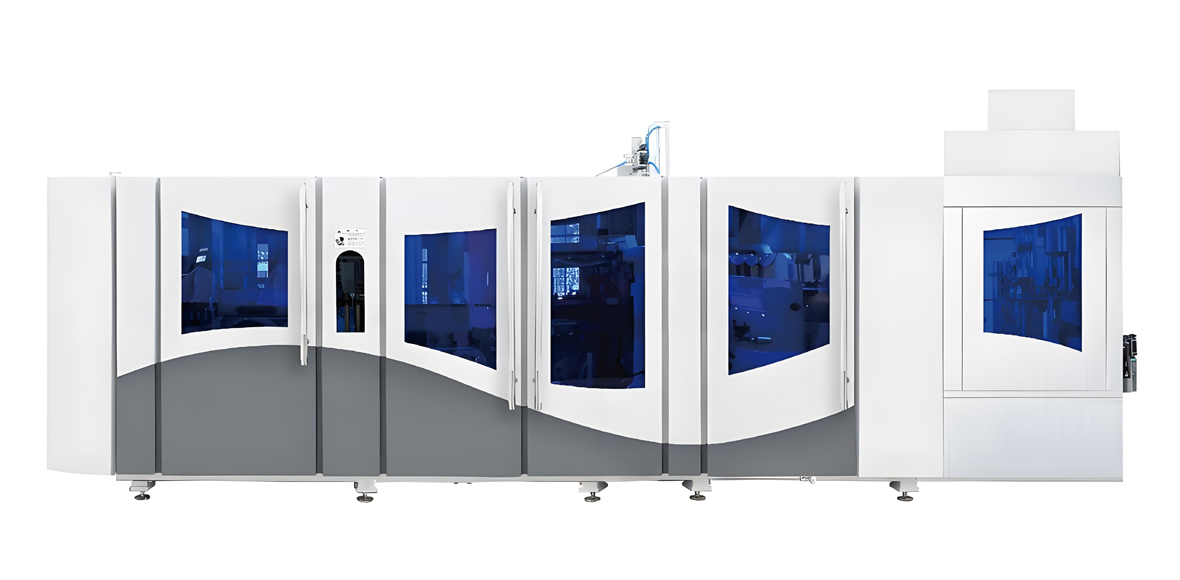
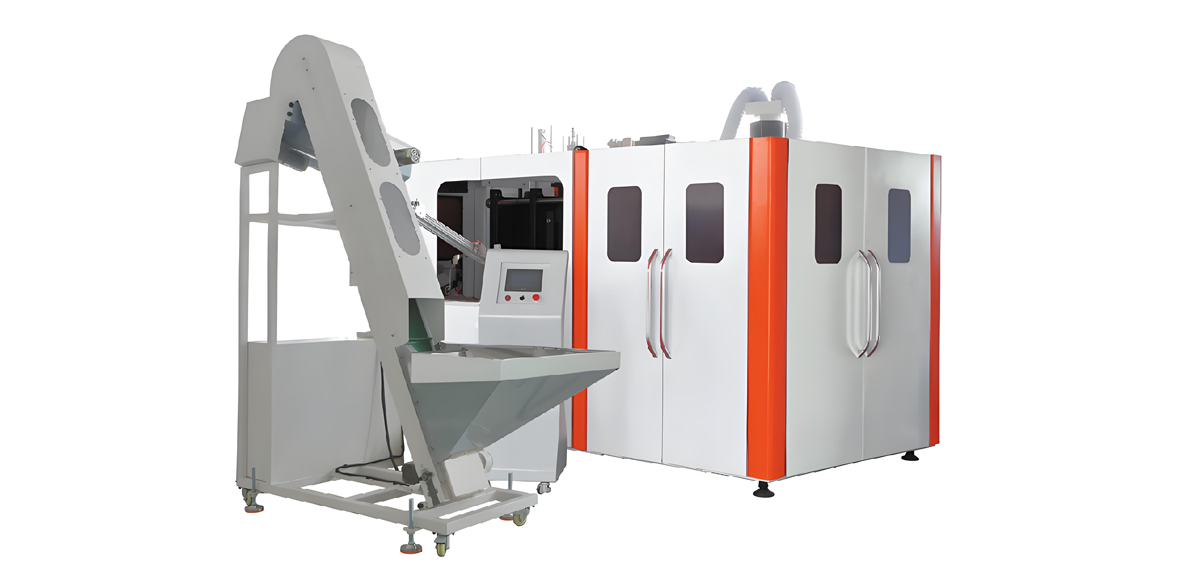
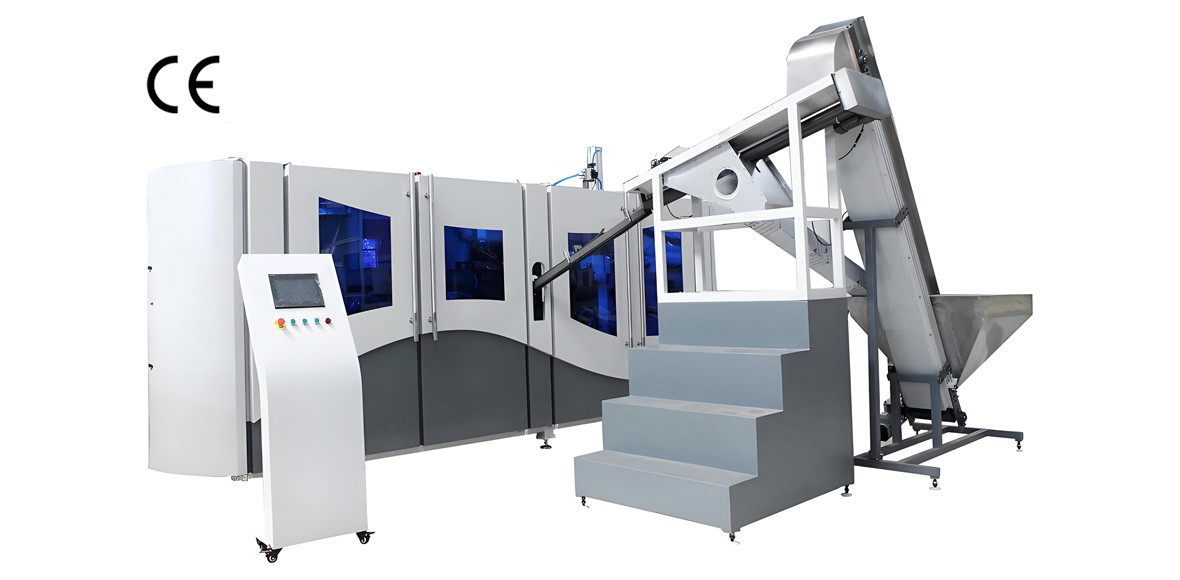
The Standard Speed Series is a fully automatic linear line built for controlled, hygienic production of water, carbonated and general beverage bottles at low-to-mid volumes. Its energy-saving heating and clean bottle path make it a common first choice for producers building a compliant line for an initial export market.
| Parameter | Typical Range |
|---|---|
| Series / model class | Standard Speed Series, full automatic |
| Cavities | 1 to 6 cavities (typical) |
| Output | 1,000 to 7,000 BPH |
| Bottle volume range | Typically 50 mL to about 2 L |
| Heating design | Infrared reheat, heater distance minimized to 38.1 mm |
| Energy saving | Around 30% or more electricity saving vs conventional heating-oven machines |
| Clamping | High-rigidity clamp with cam-linked mold movement (typical) |
| Hygienic design points | Oil-free bottle contact path, cleanable surfaces, guarded preform feed |
| Installed power | Typical mid-range for this output class; confirmed per configuration |
YuDa High Speed Series FGX (8000-15000 BPH)
The FGX High Speed Series is engineered for large-scale food and beverage production, where throughput, consistency and clean operation must hold up over long continuous runs. It suits producers scaling into high-volume water and carbonated soft drink markets that demand both capacity and stable, compliant bottle quality.
| Parameter | Typical Range |
|---|---|
| Series / model class | FGX High Speed Series |
| Cavities | 6 to 12+ cavities (typical) |
| Output | 8,000 to 15,000 BPH |
| Single-mold speed | About 2,500 to 3,000 BPH per cavity |
| Bottle volume range | Typically 200 mL to about 2.5 L |
| Heating design | High-efficiency infrared reheat, 38.1 mm heater distance |
| Drive | High-speed servo driving system with cam-linked mold motion |
| Monitoring | Remote monitoring; PLC data reviewable by engineers for stable quality |
| Hygienic design points | Oil-free contact zones, high-speed clean transfer, modular cleanable units |
YuDa Bottle Blow-Filling-Capping (BFC) Machine
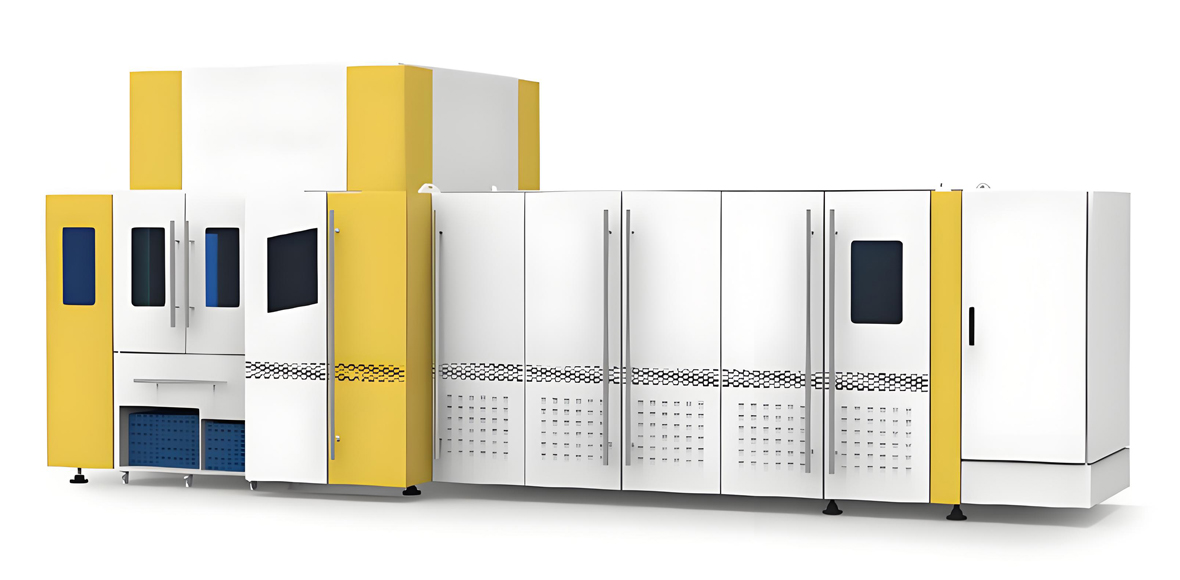
The BFC machine combines blowing, filling and capping into one integrated process. By forming, filling and sealing the bottle in a single continuous flow, it removes the storage-and-transport gap between an empty bottle and the filler, which is exactly the gap where re-contamination can occur. For water and sensitive beverages, that integration is a meaningful hygiene advantage as well as a footprint saver.
| Parameter | Typical Range |
|---|---|
| Process | Integrated blow, fill and cap in one line |
| Best-fit content | Drinking water and low-viscosity beverages |
| Output | Configuration-dependent; matched to compact-to-mid volumes |
| Hygiene benefit | Eliminates empty-bottle storage gap, reducing secondary contamination |
| Footprint | Compact combi layout saves plant area |
| Contact path | Oil-free, cleanable transfer between forming and filling |
Across all three lines, the shared design philosophy is the same: keep oil away from the bottle, keep surfaces cleanable, keep the air clean, and keep the bottle moving through a controlled path. None of this certifies the bottle, but all of it removes the contamination sources that cause migration and sensory failures.
Matching Bottle Compliance to Beverage Categories
Different beverages place different demands on the bottle, so the compliance profile changes with the content. A water bottle, a carbonated soft drink bottle and an edible oil bottle are all PET, but they face different fill temperatures, pressures, barrier needs and simulant classes during testing. Mapping content to requirement early prevents the expensive mistake of qualifying a bottle for the wrong use.
Drinking water is the most sensory-sensitive product, so acetaldehyde control and low overall migration dominate; the bottle is usually cold- or ambient-filled and tested with an aqueous simulant. Carbonated soft drinks add internal pressure, so the bottle needs a pressure-resistant base and body, and testing uses an acidic simulant. Juices and teas are frequently hot-filled or pasteurized, which requires a heat-set bottle and testing at elevated temperature. Dairy drinks add sensitivity to light and a need for clean, sometimes barrier-enhanced packaging. Edible oil is the most aggressive from a migration standpoint because fatty contact extracts more, making the fatty simulant the decisive test. Condiments and sauces vary widely in acidity and fat, so each is assessed on its own contact profile.
| Content | Fill / Use Condition | Key Bottle Requirement | Dominant Test Concern |
|---|---|---|---|
| Drinking / mineral water | Cold or ambient fill | Low acetaldehyde, high clarity | Sensory and aqueous migration |
| Carbonated soft drinks | Cold fill, internal pressure | Pressure-resistant base and body | Acidic simulant, antimony |
| Juices and tea | Hot fill or pasteurization | Heat-set bottle, thermal stability | Elevated-temperature migration |
| Dairy drinks | Often pasteurized, light-sensitive | Clean, sometimes barrier-enhanced | Migration plus sensory stability |
| Edible oil | Ambient, fatty contact | Robust wall, fat-resistant design | Fatty simulant (most aggressive) |
| Condiments and sauces | Variable acidity and fat | Content-specific design | Matched simulant per recipe |
These application areas map directly to the food and beverage industries YuDa machines serve. The practical takeaway for an exporter is to define the content and fill first, because that decision cascades into bottle type, heat-set requirement, barrier needs and the specific migration testing program the destination market will expect.
Selecting the Right YuDa Line for Your Target Market
Machine selection should follow the market and the content, not the other way around. Once an exporter knows the destination market, the beverage and the required output, the right YuDa line and hygienic configuration usually become clear. The table below turns common requirement profiles into a recommended starting configuration.
| Target Profile | Content / Fill | Output Need | Recommended YuDa Line and Hygienic Setup |
|---|---|---|---|
| New EU or US water brand | Still water, cold fill | Low to mid | Standard Speed full automatic line, oil-free air package, low-acetaldehyde heating window |
| Carbonated drink scale-up | CSD, cold fill, pressurized | High | FGX High Speed Series, pressure-base bottle tooling, servo-driven clean transfer |
| Hot-fill juice / tea export | Hot fill or pasteurized | Mid to high | Heat-set-capable configuration on Standard or FGX line, elevated-temperature bottle design |
| Bottled water with clean-fill priority | Water, contamination-sensitive | Compact to mid | Bottle Blow-Filling-Capping (BFC) machine to remove the empty-bottle gap |
| Edible oil packaging | Oil, fatty contact | Low to mid | Standard Speed line with robust wall bottle design and fatty-simulant-focused validation |
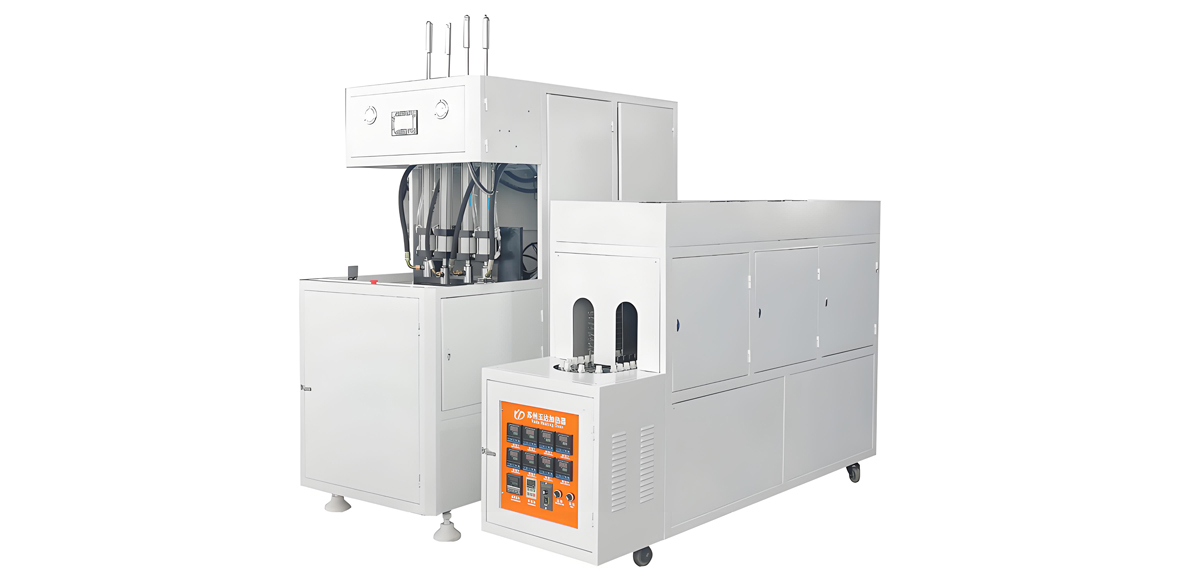
| Small enterprise, first export step | Water or general beverage | Entry level | Semi-auto or entry Standard Speed line, upgrade path to full automatic later |
Every recommendation in this table is a starting point that YuDa refines with the customer once the exact bottle geometry, weight, neck finish and destination market are confirmed. The point is that hygienic configuration — oil-free air, clean transfer, controlled heating — is chosen alongside the machine, because those choices are what let the finished bottle clear the destination market’s rules.
Common Reasons Market Entry Fails
Most rejected market entries fail for a small set of recurring reasons, and nearly all of them are preventable with planning. Knowing the failure modes in advance is the cheapest form of compliance insurance. The most frequent causes are migration exceedance, incomplete documentation, unauthorized recycled content, wrong labeling and mismatched test conditions.
| Failure Mode | Typical Cause | Prevention |
|---|---|---|
| Migration exceedance | High acetaldehyde, antimony or additive transfer | Food-grade resin, controlled processing temperature, clean equipment |
| Missing or incomplete DoC | Declaration absent or lacking supporting documents | Build the full dossier before shipment; keep supporting data current |
| Unauthorized rPET process | Recycled content from a non-authorized process | Use only EU- or FDA-authorized recycling processes with traceability |
| Non-compliant labeling | Missing #1 code, food symbol or local language | Confirm labeling rules per market before printing |
| Test conditions mismatch | Report milder than the real fill or use | Test at the actual fill temperature, time and simulant |
| Content change not reassessed | New beverage put in a bottle qualified for another | Re-evaluate compliance whenever content or fill changes |
The last row deserves special attention because it catches experienced producers. A bottle qualified for cold-filled water is not automatically valid for hot-filled tea or edible oil; changing the content changes the contact conditions and can invalidate an otherwise good file. Treat any content or fill change as a trigger to re-check the compliance basis.
A Step-by-Step Market Entry Roadmap
A disciplined roadmap turns a complex, market-specific process into a repeatable sequence. Following the steps in order prevents rework, because each step produces the input the next step needs. The roadmap below is the sequence YuDa recommends to customers preparing to enter a new food-grade market.
| Step | Action | Output |
|---|---|---|
| 1. Define the market | Confirm each destination country and its framework | Target-market list mapped to regulations |
| 2. Confirm applicable rules | Identify the exact framework and standards (FDA, EU 10/2011, GB 4806, MHLW, etc.) | Requirement checklist per market |
| 3. Select compliant material and process | Choose food-grade resin (and authorized rPET if used) and correct bottle type | Material and process specification |
| 4. Run migration and safety testing | Test with correct simulants and real-use conditions | Valid migration and sensory reports |
| 5. Issue DoC and technical file | Prepare declaration and supporting documents | Complete compliance dossier |
| 6. Apply labeling and traceability | Add #1 code, food symbol, batch coding, local language | Compliant bottle and packaging |
| 7. Clear import / customs | Assemble trade and compliance documents for the route used | Cleared shipment or local production start |
| 8. Monitor after launch | Maintain quality checks and re-assess on any change | Sustained compliance over time |
The roadmap is deliberately market-agnostic in structure and market-specific in content: the eight steps stay the same everywhere, while the details inside each step change with the destination. Building the process this way lets a manufacturer reuse its discipline across markets even though the specific rules differ.
Understanding the Relative Cost of Compliance
Compliance investment is best understood in relative terms, because the absolute figures vary widely by market, content and volume. To compare activities on a common scale, the table below sets a single-market, documentation-focused entry as the baseline at 100 index points, then expresses each activity as an index value, a multiple of that baseline, a level rating and a share of a typical full program. No monetary amounts are implied; these are planning ratios only.
| Compliance Activity | Investment Level | Index Points | Multiple vs Baseline | Share of Program |
|---|---|---|---|---|
| Food-grade virgin resin qualification | Low | 60 | 0.6x | ~4% |
| Multi-market documentation (DoC set) | Medium | 130 | 1.3x | ~9% |
| Labeling and traceability system | Medium | 110 | 1.1x | ~8% |
| Full migration and safety testing | High | 240 | 2.4x | ~17% |
| rPET process authorization | Very High | 380 | 3.8x | ~26% |
| Aseptic / ultra-clean filling readiness | Premium | 450 | 4.5x | ~31% |
| Post-market monitoring | Low | 80 | 0.8x | ~5% |
The ratios carry a clear message: routine documentation and virgin-resin qualification are the lightest tasks, migration testing is a significant but manageable step, and the heaviest investments cluster around recycled-content authorization and ultra-clean or aseptic filling readiness. An exporter planning a phased entry can use these relative weights to sequence spending — start with virgin resin and a solid testing and documentation base, then add recycled content or aseptic capability once the core market is established.
Service and Support for Compliance-Ready Production
YuDa supports customers well beyond machine delivery, because a compliant bottle depends on a correctly installed, correctly running and well-documented line. As a Wanplas factory, YuDa applies the group’s shared service commitments to every project so the customer can focus on winning the market rather than fighting the equipment.
Support begins before shipment with factory testing and machine acceptance, so the line is proven before it travels. YuDa engineers provide on-site installation and commissioning, tuning the heating window and process so bottles are formed within the parameters that keep acetaldehyde low and quality stable. The Wanplas group’s after-sales program includes USD 500 in free parts each year and free replacement of damaged parts within the warranty period, which keeps a compliant line running without improvised fixes that could compromise hygiene. A remote monitoring system lets engineers review PLC data and help maintain stable, repeatable production, and operator training builds the in-house capability to sustain quality over time.
On the compliance side specifically, YuDa assists by providing machine conformity and hygienic-design documentation and by explaining the equipment’s oil-free contact paths and cleanability, so the customer can fold that evidence into the finished-bottle dossier they build for their target market. The open-factory policy means customers are welcome to visit, inspect the equipment and run sample trials before committing. Alongside these, the Wanplas group’s transportation guarantee, production-capacity guarantee and quality-standard commitments underpin the whole engagement. To be precise about scope: this support helps the customer produce a bottle that can meet the rules and helps document the machine’s role, but the food contact certification of the finished bottle remains the responsibility of the bottle producer, its resin supplier and, where relevant, the recycler.
Frequently Asked Questions
Does a PET bottle blow molding machine itself need food contact certification?
No. Food contact compliance applies to the finished bottle, its resin and additives, and the hygiene of the production environment, not to the blow molding machine as a stand-alone product. That said, the machine’s hygienic design, oil-free contact paths and cleanability directly determine whether the bottle can pass migration and sensory testing, so equipment choice is still central to a successful market entry.
What is the difference between overall migration and specific migration?
Overall migration measures the total mass of all substances that transfer from the bottle into a food simulant, capped in the EU at 10 mg per square decimeter of contact surface. Specific migration limits control individual substances of concern one by one, such as antimony or acetaldehyde, each with its own numeric limit. A compliant bottle has to satisfy both the overall ceiling and every applicable specific limit.
Can recycled PET be used for food-grade bottles in export markets?
Yes, but only when the recycling process is authorized. The EU requires a recycling process authorization under EU 2022/1616, while the United States uses an FDA pre-market consultation that typically results in a letter of no objection. Both require evidence of decontamination efficiency and traceable food-grade feedstock, and rPET is often blended with virgin resin at a controlled ratio.
Which document do importers most often ask for first?
In the EU and many markets modeled on it, the Declaration of Conformity is the primary document, supported by migration test reports and a technical dossier. In the United States, the emphasis is on showing that the material is cleared for the intended food types and use temperatures under the relevant food additive regulation, such as the PET provisions in 21 CFR.
Why do bottle wall thickness and content type change the test conditions?
Migration testing must reproduce the real end use of the bottle. A hot-filled juice bottle, a chilled water bottle and a pasteurized dairy bottle each contact food at different temperatures and for different times, so the food simulant, the test temperature and the duration all change accordingly. Testing under milder conditions than the actual fill produces a report that is not valid evidence for that use.
How does YuDa help customers reach food-grade compliance?
YuDa supplies hygienically designed PET bottle blow molding machines with oil-free contact zones and cleanable surfaces, tunes the heating process during commissioning to keep acetaldehyde low, and provides machine conformity and hygienic-design documentation that customers fold into their finished-bottle dossier. YuDa also advises on preform handling, oil-free compressed air and clean filling integration, while the food contact certification itself stays with the bottle producer and resin supplier.
Is one compliance dossier enough for all export markets?
No single dossier covers every market, because each framework has its own permitted-substance basis and documentation format. However, a complete EU 10/2011 dossier is a strong foundation, since many emerging markets model their rules on the EU approach, and much of the underlying migration data can be reused across markets when the test conditions match the intended use.
Conclusion
For food-grade PET bottle manufacturers, overseas market entry is won or lost on the compliance chain, not on the blow molding step. The bottle, its resin and additives, its recycled content, its labeling and its documentation must all satisfy the destination market’s own framework — whether that is FDA 21 CFR in the United States, EU 10/2011 in Europe, the GB 4806 family in China, the MHLW Positive List in Japan, or the FSSAI, ANVISA, Health Canada and GSO systems elsewhere. Migration testing must reflect the real fill, recycled content must come from an authorized process, and every shipment needs the right declaration, labeling and import paperwork for its route.
The equipment’s role is to make all of that achievable: a hygienically designed, oil-free, cleanable line that forms bottles capable of passing, run under a controlled and well-documented process. That is where YuDa, a Wanplas factory, fits — building PET bottle blow molding machines that support food-grade production and providing the machine documentation and hands-on support that help customers assemble a compliant finished-bottle file.
If you are planning to enter a new market, tell us your target export countries, the beverage or content you intend to fill, and your required output. With that information, YuDa can recommend a compliance-oriented machine and bottle configuration, explain the hygienic setup your target market expects, and prepare the supporting documentation. You are welcome to audit the factory and run a sample trial before you commit — so the line you install is ready for the market you want to reach.