Small, high-value PET containers are a distinct discipline inside PET bottle production. A dropper bottle for essential oil, serum, or reagent and a lotion bottle for daily chemical or cosmetic use share the same raw material, but their neck finishes, body shapes, stretch ratios, and quality targets diverge enough that a generic machine setting will not deliver a clean result. YuDa, a Wanplas factory, has specialized in PET bottle blow molding machines for more than 20 years, exports to over 60 countries, and ranks among the top two PET blow machine manufacturers in China with more than 20 patents. This article explains how to configure a PET stretch blow line specifically for dropper bottles in the 5 to 100 mL range and lotion bottles in the 100 to 500 mL range, covering preform engineering, infrared heating, the three-stage blow sequence, machine architecture, mold and changeover strategy, auxiliary equipment, defect troubleshooting, and a practical model selection path built around the real YuDa product lineup. Wanplas, as the parent brand, unifies the quality standards and service commitments described here across its network of specialized factories.
Process Differences Between Dropper and Lotion Bottles
The first step in any correct machine configuration is to stop treating dropper and lotion bottles as one category. A dropper bottle is typically a small cylindrical straight-wall container whose entire commercial value depends on optical clarity, a precise neck inner diameter that accepts a glass or plastic dropper, and sometimes a UV-blocking amber or colored body. A lotion bottle is a larger, often shaped container whose value depends on neck thread strength for a pump or dispenser cap, controlled wall-thickness distribution across a flat or oval body, and freedom from thin shoulders or handles. The two formats stress different parts of the same blow molding process.
For dropper bottles, the neck finish is usually 18/415, 20/410, or GL18, and the dropper assembly demands a neck inner diameter tolerance of about plus or minus 0.10 mm. Because the bottle is small, the total stretch ratio is kept toward the lower end of the usable window, and the base is prone to crystallization white spots if the preform is under-heated or over-stretched. The wall must reach a haze below 3 percent, and amber or UV-barrier masterbatch is common for light-sensitive contents such as essential oils and serums. For lotion bottles, the neck finish is usually 24/410 or 28/410, and a pump head requires thread strength plus an ovality no greater than about 0.3 mm. The shaped or flat body makes wall-thickness distribution the central challenge, with thin zones appearing in the shoulder and at handle transitions.
The table below sets the two formats side by side so the machine recipe can be built around the right targets rather than a compromise that satisfies neither.
Two-Format Process Parameter Comparison
| Parameter | Dropper Bottle (5-100 mL) | Lotion Bottle (100-500 mL) |
|---|---|---|
| Typical volume | 5, 10, 15, 30, 50, 100 mL | 100, 200, 250, 300, 400, 500 mL |
| Common neck finish | 18/415, 20/410, GL18 | 24/410, 28/410 |
| Neck tolerance requirement | Inner diameter plus or minus 0.10 mm for dropper fit | Thread strength, ovality at or below 0.3 mm |
| Body shape | Mostly cylindrical straight wall | Often shaped, oval, or flat with shoulder transitions |
| Optical target | Haze below 3 percent, high transparency | Good clarity, color and frosted variants common |
| Total area stretch ratio | Lower end, about 8 to 11 | Mid to upper, about 10 to 14 |
| Preform weight | 6 to 15 g | 18 to 32 g |
| Typical defect mode | Base crystallization white spot, neck deformation | Thin shoulder, uneven wall, body ovality |
Reading this table correctly changes the configuration logic. For dropper bottles, the heater must protect the neck from heat while still reaching a uniform 95 to 115 degrees Celsius on the preform body, and the stretch rod travel must be precise because the small part tolerates little error. For lotion bottles, the heater must drive a larger preform mass with enough gradient control that the shoulder and side walls orient evenly, and the mold cooling must hold the body dimension so the pump cap threads seat square.
The economic consequence of this split is visible in the equipment configuration index, where a baseline 4-cavity linear machine equals 100 points. A 2-cavity semi-automatic setup for sampling reads around 35 to 45 points on acquisition cost, a 4-cavity standard full-automatic line reads about 60 to 75 points, a 6 to 8-cavity FGX high-speed line reads 110 to 140 points, and a linear blowing-filling-capping combi block reads 150 to 190 points. Throughput per cavity climbs as the index rises, while the energy per 1000 bottles tends to fall because higher-index machines carry the compact oven and air recovery as standard. A buyer should therefore select not the cheapest machine but the index that matches the stable daily volume, because running a low-index machine above its design point raises rejection rate and wears the servo stretch rod faster than the rated life.
Preform Design and Stretch Ratio Configuration
Blow molding does not begin at the oven; it begins at the preform. A PET preform is an injection-molded test tube with a finished neck thread, and its weight, wall distribution, and gate design predetermine what the bottle can become. For small high-value bottles, the temptation to reuse a generic preform is the single most common source of quality problems. The preform must be engineered for the target bottle, not borrowed from a water bottle program.
The axial stretch ratio describes how far the preform lengthens along the bottle axis, the radial stretch ratio describes how far the preform expands outward, and the total area stretch ratio is their product. For PET, a total area stretch ratio in the 8 to 14 range delivers good biaxial orientation, which is what gives the bottle its drop impact resistance and gas barrier. Small bottles take the lower end because the preform is already close to the final size, while a 500 mL lotion bottle can use the upper end. The axial stretch ratio is typically 2.0 to 3.0 and the radial stretch ratio 3.5 to 4.5. Preform wall thickness is usually 2.5 to 4.2 mm, and the gate must be clean because a heavy gate on a 6 g dropper preform wastes material and risks a stress mark at the base.
For dropper bottles, preform weight lands between 6 and 15 g depending on the final volume and the wall target. A 10 mL dropper bottle may use a 6 to 8 g preform, while a 100 mL version reaches 12 to 15 g. For lotion bottles, preform weight spans 18 to 32 g, with a 500 mL bottle near the top of that range when wall thickness must survive a pump actuation. The grammar of preform design is simple: keep the preform as light as the bottle allows, because every gram of preform is purchased resin that becomes scrap if the bottle is rejected.
Preform and Stretch Ratio Reference
| Item | Dropper Bottle | Lotion Bottle |
|---|---|---|
| Volume range | 5 to 100 mL | 100 to 500 mL |
| Preform weight | 6 to 15 g | 18 to 32 g |
| Preform wall thickness | 2.5 to 3.6 mm | 3.0 to 4.2 mm |
| Axial stretch ratio | 2.0 to 3.0 | 2.0 to 3.0 |
| Radial stretch ratio | 3.5 to 4.5 | 3.5 to 4.5 |
| Total area stretch ratio | 8 to 11 | 10 to 14 |
| Color and additive | Clear, amber, UV-barrier masterbatch | Clear, white, frosted, custom color |
A frequent engineering mistake is stretching a small dropper preform too hard to reach a lighter bottle. When the total area stretch ratio is pushed above the comfortable window on a 6 g preform, the base turns pearlescent and the drop impact resistance falls. The correct move is to select a preform whose weight supports the target stretch ratio rather than forcing the ratio through an undersized preform.
The preform gate and neck crystallinity deserve equal attention. The gate at the preform base should be as small as the injection process allows, because a heavy gate adds resin cost and becomes a stress concentrator that can initiate a base crack during drop testing. Neck crystallinity is controlled on the injection side, not the blow side: the neck must be cooled in the preform mold fast enough to stay amorphous, so the finished thread keeps its dimensions and surface finish. If the preform neck arrives at the blow oven already partially crystallized, no amount of neck air cooling will restore the tolerance, which is why preform quality control is the first gate in a dropper bottle program. For lotion bottles the same logic applies to the thread region, where a pump cap will expose any neck ovality or short-shot thread the moment torque is applied at the filling line.
Infrared Heating System and Oven Zone Configuration
The infrared oven is where a PET preform becomes blow-ready. PET absorbs infrared energy strongly in the near-infrared band, so the lamp power and the dwell time determine the preform surface temperature, which in turn controls how evenly the material stretches. For small bottles, the preform is short and the neck is close to the heated body, so neck cooling and zone count matter more than raw lamp power.
A typical oven uses 6 to 10 independently controlled zones, with small bottles leaning toward 5 to 7 zones because the preform length is short and over-zoning creates temperature overlap. Each lamp runs at 1.5 to 2.5 kW. The target is a preform surface temperature of 95 to 115 degrees Celsius at the body and a much cooler neck, achieved by a dedicated neck air-cooling ring that prevents the finished thread from annealing or deforming. The preform rotates at 8 to 20 rpm on a chain whose pitch is matched to the preform pitch, so every preform receives identical exposure as it passes the lamps. The total conditioning time in the oven is usually 8 to 15 seconds per preform.
The heater geometry itself influences energy use. YuDa machines apply a minimized lamp distance of 38.1 mm, which concentrates radiant energy on the preform and reduces wasted heat to the oven housing. Compared with conventional heating ovens, this configuration saves more than 30 percent of electricity for the same preform temperature profile, a meaningful operating cost reduction across a multi-shift production month.
Oven Zone Configuration for Small Bottles
| Zone position | Lamp power | Target temperature | Function |
|---|---|---|---|
| Neck cooling ring | Air only | Below 60 degrees Celsius | Protect finished thread from deformation |
| Zone 1 to 2 (upper) | 1.5 to 2.0 kW | 90 to 100 degrees Celsius | Softens shoulder region |
| Zone 3 to 5 (middle) | 1.8 to 2.5 kW | 100 to 115 degrees Celsius | Main body heating for uniform stretch |
| Zone 6 to 7 (lower) | 1.5 to 2.2 kW | 95 to 110 degrees Celsius | Base heating to avoid white spots |
| Rotation and chain | 8 to 20 rpm | Dwell 8 to 15 s | Even circumferential exposure |
Recipe management is the practical payback of multi-zone control. When a dropper bottle and a lotion bottle share a line, the operator stores one oven recipe per bottle and switches with a few taps on the control system. Because the lamp distance is fixed by the machine, the adjustable variables are per-zone power, conveyor speed, and neck air volume, all of which should be saved per product so changeovers are repeatable.
Three-Stage Stretch Blow Process Parameters
Stretch blow molding is a three-stage event inside the blow mold. First, a servo stretch rod drives down the center of the heated preform to lengthen it axially. Second, a pre-blow pulse at low pressure begins to shape the parison against the mold wall. Third, a high-pressure pulse completes the form and sets the bottle. The timing and pressure of each stage decide whether the bottle is flawless or flawed.
The pre-blow pressure sits at 0.8 to 1.4 MPa with a delay of 0.1 to 0.35 seconds after the stretch rod begins. This early, gentle pulse prevents the preform from sticking to one side of the mold and gives the material time to orient before the full force arrives. The high-pressure blow follows at 2.5 to 4.0 MPa, pushing the preform firmly against the cooled mold surface so the bottle adopts the cavity geometry and freezes the wall thickness. The stretch rod itself moves at 0.8 to 1.6 m/s and is positioned with a servo accuracy of about plus or minus 0.1 mm, which is especially important for small dropper bottles where a fraction of a millimeter at the base changes the crystallization result.
Exhaust recovery is the economical half of the process. The high-pressure air that formed the bottle is exhausted at the end of the cycle, and an air recovery system captures and cleans a portion of it back into the buffer tank. Depending on the bottle and the recovery design, this recovers 20 to 35 percent of the high-pressure volume, directly reducing the load on the compressor and the energy bill. Against entry-level imported units that vent all exhaust, a line with recovery and a 38.1 mm lamp spacing carries a lower operating cost per thousand bottles.
Energy use is most fairly expressed per unit output rather than per machine. A practical benchmark is the energy per 1000 bottles, which falls as cavity count and machine efficiency rise. The combination of a compact oven and air recovery moves the operating profile toward the lower end of the energy band without changing resin or bottle weight.
Machine Architecture Selection and YuDa FGX Series
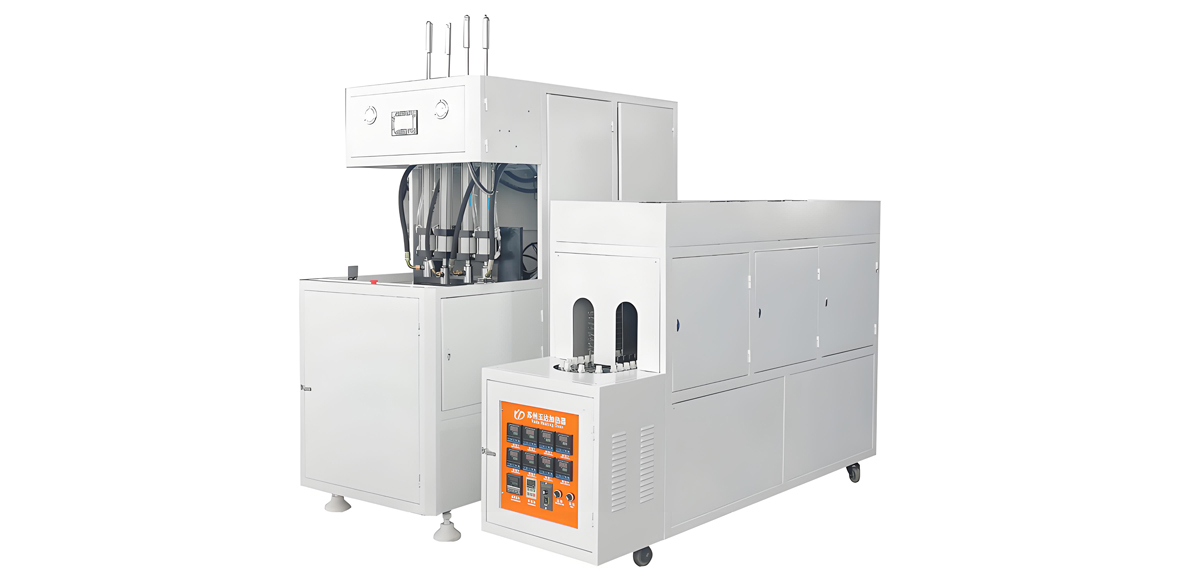
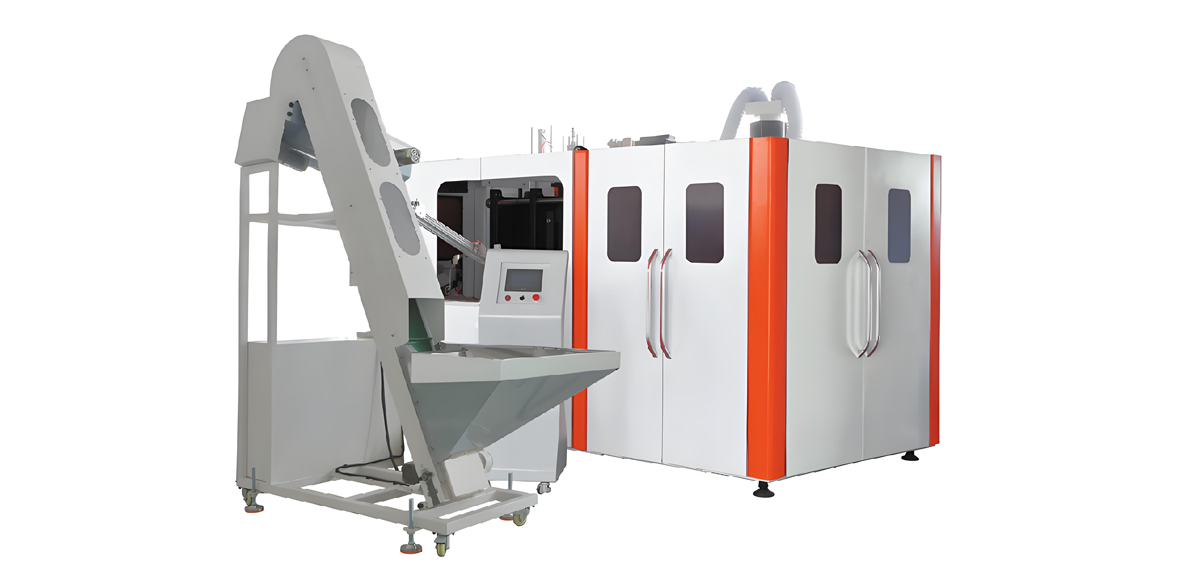
Three architectures cover essentially all dropper and lotion production: the full-automatic linear machine, the full-automatic rotary machine, and the semi-automatic two-step machine. The linear machine carries 2, 4, 6, or 8 cavities on a straight shuttle and delivers roughly 1200 to 2000 bottles per hour per cavity. It is the flexible workhorse for mixed bottle types and moderate volumes. The rotary machine arranges 6 to 20 cavities on a rotating wheel and reaches about 1500 to 2200 bottles per hour per cavity, making it the right choice for a single high-volume shape. The semi-automatic two-step machine suits very small batches, sampling, and product development where speed is secondary to low commitment.
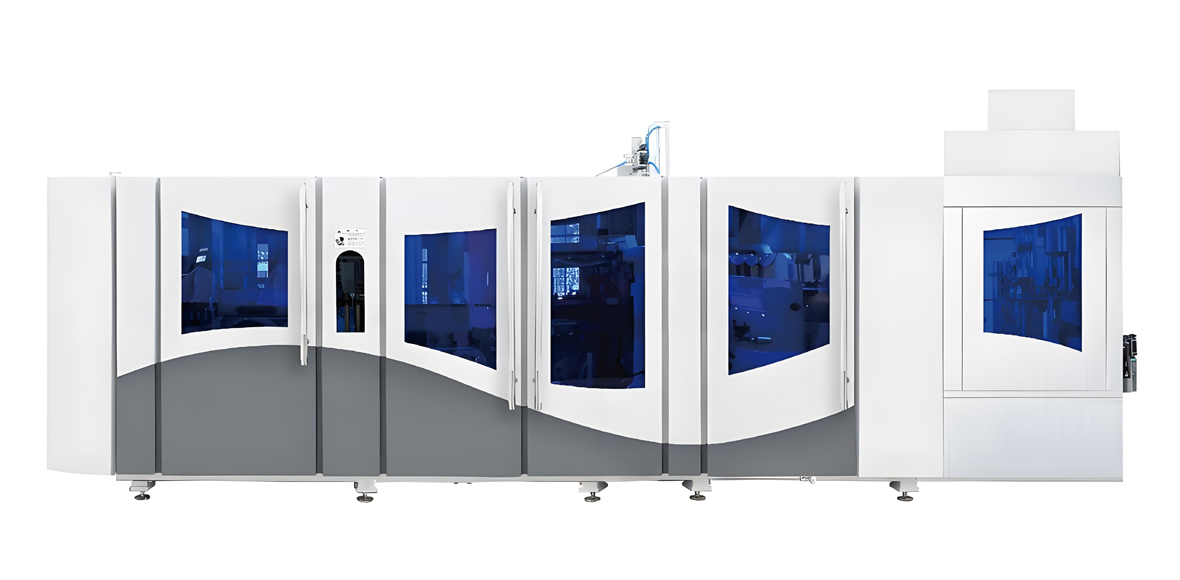
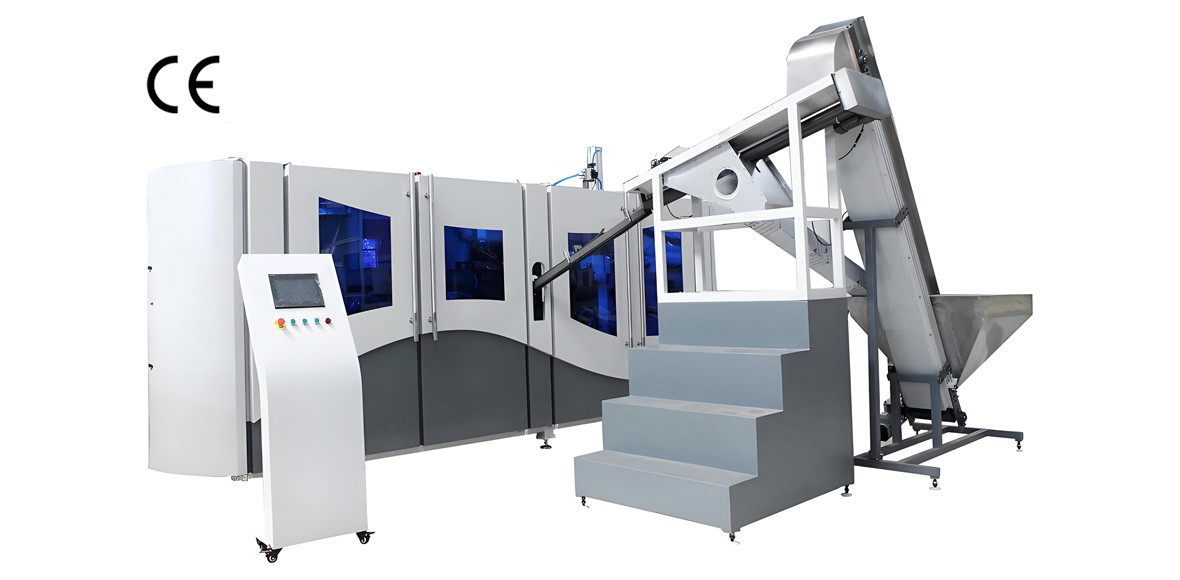
When the question becomes “which machine do I actually buy,” the YuDa FGX high-speed linear series is the reference point for high-volume, high-changeover reality. YuDa, a Wanplas factory, builds the FGX series as its high-speed PET blow molding line, with the high-speed series rated at 8000 to 15000 BPH and a single module running at 2500 to 3000 BPH. The design centers on an integrated cam linking system that performs mold opening, mold locking, and bottom mold elevation in one motion, paired with a high-speed servo stretch rod drive. That mechanism is what lets a multi-cavity linear machine keep cycle time tight while staying serviceable.
YuDa FGX High-Speed PET Blow Molding Machine
| Specification | Value or Range |
|---|---|
| Machine series | FGX high-speed linear series |
| Production capacity (high-speed series) | 8000 to 15000 BPH |
| Single module or cavity speed | 2500 to 3000 BPH |
| Cavity configuration | 2, 4, 6, or 8 cavities |
| Heater lamp distance | 38.1 mm, energy-optimized |
| Energy saving versus conventional oven | More than 30 percent electricity reduction |
| Mold motion system | Integrated cam linking: open, lock, bottom-elevate in one movement |
| Stretch rod drive | High-speed servo, accuracy about plus or minus 0.1 mm |
| Monitoring | Remote PLC data monitoring via mobile link |
| Best fit | High-volume single or few shapes, dropper and lotion lines |
For a producer running both dropper and lotion bottles in mid volumes, the modular design of the YuDa lineup matters as much as the speed number. Modular construction shortens maintenance and changeover because common sub-assemblies are interchangeable, which lowers the spare-part inventory and the time a machine spends idle during a mold swap.
Mold Design, Cooling, and Quick Changeover
The blow mold is the negative of the bottle, and for small high-value bottles its quality dominates the result. Cavity material is typically aluminum alloy for thermal response or stainless steel for wear life, with aluminum favored for short runs and frequent changes and stainless for long campaigns. Each cavity carries its own cooling circuit fed by mold cooling water at about 8 to 15 degrees Celsius, and the cooling balance is what freezes the wall thickness consistently and controls bottle ovality at ejection.
Changeover discipline decides whether a flexible line is actually profitable. A quick-change mold frame lets the operator swap a dropper cavity set for a lotion cavity set in 20 to 45 minutes, provided the water connections, blow needles, and neck transfers are pre-aligned. The alternative, a full strip-and-rebuild, can consume hours and invites setup error. YuDa machines are built around this quick-change philosophy so a cosmetics producer can run a morning lotion campaign and an afternoon dropper campaign on one frame.
Cooling water temperature and flow must be recipe-locked per bottle. A lotion bottle with a shaped shoulder needs more aggressive side cooling than a straight-wall dropper bottle, and if the mold is too warm at ejection the body relaxes into ovality. The rule is simple: colder mold, faster freeze, tighter dimension, at the cost of a slightly longer cycle, so the cooling setpoint is a balance between dimensional control and output.
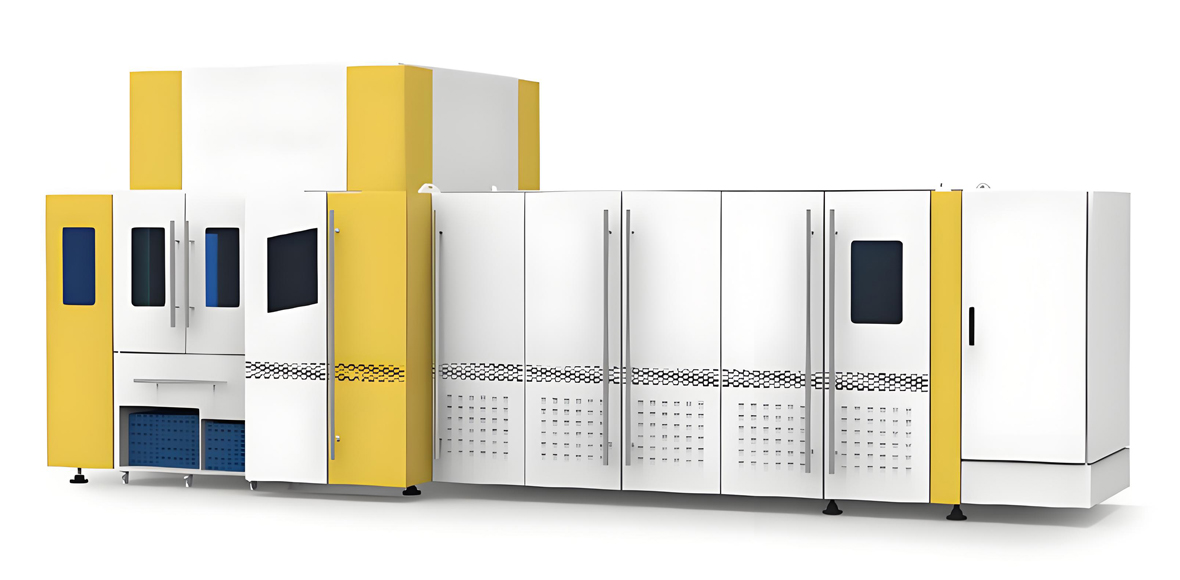
YuDa Standard Full-Automatic PET Blow Machine
| Specification | Value or Range |
|---|---|
| Machine series | YuDa standard full-automatic series |
| Production capacity (standard series) | 1000 to 7000 BPH |
| Operation | Full automatic, two-step |
| Cavity configuration | 2, 4, or 6 cavities |
| Heating system | Advanced multi-zone infrared oven, energy-saving |
| Neck handling | Neck air cooling to control finish deformation |
| Mold material | Aluminum alloy or stainless steel cavity |
| Changeover time | 20 to 45 minutes with quick-change frame |
| Best fit | Mid-volume, multi-shape dropper and lotion production |
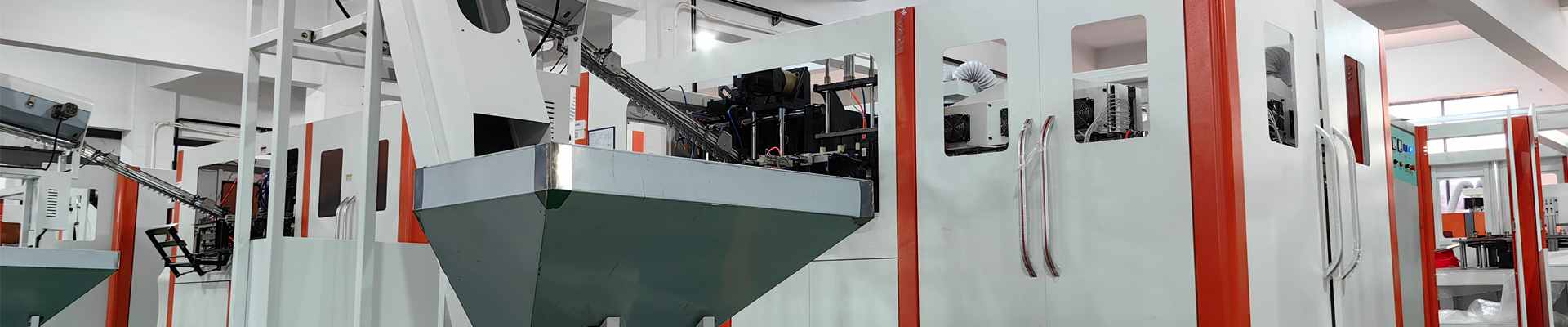
The standard series is the workhorse counterpart to the FGX high-speed series. Where the FGX targets maximum throughput, the standard full-automatic series targets flexibility and a more moderate capital commitment, which is frequently the correct entry point for a daily chemical or cosmetic bottle producer who is still expanding its SKU list.
Auxiliary Equipment Configuration
A blow molding machine is the center of a system, not the whole system. The auxiliary train around it decides whether the line runs clean, dry, and uninterrupted. For dropper and lotion bottles the auxiliary set is consistent: preform handling, resin drying, compressed air, cooling, conveying, and inspection.
Preform handling starts with a loader and an orienting system that feeds preforms into the oven without jamming. Because PET is hygroscopic, preforms are made from resin that must be dried to below 50 ppm moisture content, typically in a dehumidifying dryer at 160 to 170 degrees Celsius for 4 to 6 hours before injection. The blow side does not re-dry the preform, so drying belongs to the preform supply step and must be verified, not assumed. Compressed air is delivered by an oil-free compressor in a dual system: a high-pressure loop at about 4.0 MPa for the blow stage and a low-pressure loop at about 0.8 MPa for pneumatic functions, supported by a refrigerated dryer and air receiver tanks. Mold cooling is handled by a chiller holding the mold at 8 to 12 degrees Celsius, while bottles leave the machine on an air conveyor and move to inspection.
Inspection is where high-value bottles earn their margin. An online leak tester rejects bottles that cannot hold pressure, and a vision system checks the bottle mouth for flash, the body for black specks, and the wall for thickness outliers. For dropper bottles the vision system should verify the neck inner diameter because a half-tenth-of-a-millimeter error rejects the dropper fit at the filling line. For lotion bottles the vision system should confirm neck ovality and thread completeness so the pump cap seats without leak.
Auxiliary Equipment List
| Equipment | Function | Key specification |
|---|---|---|
| Preform loader and orienter | Feed preforms into oven | Jam-free orientation |
| Dehumidifying dryer | Dry PET resin for preform | Below 50 ppm, 160 to 170 degrees Celsius, 4 to 6 h |
| Oil-free air compressor | Supply blow and pneumatic air | High 4.0 MPa plus low 0.8 MPa dual system |
| Refrigerated dryer and receiver | Condition and buffer compressed air | Dew point control, stable pressure |
| Chiller | Cool blow mold | Mold temperature 8 to 12 degrees Celsius |
| Air conveyor | Transport finished bottles | Clean, non-contact transfer |
| Online leak and vision inspection | Reject defects | Leak, flash, black spot, wall thickness |
For producers who also fill in-house, Wanplas supplies matched blowing-filling-capping combi blocks that place the blow module directly ahead of the filler, eliminating the empty-bottle buffer and reducing floor space and contamination risk. A compact linear combi block is especially relevant for mini PET bottles where the handling loss between separate machines is a meaningful share of total output.
Defect Troubleshooting and Quality Control
Small PET bottles reveal process errors that large water bottles hide. A half-degree temperature drift or a mis-set pre-blow delay shows up immediately as a cosmetic or functional defect, so a structured troubleshooting table is part of the machine configuration, not an afterthought. The most common faults map cleanly to their causes.
Pearlescence or a white crystallization mark on the base means the preform was too cold at blow or the stretch ratio was too aggressive; the remedy is to raise the base zone temperature and ease the axial stretch ratio toward the lower end of its range. Star cracks at the base, sometimes called bottom star cracking, come from over-stretching a cold preform and are fixed the same way plus a check of stretch rod bottoming. Neck deformation points to insufficient neck air cooling or an oven profile that let heat creep into the thread; increase neck air and lower the upper-zone power. Uneven wall thickness traces to lamp power distribution across the oven, corrected by rebalancing zone power and verifying preform rotation. Body ovality at ejection means the mold was too warm or the cooling time too short; lower the mold temperature or extend the cooling portion of the cycle.
Defect Troubleshooting Table
| Defect | Likely cause | Remedy |
|---|---|---|
| Base pearlescence or white spot | Preform too cold, stretch ratio too high | Raise base zone, lower axial stretch ratio |
| Bottom star crack | Over-stretch of cold preform, rod bottoming | Warm preform, check stretch rod travel |
| Neck deformation | Neck cooling insufficient, heat creep | Increase neck air, reduce upper zone power |
| Uneven wall thickness | Lamp power imbalance, poor rotation | Rebalance zone power, verify 8 to 20 rpm spin |
| Body ovality | Mold too warm at ejection | Lower mold temperature, extend cooling |
| Black specks or haze high | Resin contamination, over-temperature | Check resin, reduce peak zone temperature |
Quality control for cosmetic and pharmaceutical contact also includes the production environment. Bottles for daily chemical, cosmetic, and pharmaceutical use are best produced in a controlled workshop, with a 100,000-class clean room appropriate for many cosmetic and daily chemical bottling operations. The blow process does not alter resin compliance, but clean handling protects the finished bottle from particulates that a downstream filler would otherwise have to remove.
Application Industries for Dropper and Lotion Bottles
Dropper and lotion bottles are the packaging backbone of several high-margin industries, and the machine configuration should be traced to the end use. The essential oil and serum segment uses dropper bottles in 5 to 30 mL with amber or UV-barrier PET to protect light-sensitive actives; clarity and a precise dropper fit are the buying criteria. The pharmaceutical and reagent segment uses small dropper bottles where controlled neck dimensions and clean handling support accurate dosing. The daily chemical and cosmetic segment uses both formats: dropper bottles for concentrated treatments and lotion bottles in 100 to 500 mL for body care, where pump-thread strength and an attractive shaped body drive the purchase. Food and beverage uses larger PET bottles, but the same YuDa machines serve edible-oil and condiment PET bottles when the neck and preform are reconfigured.
Because YuDa, a Wanplas factory, concentrates on PET bottle blow molding, its real application footprint is packaging bottles across these segments rather than a separate machine family per industry. The practical implication for a buyer is that the same FGX or standard machine, with the correct preform and mold, serves cosmetics, daily chemical, pharmaceutical, and food-contact PET bottles under the relevant compliance frameworks.
Model Selection Recommendation Guide
Selection should start from the bottle, not the machine. Define the volume, neck finish, daily volume, and how many shapes share the line, then map to a YuDa configuration. The guide below converts common requirements into a recommended model from the real YuDa lineup, keeping the advice grounded in the published capacity ranges.
Requirement to Model Recommendation
| Requirement (bottle, volume, output) | Recommended YuDa configuration |
|---|---|
| Dropper 5 to 30 mL, sampling, low volume | Semi-automatic two-step machine for trial and small batch |
| Dropper 10 to 100 mL, multi-shape, 1000 to 4000 BPH | Standard full-automatic, 2 to 4 cavities |
| Lotion 100 to 300 mL, mid volume, shaped body | Standard full-automatic, 4 to 6 cavities |
| Lotion 250 to 500 mL, high volume, single shape | FGX high-speed linear, 6 to 8 cavities |
| Dropper and lotion mixed, very high volume | FGX high-speed linear, 8000 to 15000 BPH series |
| Blow plus fill plus cap in one line | Linear blowing-filling-capping combi block (Wanplas group supply) |
The selection logic compresses into one sentence: choose a semi-automatic machine for trials, a standard full-automatic machine for flexible mid-volume multi-shape work, and an FGX high-speed linear machine for sustained high volume, then add a combi block when filling is in-house. Capital commitment rises from Low for semi-automatic, through Medium for standard, to High or Premium for high-speed and combi configurations, while the energy per 1000 bottles typically falls as efficiency features like the 38.1 mm oven and air recovery are included.
Service, Support, and Factory Commitment
A machine configuration is only as good as the support behind it, and this is where the Wanplas brand commitment applies uniformly. YuDa, a Wanplas factory, tests machines before shipment, dispatches engineers for installation and commissioning, supplies operator training, and maintains remote monitoring so that engineers at the China headquarters can read the machine PLC data through a mobile link and feed abnormal conditions back to the customer site. That remote capability shortens the gap between a fault appearing and a corrective recipe change being proposed.
The shared Wanplas service promises include USD 500 free parts every year, free replacement of damaged parts within the warranty, and an open-factory policy that welcomes customer visits for inspection and audit. For a buyer evaluating a dropper or lotion bottle line, the open-factory visit is the moment to verify build quality, watch a mold changeover, and confirm the oven and blow settings on a real preform. Wanplas also backs its factories with production-capacity and quality-standard guarantees, reflecting a group-wide stance that the machine must meet the promised output and quality or the commitment is honored.
Frequently Asked Questions
Can one blow molding machine produce both dropper bottles and lotion bottles?
Yes, a single linear PET blow molding machine can run both formats when it is equipped with quick-change mold frames and the oven recipe is reconfigured per bottle. Dropper and lotion bottles differ mainly in neck finish, body shape, and stretch ratio, so the practical limit is mold changeover time and the heating recipe, not the machine frame. A standard full-automatic YuDa machine with 2 to 6 cavities is a common platform for this mixed production.
What preform moisture level is required before PET blow molding?
PET must be dried to below 50 ppm moisture content, typically at 160 to 170 degrees Celsius for 4 to 6 hours in a dehumidifying dryer, before it is injected into preforms. Residual moisture above this level hydrolyzes the polymer chain during processing and reduces bottle clarity and mechanical strength. The blow side assumes a dry preform, so the drying step belongs to the preform supply and must be verified rather than assumed.
Why do dropper bottles show white crystallization spots on the base?
White crystallization or pearlescence on a dropper bottle base is caused by insufficient preform temperature at blow, a stretch ratio that is too aggressive for the small container, or a stretch rod that bottoms out too early. Raising the base zone temperature, reducing the axial stretch ratio toward the lower end of the 2.0 to 3.0 range, and tuning the pre-blow delay usually removes the defect. The small preform of a dropper bottle has little margin, so these settings must be recipe-locked.
How much compressed air does a PET blow molding line consume?
A two-step PET blow line needs a high-pressure system around 4.0 MPa for the blow stage and a low-pressure system around 0.8 MPa for pneumatic functions. Air recovery units can save 20 to 35 percent of high-pressure volume by recycling exhaust from the blow stage back into the buffer tank. Combined with an energy-optimized oven, this lowers the operating cost per 1000 bottles compared with conventional lines that vent all exhaust.
Which machine architecture is best for small-batch multi-shape bottle production?
A full-automatic linear machine with 2 to 4 cavities is the most flexible choice for small to mid batches and frequent changeovers between dropper and lotion shapes. A rotary machine becomes economical only when a single shape runs at high volume, because its longer changeover and higher cavity count favor stable mass production. The YuDa standard full-automatic series is the natural fit for flexible multi-shape work.
What certifications apply to PET bottles for cosmetics and pharmaceutical use?
PET bottles for cosmetics, daily chemical, and pharmaceutical contact should meet food-contact frameworks such as EU 10/2011, FDA 21 CFR 177.1630, and GB 4806.7, supported by ISO 9001 quality management and CE machinery safety. The blow molding process itself does not change the resin compliance, but clean handling in a controlled workshop protects the finished bottle from contamination that a downstream filler would otherwise reject.
How long does a mold changeover take between dropper and lotion bottles?
With a quick-change mold frame and pre-aligned water connections, a cavity changeover between dropper and lotion molds is typically completed in 20 to 45 minutes. The time depends on cavity count, whether the neck transfer and blow needle set must be swapped, and how much oven reconfiguration the new bottle requires. A modular machine design keeps this interval short and repeatable across shifts.
Conclusion
Configuring a PET blow molding line for dropper and lotion bottles is a preform-first discipline. The dropper bottle demands a precise neck, low haze, and a base free of crystallization; the lotion bottle demands thread strength, controlled wall distribution, and low ovality. Both are served by the same engineering foundation: a correctly weighted preform, a multi-zone infrared oven with neck cooling and a compact 38.1 mm lamp spacing, a precise three-stage stretch blow sequence with servo stretch rod control, and a mold and auxiliary train built for clean, dry, inspected output. YuDa, a Wanplas factory with more than 20 years in PET bottle blow molding and over 60 export countries, offers the FGX high-speed linear series for sustained volume and the standard full-automatic series for flexible mid-volume multi-shape production, both supported by the Wanplas group commitments of USD 500 free parts per year, pre-shipment testing, remote monitoring, and an open-factory policy. If you are specifying a dropper or lotion bottle line, send your bottle drawing, target volume, and daily output, and the engineering team will return a tailored machine and mold configuration, arrange a mold trial on your preform, and welcome you to the factory for an on-site audit and changeover demonstration.