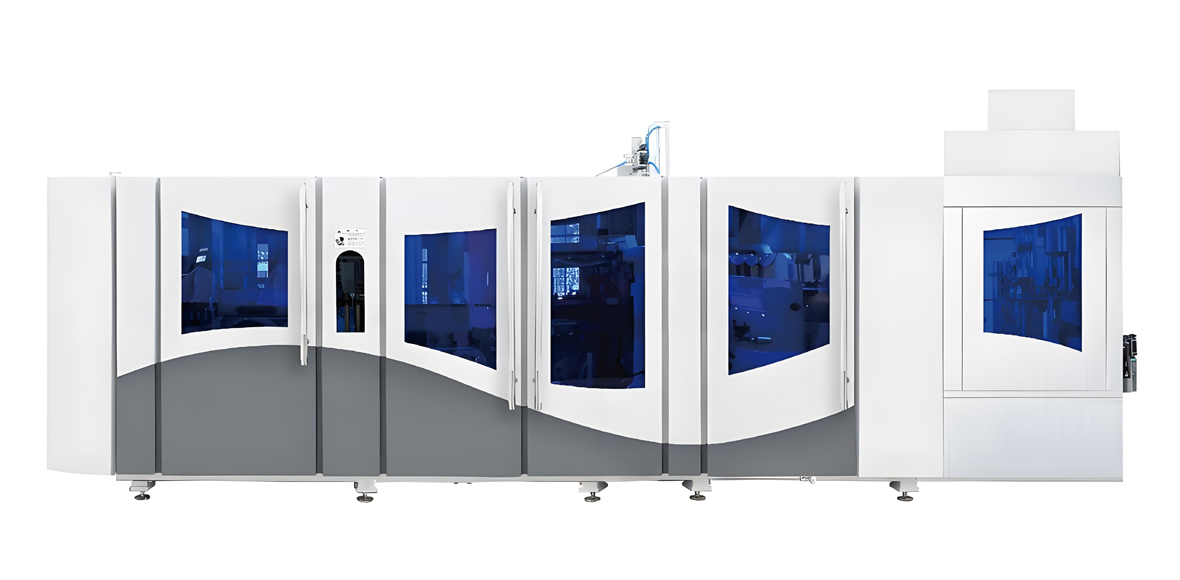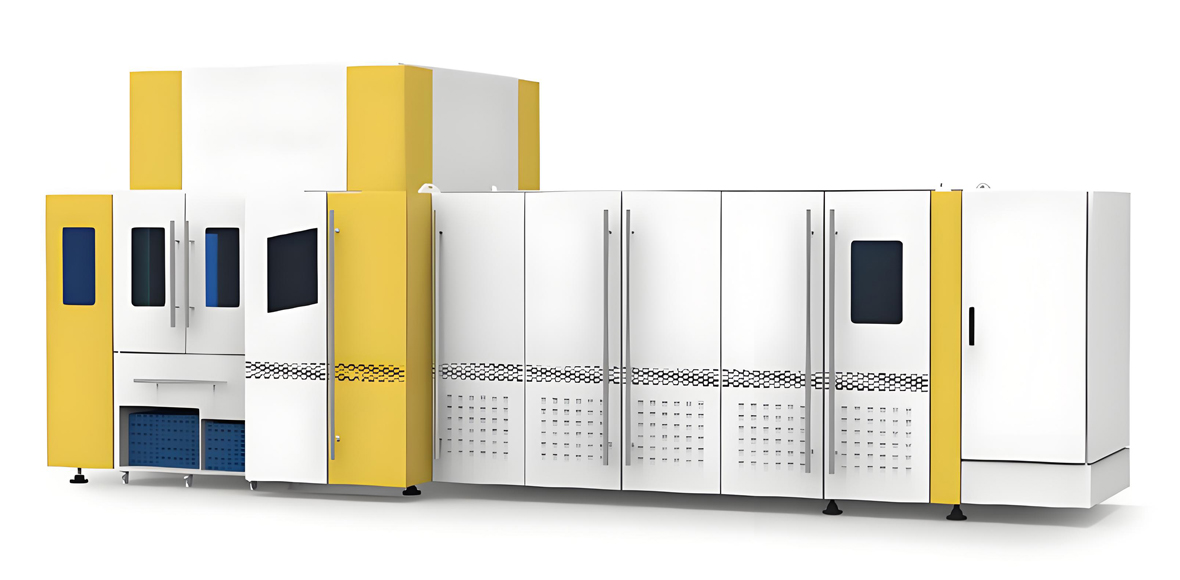
The edible oil packaging industry has maintained stable and resilient development in the global consumer market, driven by the rigid demand for household cooking oil, catering industry expansion, and retail packaged oil sales. Compared with traditional glass bottles and iron cans, PET edible oil bottles have become the mainstream packaging solution for vegetable oil, peanut oil, olive oil, and blended edible oil due to their lightweight structure, high safety, excellent barrier performance, shatterproof feature, and recyclable advantages. With the continuous upgrading of food safety standards and standardized packaging requirements, professional PET bottle manufacturing has evolved into a low-risk, stable-profit, and sustainable supporting business for the edible oil industry.
For investors and packaging factory operators, the profit margin of the edible oil PET bottle manufacturing business depends on core factors including equipment performance, raw material cost control, production automation level, and order scale. Among them, the configuration and operation efficiency of the PET bottle blow molding machine directly determines the unit production cost, finished product qualification rate, and daily output capacity, which are the core determinants of long-term profit space. Many small and medium-sized packaging factories face thin profits or unstable income due to backward equipment, high energy consumption, serious material waste, and low automation.
This article conducts a comprehensive and in-depth profit margin analysis of the edible oil PET bottle manufacturing business, covering market profit characteristics, full-link cost breakdown, PET bottle blow molding machine price and operation cost, single product profit calculation, annual benefit evaluation, profit influencing factors, and profit improvement strategies. Combined with the actual production data of YUDA professional food-grade PET bottle blow molding equipment and 2026 industry market price standards, this article sorts out a complete profit assessment system to help investors accurately judge the profitability, investment value, and risk control points of the edible oil PET bottle production project.
1. Overview and Profit Characteristics of Edible Oil PET Bottle Manufacturing Industry
1.1 2026 Market Demand and Industry Profit Environment
Edible oil belongs to rigid consumer goods with stable market demand throughout the year, and the supporting PET bottle packaging market has no obvious off-season and peak-season differentiation, ensuring continuous and stable order sources for packaging factories. In recent years, with the standardized development of the edible oil industry, small and medium-sized oil presses and informal packaging containers have been gradually eliminated, and formal food-grade PET plastic bottles have become the only compliant packaging choice for edible oil retail and wholesale. The market demand for 1L, 2L, 5L, and 10L conventional edible oil PET bottles continues to grow steadily, bringing stable business support for packaging manufacturers.
Different from cosmetic and daily chemical PET bottles that pursue personalized appearance and high added value, edible oil PET bottles focus more on safety stability, barrier performance, and cost controllability. The industry presents the profit characteristic of small single product profit but large-scale overall profit, relying on high-volume continuous production to accumulate total profits. The industry gross profit margin is relatively stable, less affected by market fashion changes, with low investment risk and strong anti-risk ability, which is very suitable for long-term stable operation of small and medium-sized manufacturing enterprises.
1.2 Core Profit Advantages of Edible Oil PET Bottle Business
The edible oil PET bottle manufacturing business has unique profit advantages compared with other plastic packaging businesses. First, the product specification is highly standardized, with few customized modifications, which greatly reduces mold replacement cost, equipment debugging time, and trial production material loss. Conventional edible oil bottle specifications are fixed for a long time, and the production line can maintain long-term continuous single-specification production, maximizing production efficiency and reducing comprehensive operating costs.
Second, food-grade PET packaging has high industry entry barriers and stable customer stickiness. After passing food safety certification and long-term quality verification, packaging factories can form long-term cooperative relationships with edible oil manufacturers, realizing stable order repetition and continuous profit output. Third, equipped with high-efficiency and energy-saving PET bottle blow molding machine, the whole production process realizes automatic molding, with low manual dependence, low defective rate, and controllable long-term cost, further expanding net profit space.
1.3 Industry Profit Restriction Factors
The main factors restricting the profit level of the edible oil PET bottle manufacturing industry include raw material price fluctuation, backward production equipment leading to high energy consumption and waste, low production automation leading to high labor costs, and homogeneous market competition leading to low ex-factory unit price. Most small factories adopt old semi-automatic blow molding equipment, with a defective rate of more than 5%, serious raw material waste, and high hourly power consumption, resulting in compressed single bottle profit and difficulty in expanding profit scale.
2. Full-Link Cost Breakdown of Edible Oil PET Bottle Production
The profit calculation of edible oil PET bottle manufacturing is based on accurate full-link cost accounting. The total production cost is divided into fixed investment depreciation cost and daily variable operating cost. Fixed costs include PET bottle blow molding machine equipment depreciation, mold depreciation, and plant rent depreciation. Variable costs cover PET raw material cost, labor cost, water and electricity energy consumption cost, equipment maintenance cost, and auxiliary material cost. This chapter conducts detailed price and cost accounting based on 2026 industry market standards.
2.1 Core Equipment Fixed Investment and Depreciation Cost
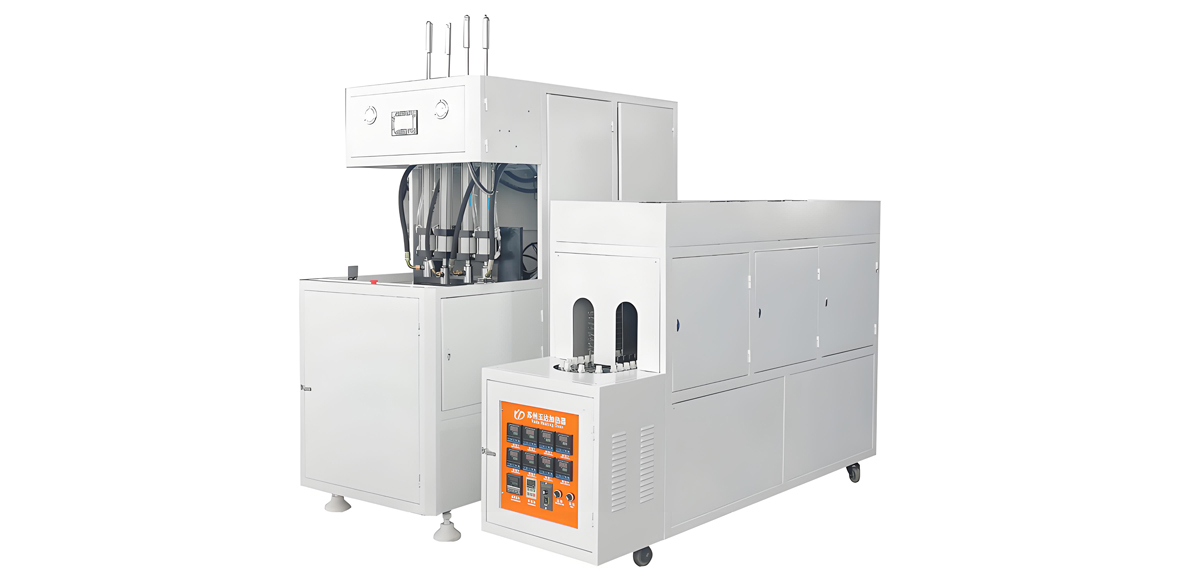
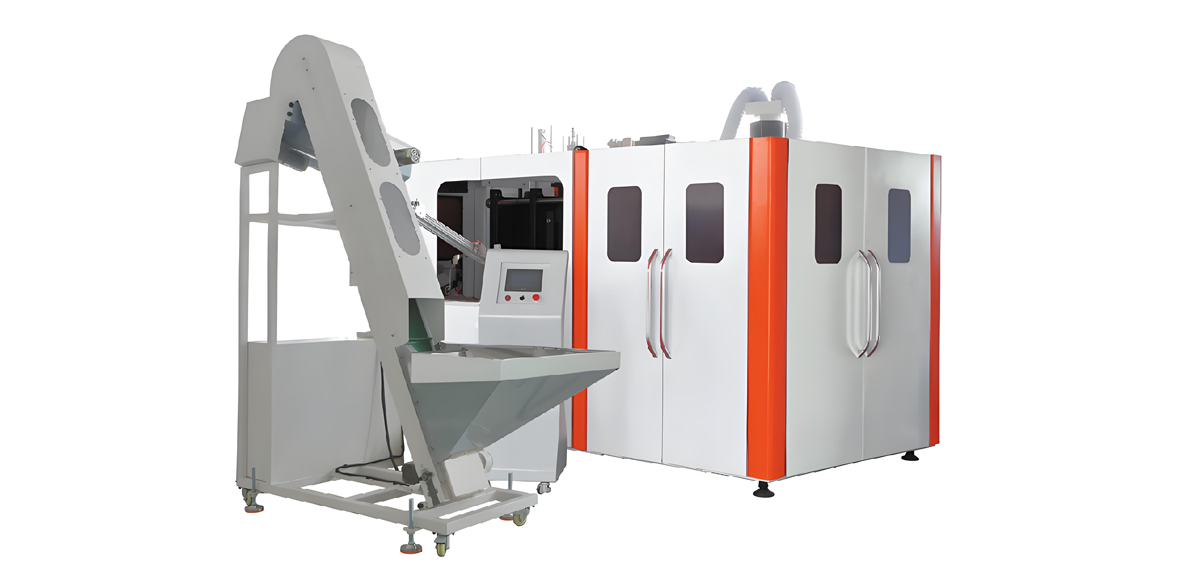
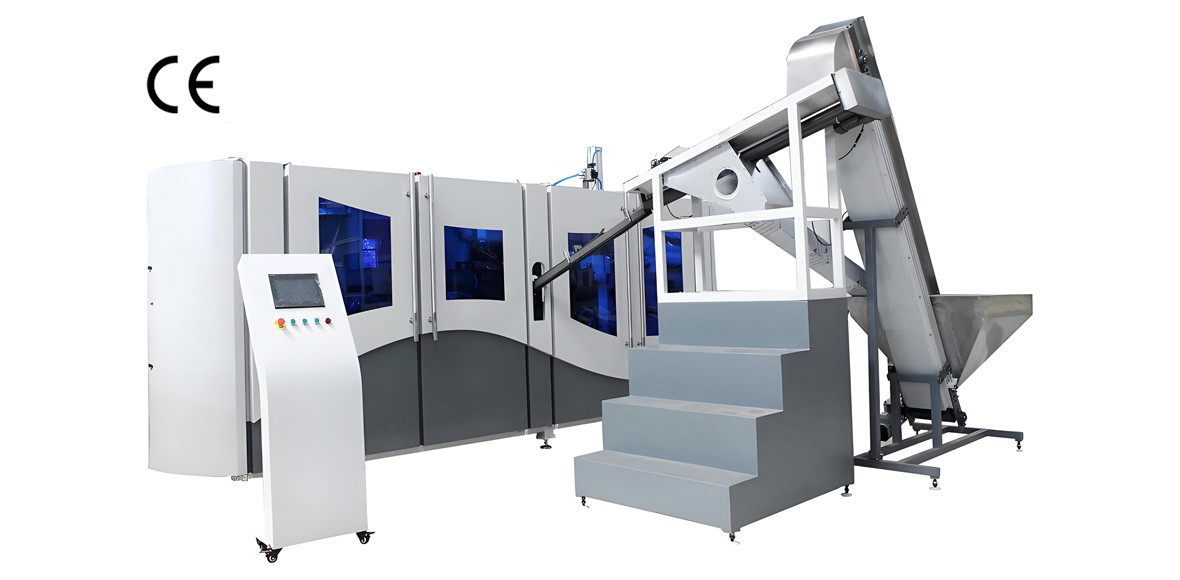
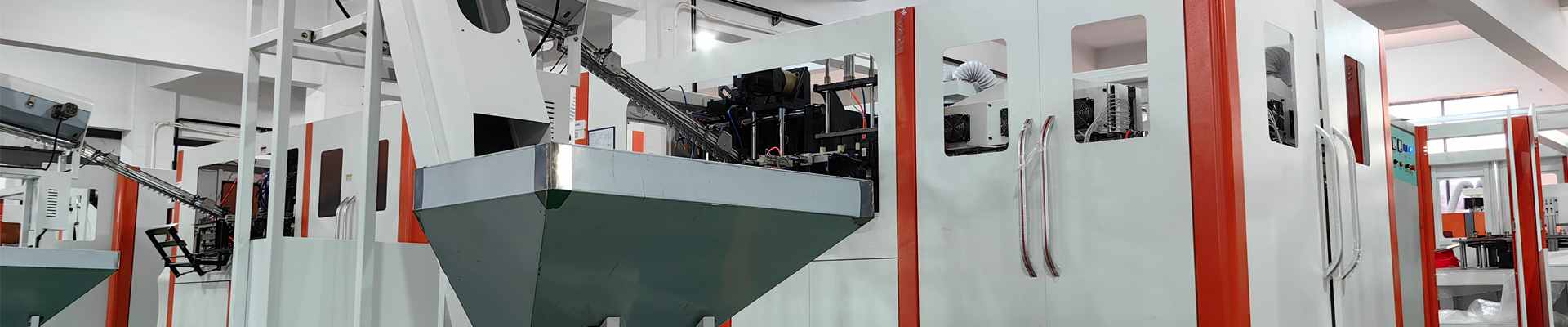
The PET bottle blow molding machine is the core fixed asset of edible oil bottle production, and its procurement cost and service life directly affect daily depreciation cost. YUDA provides professional food-grade PET bottle blow molding machines specially optimized for edible oil packaging production, including semi-automatic and fully automatic models, meeting the production demands of small-batch trial operation and large-scale mass production respectively.
The semi-automatic PET bottle blow molding machine is suitable for small edible oil bottle factories with daily output below 15,000 bottles. The 2026 standard FOB price is 13,000-17,000 US dollars. The equipment has a service life of 8-10 years, with an average daily depreciation cost of 4.5-6 US dollars. It has the advantages of low initial investment and flexible operation, suitable for start-up investors.
The fully automatic food-grade PET bottle blow molding machine is the mainstream profit-making model for formal edible oil packaging factories. It adopts two-step stretching blow molding technology, independent constant-temperature heating system, and full PLC intelligent control, which can stably produce high-barrier, high-safety edible oil bottles with a qualification rate of over 99.3%. The 2026 FOB price of YUDA standard fully automatic model is 29,000-36,000 US dollars, with a service life of 10-12 years and an average daily depreciation cost of 8-11 US dollars. The high-efficiency and low-loss operation of the equipment can greatly offset the depreciation cost advantage and create higher net profit for long-term operation.
In addition, the supporting auxiliary equipment of the production line includes an automatic preform feeder, high-pressure air compressor, circulating water cooling system, and raw material drying equipment, with a total one-time investment of 10,000-14,000 US dollars and a daily depreciation cost of 3-5 US dollars. The total daily fixed depreciation cost of the complete production line is controlled within 10-17 US dollars, with low fixed cost pressure.
2.2 Mold Customization and Depreciation Cost
Edible oil PET bottles have fixed conventional specifications, and factories only need to be equipped with standard molds of 1L, 2L, 5L, and 10L to meet most market orders. The food-grade blow molding mold adopts high-precision steel mirror polishing treatment, which meets food safety production standards and has long service life. The price of a single-cavity standard edible oil bottle mold is 900-1,300 US dollars per set, and the price of a dual-cavity high-efficiency mold is 1,600-2,200 US dollars per set.
A complete set of mainstream specification molds requires a total investment of 3,500-6,000 US dollars, with a service life of 5-8 years and an average daily depreciation cost of 2-4 US dollars. YUDA provides long-term free mold maintenance and preferential repair services for supporting equipment customers, effectively reducing the later mold replacement cost and maintaining stable profit margins.
2.3 PET Raw Material Variable Cost
PET raw material cost accounts for more than 85% of the variable production cost of edible oil bottles, which is the most important factor affecting single product profit. In 2026, the market price of food-grade PET raw material particles is stable at 1.7-2.1 US dollars per kilogram. Taking the mainstream 5L edible oil PET bottle as an example, the single bottle weight is 38-42 grams, and the pure raw material cost of a single finished bottle is 0.065-0.088 US dollars.
Ordinary old blow molding equipment has a raw material waste rate of 5%-7%, which seriously increases the unit material cost. YUDA PET bottle blow molding machine is equipped with an automatic flash recycling system and precise quantitative extrusion technology, which controls the raw material waste rate below 1.2%. It saves a lot of invalid material loss every day, directly increasing the gross profit of each finished bottle.
2.4 Labor Operating Cost
The fully automatic PET bottle blow molding production line has a high degree of automation, realizing automatic preform feeding, heating, blowing, and finished product output. A single production line only needs 1 operator to complete daily equipment monitoring and finished product sorting work, with a monthly labor cost of 320-480 US dollars and an average daily labor cost of 10-16 US dollars.
In contrast, the traditional semi-automatic production line requires 3-4 workers for auxiliary operations, with a daily labor cost of more than 40 US dollars. The high automation advantage of YUDA professional equipment can save more than 65% of labor costs, forming a stable cost advantage in long-term production and significantly improving net profit margin.
2.5 Water, Electricity and Maintenance Comprehensive Cost
YUDA PET bottle blow molding machine adopts servo energy-saving optimization design, which effectively reduces idle power consumption and repeated energy loss. The daily power consumption cost of 24-hour continuous operation of a fully automatic production line is 26-38 US dollars. The production line is equipped with a circulating water recycling system, with almost no water waste, and the daily water cost is less than 4 US dollars. The daily comprehensive water and electricity cost is controlled at 30-42 US dollars.
In terms of equipment maintenance, the daily maintenance cost is extremely low, only including regular cleaning and parameter calibration. The average daily maintenance cost and wearing parts replacement amortization cost is 2-3 US dollars. The overall daily operating miscellaneous cost is low and stable, with no hidden cost consumption, ensuring transparent and controllable profit accounting.
3. Single Product and Monthly Profit Margin Calculation
3.1 Standard Ex-Factory Price of Edible Oil PET Bottles
In 2026, the market ex-factory price of mainstream food-grade edible oil PET bottles is stable and transparent. The ex-factory price of 1L edible oil bottles is 0.12-0.15 US dollars per piece, 2L bottles is 0.18-0.22 US dollars per piece, and the most mainstream 5L large-capacity edible oil PET bottle is 0.28-0.32 US dollars per piece. The ex-factory price fluctuates slightly according to order quantity and delivery cycle, and large-batch long-term orders have stable unified pricing, which is conducive to stable profit accumulation.
3.2 Single Bottle Gross Profit and Net Profit Calculation
Taking the most sold 5L edible oil PET bottle as the calculation standard, after deducting the raw material cost of 0.065-0.088 US dollars, the single bottle gross profit is 0.192-0.255 US dollars. After further amortizing daily fixed depreciation, labor, water, electricity, and maintenance costs, the single bottle net profit is stably maintained at 0.15-0.20 US dollars. For small-specification 1L and 2L bottles, although the single bottle profit is low, the production cycle is short and the daily output is larger, and the comprehensive gross profit rate can reach 55%-65%.
Equipped with YUDA high-efficiency PET bottle blow molding machine, the product qualification rate is as high as 99.3%, which almost eliminates defective product loss. Compared with ordinary equipment with a 5% defective rate, it avoids the profit loss caused by waste products and further improves the actual net profit margin of finished products.
3.2 Daily and Monthly Total Profit Scale
The standard YUDA fully automatic PET bottle blow molding machine has a stable daily output of 18,000-25,000 pieces of 5L edible oil bottles. Calculated based on the average daily output of 20,000 pieces, the daily gross profit of the production line is about 3,800-4,200 US dollars. After deducting all daily fixed and variable operating costs, the daily net profit is 2,800-3,300 US dollars.
Based on 28 effective production days per month, the monthly net profit of a single fully automatic production line can reach 78,400-92,400 US dollars. Even considering order fluctuation, equipment regular maintenance shutdown, and other factors, the monthly stable net profit can still be maintained above 65,000 US dollars, with extremely considerable profit scale and stable profit output capacity.
4. Key Factors Affecting Profit Margin of Edible Oil Bottle Manufacturing
4.1 PET Bottle Blow Molding Machine Performance and Automation Level
Equipment performance is the core factor that determines the profit ceiling of the edible oil PET bottle manufacturing business. High-quality professional PET bottle blow molding machines can achieve precise raw material extrusion, stable molding quality, ultra-low waste rate, and high-speed continuous production, which fundamentally reduce unit production costs. YUDA food-grade dedicated blow molding equipment is optimized for the high-barrier and high-safety production requirements of edible oil bottles, effectively avoiding bottle deformation, uneven wall thickness, and poor sealing problems, ensuring product qualification rate and reducing rework loss.
The servo energy-saving system of the equipment can reduce long-term power consumption by more than 20% compared with ordinary equipment, and the intelligent parameter locking function avoids parameter deviation caused by manual debugging, ensuring consistent product quality and stable profit level of each batch of products. Investors who choose low-cost inferior equipment will face high energy consumption, high waste rate, and low output, resulting in compressed profit margins and even long-term meager profit operation.
4.2 Raw Material Price Fluctuation Control Ability
PET raw material price fluctuation directly affects the gross profit space of finished bottles. In the cycle of rising raw material prices, factories with high material waste rate will face severe profit compression or even losses, while factories equipped with high-precision PET bottle blow molding machines can rely on ultra-low waste rate to resist raw material price risks and maintain stable net profit. In addition, long-term bulk raw material procurement and reasonable inventory reserve can effectively hedge short-term price fluctuations and stabilize comprehensive profit margins.
4.3 Production Scale and Order Stability
The edible oil PET bottle business is a typical scale-profit industry. The larger the daily production scale, the lower the amortized fixed cost per unit product, and the higher the net profit margin. Factories with stable long-term orders can realize full-load continuous operation of PET bottle blow molding machines, maximize equipment production efficiency, and avoid profit loss caused by equipment idle and repeated startup energy consumption. Cooperating with multiple edible oil manufacturers to maintain stable order reserves is the key to long-term profit growth of the factory.
4.4 Daily Production Management and Loss Control
Refined daily management can further optimize profit margins. Standardized equipment maintenance can maintain the high-efficiency operation state of the PET bottle blow molding machine for a long time, reduce failure shutdown loss, and extend equipment service life. Unified raw material management and finished product inspection can reduce material waste and defective product outflow. Reasonable personnel scheduling can improve labor efficiency and avoid human resource waste. Small management loopholes will form a huge profit gap in long-term mass production.
5. Effective Strategies to Improve Profit Margin in 2026
5.1 Upgrade to High-Efficiency Energy-Saving PET Bottle Blow Molding Machine
For old factories with low profit margins and high comprehensive costs, upgrading to YUDA fully automatic energy-saving PET bottle blow molding machine is the most direct and effective profit improvement measure. The new generation of equipment reduces raw material waste rate by 4%-6%, reduces power consumption by more than 20%, and increases production efficiency by 30%, which can significantly reduce unit production costs and expand single product profit space in the short term. The equipment investment payback period is short, and the long-term cost-saving benefit is significant, which is the core configuration for profit upgrading of edible oil bottle factories in 2026.
5.2 Optimize Production Line Configuration and Improve Automation
Supporting the automatic feeding, automatic sorting, and automatic recycling auxiliary equipment matching the PET bottle blow molding machine can further reduce manual intervention and labor costs. The fully automated assembly line realizes unmanned continuous production in the true sense, reduces human error loss and labor expenditure, and improves production continuity and output scale. Through equipment linkage optimization, the overall production efficiency of the factory is improved, and the scale profit advantage is amplified.
5.3 Stabilize Customer Resources and Expand Order Scale
On the premise of ensuring product quality, establish long-term exclusive cooperative relations with medium and large edible oil manufacturers to lock in stable order volume and avoid idle equipment. At the same time, expand market channels, undertake supporting packaging orders for catering oil, gift box edible oil, and small-batch customized oil products, enrich order types, improve equipment utilization, and realize diversified profit growth.
5.4 Realize Refined Cost Control
Formulate standardized production cost accounting standards, monitor raw material consumption, energy consumption, and defective product rate in real time every day, find out cost waste links in time, and optimize production parameters. Make full use of the automatic flash recycling function of the PET bottle blow molding machine to realize 100% recycling of waste materials and minimize raw material loss. Regularly calibrate equipment parameters to maintain the best production state and ensure stable product qualification rate and profit level.
6. Investment Risk and Profit Stability Analysis
6.1 Low Industry Operation Risk
The edible oil packaging industry belongs to the basic consumer goods supporting industry, with rigid market demand, no obvious seasonal fluctuation, and strong ability to resist market economic fluctuations. Different from emerging industries with rapid iteration, the edible oil bottle specification standards and production process are stable for a long time, and the PET bottle blow molding machine equipment will not be eliminated in the short term, with long-term effective profit output capacity and extremely low investment risk.
6.2 Main Profit Risks and Avoidance Methods
The main profit risks include raw material price surge, homogeneous market price competition, and equipment failure leading to production shutdown. For raw material price risks, long-term cooperative procurement and reasonable inventory reserve can be used to hedge fluctuations. For market competition risks, rely on high-quality and high-precision finished products produced by professional PET bottle blow molding machines to form quality advantages, avoid low-price competition, and improve product added value and customer stickiness.
For equipment failure risks, choose YUDA brand equipment with perfect after-sales service system, enjoy long-term warranty and professional maintenance services, ensure stable equipment operation, avoid production shutdown losses, and maintain continuous and stable profit output of the production line.
7. Long-Term Investment Value and Profit Forecast
With the continuous improvement of national food safety supervision standards, backward small-scale workshops and low-quality packaging products will be gradually eliminated, and market share will continue to concentrate on standardized and high-quality professional packaging factories. The edible oil PET bottle manufacturing industry will usher in a more standardized and high-profit development trend in the next few years.
Investing in a standardized edible oil PET bottle production line and equipping with high-performance PET bottle blow molding machine can not only obtain stable monthly net profit income, but also form long-term fixed asset value appreciation. With the expansion of factory scale and the accumulation of customer resources, the annual profit growth rate can reach 10%-15%. It is a low-risk, high-stability, and high-return manufacturing investment project, suitable for long-term layout and sustainable operation.
8. Conclusion
The edible oil PET bottle manufacturing business has excellent profit characteristics of stable demand, transparent cost, low risk, and considerable scale profit. The core of improving factory profit margin lies in optimizing production equipment, controlling full-link costs, and expanding stable order scale. High-quality PET bottle blow molding machine is the key equipment to reduce production loss, improve production efficiency, and stabilize product quality, which directly determines the comprehensive profit level and long-term development potential of the factory.
Choosing YUDA professional food-grade PET bottle blow molding equipment can help edible oil bottle manufacturing factories realize low-consumption, high-efficiency, and high-qualification rate production, effectively reduce comprehensive operating costs, expand net profit space, and avoid industry operation risks. In the increasingly standardized edible oil packaging market, standardized equipment configuration and refined cost management will become the core competitive advantage for enterprises to maintain stable profits and long-term development.