Quick Payback Skills for PET Daily Chemical Bottle Production Business
YuDa Machinery, a Wanplas factory, has specialized in PET bottle blow molding machines for more than 20 years and ships equipment to more than 60 countries, ranking among the top two PET bottle blow machine manufacturers in China with more than 20 patents. This guide explains how a daily chemical brand can reach a faster recovery period on a PET bottle line without guessing at currency figures. Every lever below is expressed as a capacity index, a utilization percentage, an OEE component, or a physical quantity such as kWh per 1,000 bottles or tonnes per year, so the analysis stays verifiable and brand neutral.
Why PET Daily Chemical Bottles Reward Fast Payback
The daily chemical segment — shampoo, conditioner, body wash, lotion, and liquid detergent — is one of the most repeatable PET blow molding businesses because demand is non-seasonal, bottles are standardized, and gram weights are stable across long production runs. A stable product mix lets a producer push capacity utilization higher than in promotional or beverage markets, and high utilization is the single largest driver of a short recovery period.
When a line runs at 60 percent utilization, roughly 40 percent of its depreciable hours produce nothing, yet fixed costs such as floor space, labor, and machine ownership continue. Moving from 60 percent to 85 percent utilization can lift effective throughput by more than 40 percent on the same physical asset. That uplift is captured entirely as a payback acceleration, because no additional acquisition is required to gain it.
PET is favored for daily chemical bottles because it offers clarity, chemical resistance to surfactants, good barrier properties, and light weight. HDPE remains common for opaque detergent bottles, but PET dominates the premium translucent segment where shelf appeal matters. YuDa Machinery, as a Wanplas factory, supplies PET blow lines across this whole range, from pilot semi-auto units to FGX high-speed lines rated at 8,000 to 15,000 bottles per hour.
The fastest payback does not come from buying the most expensive machine. It comes from removing the specific bottleneck that limits utilization, throughput, or good-bottle yield on the current product. The six levers in this article are ordered so that a producer can apply the lowest-cost lever first and only move to higher-capital levers when the data justifies them.
The Payback Model Without Currency
To keep the analysis compliant and comparable across factories, this guide replaces currency with an index system. The baseline is defined as a conventional single-cavity PET line operating at 60 percent capacity utilization, 65 percent OEE, and a reference energy of 7.0 kWh per 1,000 bottles. That baseline is assigned a Payback Acceleration Index of 100 index points.
Recovery period is inversely related to productive output at constant ownership cost. Therefore, when the capacity index rises from 100 to 150 while the acquisition and fixed costs stay at the baseline level, the relative recovery period scales by 100 divided by 150, or about 0.67. In plain terms, a 50-point index rise at constant cost shortens the relative time-to-recovery by roughly one third. Where a lever also raises acquisition cost, the net index must be discounted, and that is why this guide always pairs an index gain with its cost basis.
Three measurable inputs drive the model:
- Capacity utilization percentage — actual running hours divided by planned available hours over a year.
- Capacity index — actual good-bottle output divided by baseline good-bottle output, normalized to 100.
- OEE components — Availability times Performance times Quality, each expressed as a percentage, never as a currency figure.
By keeping every figure in percentages, index points, bottles per hour, tonnes per year, or kWh per 1,000 bottles, a procurement team in any country can benchmark a YuDa line against an older-generation line or an entry-level imported unit without converting currencies. Wanplas, the parent brand, applies the same index logic across its specialized factories so that customers can compare capability rather than price tags.
Lever 1 — FGX High-Speed Lines and Throughput Scaling
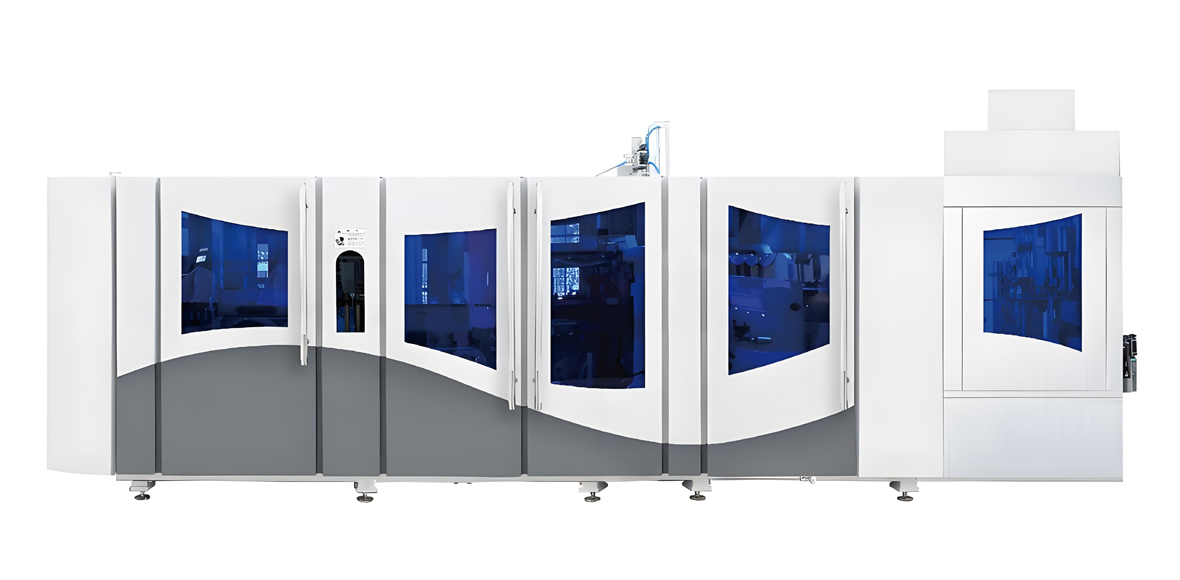
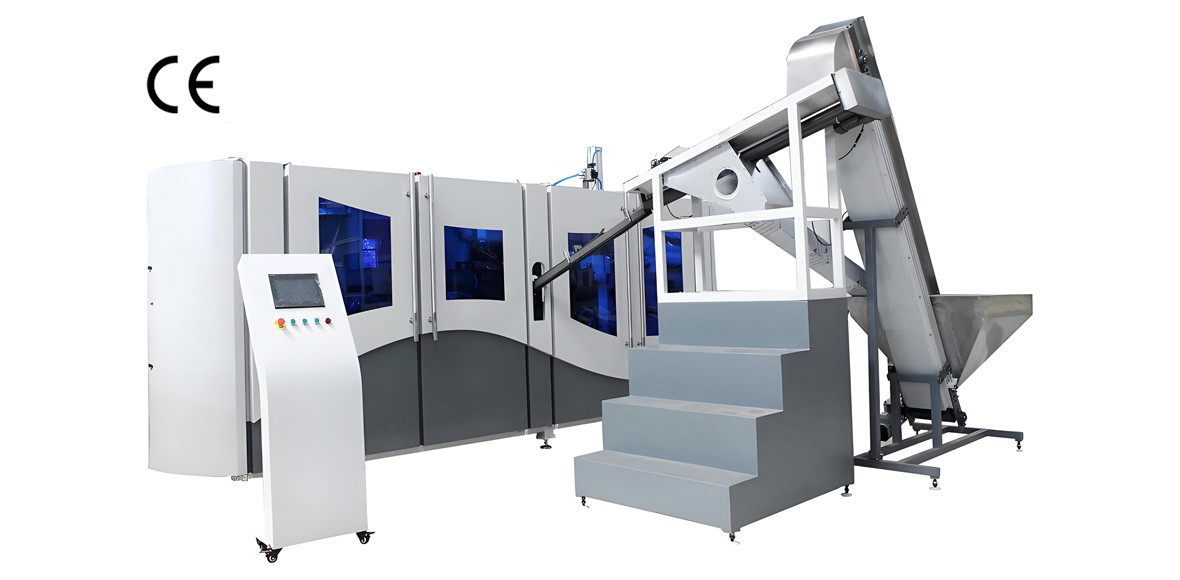
The FGX series is YuDa’s high-speed PET bottle blow platform, built around a unique cam linking system that integrates mold-opening, mold-locking, and bottom-mold elevation into one synchronized movement, driven by a high-speed servo system. The single-mold speed of the FGX platform is 2,500 to 3,000 bottles per hour, and a full high-speed line reaches 8,000 to 15,000 bottles per hour depending on cavity count. Upgrading from a standard line to an FGX line is the highest single index gain available, because it attacks throughput directly.
Consider a daily chemical producer filling 500 mL PET bottles. A standard full-automatic line at 4,000 bottles per hour might run 6,000 planned hours per year at 80 percent utilization, yielding about 19.2 million bottles annually. An FGX 6-cavity line at 15,000 bottles per hour under the same 6,000 planned hours and 80 percent utilization yields about 72 million bottles annually — nearly 3.75 times the output from the same footprint and similar labor. Expressed as a capacity index, the FGX configuration sits near 270 relative to the 100-point baseline, before any cost discount.
The table below lists representative FGX configurations. Cavity count multiplies the single-mold speed; energy per 1,000 bottles falls as the line scales because fixed heating and air load are spread over more bottles.
| FGX Configuration | Cavity Count | Single-Mold Speed (BPH) | Line Output (BPH) | Rated Power (kW) | Energy / 1,000 Bottles (kWh) | Heater Pitch (mm) |
|---|---|---|---|---|---|---|
| FGX 4-cavity | 4 | 2,500 | 10,000 | 48 | 4.8 | 38.1 |
| FGX 6-cavity | 6 | 2,500 | 15,000 | 62 | 4.1 | 38.1 |
| FGX high-speed range | 4 to 6 | 2,500 to 3,000 | 8,000 to 15,000 | 48 to 70 | 4.1 to 4.8 | 38.1 |
Reference values above are typical for a 500 mL PET bottle under standard daily chemical preform conditions. The 38.1 mm heater pitch is a YuDa design characteristic that shortens the distance between heating lamps and the preform, cutting electrical draw versus conventional heating ovens. Because the FGX line produces more good bottles per kWh, its energy index contribution is positive even before counting the raw throughput gain.
For a producer whose bottleneck is simply “not enough bottles per shift,” the FGX line is the decisive lever. It is best justified when current utilization is already high (above 80 percent) and the only way to ship more is to physically blow more bottles per hour. If utilization is low because of changeovers or downtime, Lever 5 (OEE) should come first.
Lever 2 — Single-Cavity to Multi-Cavity Migration
Within the same machine class, moving from fewer cavities to more cavities is the most capital-efficient way to raise the capacity index, because tooling and control systems are reused. A single-cavity line capped at roughly 2,500 to 3,000 bottles per hour becomes a 6-cavity line at 15,000 bottles per hour by adding cavities and servo同步, not by replacing the whole plant.
The capacity index scales close to linearly with cavity count when the preform feeding, oven, and air system are sized for it. The table below maps cavity count to the resulting index, assuming the baseline single-cavity line at 2,500 bottles per hour equals index 100.
| Cavity Configuration | Output (BPH) | Capacity Index (baseline 100) | Relative Recovery Effect | Primary Constraint |
|---|---|---|---|---|
| 1 cavity | 2,500 | 100 | Baseline | Mold cycle |
| 2 cavity | 5,000 | 200 | Faster at same footprint | Oven length |
| 4 cavity | 10,000 | 400 | Strong throughput gain | High-pressure air |
| 6 cavity | 15,000 | 600 | Maximum index in FGX range | Servo sync, cooling |
Multi-cavity migration also improves the energy index: heating and compressed air overhead are amortized across more bottles, so kWh per 1,000 bottles drops. However, higher cavity counts demand tighter process control. A 6-cavity line that drifts out of calibration wastes six bottles per defective cycle instead of one, which is why cavity scaling must be paired with the OEE and scrap levers below.
YuDa’s modular design philosophy supports this migration path. Molds, ovens, and servo modules are engineered for convenient changeovers, so a growing daily chemical brand can start at 2 cavities and step up to 4 or 6 as volume justifies, preserving the earlier investment in the base machine rather than discarding it.
Lever 3 — Compact Heating and Energy Saving
Heating the PET preform to its stretch-blow temperature is the largest electrical load on a blow line. YuDa minimizes the heater-to-preform distance to 38.1 mm, a compact pitch that concentrates radiant energy on the preform and reduces losses to the surrounding oven. Compared with conventional heating ovens, this design saves more than 30 percent of electricity for the same bottle output.
Energy saving accelerates payback through two index paths. First, lower kWh per 1,000 bottles reduces the variable cost per bottle, which widens the margin captured on every shipped unit. Second, because the saved energy is a physical quantity, it can be expressed transparently: a line producing 50 million bottles per year at 7.0 kWh per 1,000 bottles consumes 350,000 kWh annually; at 4.8 kWh per 1,000 bottles it consumes 240,000 kWh, a reduction of 110,000 kWh per year on the same throughput.
| Heating Design | Energy / 1,000 Bottles (kWh) | Annual kWh at 50M Bottles | Energy Index (baseline 7.0) | Notes |
|---|---|---|---|---|
| Conventional oven | 7.0 | 350,000 | 100 | Wider lamp pitch |
| YuDa 38.1 mm pitch | 4.8 | 240,000 | 69 | 30%+ saving |
| YuDa + recovery optimization | 4.1 | 205,000 | 59 | FGX 6-cavity scale |
Energy saving is a low-risk lever because it does not change the bottle specification. The 38.1 mm pitch is built into the machine, so the saving accrues on every bottle with no operator action required. For a plant with high electricity tariffs, this lever alone can move the combined index by 8 to 15 points, and it compounds with the throughput levers because the saving applies to whatever volume the line produces.
Wanplas, as the parent brand, audits energy consumption across its specialized factories, and the 38.1 mm compact heater pitch is one of the design features YuDa carries from its mature, stable component platform into every high-speed line.
Lever 4 — Material Down-Gauging
Down-gauging means reducing the gram weight of the preform and bottle wall while holding the required top-load, drop-test, and shelf-stability performance. For daily chemical PET bottles, experienced processors typically reduce material by 8 to 12 percent on a 500 mL bottle and 6 to 10 percent on a 1,000 mL bottle through optimized base geometry and wall distribution, without changing the external bottle shape the brand owns.
Less material per bottle translates directly into more bottles per tonne of PET resin, which raises the effective capacity index measured in bottles per year. If a line consumes 1,000 tonnes of PET annually and down-gauging cuts gram weight by 10 percent, the same resin now yields about 11 percent more bottles. That is a capacity index gain of roughly 11 points at zero additional machine cost.
| Resin and Bottle | Typical Use | Down-Gauging Range | Bottles per Tonne Gain | Capacity Index Effect |
|---|---|---|---|---|
| PET 500 mL | Shampoo, body wash | 8 to 12 percent | +9 to +14 percent | +9 to +14 |
| PET 1,000 mL | Lotion, conditioner | 6 to 10 percent | +6 to +11 percent | +6 to +11 |
| HDPE detergent | Liquid detergent | 10 to 15 percent | +11 to +18 percent | +11 to +18 |
| rPET blend | Eco line | Maintained wall | Material cost down | Sustainability gain |
Down-gauging must be validated against filling line behavior. Thinner walls can increase the risk of paneling or deformation under vacuum if the formula contains surfactants that off-gas, so the preform design and blow profile need retuning. YuDa’s mature, stable component brands and modular molds make such retuning a changeover task rather than a redesign, which keeps the lever low-cost. The material saving is a physical quantity (gram weight and tonnes per year) and therefore fits the no-currency payback model perfectly.
Lever 5 — OEE Improvement
Overall Equipment Effectiveness is the product of three percentages: Availability, Performance, and Quality. A line that is available 82 percent of the time, performs at 88 percent of ideal cycle, and yields 97 percent good bottles delivers an OEE of about 70 percent. Closing those gaps to 90 percent availability, 95 percent performance, and 99 percent quality lifts OEE to about 85 percent — a 21 percent relative gain in good-bottle output from the same machine.
| OEE Component | Formula | Typical Before | Target After | Lever That Lifts It |
|---|---|---|---|---|
| Availability | Run time divided by planned time | 82 percent | 90 percent plus | Modular maintenance, remote monitoring |
| Performance | Ideal cycle times output divided by run time | 88 percent | 95 percent | High-speed servo, cam linking |
| Quality | Good bottles divided by total bottles | 97 percent | 99 percent plus | Down-gauging control, scrap reduction |
| OEE (product) | Availability times Performance times Quality | about 70 percent | about 85 percent | Combined program |
Availability rises when changeovers and unplanned stops fall. YuDa’s modular design shortens mold and oven changeovers, and its remote monitoring system lets engineers at the China headquarters read PLC data on a mobile device and feed abnormal conditions back to the client site before a stoppage spreads. Performance rises with the FGX high-speed servo drive and synchronized cam motion, which hold the line near its ideal cycle. Quality rises with tighter down-gauging control and the scrap practices in the next section.
OEE improvement is the cheapest lever when a line already owns good hardware but loses hours to stops and rejects. A 15-point OEE lift, expressed as a capacity index gain of roughly 15, costs far less than a new line yet delivers a comparable fraction of the recovery acceleration. Wanplas encourages a monthly OEE review as part of its production capacity guarantee mindset.
Lever 6 — Scrap Rate Reduction
Scrap is the silent tax on payback. A line running at 97 percent quality throws away 3 of every 100 bottles plus their preforms, their energy, and their machine time. Raising quality to 99 percent recovers 2 of those 3 bottles, a 67 percent reduction in reject volume. On a line producing 50 million bottles per year, that shift recovers about 1 million good bottles annually with no extra resin and no extra machine hours.
Scrap reduction complements down-gauging: thinner walls are more sensitive to process drift, so the same monitoring and control discipline that cuts scrap also protects the material saving. The combined effect on the capacity index can reach 5 to 12 points beyond the OEE quality component alone, because recovered bottles also carry their embedded energy and resin.
Practical scrap controls for daily chemical PET include stable preform conditioning in the oven, consistent stretch-rod timing, clean compressed air free of oil and moisture, and a first-article check after every mold change. YuDa’s remote monitoring flags abnormal trends in real time, so a drift toward higher scrap is corrected within a shift rather than discovered at month-end inventory.
Combined Payback Acceleration Index
Each lever contributes index points on top of the 100-point baseline. The table below shows the mechanism and the typical contribution range. The combined index for a well-executed program lands between 180 and 230 points, meaning the line produces roughly 1.8 to 2.3 times the baseline good-bottle output from a comparable asset base, before any cost discount for the higher-capital levers.
| Lever | Mechanism | Index Contribution (points) | Cost Basis to Discount |
|---|---|---|---|
| FGX high-speed line | Higher bottles per hour | +120 to +170 | High (machine capital) |
| Multi-cavity migration | Scale output on same base | +60 to +120 | Medium (tooling) |
| Energy saving (38.1 mm) | Lower kWh per bottle | +8 to +15 | Low (built-in design) |
| Down-gauging | More bottles per tonne | +9 to +18 | Low (preform design) |
| OEE improvement | Availability, performance, quality | +10 to +25 | Low to medium |
| Scrap reduction | Recover good bottles | +5 to +12 | Low |
A prudent buyer discounts the FGX and multi-cavity gains by their acquisition cost, while keeping the energy, down-gauging, OEE, and scrap gains nearly free. The strategy that maximizes net index is therefore: first lift OEE and cut scrap (near zero cost), then apply down-gauging and compact heating (low cost, built into the machine), and only then invest in multi-cavity and FGX capacity when the utilization data proves the extra throughput will be sold. This sequence shortens the recovery period step by step rather than betting the whole case on one capital outlay.
Measuring Payback Week by Week With an Index Dashboard
A payback plan only works if it is measured. The index method in this guide is useless as a one-time spreadsheet; it becomes powerful when tracked weekly so that each lever is confirmed in the field rather than assumed on paper. YuDa’s remote monitoring system already streams PLC data to the China headquarters, and that same data feed can be shaped into a simple weekly dashboard that any plant manager can read in five minutes.
The dashboard needs only six rows, each tied to one of the six levers. For every week, record the planned hours, the running hours, the good-bottle count, the energy consumed, the resin consumed, and the reject count. From those six raw numbers every other figure in this guide can be derived without touching a currency field.
| Weekly Metric | Raw Input | Derived Index | Target | Lever It Tracks |
|---|---|---|---|---|
| Utilization | Run hours divided by planned hours | Percentage | 80 percent plus | OEE availability |
| Throughput | Good bottles divided by run hours | Bottles per hour | Rated BPH minus 5 percent | FGX, multi-cavity |
| Energy | kWh divided by 1,000 bottles | kWh per 1,000 | 4.8 or lower | 38.1 mm heating |
| Material | Resin tonnes divided by bottle count | Gram weight | Down-gauged target | Down-gauging |
| Quality | Good divided by total bottles | Quality percent | 99 percent plus | Scrap reduction |
| OEE | Availability times performance times quality | OEE percent | 85 percent | Combined program |
Reading the dashboard is straightforward. If utilization is below 80 percent, the bottleneck is time, not speed, so the OEE lever comes first. If utilization is high but energy per 1,000 bottles is above 5.5, the 38.1 mm heating benefit is not being captured and the oven profile needs tuning. If gram weight is above target, the down-gauging lever has drifted and the preform or blow setting should be rechecked. If quality is below 99 percent, scrap is eating the index and the remote monitoring alert should already have flagged it.
The beauty of the index dashboard is that it removes argument from the payback discussion. Instead of debating whether an upgrade paid for itself, the team simply watches the combined index climb from 100 toward 180 or 230. When the index stalls, the dashboard shows exactly which lever is stuck, and the next action is obvious. Wanplas, the parent brand, encourages this disciplined, data-led approach across its specialized factories because it turns vague payback claims into measured, repeatable results that any customer can audit.
A practical cadence is a five-minute weekly review and a thirty-minute monthly review. The weekly review checks the six rows and assigns one owner to any row below target. The monthly review recomputes the combined Payback Acceleration Index, compares it with the plan, and decides whether the next capital lever — multi-cavity or FGX — is justified by the demand now visible in the data. This cadence is what separates lines that merely own good machines from lines that actually achieve a short, predictable recovery period.
FGX vs Standard vs Semi-Auto
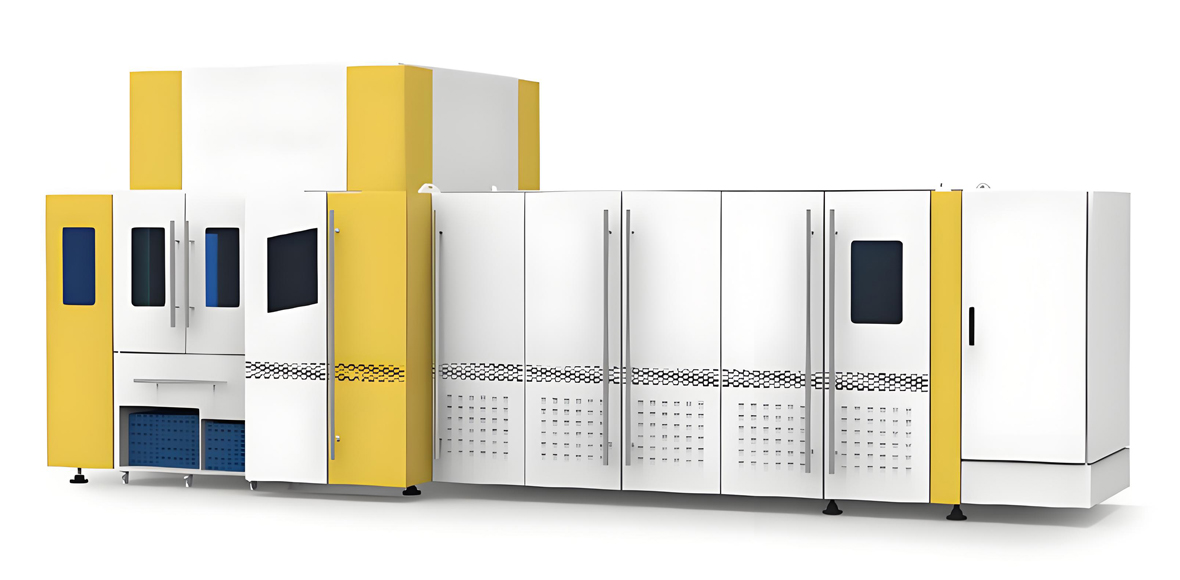
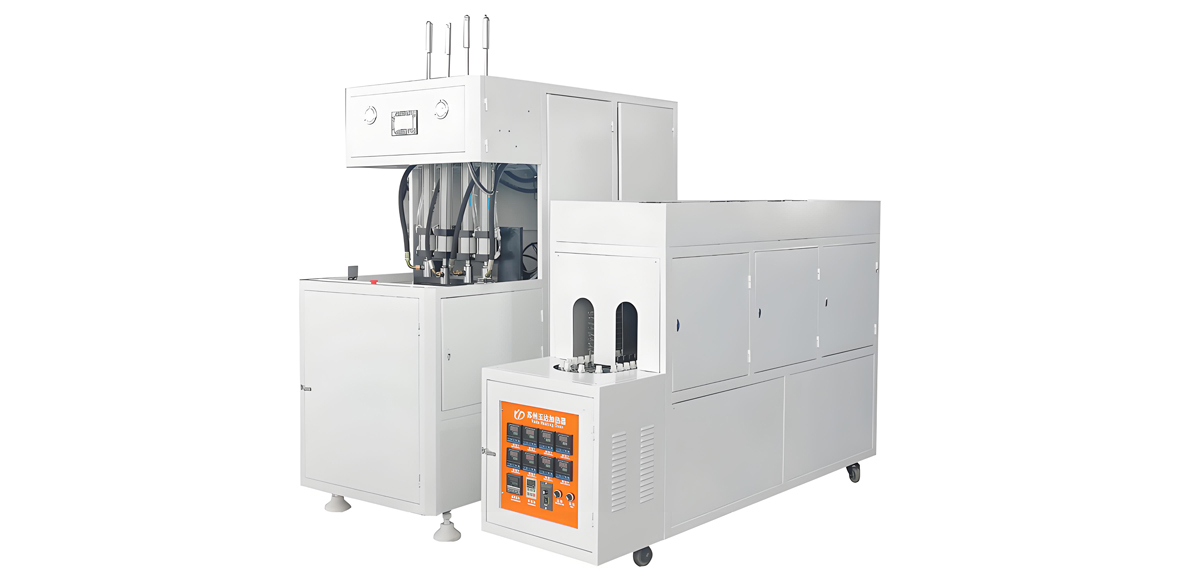
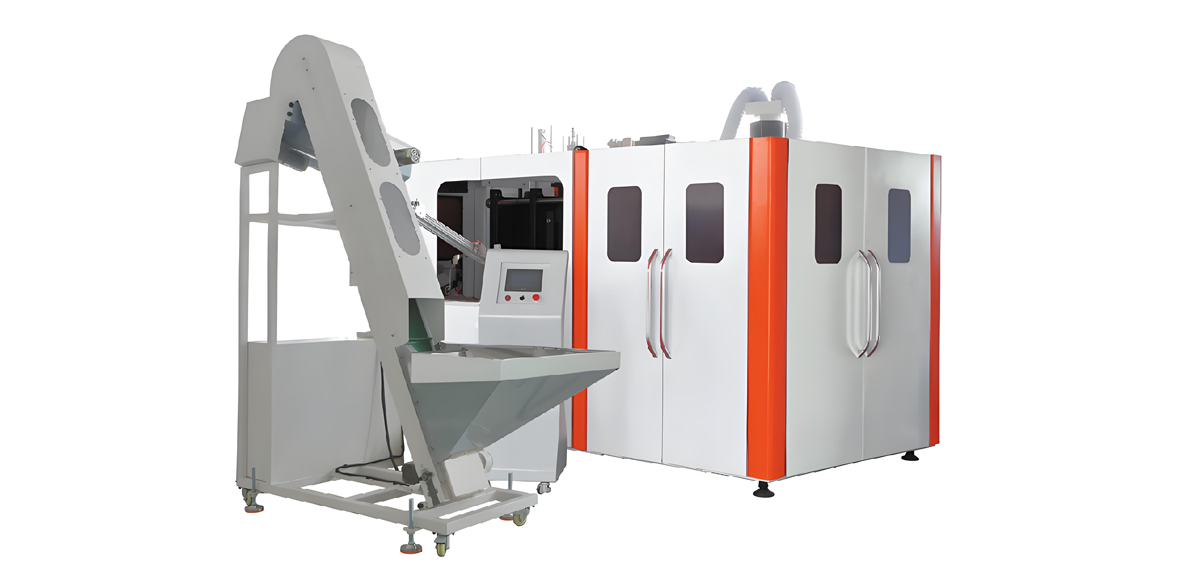
YuDa offers a full ladder of PET blow solutions, and selecting the right rung is itself a payback skill. The semi-auto series carries the lowest procurement cost and suits small enterprises or pilot lines. The standard full-automatic series covers 1,000 to 7,000 bottles per hour with advanced heating and energy-saving technologies. The FGX high-speed series covers 8,000 to 15,000 bottles per hour for volume daily chemical production.
The table below contrasts the three families on the metrics that matter to recovery: output band, energy per 1,000 bottles, and the index starting point.
| YuDa Series | Output Band (BPH) | Cavity Options | Energy / 1,000 Bottles (kWh) | Best Payback Role |
|---|---|---|---|---|
| Semi-auto series | 1,000 to 2,000 | 2 | about 6.5 | Low entry, pilot, regional brand |
| Standard full-automatic | 1,000 to 7,000 | 2 to 4 | 5.2 to 6.0 | Balanced growth, flexible SKUs |
| FGX high-speed | 8,000 to 15,000 | 4 to 6 | 4.1 to 4.8 | Volume daily chemical, fastest index |
The standard full-automatic series deserves a second product block because it is the workhorse for brands scaling from pilot to regional. Its advanced heating systems and energy-saving technologies already embed much of Lever 3, and its modular molds support the cavity migration in Lever 2. For a producer at 2,000 to 7,000 bottles per hour, this series often delivers the best net index because the acquisition cost stays moderate while utilization and OEE gains are still available.
| Standard Series Configuration | Cavity Count | Line Output (BPH) | Heating | Energy Saving |
|---|---|---|---|---|
| Standard 2-cavity | 2 | 2,000 to 3,000 | Advanced oven | Built-in |
| Standard 4-cavity | 4 | 4,000 to 7,000 | Advanced oven | Built-in, 30%+ vs conventional |
For producers who also fill and cap in one cell, YuDa supplies a Linear Blowing-Filling-Capping CombiBlock specialized in compact mini linear BFC, which saves plant area, and a Bottle Blow-Filling-Capping machine that produces PET bottles while filling drinking water and installs caps in one process. These integrated options accelerate payback by cutting footprint and handling labor, expressed again as utilization and labor-per-bottle rather than currency.
Selecting the Right Configuration
The selection table below maps a production need to a recommended YuDa line. It follows the principle that the lowest-cost lever satisfying the volume should be chosen first, with capacity upgrades reserved for proven demand.
| Production Need | Recommended YuDa Line | Cavity | Output Band (BPH) | Rationale |
|---|---|---|---|---|
| Pilot or new brand under 2,000 BPH | Semi-auto series | 2 | 1,000 to 2,000 | Lowest entry cost, ready to ship |
| Growing daily chemical 2,000 to 7,000 BPH | Standard full-automatic | 2 to 4 | 2,000 to 7,000 | Balanced capital and flexibility |
| Volume daily chemical 8,000 to 15,000 BPH | FGX high-speed | 4 to 6 | 8,000 to 15,000 | Maximum capacity index |
| Limited plant area, combine steps | Linear BFC CombiBlock | Configurable | Compact | Saves floor space, fewer handlers |
| Bottle plus water fill in one cell | Bottle BFC machine | Configurable | Combined | One process, cap installed inline |
When in doubt, start one rung lower and apply the near-zero-cost levers (OEE, scrap, down-gauging, compact heating) to lift the index on the asset you already own. YuDa, as a Wanplas factory, supports this staged approach with modular molds and a remote monitoring system that makes the next upgrade a planned step rather than a crisis purchase.
Applications in Daily Chemical Bottles
PET daily chemical bottles made on YuDa lines span the full personal care and home care shelf. The same FGX or standard line easily switches between these products through mold and preform changeovers:
- Shampoo bottles — typically 300 to 800 mL PET, often with a flip-top or pump, where clarity and squeezability matter.
- Conditioner bottles — 400 to 1,000 mL PET, slightly heavier wall for stand-up stability on the shower shelf.
- Body wash and shower gel — 250 to 750 mL PET, frequently translucent or tinted for shelf appeal.
- Lotion bottles — 200 to 600 mL PET, with pump compatibility and good barrier against formulation oils.
- Liquid detergent bottles — can be PET or HDPE; larger 1,000 to 3,000 mL sizes where down-gauging and lightweighting deliver the biggest material index gain.
Because daily chemical demand is steady year-round, these applications sustain high capacity utilization, which is exactly the condition under which the six levers compound most strongly. A line dedicated to a stable shampoo and body wash mix can hold 85 percent utilization far more easily than a line chasing seasonal beverage peaks, and that stability is what converts the index gains into a short, predictable recovery period.
Service and Support
YuDa, a Wanplas factory, backs every PET blow line with the group’s shared service commitments. Each machine undergoes factory testing before shipment, with engineers verifying cycle, oven profile, and bottle quality on the customer’s preform where possible. On-site installation and commissioning are provided so the line reaches rated bottles per hour under real factory conditions rather than laboratory ones.
The Wanplas brand’s shared spare parts policy provides USD 500 free parts every year, complemented by free replacement for damaged parts within the warranty window. Training covers machine operation, mold changeover, oven tuning for down-gauging, and basic OEE tracking so the customer’s team can run the payback levers themselves. Remote monitoring lets YuDa engineers at the China headquarters read PLC data via mobile and feed abnormal conditions back to the client site, shortening the time between a drift and its correction.
YuDa also operates an open factory policy: customers are welcome to visit the plant, observe a running FGX line, and trial their own preform and bottle on the equipment before committing. This transparency supports the Wanplas group promises of free parts, transportation guarantee, production capacity guarantee, and quality standards, the last backed by a refund plus compensation commitment if quality fails to meet the agreed standard.
FAQ
What capacity utilization should a PET daily chemical bottle line target?
For a stable shampoo, conditioner, body wash, or lotion mix, target 80 percent utilization or higher on planned available hours. Daily chemical demand is non-seasonal, so 85 percent is realistic and is the level at which the throughput and OEE levers start to compound into a visibly shorter recovery period.
How does the FGX high-speed line shorten the recovery period without currency figures?
The FGX line is rated at 8,000 to 15,000 bottles per hour from a 2,500 to 3,000 bottles per hour single-mold speed across 4 to 6 cavities. Expressed as a capacity index against a 2,500 bottles per hour single-cavity baseline of 100, the FGX 6-cavity configuration reaches about 600, meaning roughly six times the good-bottle output from a comparable footprint. The recovery period shortens in proportion to that output gain at constant ownership cost.
Is multi-cavity migration always better than buying a faster single-cavity line?
Not always. Multi-cavity migration is the most capital-efficient step when the base machine, oven, and air system can be reused, and it should come after OEE and scrap fixes. If utilization is already high and the only path to more volume is raw throughput, the FGX high-speed line becomes the better lever despite its higher acquisition cost, because it attacks the true bottleneck.
How much energy can the 38.1 mm compact heater pitch save?
The 38.1 mm heater-to-preform distance concentrates radiant heat and cuts electrical draw by more than 30 percent compared with conventional heating ovens. On a line producing 50 million bottles per year, that moves energy from about 7.0 kWh per 1,000 bottles to about 4.8 kWh, a saving of roughly 110,000 kWh annually at the same throughput.
Can down-gauging hurt bottle quality or filling speed?
It can if applied blindly. Thinner PET walls are more sensitive to process drift and to vacuum paneling from surfactant off-gassing, so preform geometry and blow profile must be retuned. Done within YuDa’s modular mold and monitoring platform, down-gauging of 8 to 12 percent on a 500 mL bottle is routine and protects filling speed because bottle weight, not shape, changes.
What does the Wanplas USD 500 free parts per year policy cover?
The policy provides USD 500 of free spare parts every year as part of the Wanplas shared service commitment, alongside free replacement of damaged parts within warranty and an open factory visit policy. It is written without any currency symbol and applies to YuDa PET blow lines as a Wanplas factory product.
How do I choose between semi-auto, standard, and FGX for a new daily chemical brand?
Start with the volume you can actually sell. Under 2,000 bottles per hour, the semi-auto series is the lowest-entry option. From 2,000 to 7,000 bottles per hour, the standard full-automatic series balances cost and flexibility. Above 8,000 bottles per hour with proven demand, the FGX high-speed line delivers the highest capacity index and the fastest recovery.
Conclusion
Fast payback in PET daily chemical bottle production is not a matter of buying the most expensive machine; it is a disciplined sequence of levers measured in percentages, index points, OEE components, and physical quantities such as kWh per 1,000 bottles and tonnes per year. Begin with the near-zero-cost gains — lift OEE, cut scrap, apply down-gauging, and use the 38.1 mm compact heater pitch — then scale cavities and step up to the FGX high-speed line only when utilization data proves the extra throughput will be sold.
YuDa Machinery, a Wanplas factory with more than 20 years of PET blow molding experience, more than 20 patents, and equipment in over 60 countries, supplies the full ladder from semi-auto to FGX high-speed lines, the Linear BFC CombiBlock, and the Bottle Blow-Filling-Capping machine, all supported by factory testing, installation and commissioning, USD 500 free parts every year, training, remote monitoring, and an open factory policy.
The staged roadmap is the part most often skipped, and it is the part that protects the recovery period. A new daily chemical brand should not begin with the FGX high-speed line on a hope of volume; it should begin with the semi-auto or standard full-automatic line, apply the zero-cost levers until utilization sits above 80 percent, and only then step up cavities or move to the FGX platform. Each step is justified by the prior step’s measured index, so capital is spent against proven demand rather than forecast demand. This discipline is why YuDa recommends treating payback as a weekly habit, not a purchase event.
If you are planning or expanding a PET daily chemical bottle line, send your target bottles per hour, bottle sizes, and resin plan. YuDa’s engineering team will propose a configuration and a staged payback roadmap, and you are welcome to visit the factory to run your own preform and bottle on a live line before you decide.