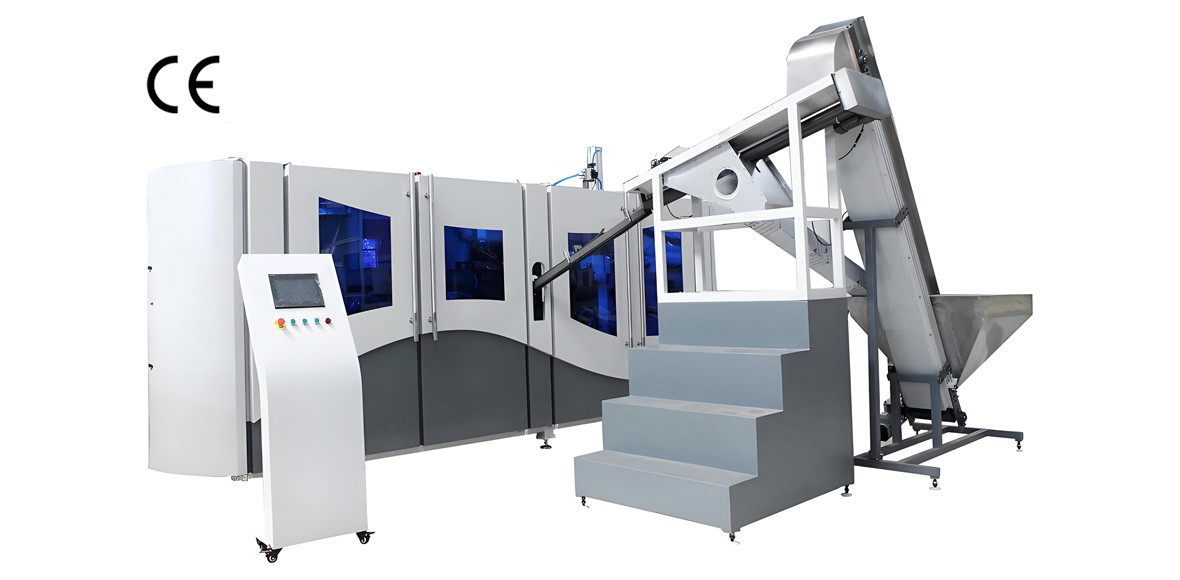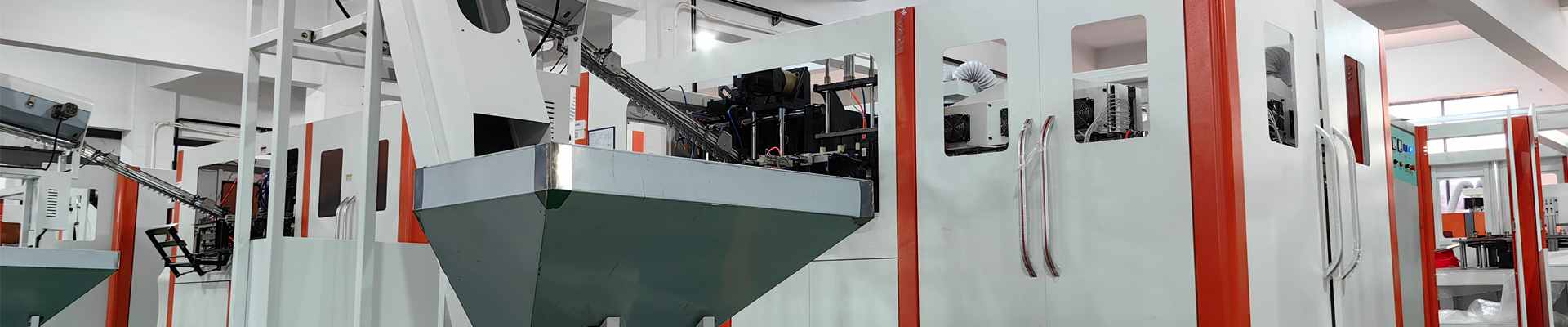
Designing a small PET bottle blowing workshop is fundamentally a problem of area optimization. Every square meter of rented or owned factory floor carries a cost in rent, utilities, and opportunity, and for an entrepreneur entering the packaged-water, edible-oil, or personal-care market with a limited budget, the difference between a cramped, inefficient layout and a well-planned compact layout can decide whether the business reaches profitability. YuDa, a Wanplas factory with more than 20 years of experience in PET bottle blow molding machines and exports to 60-plus countries, has helped hundreds of small and medium producers design workshops that deliver high output from surprisingly small footprints. This guide distills that field experience into a practical framework you can apply to a 200 to 500 square meter floor, covering layout principles, real machine envelope data for the FGX series, supporting-equipment planning, and ready-to-use floor plans.
The central idea of this article is simple: a PET bottle blowing workshop should be planned around flow, not around the machines. When you let the material and operator flow dictate the position of each machine, the layout naturally becomes shorter, safer, and denser. We will analyze three proven layout families – the straight-line layout, the U-shape layout, and the modular cell layout – and we will quantify each one with area and throughput-per-square-meter data so you can choose with confidence. Along the way we will show how a Wanplas-group FGX high-speed line and a linear blow-fill-capping combi block compress the entire production sequence into a fraction of the area that older discrete lines required.
Why Floor-Space Efficiency Decides Small-Workshop Survival
A small PET bottle blowing workshop lives or dies on its unit-area productivity. Unlike a large plant that can absorb wasted aisles and oversized buffer zones, a compact workshop must convert nearly every square meter into value. When you calculate the true cost of floor space, you should include not only the rent but also the lighting, the air conditioning or ventilation, the cleaning labor, and the time operators spend walking between stations. A poorly planned floor multiplies all of those hidden costs.
Consider a workshop paying a modest floor rent. If the blowing machine, the air compressor, the chiller, the bottle unscrambler, the conveyor, and the packing zone are scattered without a plan, the operator may walk 40 to 60 meters between refill and inspection on every cycle. Over a single shift that becomes several kilometers of wasted motion. A compact cell layout can cut that travel to under 10 meters, freeing the same operator to supervise more cavities and more output.
The second reason space efficiency matters is expansion headroom. Most small workshops do not stay small. A founder who starts with a 4-cavity line at 200 square meters usually wants to add a second line or a filling block within two years. If the initial layout consumed all the spare floor with inefficient aisles, expansion forces a costly relocation. A disciplined compact layout reserves a clearly marked growth lane from day one.
Third, dense and logical layouts improve quality control. When blowing, leak testing, and visual inspection sit close together, defects are caught at the source instead of after a long conveyor journey. Short logistics means fewer bottle transfers, fewer fallen or scratched bottles, and lower rejection rates – a direct contribution to the bottom line for a small workshop that cannot afford waste.
Core Layout Principles for a Compact PET Blowing Workshop
Every space saving layout we design for a small PET bottle blowing workshop rests on four non-negotiable principles. Master these and almost any floor shape can be made productive.
Principle 1: Organize production as reusable cells
The cell layout, borrowed from lean manufacturing, groups one blowing module together with its immediate supporting equipment – preform feeder, heater oven, blow station, and exit conveyor – into a self-contained unit. A cell can be as small as a single FGX machine with its table, or as large as a blow-fill-capping combi block. Cells are portable: if you later add a second line, you replicate the cell rather than redesign the whole workshop. For a 200 to 500 square meter floor, thinking in cells is the fastest route to a clean, scalable plan.
Principle 2: Choose inline flow over rotary whenever density matters
In PET bottle blowing, the two dominant mechanical architectures are the inline (linear) machine and the rotary machine. A rotary blow molder arranges cavities around a rotating carousel; it is extremely fast but its circular envelope wastes corner space and forces a round service aisle. An inline machine arranges cavities in a straight row, which packs against a wall and leaves the opposite side open for service and operator access. For a small rectangular workshop, inline flow almost always yields better area utilization, and YuDa’s FGX series is built on exactly this inline philosophy. Rotary architecture still has a place in very high output plants, but it is rarely the right answer for a compact floor.
Principle 3: Separate human flow from material flow
People and pallets should not share a lane. Forklifts moving preform bags and finished pallets must have a perimeter route that never cuts through the operator aisle. When human and material flow cross, you create both a safety hazard and a bottleneck, because the line stops whenever a pallet blocks the packing table. In a small workshop the separation is achieved with painted floor lines and a one-way perimeter loop rather than with walls, keeping the build cost low.
Principle 4: Minimize logistics distance with shortest-path routing
The shortest logistics principle means placing each downstream process as close as physically possible to its upstream source. Preforms should enter near the oven, bottles should exit near the leak tester, and packed cartons should exit near the warehouse door. Every meter of unnecessary conveyor is a meter of floor you pay for but cannot use for production. A linear BFC combi block is the ultimate expression of this principle because blowing, filling, and capping happen inside one enclosure with zero inter-machine conveyor.
A fifth, often overlooked principle is to standardize the cell envelope before buying the machine. Many small-workshop owners pick a machine first and then try to force it into whatever room they have rented, which guarantees wasted aisles and awkward service access. The better sequence is to decide the target output, convert that into a required cavity count, read the FGX envelope table above, and only then sign the lease on a room whose dimensions comfortably contain the cell plus a growth lane. This reverse planning also protects your negotiation position with the landlord, because you can specify the exact door width, floor-load rating, and ceiling height the cell needs rather than accepting a space and discovering later that the oven cannot clear the roof beam.
Layout Scheme Comparison: Straight-Line, U-Shape, and Cell
We evaluate three layout families against the two metrics that matter most to a small workshop: total occupied area and throughput per square meter. The numbers below are envelope estimates for a typical 6 to 8 cavity FGX line bundled with a standard air compressor, a water-cooled chiller, a bottle unscrambler, and a packing table, calculated for a 2,000 to 3,000 bottles per hour target. Your exact figures will vary with cavity count and bottle size, but the relative ranking is stable.
| Layout scheme | Approx. occupied area (sqm) | Throughput per sqm (index) | Best fit floor |
|---|---|---|---|
| Straight-line (inline) | 110 to 140 | 100 (baseline) | Long narrow rooms |
| U-shape (inline return) | 85 to 110 | 128 | Square or near-square floors |
| Modular cell (combi block) | 70 to 95 | 146 | Very tight 200 to 300 sqm floors |
The straight-line layout is the easiest to design and the most forgiving for a first-time owner, because material enters one end and leaves the other with no reversal. Its weakness is that both operators and supervisors must walk the full length, so for a short wide room it leaves dead corners. The U-shape layout bends the line back on itself so that the inlet and outlet sit on the same face; a single supervisor standing at the base of the U can see blowing, filling, and packing at once, and the return path shortens operator travel dramatically. The modular cell, built around a linear blow-fill-capping combi block, is the densest option because it removes the longest conveyor in the plant.
FGX High-Speed Machine Footprint Analysis
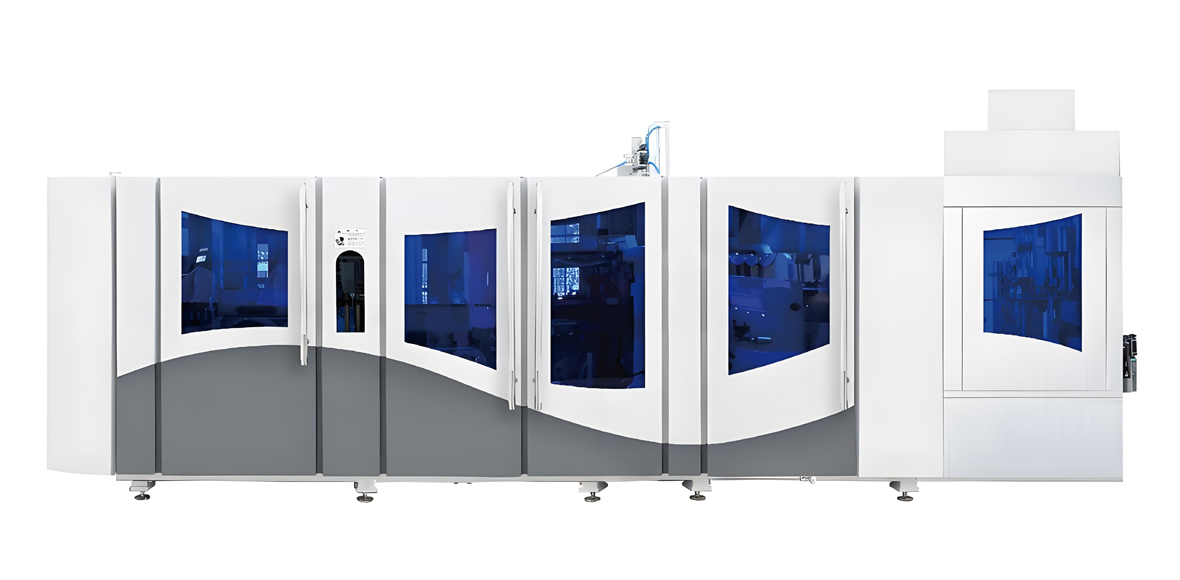
The FGX series is YuDa’s high-speed inline PET bottle blowing platform, covering a single-mode speed band of roughly 2,500 to 3,000 bottles per hour per mold and total line outputs from 8,000 up to 15,000 bottles per hour depending on cavity count. Because the FGX is inline rather than rotary, its envelope grows predictably with cavity count, which makes floor planning straightforward. The table below lists the machine envelope and the recommended service aisle for common cavity configurations, together with the footprint of the supporting air compressor, water chiller, and bottle unscrambler that must sit nearby.
| FGX cavity count | Machine envelope (sqm) | Service aisle (sqm) | Air compressor (sqm) | Chiller (sqm) | Unscrambler (sqm) | Total cell (sqm) |
|---|---|---|---|---|---|---|
| 4 cavities | 32 to 40 | 10 to 14 | 8 to 12 | 4 to 6 | 6 to 9 | 60 to 81 |
| 6 cavities | 38 to 48 | 12 to 16 | 10 to 14 | 5 to 7 | 6 to 9 | 71 to 94 |
| 8 cavities | 45 to 55 | 14 to 18 | 12 to 16 | 6 to 8 | 7 to 10 | 84 to 107 |
| 12 cavities | 60 to 72 | 18 to 22 | 16 to 20 | 8 to 10 | 8 to 11 | 110 to 135 |
Notice how the supporting equipment – compressor, chiller, unscrambler – occupies a meaningful share of the cell. A common beginner mistake is to budget only for the blowing machine and forget that the high-pressure air system alone can need 12 to 20 square meters once you include the receiver tank and the dryer. The FGX energy-saving design reduces this burden indirectly: by minimizing heater distance to 38.1 millimeters and saving more than 30 percent electricity versus conventional heating ovens, the machine runs cooler, which lets you place the chiller closer without heat conflict and reclaims a few square meters of otherwise forbidden hot zone.
FGX key technical features that protect floor density
- Efficient motion: A unique cam linking system integrates mold-opening, mold-locking, and bottom mold-elevating into one movement, driven by a high-speed servo system that keeps the machine footprint small while maximizing cavities per meter.
- Energy-saving oven: Heater distance is minimized to 38.1 millimeters, cutting radiation and saving more than 30 percent electricity compared with conventional heating ovens.
- Modular design: Modularized construction makes maintenance and cavity changeovers cost-saving and fast, so the service aisle can stay narrow.
- Monitoring: A remote monitoring system lets engineers at the China headquarters read PLC data from a mobile device and feed abnormal conditions back to your site, reducing the need for a permanent on-site technical room.
- Mature and stable components: The use of mature, stable component brands reduces unplanned downtime that would otherwise force you to keep large spare-part and buffer areas.
When reserving the service aisle for an FGX cell, plan for the widest maintenance event rather than the daily routine. The daily operator needs only a narrow front aisle to load preforms and read the HMI, but a mold change or a heater-module service requires the oven front to swing open and a technician to stand beside it with a cart of tools. Budgeting the aisle at the daily minimum saves a few square meters up front but costs far more when the first major service blocks the entire line. A practical compromise used in many YuDa installations is a 1.2 meter daily aisle backed by a marked 0.8 meter expansion strip that stays clear of stored goods, giving 2.0 meters exactly when a service is underway without permanently dedicating that floor to emptiness. This striped-aisle method is the cheapest way to keep both density and serviceability high in a small workshop.
Unit-Area Output Index Across Machine Types
To compare layout density objectively, we normalize output-per-square-meter against a conventional imported standalone line set to an index of 100. The index captures how cleverly each configuration uses floor. Higher is better. These figures assume the same bottle size and similar shift patterns; they are planning aids, not guaranteed production numbers.
| Configuration | Unit-area output index (conventional = 100) | Relative capital cost |
|---|---|---|
| Conventional standalone blowing + separate filling | 100 | Medium |
| YuDa standard-speed FGX, inline U-shape | 128 | Medium |
| YuDa high-speed FGX, inline U-shape | 141 | High |
| YuDa linear BFC combi block (cell) | 168 | High |
| Semi-auto starter cell (entry level) | 92 | Low |
The standout is the linear blow-fill-capping combi block, which reaches an index near 168 because it deletes the longest conveyor and the intermediate empty-bottle buffer. For a small workshop where every square meter is precious, that single architectural choice can be worth more than doubling the cavity count on a discrete line. The semi-auto starter cell scores slightly below 100 only because its manual packing step needs a larger open floor in front of the operator; it remains the lowest-cost entry point for a first-time producer.
Compact Machine Families for Tight Floors
YuDa offers several machine families that suit a space-constrained workshop, and choosing among them is the single most important layout decision you will make. Below we present two concrete product modules with specification tables, drawn from the real YuDa lineup.
Module A: YuDa linear blow-fill-capping combi block
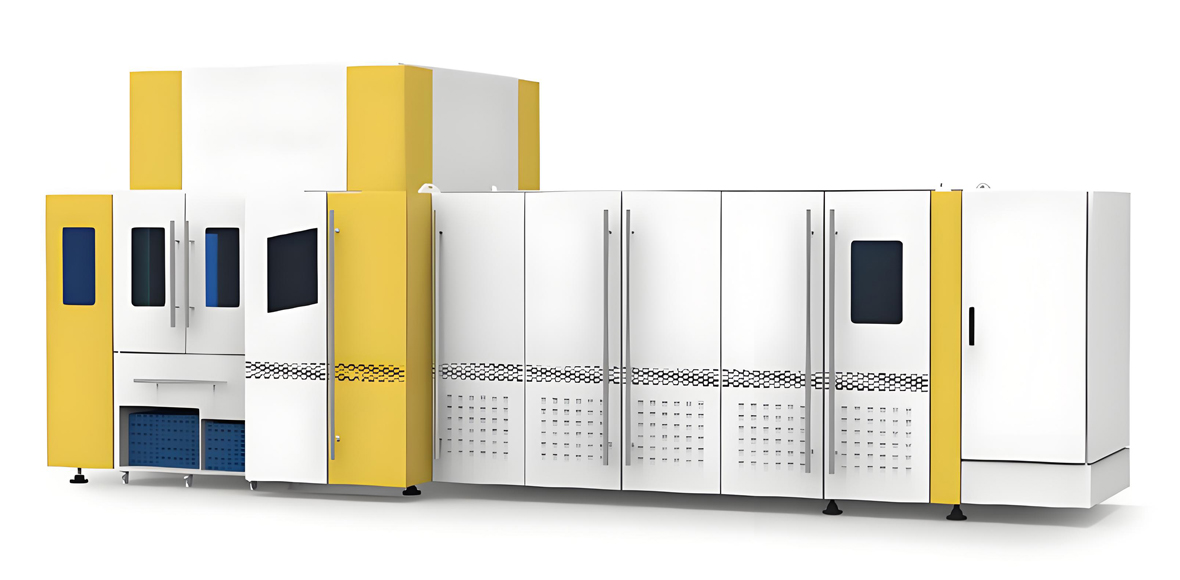
The linear BFC combi block is purpose-built for small floors. It performs blowing, filling, and capping inside one compact enclosure, which is why it tops the unit-area output index. It is described by YuDa as compact, simple, and easy to operate, specialized in mini linear BFC design that saves plant area. For a workshop of 200 to 300 square meters this is often the first recommendation because it replaces three separate machines and two conveyors with one cell.
| Parameter | Linear BFC combi block |
|---|---|
| Process integration | Blowing, filling, capping in one enclosure |
| Layout type | Inline linear, cell-friendly |
| Typical envelope | 70 to 95 sqm including service aisle |
| Operator requirement | 1 to 2 persons |
| Area saving vs discrete line | Up to 40 percent |
| Best application | Drinking water and edible-oil bottles on tight floors |
Module B: YuDa standard-speed full-automatic FGX line
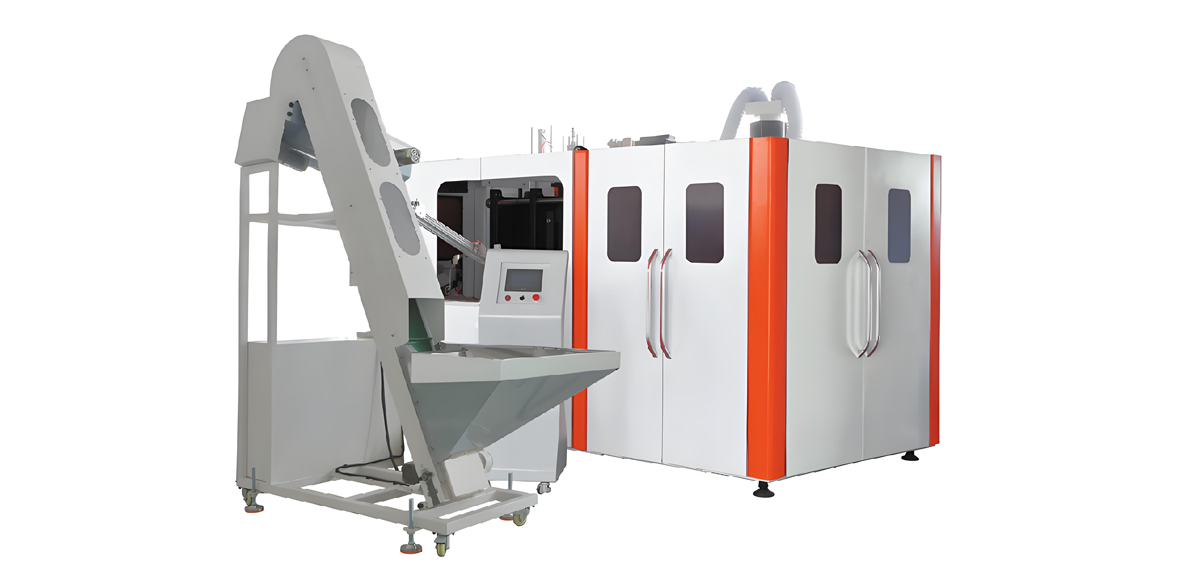
The standard-speed series covers 1,000 to 7,000 bottles per hour with full automation, advanced heating systems, and energy-saving technologies. It is the flexible backbone for workshops that may later separate blowing from filling. Its specification table below helps you reserve the correct cell area.
| Parameter | Standard-speed FGX |
|---|---|
| Output range | 1,000 to 7,000 BPH |
| Automation | Full automatic |
| Heating system | Advanced, energy-saving oven with 38.1 mm heater distance |
| Typical cavity count | 2 to 8 cavities |
| Cell envelope | 60 to 107 sqm with support equipment |
| Upgrade path | Add linear BFC or high-speed FGX later |
Supporting Equipment and Utility Footprint Planning
A PET bottle blowing workshop is more than a blowing machine. The supporting utilities often occupy as much floor as the machine itself, so they must be planned as part of the cell rather than bolted on afterward. We group them into three zones: the high-pressure air zone, the cooling water zone, and the material handling zone.
High-pressure air zone
Stretch blow molding needs high-pressure air for the blow pins and the stretch rod. A typical 6-cavity FGX line requires a compressor plus a receiver tank and a dryer, together occupying 10 to 16 square meters. Place this zone against an exterior wall if possible so intake air stays cool and exhaust noise stays away from packing. The air zone should connect to the blowing machine with the shortest practical piping to reduce pressure loss, which also lets you keep the compressor close and avoid a long machine-room corridor.
Cooling water zone
The chiller removes heat from the mold and the compressor after-cooler. A water-cooled chiller for a mid-size FGX line needs 5 to 8 square meters plus clearance for airflow. Because YuDa’s 38.1 millimeter heater distance reduces radiated heat, the chiller can sit nearer the machine than on conventional lines, saving a few square meters of forced separation. Route the chiller drain and make-up water line during the initial floor plan so you do not later sacrifice production area to plumbing.
Material handling zone
Preforms arrive in bulk bags or boxes and leave as packed bottles on pallets. The bottle unscrambler, which orients and feeds preforms, needs 6 to 11 square meters. The exit conveyor and packing table need another 8 to 15 square meters depending on whether you pack into cartons or shrink wrap. Keep a clear pallet exchange point on the perimeter so forklifts never enter the operator aisle.
| Support item | Area (sqm) | Placement note |
|---|---|---|
| Air compressor + receiver + dryer | 10 to 16 | Exterior wall, short piping to blow station |
| Water chiller | 5 to 8 | Near machine, with drain access |
| Bottle unscrambler | 6 to 11 | Preform inlet side |
| Exit conveyor + packing table | 8 to 15 | Toward warehouse door |
| Finished-goods buffer | 10 to 25 | Perimeter, not in operator path |
When sizing the utility zone, do not forget the cable tray and pipe bridge. High-pressure air lines, cooling water lines, and the main power conduit should run overhead in a dedicated bridge rather than along the floor, where they would block forklifts and force you to widen aisles. A 300 millimeter deep overhead bridge planned during the initial layout keeps the floor clear and lets you place the compressor and chiller closer to the machine, reclaiming floor that a floor-mounted pipe run would otherwise waste. The same bridge should carry the network cable for the remote monitoring system, so the engineer at the China headquarters can read PLC data without a long on-floor cable route that becomes a trip hazard.
Human-Material Flow Separation and Ventilation
Even a tiny workshop must respect basic industrial hygiene. PET blowing releases heat from the ovens and, if preforms are printed, trace organic vapors from inks or labels. Good ventilation is not optional, and the ductwork for it consumes ceiling volume rather than floor, so plan it early to avoid clashing with the overhead crane or light fixtures.
Human flow design follows three rules. First, operators move along an inner aisle that runs parallel to but never crosses the material lane. Second, the supervisor station sits at the convergence point of a U-shape or at the open face of a cell, giving sightlines to every station without walking. Third, emergency egress is kept clear at all times; a blocked fire lane is both illegal and a layout failure. Mark the operator aisle in one floor color and the material lane in another so the separation is visible to every new hire.
Material flow is a one-way perimeter loop. Preform bags enter at the receiving door, move to the unscrambler, become bottles through the FGX, get packed at the table, and exit as pallets at the shipping door – ideally the same door used for receiving but on a timed, one-direction schedule. This loop minimizes travel and keeps forklifts off the production floor interior. In a 200 square meter room the loop may be only a painted rectangle; in a 500 square meter room it can be a real marked lane with bollards.
200 To 500 Square Meter Small Workshop Feasible Plans
We now translate the principles into three concrete floor plans. Each plan assumes a rectangular room with a standard 4 to 6 meter ceiling, a level floor, and a 3-phase power supply. Adjust cavity counts to your output target.
Plan A: 200 square meters – entry-level cell
A 200 square meter room supports one standard-speed FGX line or one linear BFC combi block, a compact air system, a chiller, and a modest finished-goods corner. This is the classic first workshop for a bottled-water startup. Reserve about 95 to 110 square meters for the production cell, 25 to 35 square meters for utilities and aisles, and 50 to 70 square meters for receiving, packing buffer, and office.
Plan B: 300 to 350 square meters – growth-ready U-shape
At this size you can run a high-speed FGX (6 to 8 cavities) in a U-shape with a separate manual or semi-auto filling table if you are not using a combi block, plus a real warehouse corner. The U-shape lets one supervisor cover blowing and packing. Reserve 110 to 135 square meters for the blowing cell, 30 to 40 for utilities, and 120 to 160 for buffer, warehouse, and a small quality-inspection room.
Plan C: 400 to 500 square meters – two-cell expansion
This floor fits two production cells or one high-speed cell plus a filling and labeling block, with comfortable warehouse space. It is the plan most small workshops grow into within two to three years. The key is to lay out the first cell exactly as in Plan A or B and leave the second half as a marked growth lane so the future expansion needs no relocation.
| Floor area | Recommended layout | Recommended YuDa machine | Production cell (sqm) | Warehouse + buffer (sqm) |
|---|---|---|---|---|
| 200 sqm | Cell or mini U | Linear BFC combi block | 95 to 110 | 50 to 70 |
| 300 to 350 sqm | U-shape | High-speed FGX 6 to 8 cavities | 110 to 135 | 120 to 160 |
| 400 to 500 sqm | Two-cell | High-speed FGX + filling block | 180 to 240 | 160 to 220 |
Requirement-to-Model Selection Recommendation
Use the table below to match your business requirement to a concrete YuDa model from the real lineup. These recommendations assume a small workshop context and standard 500 milliliter to 1.5 liter water or edible-oil bottles unless noted.
| Your requirement | Recommended YuDa model | Why it fits a small floor |
|---|---|---|
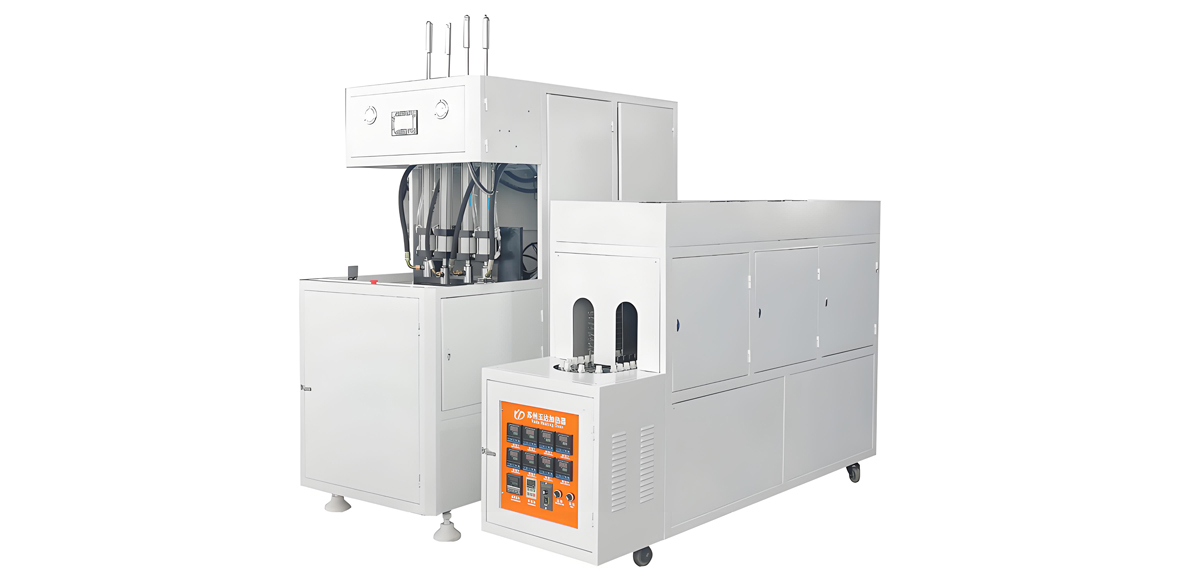
| Lowest budget, test the market | Semi-auto series | Low procurement cost, ready to ship, needs only a small cell |
| 200 to 300 sqm, water or oil, want filling too | Linear BFC combi block | One enclosure, up to 40 percent area saving vs discrete line |
| 1,000 to 7,000 BPH, flexible future | Standard-speed FGX | Modular, energy-saving oven, easy upgrade path |
| 8,000 to 15,000 BPH, dense U-shape | High-speed FGX (FGX series) | Inline cavities, 38.1 mm heater distance, high output per sqm |
| Want blow and fill in one process | Bottle BFC machine | Produces bottles while filling, installs caps in one process |
Application Industries: Beverage, Edible Oil, Personal Care
A space saving layout is only valuable if it serves real markets. The YuDa FGX and combi block platforms are applied across three core industries, each with distinct bottle geometries that influence floor planning.
Beverage packaging
Carbonated and still beverages, bottled water, and juice demand the highest volumes and therefore benefit most from high-speed FGX lines and combi blocks. Water bottles in particular are the classic small-workshop product because the bottle is simple, the output is steady, and the linear BFC block can blow, fill, and cap in one cell. For a 200 square meter startup, a combi block producing drinking-water bottles is the fastest route to a salable product.
Edible oil packaging
Edible-oil bottles are often wider and heavier than water bottles, with hot-fill or ambient-fill requirements that favor a stable, well-ventilated cell. The FGX platform handles the thicker preforms and the stronger bottle bases needed for oil, and because oil bottling usually pairs blowing with filling, the linear BFC combi block again delivers the strongest area saving. Plan a slightly larger packing and pallet zone for oil because the filled bottles are heavier.
Personal care packaging
Shampoo, conditioner, lotion, and detergent bottles come in many shapes and often require labeled, branded finishes. A small workshop serving this segment benefits from the standard-speed FGX for its flexibility across mold shapes, plus a separate labeling and packing area. The modular FGX design makes cavity and mold changeovers fast, which matters when you run several SKUs from one compact cell.
Across all three industries the layout logic is identical even when the bottle differs. The cell concept, the U-shape supervisor sightline, and the perimeter material loop apply whether you are blowing a lightweight water bottle or a heavy edible-oil container. What changes is the packing and pallet zone: oil and personal-care bottles are heavier and often oddly shaped, so they need a slightly larger finished-goods buffer and a stronger palletizing bench. A thoughtful small-workshop owner designs the cell once and only resizes the warehouse corner when switching product families, which is exactly why the modular FGX platform and the combi block are such strong foundations for a business that may pivot between beverage, oil, and personal care over its first few years.
Service and Support for Your Workshop
Choosing the right layout is only half the project; running it reliably is the other half. As a Wanplas factory, YuDa backs every line with the group’s shared quality standards and service promises, all designed to keep a small workshop productive with minimal on-site engineering staff.
- Factory running test: Each machine is run and verified at the YuDa factory before shipment, so the cell is commissioned quickly on arrival.
- Installation and commissioning: Engineers assist with on-site installation, machine leveling, utility connection, and first-article approval.
- Operator training: Your team is trained on operation, daily maintenance, mold change, and basic fault diagnosis so the workshop runs independently.
- Remote monitoring: The remote monitoring system lets YuDa engineers at the China headquarters read PLC data from a mobile device and feed abnormal conditions back to your site, reducing the need for a permanent technical room and protecting floor space.
- Spare parts policy: Under the Wanplas group policy you receive USD 500 free spare parts every year, with warranty replacement for damaged parts, so a small workshop keeps a lean inventory instead of a large spare-parts storeroom.
- Open factory: You are welcome to visit the YuDa factory to audit the build, witness the running test, and confirm the layout logic before you invest.
Frequently Asked Questions
What is the smallest practical workshop area for a PET bottle blowing line?
A single-cavity semi-automatic starter cell can operate inside roughly 60 to 90 square meters including buffer space, while a realistic small production workshop of 200 to 300 square meters already supports a full inline FGX line with air compressor, chiller, and unscrambler plus finished-goods staging.
Is a U-shape or straight-line layout better for a compact floor?
For floors below 400 square meters the U-shape layout usually wins because it returns both operators and material flow to a single face, cutting travel distance and letting one supervisor cover blowing, filling, and packing from a central point.
How much floor does an FGX high-speed blow molding machine occupy?
Footprint scales with cavity count: a 4-cavity FGX typically needs about 32 to 40 square meters of machine envelope, an 8-cavity unit about 45 to 55 square meters, and a 12-cavity high-speed unit about 60 to 72 square meters before you add the oven-front service aisle.
Why does heater distance matter for energy and layout?
YuDa minimizes heater distance to 38.1 millimeters, which reduces radiated heat and lets the ovens sit closer together; this saves more than 30 percent electricity versus conventional heating ovens and also shortens the heating module so the machine envelope stays compact.
Can a blow-fill-capping combi block really save plant area?
Yes. A linear BFC combi block performs blowing, filling, and capping in one continuous enclosure, eliminating the separate empty-bottle conveyor, intermediate buffer, and transfer aisle that a discrete layout would require, which is the single biggest area saving available to a small workshop.
How should human and material flow be separated in a small workshop?
Keep a one-way material lane from preform inlet to finished pallet on the perimeter, place operators on an inner aisle that never crosses the forklift path, and put the air compressor and chiller in a separated utility zone so heat and noise stay away from the packing area.
Which YuDa machine fits a 200 to 500 square meter workshop?
A 200 to 300 square meter floor pairs well with a standard-speed full-automatic FGX or a linear BFC combi block, while 400 to 500 square meters can host a high-speed FGX with full supporting utilities and a finished-goods warehouse corner.
What after-sales support comes with a YuDa line?
Every line ships after factory running tests, includes on-site installation and commissioning, operator training, remote PLC monitoring from the China headquarters, and the Wanplas group policy of USD 500 free spare parts per year plus warranty replacement.
Conclusion
A small PET bottle blowing workshop does not need a large floor to be profitable; it needs a layout planned around flow. By adopting cell thinking, preferring inline over rotary architecture, separating human from material flow, and minimizing logistics distance, you can reach an output-per-square-meter index well above a conventional imported line. The YuDa FGX series – with its 38.1 millimeter heater distance, more than 30 percent energy saving, modular design, and remote monitoring – and the YuDa linear blow-fill-capping combi block are purpose-built to convert 200 to 500 square meters into a serious production cell for beverage, edible-oil, and personal-care bottles.
If you are planning a compact workshop, send your target output, bottle size, and available floor dimensions, and the YuDa team, a Wanplas factory with more than 20 years of PET blow molding experience and 20-plus patents, will prepare a tailored layout and machine configuration for your site. You are also welcome to visit our factory to witness the running test and review the cell design in person before you commit. We look forward to helping you build a denser, cleaner, and more profitable blowing workshop.