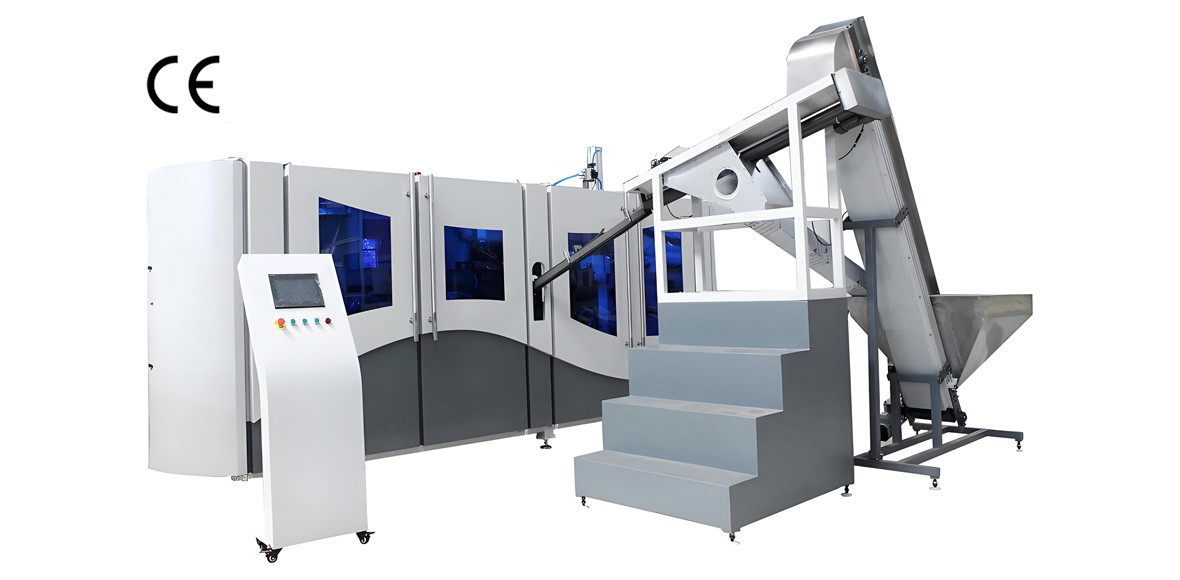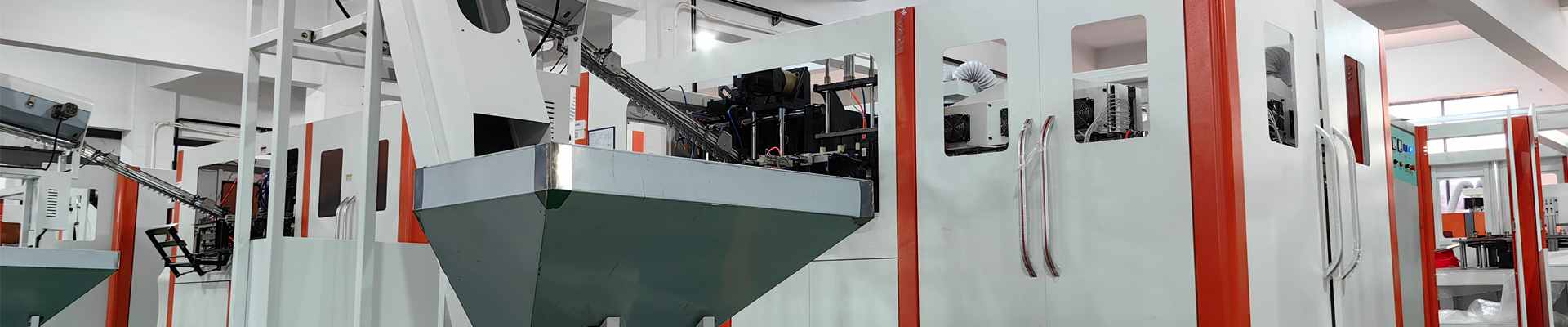
YuDa, a Wanplas factory, builds PET bottle blow molding machines for producers who need one platform to make many bottle types instead of one. With 20+ years of experience, exports to 60+ countries, a top 2 position among PET blow machine manufacturers in China, and 20+ patents, YuDa designs multi-functional PET blow equipment that turns a single flat (linear) stretch-blow platform into a flexible bottle factory. A multi-functional PET flat blow molding machine is the practical answer when a plant must produce drinking-water bottles, edible-oil bottles and cosmetic bottles without buying three separate lines. This article explains how quick mold change, modular design and a compact heating system let one machine serve water, oil and cosmetic packaging, and it shows the real YuDa product series, specification tables, material guidance, a selection table, and the service program that backs the equipment. By the end you will understand which model fits a mixed bottle range and how a multi-functional layout protects both output and operating cost.
What Is a Multi-Functional PET Flat Blow Molding Machine?
A multi-functional PET flat blow molding machine is a linear (flat-bed) stretch-blow unit that forms polyethylene terephthalate bottles from heated preforms by blowing them into a mold while stretching them in two directions. The word “flat” describes the linear machine layout, where preforms move along a straight conveying and blowing track rather than around a rotary wheel. The word “multi-functional” means the same base machine accepts different blow molds, neck handling and preform specifications so it can produce drinking-water bottles, edible-oil bottles, beverage bottles and cosmetic bottles on demand. For a packaging operation that serves several product categories, this versatility removes the need to dedicate one machine to one bottle type.
The core process stays the same for every bottle type. PET preforms are fed, heated in an infrared oven, conditioned to the correct temperature profile, then transferred to a blow station where a stretch rod pushes the preform axially while high-pressure air expands it against the mold wall. Biaxial orientation of the PET molecules gives the bottle its clarity, strength and pressure resistance. What changes between products is the mold shape, the neck finish, the preform gram weight and the blowing recipe. A multi-functional flat machine is engineered so those changes are fast, repeatable and low risk.
YuDa, a Wanplas factory, applies a unique cam linking system that integrates mold-opening, mold-locking and bottom mold-elevating into one movement driven by a high-speed servo system. That mechanism is what lets the flat platform reach high output while keeping the structure simple enough for frequent changeover. Because the machine is built on a modular frame, the blow station, oven and transfer parts can be serviced or reconfigured without rebuilding the whole line. This is the foundation of multi-functionality: a stable base that accepts many product definitions.
Compared with a single-purpose rotary line, a flat multi-functional machine trades some peak speed for much greater format flexibility. For a producer whose monthly volume is spread across water, oil and cosmetic bottles, that trade is usually favorable, because the machine runs most of the day on different products instead of sitting idle between long campaign runs. The selection section later in this article quantifies when a flat multi-functional machine is the better economic choice than separate dedicated lines.
In the context of the Wanplas brand, YuDa is the specialized factory for PET blow molding, while the broader Wanplas network covers filling, extrusion, recycling and other plastic machinery categories. A buyer who starts with a YuDa multi-functional PET blow machine can later extend the line with matched downstream equipment from the Wanplas group, but on the YuDa website the focus stays on PET blow molding and the real YuDa series described below.
Why choose a flat layout for a multi-functional mission rather than a rotary one? A flat (linear) machine carries a simpler frame, a lower entry cost and a more open structure that makes mold access and oven service straightforward, which are exactly the traits a plant wants when it changes formats often. A rotary machine can reach higher peak speed but packs cavities tightly and is harder to reconfigure, so it fits a single high-volume product better than a mixed bottle range. The flat platform therefore matches the economic logic of water-oil-cosmetic production, where the line must stay useful across many SKUs and where the buyer prefers to add cavity rows progressively as demand grows. YuDa’s cam linking and servo drive close much of the speed gap, so the plant gets rotary-class output on the high-speed model without giving up flat-machine serviceability.
How Quick Mold Change Delivers Production Flexibility
Production flexibility on a multi-functional PET flat blow machine comes from how quickly the plant can move from one bottle type to another. Quick mold change is the set of design features that lets an operator swap a blow mold, adjust neck handling, load a stored recipe and resume stable blowing with minimal downtime. The value is largest when a factory runs water bottles in high volume but also produces edible-oil and cosmetic bottles in shorter, more frequent batches.
YuDa designs the machine with a modularized structure so that mold bases, neck stars, transfer wheels and blowing heads are grouped into defined modules. When the neck diameter or bottle height changes, the operator replaces the relevant module rather than reworking the machine. Mold clamping uses a quick-lock interface, and the PLC keeps named recipes for each bottle type, so preform heating zones, stretch timing and blow pressure are restored with a few touches on the HMI. This reduces the restart learning curve and protects bottle quality after every changeover.
The range of formats a single flat platform can cover is wide. Neck sizes commonly span from small cosmetic finishes through standard water and oil necks up to wider mouths for easy-pour edible oil. Bottle volumes can range from a few hundred milliliters for cosmetic and sample bottles to several liters for water and edible oil. Preform gram weight varies with bottle size and wall requirement, and the oven must condition each preform type correctly; the recipe function handles that variation. The table below summarizes the typical format envelope a multi-functional flat machine should support.
Typical Format Envelope for One Multi-Functional Flat Platform
| Bottle category | Typical neck diameter | Typical volume range | Preform gram weight | Changeover focus |
|---|---|---|---|---|
| Drinking-water bottle | Standard water neck (e.g. 28mm PCO class) | 0.3L to 5L | Low to medium | Mold, recipe, output pacing |
| Edible-oil bottle | Wider oil neck for pour control | 0.5L to 5L | Medium to high (taller, stiffer) | Neck, mold height, preform weight |
| Cosmetic bottle | Small precision neck or specialty finish | 0.05L to 1L | Low (thin wall, clarity) | Neck, mold shape, color preform |
| Beverage bottle (carbonated / juice) | Pressure-grade neck | 0.25L to 2L | Medium (pressure resistance) | Pressure recipe, preform grade |
Mold change time depends on how different the two products are. Swapping between two water bottles of the same neck but different volume can be completed in well under one hour. Moving from a small cosmetic bottle to a tall edible-oil bottle, which changes neck, height and preform weight, may take a few hours including reheat tuning and sample verification. The modular design keeps that within a planned shift rather than a full day, which is the difference between a machine that serves the market and a machine that sits idle.
A practical way to plan flexibility is to group products by neck family. Keep all standard-water-neck bottles on one recipe set, all oil-neck bottles on another, and all cosmetic-neck bottles on a third. The operator then changes molds mostly within a neck family, which is the fastest and safest pattern. YuDa engineers help customers design this product grouping during line commissioning so the daily schedule stays smooth.
YuDa FGX High-Speed Series for Multi-Format Production
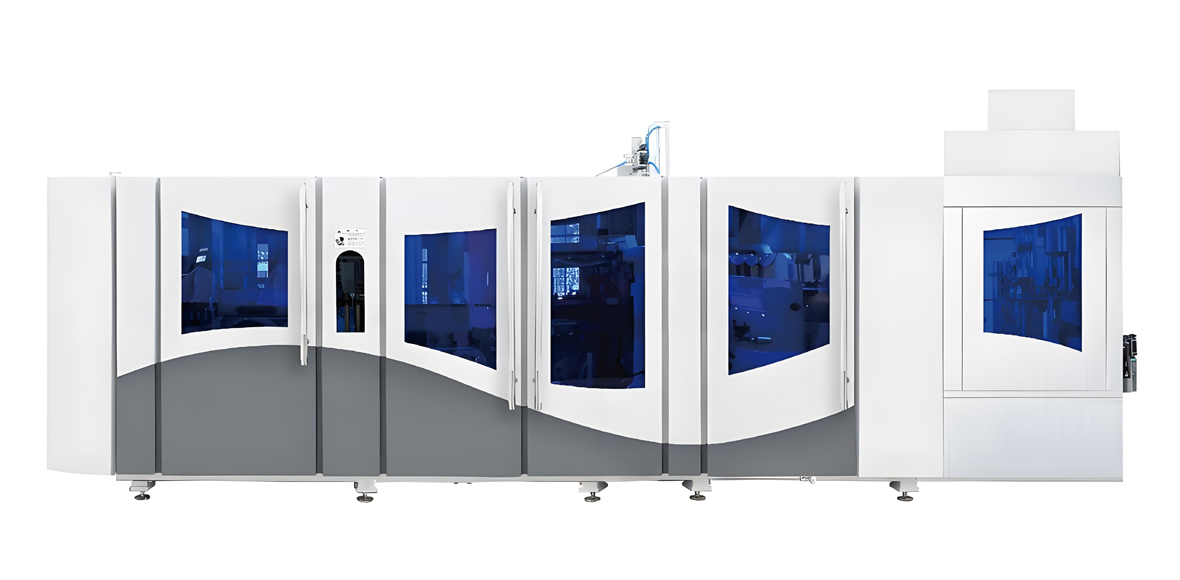
The FGX high-speed series is YuDa’s flagship flat PET blow platform for plants that need high output yet still want format flexibility. Built as a Wanplas factory product, the FGX series covers 8000 to 15000 bottles per hour across the full line and reaches 2500 to 3000 bottles per hour per single blow mode (cavity row), which makes it suitable for high-volume water lines while leaving capacity headroom to absorb oil and cosmetic batches. The unique cam linking system and servo drive let the flat layout hit rotary-class speeds without losing the changeover simplicity that defines a multi-functional machine.
For a mixed bottle plant, the FGX series is typically the water workhorse. Because water bottles dominate volume in most beverage, edible-oil and personal-care factories, running water on the high-speed FGX line and shifting oil and cosmetic bottles to a standard-speed or semi-automatic unit is a common and cost-efficient layout. The FGX series still supports quick mold change, so it can also produce large edible-oil or beverage bottles during off-peak water demand.
FGX High-Speed Series Specification Table
| Parameter | FGX high-speed (typical range) | Note for multi-functional use |
|---|---|---|
| Output | 8000 to 15000 BPH | High-volume water and beverage base |
| Single-mode speed | 2500 to 3000 BPH per mode | Scalable by cavity count |
| Drive system | High-speed servo, cam linking | Fast, repeatable mold motion |
| Heater spacing | 38.1mm (minimized) | 30%+ electricity saving vs conventional oven |
| Bottle types | Water, oil, beverage, cosmetic (by mold) | Multi-format via quick mold change |
| Control | PLC with recipe storage + remote monitoring | Fast restart after changeover |
| Design | Modular, mature stable components | Low-cost maintenance and changeovers |
| Relative procurement cost | High | Best for high and mixed volume |
The FGX series suits a factory that already sells water in volume and wants to add edible-oil or cosmetic bottles without a second high-speed investment. By reserving one or two cavity rows for the secondary product and changing molds within a shift, the plant gains a second bottle line’s worth of capability from one machine base. The remote monitoring system supports this mixed operation because engineers can watch each recipe’s performance and catch drift before it affects bottle quality.
In the Wanplas product view, the FGX high-speed series represents the upper end of the YuDa PET blow range. Buyers who need both speed and flexibility usually pair it with a lower-speed unit for the long-tail products, which is the layout described in the next section and the selection table.
Standard-Speed and Semi-Automatic Models for Versatile Output
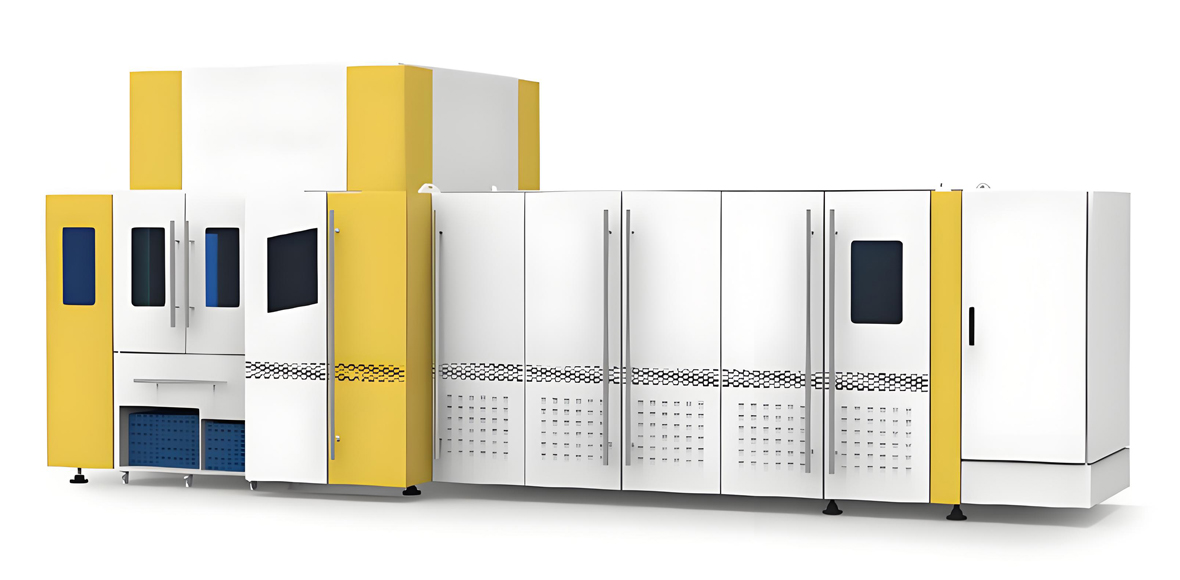
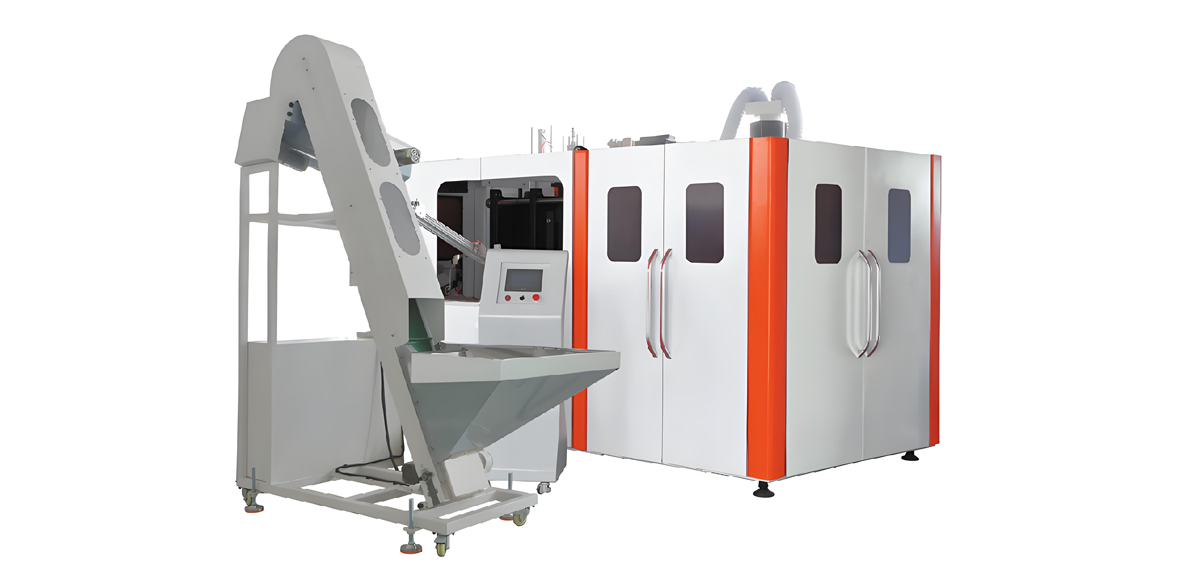
Not every bottle type needs high speed. Edible-oil and cosmetic bottles are often produced in smaller, more varied batches where flexibility and low procurement cost matter more than peak output. YuDa’s standard-speed full-automatic series and semi-automatic series cover this need, with outputs from 1000 to 7000 bottles per hour on the standard line and lower volumes on the semi-automatic line. Together with the FGX series they form a complete multi-functional program.
The standard-speed series is fully automatic and uses advanced heating systems with the same energy-saving philosophy as the FGX line. It is the natural home for edible-oil and cosmetic bottles that do not justify a high-speed cavity count but still need consistent quality and easy changeover. Because it shares YuDa’s modular design and recipe control, molds and process knowledge transfer between the standard-speed and high-speed machines, which simplifies training and spare-parts planning across a mixed plant.
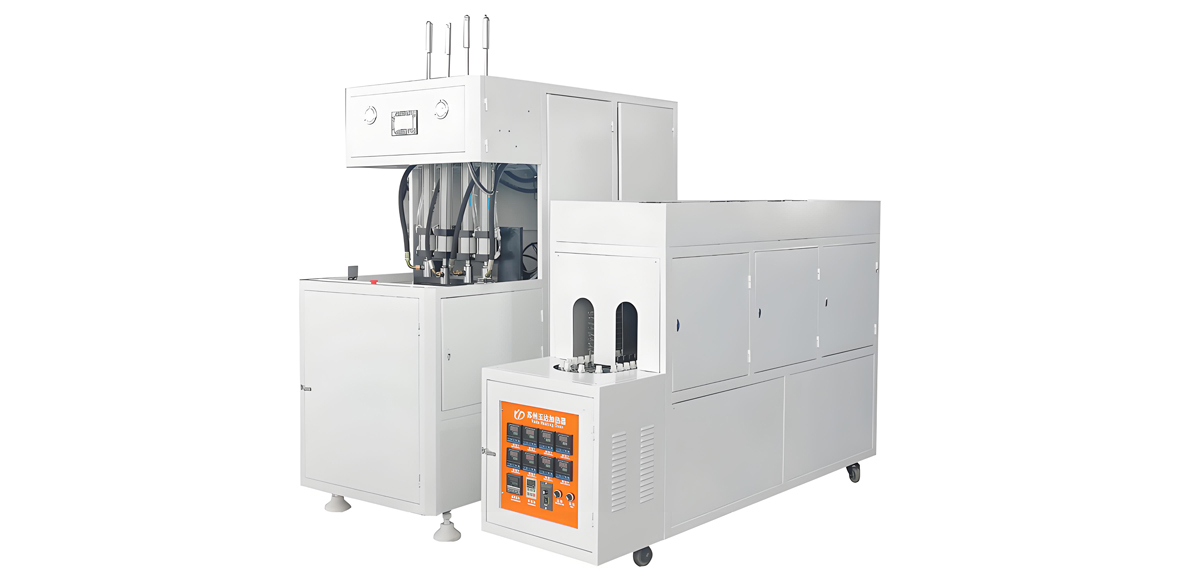
The semi-automatic series lowers procurement cost and is ready to ship, making it suitable for small enterprises, pilot runs and niche cosmetic formats. A semi-automatic flat blow machine is operated with manual preform loading or a simple feeder, and it is an economical way to validate a new bottle design before committing to a fully automatic line. Many factories use a semi-automatic unit as the cosmetic or sample bottle machine while the automatic lines run water and oil.
Standard-Speed and Semi-Automatic Specification Table
| Parameter | Standard-speed series | Semi-automatic series |
|---|---|---|
| Output | 1000 to 7000 BPH | Low to medium (manual assist) |
| Automation | Full automatic | Semi-automatic, ready to ship |
| Heating | Advanced energy-saving oven | Energy-saving oven |
| Best bottle types | Edible oil, cosmetic, beverage, water | Cosmetic, sample, low-volume oil |
| Changeover | Quick mold change, recipe stored | Manual mold swap, simple setup |
| Relative procurement cost | Medium | Low |
| Typical user | Growing mixed-packaging factory | Small enterprise, pilot, niche format |
For a multi-functional strategy, the recommended combination is usually one FGX high-speed line for water plus one standard-speed line for oil and cosmetic, with an optional semi-automatic unit for trials. This spreads risk: if cosmetic demand is uncertain, the semi-automatic unit proves the market before a fuller investment. Because all YuDa machines use the same PET stretch-blow principle, preform know-how and quality standards stay consistent across the plant.
Wanplas, as the parent brand, applies the same quality standards and service promises across the YuDa range, so a buyer combining high-speed, standard-speed and semi-automatic units receives one coordinated support program rather than three separate vendor relationships. That coordination is especially useful for a factory running many bottle types on many machines.
PET Material Properties for Water, Edible Oil and Cosmetic Bottles
Multi-functionality is only useful if the material behaves well for every product. Polyethylene terephthalate is the common base for water, edible-oil and cosmetic bottles because it is clear, strong, light and recyclable, but each product stresses the material differently. Understanding those differences helps the plant choose preforms and blowing recipes so one machine delivers good bottles across the range.
For drinking water, PET is nearly ideal: water is inert, needs no barrier, and the bottle is judged mainly on clarity, top-load strength and weight. Lightweighting is the main goal, so water preforms use low gram weight and the blow recipe maximizes material distribution for stiffness at minimum wall. The same flat machine that makes water bottles can make them very thin, which is why water dominates high-speed lines.
Edible oil is more demanding. Oil penetrates and stresses PET over time, and it oxidizes when exposed to oxygen, which changes flavor and shortens shelf life. Edible-oil bottles therefore need a thicker, more uniform wall and often a barrier strategy. The blow recipe must avoid thin spots at the handle or shoulder where oil can migrate, and the preform is usually heavier than a water preform of the same volume. A flat multi-functional machine handles this by storing an oil-specific recipe and using the correct heavier preform.
Cosmetics add two concerns: appearance and protection. Cosmetic bottles must look flawless, so the blow process must prevent haze, gate marks and uneven stretch lines. Many cosmetic formulas contain solvents or fragrances that interact with PET, so a barrier or a specialty preform may be needed. Color is also a factor; tinted or UV-blocking PET protects light-sensitive contents. Because the bottle color and clarity come from the preform, not the machine, the multi-functional blow unit simply needs the right preform and a clean, stable recipe.
Material Behavior by Product Type
| Product | Key PET requirement | Barrier need | Typical preform note |
|---|---|---|---|
| Drinking water | Clarity, top-load, light weight | None | Low gram weight, optimized distribution |
| Edible oil | Wall uniformity, shelf life | Medium to high (oxygen, oil migration) | Heavier, uniform-wall preform |
| Cosmetic | Surface quality, color, protection | Low to medium (solvent, fragrance, UV) | Colored or UV-blocking preform |
| Carbonated beverage | Pressure resistance, stiffness | Low (CO2 retention via design) | Pressure-grade preform, tuned recipe |
Barrier options for oil and cosmetic bottles include active-agent or oxygen-scavenger PET, multilayer preforms, and tinted or UV-blocking resin. None of these change the blow machine; they change the preform specification and the bottle color. A multi-functional flat machine is therefore future-proof: as a brand introduces a new oil or cosmetic formula, the plant adopts a new preform and updates the recipe without buying new equipment. This is a key reason mixed-product factories prefer one flexible platform over several fixed ones.
Recyclability also favors PET across all three categories. Clear water bottles are the easiest to recycle, while colored oil and cosmetic bottles need sorted streams, but all remain PET and fit established recycling systems. Plants that care about sustainability can state a single material family across their whole bottle range, which simplifies end-of-life handling and supports the Wanplas group’s environmental commitments.
For a mixed plant, material consistency also simplifies procurement and quality control. Because water, oil and cosmetic bottles are all PET, the incoming preform inspection, drying and storage rules stay within one material family, and the blow machine calibration learned on water transfers directly to oil and cosmetic runs. This reduces the documentation and training burden that would exist if the plant ran PET for water but a different resin for cosmetics. When a new bottle is developed, the team reuses the same stretch-blow know-how and only adjusts preform grade, color and barrier, which shortens time to market. The multi-functional machine is therefore not only flexible in production but also efficient in product development, because every new SKU builds on one established PET process rather than a separate one.
Application Industries: Water, Edible Oil, Beverage and Cosmetic Bottles
A multi-functional PET flat blow molding machine serves four closely related packaging industries, and the same plant often spans more than one. Drinking-water bottling is the largest user: municipal water brands, mineral-water brands and private-label packers need huge volumes of consistent, light bottles, which is why water is the anchor product on a high-speed line. The flat multi-functional machine produces water bottles from small single-serve sizes up to multi-liter family bottles.
Edible-oil bottling is the second pillar. Cooking-oil brands, olive-oil producers and condiment makers package in PET because it is light, shatter-resistant and economical versus glass. Oil bottles need the uniform wall and barrier care described earlier, and they often use wider necks for controlled pouring. A factory that bottles both water and oil gains strongly from one machine family, because the oil line reuses the same blow principle and much of the same tooling logic.
The beverage industry broadens the mix further. Carbonated soft drinks, juices, teas and functional drinks all use PET, with carbonated products needing pressure-grade necks and tuned recipes. A multi-functional machine with recipe storage switches from still water to carbonated beverage by changing preform grade and blow pressure profile, which lets a contract packer serve several beverage clients from one line.
Cosmetics and personal care is the most format-diverse industry. Shampoo, lotion, serum, toner and fragrance bottles come in many shapes, neck finishes and colors, and volumes are small. This is where the standard-speed and semi-automatic YuDa models earn their place: they make the long tail of cosmetic bottles economically without consuming high-speed cavity time. A private-label cosmetics filler can run dozens of SKUs on one flexible flat machine, changing molds between batches.
Beyond these four, the same platform supports edible products such as vinegar, soy sauce and other liquid condiments, and non-food liquids like detergent where PET is allowed. The point is that “multi-functional” is not a marketing phrase but a real operating mode: one base machine, many preform and mold definitions, one quality system. For factories serving water, oil and cosmetic markets together, that mode cuts capital, floor space and training versus running separate dedicated lines.
In the Wanplas group context, YuDa supplies the PET blow stage while related Wanplas capabilities can provide filling and downstream equipment, so a water-oil-cosmetic producer can build a coordinated line. On the YuDa site the message stays focused: the blow machine is multi-functional, and the application proof is the four industries above.
How to Select the Right Multi-Functional Machine for Your Bottle Range
Selection starts from the bottle range, not from the machine catalog. A plant should list every bottle type it must make, with neck size, volume, annual volume and peak monthly volume, then map that list to YuDa models. The rule of thumb: put the highest-volume product on the fastest line, and place lower-volume or frequently changed products on more flexible, lower-cost lines. The table below gives a ready-to-use mapping.
Need-to-Model Selection Table
| Bottle type / situation | Target output | Recommended YuDa model | Why |
|---|---|---|---|
| High-volume water | 8000 to 15000 BPH | FGX high-speed series | Peak speed, servo cam linking |
| Mixed water + beverage | 8000 to 15000 BPH | FGX high-speed series | Recipe change between still and carbonated |
| Edible-oil bottles | 1000 to 7000 BPH | Standard-speed series | Flexible, medium volume, barrier preform |
| Cosmetic bottles (diverse SKU) | Low to medium | Semi-automatic or standard-speed | Frequent mold change, low cost entry |
| Pilot / new SKU test | Low | Semi-automatic series | Ready to ship, prove market first |
| Full water + oil + cosmetic plant | Mixed | FGX + standard-speed + optional semi-auto | One flexible program, shared support |
When estimating capacity, account for the fact that changeovers reduce effective hours. A line quoted at 12000 BPH water may deliver less if it also runs oil and cosmetic batches with setup time between them. A realistic plan reserves changeover windows and uses the semi-automatic unit to absorb small cosmetic runs so the high-speed line stays on water. YuDa engineers help build this capacity model during quotation so the chosen models match real demand rather than a best-case number.
Another selection factor is floor space. The linear BFC combiblock and compact BFC machine from YuDa save plant area by combining blowing, filling and capping in one block, which helps a mixed plant that lacks room for separate machines. For a water-oil-cosmetic producer, a combiblock for water plus a standalone blow machine for oil and cosmetic can be a space-efficient layout. The selection should weigh output, format count and available footprint together.
Finally, choose with growth in mind. A multi-functional machine protects investment because new bottle types usually mean new preforms and molds, not new machinery. Selecting a model whose cavity count and neck range cover the next two years of planned SKUs avoids early replacement. The Wanplas group’s coordinated service then keeps that machine running as the product range expands.
Energy Saving and Remote Monitoring for Stable Multi-Product Operation
A machine that runs many products across long hours must be efficient and observable. YuDa’s energy-saving design centers on the heating oven, where the heater spacing is minimized to 38.1mm. Conventional heating ovens space lamps farther apart and lose infrared energy to the surrounding air; the tight 38.1mm spacing concentrates heat on the preform and cuts electricity use by more than 30 percent compared with conventional ovens. On a multi-functional line that heats water, oil and cosmetic preforms of different weights all day, that saving is a major operating-cost advantage.
Energy use also depends on matching oven power to preform weight. Light water preforms need less energy than heavy oil preforms, and a smart recipe system ramps the oven only as needed. Because the YuDa PLC stores per-product recipes, the machine does not overheat between batches; it applies the right profile for the active bottle. This avoids both wasted power and under-conditioned preforms that cause defects. For plants watching cost, the relative energy labels are clear: high-speed lines have higher absolute draw but lower unit energy per bottle, while semi-automatic lines draw less total power and suit low volume.
Technology Comparison: Conventional Oven vs YuDa 38.1mm Spacing
| Aspect | Conventional heating oven | YuDa minimized 38.1mm spacing |
|---|---|---|
| Heater spacing | Wider, more lost heat | 38.1mm, concentrated energy |
| Electricity use | Baseline | 30%+ lower |
| Preform conditioning | Adequate | Stable across weight range |
| Multi-product fit | Higher running cost | Lower cost across mixed batches |
Remote monitoring is the second pillar of stable multi-product operation. YuDa’s monitoring system lets engineers at the China headquarters read PLC data over a mobile connection, observe machine status, and send abnormal-condition feedback to the client site. On a line that switches between water, oil and cosmetic bottles, small recipe or sensor drifts can appear after a changeover; remote diagnosis catches them before they become rejects or stoppages. This is especially valuable for factories in remote regions or with limited on-site engineering staff.
Stable components complete the picture. YuDa uses mature, stable component brands for servo drives, sensors and pneumatics, which reduces unplanned downtime and keeps spare-parts planning simple. For a multi-functional plant running several products, component reliability matters more than on a single-product line, because any stoppage interrupts every category. The modular design also means a faulty module can be isolated and swapped quickly, limiting the impact of a fault.
Together, energy saving, remote monitoring and stable components let a multi-functional flat blow machine run water, oil and cosmetic bottles with predictable cost and uptime. These are not separate features but one operating philosophy: keep the base simple and observable so it can serve many products without surprise.
Data logging strengthens this philosophy further. Because the PLC records cycle counts, oven duty, blow pressure and fault history for every recipe, the plant can plan maintenance around real usage instead of a fixed calendar. A cavity row that runs water all day ages differently from one that changes molds several times per shift, and the log shows which parts need attention first. Combined with the USD 500 free parts per year allowance, this turns maintenance from a surprise cost into a scheduled activity, which is exactly what a multi-product line needs to protect delivery commitments. The same log helps YuDa engineers give better remote advice, because they can see the machine’s recent behavior rather than guessing from a symptom description. For the owner, the payoff is fewer emergency stops and a clearer view of the true cost per bottle across the whole water-oil-cosmetic range.
Service and Support: USD 500 Free Parts Per Year and Open Factory
Buying a multi-functional machine is the start of a long relationship, and YuDa, a Wanplas factory, backs its PET blow equipment with a concrete support program. The centerpiece is the Wanplas group policy of USD 500 free parts per year, which gives every owner a yearly allowance of free replacement components to control maintenance cost. For a plant running water, oil and cosmetic bottles on the same machine, that allowance helps cover the wear parts that change with format frequency.
Beyond free parts, YuDa provides warranty replacement of damaged parts, pre-shipment testing, on-site installation and commissioning, operator training, and remote monitoring support. Pre-shipment testing confirms the machine blows the agreed bottle types before it leaves the factory, which shortens the customer’s startup. On-site commissioning includes mold fitting, recipe setup for each product, and training so the local team can run changeovers confidently. Remote monitoring then keeps the line watched after handover.
The open-factory policy welcomes customer visits. A water-oil-cosmetic producer can audit the YuDa plant, see the FGX and standard-speed machines running, inspect build quality, and even request a sample trial on the target bottle. For buyers comparing suppliers, an open factory removes guesswork and builds confidence in the multi-functional claim. Wanplas, as the parent brand, extends the same openness across its specialized factories.
Spare-parts strategy for a mixed plant deserves attention. Because all YuDa models share the PET stretch-blow principle and many modular parts, a single spare-parts list can cover high-speed, standard-speed and semi-automatic units. That lowers inventory cost and speeds repair. The USD 500 free parts per year allowance is applied within this coordinated program, so the owner is not managing three separate warranties.
Finally, YuDa’s 20+ years of experience, exports to 60+ countries, and 20+ patents mean the support team has seen most real-world bottle problems. Whether the issue is an oil-bottle wall thin spot, a cosmetic-bottle haze mark or a water-bottle weight target, the engineering record behind the Wanplas group shortens the path to a fix. That depth is part of what makes a multi-functional machine practical rather than risky.
Frequently Asked Questions
What does a multi-functional PET flat blow molding machine produce?
A multi-functional PET flat blow molding machine produces a wide range of polyethylene terephthalate containers on one linear platform, including drinking-water bottles, edible-oil bottles, carbonated and non-carbonated beverage bottles, and cosmetic bottles, by changing only the blow mold and preform handling setup rather than the whole machine. The flat layout refers to the linear conveying and blowing track that defines this type of stretch-blow equipment.
How fast can one machine change between water, oil and cosmetic bottle formats?
With a modular mold base and quick-change clamping, format changeover between water, oil and cosmetic bottles typically takes from under one hour to a few hours depending on neck size difference and volume gap. Pre-set recipe storage in the PLC further shortens the restart time after a mold swap, because heating zones, stretch timing and blow pressure are restored automatically instead of re-tuned by hand.
Can the same machine handle both small cosmetic bottles and large edible-oil bottles?
Yes, within the rated cavity and stretching range of the machine. Water and cosmetic bottles are usually lighter and shorter, while edible-oil bottles are taller and heavier, so the selected model must cover the neck diameter, bottle height and preform gram weight of the full product mix. The FGX high-speed series and standard-speed series both support broad format ranges, and the semi-automatic series covers low-volume cosmetic and sample sizes.
Why is the 38.1mm heater spacing important for a multi-functional machine?
The minimized 38.1mm heater spacing concentrates infrared energy on the preform and reduces wasted heat, saving more than 30 percent of electricity compared with conventional heating ovens. For a machine that runs many bottle types across long daily hours, that energy saving has a direct impact on operating cost and also stabilizes preform conditioning across light water and heavy oil preforms.
Do edible-oil and cosmetic PET bottles need a barrier layer?
Edible oil and many cosmetics are sensitive to oxygen and light, so a barrier strategy helps protect product quality. Options include oxygen-scavenger or active-agent PET preforms, multilayer preforms, and UV-blocking or tinted PET. The blow machine itself stays the same; the difference is in the preform specification and bottle color, which means a multi-functional line can adopt new barrier preforms without new equipment.
Which YuDa model fits a factory producing water, oil and cosmetic bottles together?
A factory with medium to high mixed output should select the FGX high-speed series for the high-volume water line and pair it with a standard-speed or semi-automatic machine for the lower-volume oil and cosmetic formats. The need-to-model selection table in this article maps bottle type and output to the recommended model, and YuDa engineers refine the choice during quotation using the plant’s real SKU list.
How does remote monitoring help a multi-product PET blow line?
The remote monitoring system lets engineers at the China headquarters read PLC data over a mobile connection, spot abnormal trends, and feed guidance back to the client site before a stoppage spreads. On a line that switches between water, oil and cosmetic bottles, fast remote diagnosis keeps changeover and uptime stable and reduces the need for deep on-site engineering at every site.
What after-sales support comes with a YuDa multi-functional PET blow machine?
Support includes USD 500 free parts per year, warranty replacement of damaged parts, pre-shipment testing, on-site installation and commissioning, operator training, remote monitoring, and an open-factory policy that welcomes customer visits for audit and sample trials. As a Wanplas factory, YuDa applies the group’s shared quality standards and service promises across the full PET blow range.
Conclusion
A multi-functional PET flat blow molding machine lets one platform serve drinking water, edible oil, beverage and cosmetic bottles through quick mold change, modular design and recipe-controlled blowing. YuDa, a Wanplas factory with 20+ years of experience, exports to 60+ countries, a top 2 position in China for PET blow machines, and 20+ patents, builds this versatility into the FGX high-speed series (8000 to 15000 BPH), the standard-speed series (1000 to 7000 BPH) and the semi-automatic series for low-volume and trial runs. The 38.1mm heater spacing cuts electricity by more than 30 percent, remote monitoring keeps mixed-product lines stable, and mature components protect uptime. With the USD 500 free parts per year program, warranty, open factory and commissioning support, the total offer is built for plants that must make many bottle types well. If your operation bottles water, oil or cosmetic products and you want one flexible machine instead of several fixed lines, send your bottle list and target output to YuDa for a tailored configuration, arrange a factory audit, and request a sample trial on your own preform and mold.