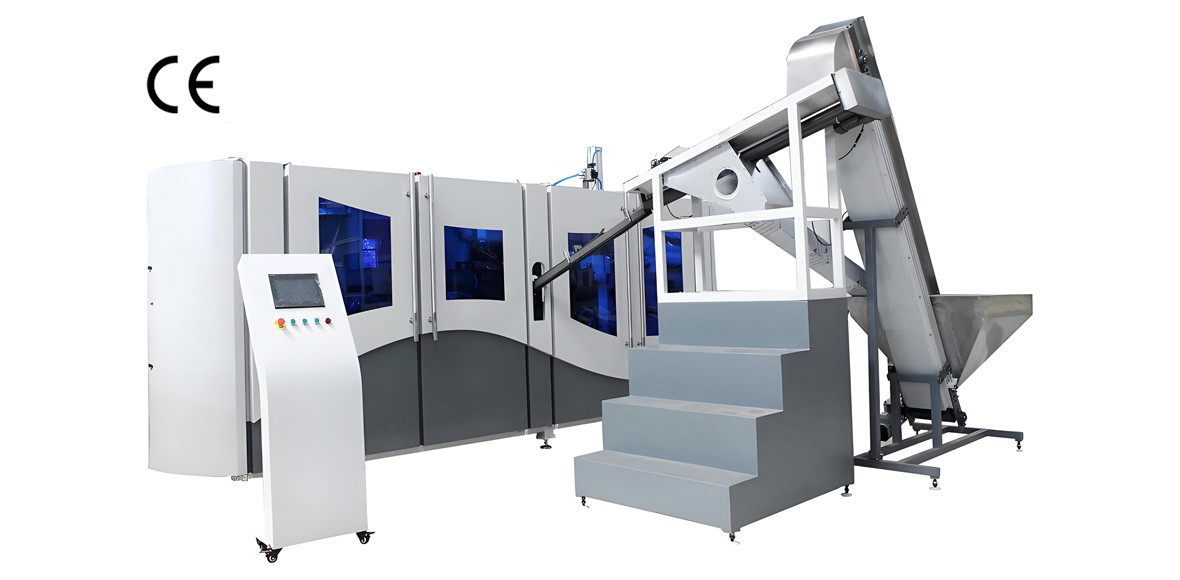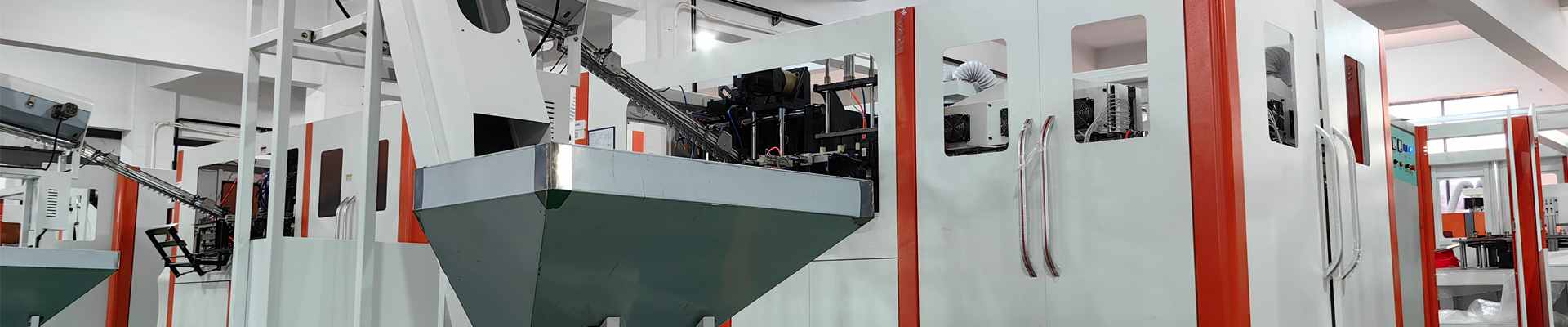
PET packaging remains the most widely produced rigid plastic container format on earth, with global demand counted in hundreds of billions of units per year across drinking water, carbonated soft drinks, juices and teas, edible oil, personal care, food jars, pharmaceuticals and agrochemicals. Yet the single most common mistake made by new bottle producers is to shop for a PET bottle blow molding machine before the bottle itself has been fully defined. A 500 mL water bottle at 9 g and a 500 mL hot-fill tea bottle at 26 g are the same nominal volume, but they demand different preform geometry, different resin intrinsic viscosity, different heating profiles, different mold temperature control and — critically — different machine architecture. Buying the wrong platform costs far more than buying the right one.
This guide reverses the usual order. It starts with the bottle, walks through the nine hot-selling PET bottle families in global trade in 2026, and for each one specifies the volumes, neck finishes, preform gram weights, intrinsic viscosity grades, process pain points and the line configuration that actually produces them at commercial quality. It then consolidates the shared engineering fundamentals — stretch ratios, drying, heating, pre-blow and high-pressure blowing, air recovery — before mapping requirements onto concrete machine platforms.
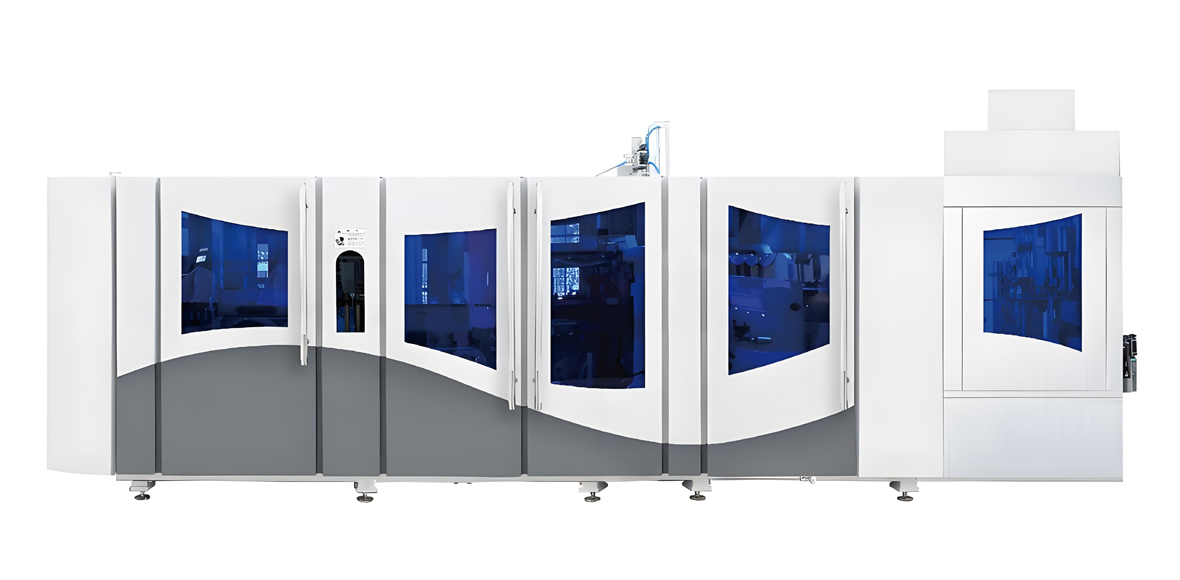
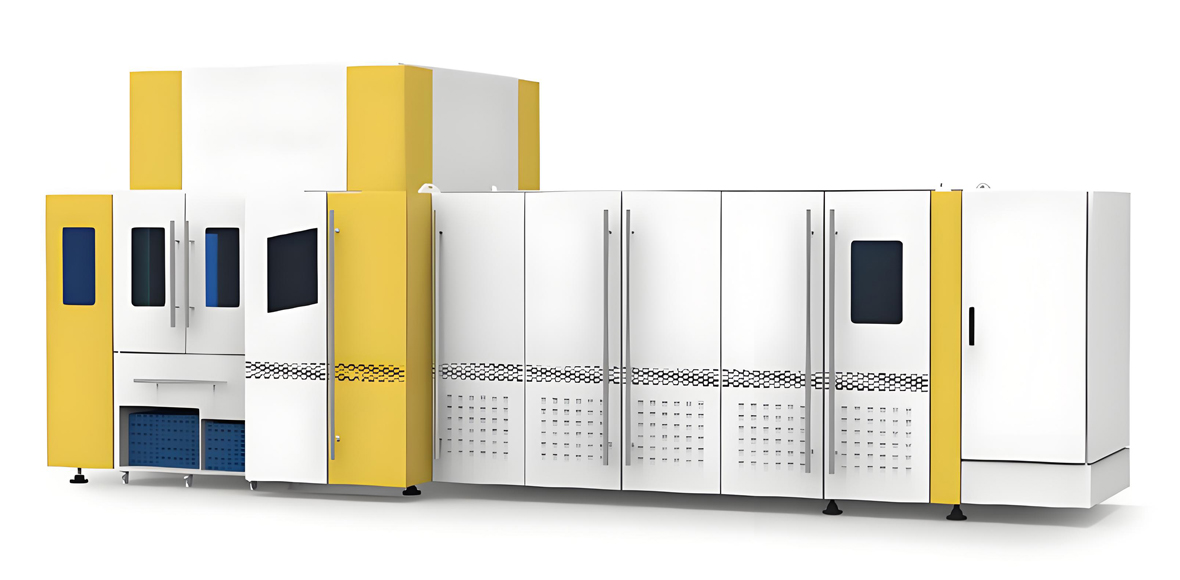
YuDa, a Wanplas factory, has built PET bottle blow molding machines for more than 20 years, exports to over 60 countries, holds more than 20 patents and ranks among the top two PET blow molding machine manufacturers in China. The machine platforms referenced throughout this guide — the FGX high-speed series, the full-automatic standard-speed series, the semi-automatic series, and the linear blowing-filling-capping CombiBlock — are the real production platforms YuDa builds and ships. Wanplas, the parent brand, supplies the matched upstream and downstream equipment that turns a blow molder into a complete packaging line.
Why Bottle Type — Not Machine Brand — Dictates Line Design
Every parameter that matters on a stretch blow molding line traces back to three properties of the finished bottle: the volume and shape, the mechanical duty the bottle must survive, and the filling condition it will meet. Volume and shape set the stretch ratios and therefore the preform geometry. Mechanical duty — internal pressure, top load, vacuum, drop resistance, creep over shelf life — sets the gram weight, the resin grade and the base design. Filling condition — ambient, cold aseptic, hot-fill at 85 to 92 degrees Celsius, or carbonated at 0.4 to 0.6 MPa — sets whether standard tooling or heat-set tooling is required, and whether crystallinity must be pushed deliberately high.
Those three properties then cascade into machine selection. A bottle that needs 48000 BPH cannot be produced economically on a linear platform no matter how many cavities are added, because linear machines carry a mechanical ceiling on clamp cycling frequency. A bottle that needs a 63 mm to 120 mm neck finish will not fit a standard 28 mm to 38 mm transfer neck gripper and requires a wide-mouth clamp and gripper set. A bottle that must survive 92 degrees Celsius filling cannot be blown in ambient molds cooled to 8 degrees Celsius, because the amorphous wall will shrink well beyond 1.5 percent when it meets the hot product.
A second reason bottle-first specification matters in 2026 is changeover economics. Very few bottle plants run a single SKU. A contract blower in a mid-size market may run 200 mL, 350 mL, 500 mL, 1.5 L and 5 L in a single week, plus a handled oil bottle and an oval personal care bottle for a local filler. The machine must therefore be specified not for one bottle but for the widest reasonable envelope of bottles the plant expects to run over a five- to eight-year horizon, with mold changeover time, preform neck compatibility and heating oven flexibility treated as first-class selection criteria rather than afterthoughts.
Third, the resin story has changed. Recycled PET inclusion rates of 25 to 100 percent are now normal in several export markets, and rPET narrows the process window on every bottle family simultaneously. It shifts the heating profile, it introduces IV variation between lots, it raises the risk of black specks and unmelted gels, and it makes on-line inspection far more valuable. A machine specified in 2018 for 100 percent virgin resin may run acceptably on 30 percent rPET and poorly on 75 percent. Heating capacity headroom is therefore a strategic purchase, not a luxury.
The Nine Hot-Selling PET Bottle Families at a Glance
The table below consolidates the nine PET bottle families that dominate global trade volume in 2026. It is the reference sheet for everything that follows: each subsequent section expands one row into full process detail. Preform weights are typical commercial ranges for competently designed containers; the low end of each band represents aggressive lightweighting and the high end represents premium or high-duty specifications.
| Bottle family | Typical volume | Common neck finish | Preform weight | Resin IV (dL/g) | Key process difficulty |
|---|---|---|---|---|---|
| Drinking water | 200–2000 mL | 28 PCO 1881, 29/25, 30/25 lightweight | 8.5–24 g | 0.76–0.78 | Body rigidity and base load-bearing at very thin walls |
| Carbonated soft drink (CSD) | 330–2000 mL | 28 PCO 1881, 28 PCO 1810 | 20–48 g | 0.80–0.84 | Petaloid base stress cracking, creep, 0.4–0.6 MPa duty |
| Hot-fill juice and tea | 250–2000 mL | 38 mm three-start, 43 mm | 22–52 g | 0.80–0.84 | Heat-set crystallinity, shrinkage below 1.5 percent |
| Edible oil | 1–5 L | 29/21, 38 mm, 45 mm | 28–95 g | 0.78–0.82 | Wall distribution around handle or grip recess |
| Personal care and household | 100–1000 mL | 24/410, 28/410, 24/415 | 14–46 g | 0.76–0.80 | Even wall on flat and oval sections, gloss and clarity |
| Wide-mouth food jar | 250–5000 mL | 63–120 mm | 28–140 g | 0.80–0.84 | Neck crystallization, large-diameter transfer and clamping |
| Pharmaceutical | 30–1000 mL | 28 mm, 33 mm, 38 mm CRC-compatible | 16–60 g | 0.78–0.84 | Cleanroom environment, migration compliance, traceability |
| Chemical and agrochemical | 100–5000 mL | 28 mm, 38 mm, 45 mm, 63 mm | 20–130 g | 0.80–0.84 | Barrier treatment against solvent permeation and paneling |
| Small-volume dropper and sample | 5–100 mL | 18 mm, 20/410, 24/410 | 5–16 g | 0.76–0.80 | Short preform handling, precise low-volume heating control |
Two observations from this table drive most purchasing decisions. First, gram weight spans an order of magnitude, from roughly 5 g to 140 g, and preform weight is the single strongest predictor of heating energy demand and cycle time. A machine sized for 10 g water preforms will not heat 95 g oil preforms at anything like the same rate, because heat must diffuse through a thicker wall without overheating the outer skin. Second, neck finish diversity is wider than most first-time buyers expect. Neck size determines the gripper, the transfer star wheel geometry and often the preform feeding system, so a plant that intends to run both 28 PCO 1881 water bottles and 89 mm food jars is really specifying two tooling families on one base machine, or two machines.
A third observation matters for market planning rather than engineering. Measured in units, drinking water and CSD together account for the overwhelming majority of global PET bottle demand, which is why high-speed rotary capacity concentrates there. Measured in value added per bottle, however, pharmaceutical, personal care and wide-mouth food containers reward precision and appearance far more than raw speed. Many profitable bottle plants are built around the second group with a modest 4000 to 8000 BPH line, not around the first group with a 40000 BPH monster.
Family 1: Drinking Water Bottles and the Lightweighting Race
Drinking water bottles are the highest-volume and most cost-sensitive PET application on earth, and they are where lightweighting has advanced furthest. A 500 mL still water bottle that weighed 18 to 22 g fifteen years ago is now routinely produced at 9 to 11 g, and aggressive specifications in competitive markets reach 8.5 g with a 29/25 or short-neck 26 mm finish. The neck finish itself carries much of that saving: the 28 PCO 1881 finish is roughly 1 g lighter than the older 1810 finish it replaced, and short-neck designs remove further material above the support ring.
The engineering challenge is that removing mass removes stiffness. Below roughly 11 g in a 500 mL format, the bottle body relies almost entirely on geometry rather than material for rigidity: horizontal rib patterns, vertical flute panels, a well-defined shoulder transition and a base that resists inversion under stacking load. Blowing thin walls uniformly is unforgiving. A 2 or 3 degree Celsius preform temperature error that would be invisible on a 24 g preform produces visible pearlescence, uneven material distribution or blowouts on a 9 g preform.
Preform and process specifics for water bottles
Water preforms for 500 mL at 9 to 11 g typically run 2.5 to 3.0 mm wall thickness with a total surface area stretch ratio in the 10 to 13 range. Resin IV is normally at the low end, 0.76 to 0.78 dL/g, because lower viscosity flows more easily into thin sections and lowers injection energy at the preform stage. Preform surface temperature at blowing is usually held at 100 to 108 degrees Celsius, with the lamp bank profile biased to give a slightly cooler neck support zone and a warmer mid-body.
Pre-blow timing is the master variable. Because the material is thin and the stretch rod moves fast — 1.2 to 1.8 m/s on high-speed platforms — pre-blow pressure of 0.8 to 1.2 MPa must arrive within a few milliseconds of the correct rod position. Too early and the bubble contacts the mold wall before axial stretch completes, thinning the shoulder; too late and material piles up in the base. High-pressure blowing then follows at 2.5 to 3.5 MPa to reproduce rib detail and freeze the wall against the mold surface.
| Bottle volume | Typical preform weight | Aggressive lightweight target | Neck finish | Typical wall thickness of bottle body | Practical output band |
|---|---|---|---|---|---|
| 200–330 mL | 8.5–12 g | 7.5 g | 28 PCO 1881, 29/25 | 0.14–0.19 mm | 12000–30000 BPH |
| 500 mL | 9–14 g | 8.5 g | 28 PCO 1881, 29/25, 26 mm short neck | 0.15–0.22 mm | 16000–48000 BPH |
| 1000 mL | 16–22 g | 14 g | 28 PCO 1881, 30/25 | 0.18–0.26 mm | 12000–24000 BPH |
| 1500 mL | 19–26 g | 17 g | 28 PCO 1881, 30/25 | 0.19–0.28 mm | 10000–20000 BPH |
| 2000 mL | 24–34 g | 22 g | 28 PCO 1881, 38 mm | 0.20–0.30 mm | 8000–16000 BPH |
Global bottled water producers overwhelmingly demand high-speed rotary platforms in the 20000 to 48000 BPH band because water is a low-margin, high-turnover product where conversion cost per thousand bottles dominates. Where a regional producer serves a smaller catchment, a well-configured linear machine at 6000 to 16000 BPH is often the better economic fit, particularly when SKU count is high and changeover frequency matters more than peak rate. YuDa’s FGX high-speed series covers the 8000 to 15000 BPH band with single-mold speed of 2500 to 3000 BPH, which suits exactly this middle segment: fast enough to supply a mainstream filling line, flexible enough to change SKUs daily.
Base design and top load for thin-wall water bottles
Base geometry deserves specific attention on lightweight water bottles. Still water requires no internal pressure resistance, so a champagne base or a shallow ribbed base is used rather than a petaloid. The base must nonetheless resist inversion under warehouse stacking, and it must sit flat after filling and cooling. Standing stability failures usually trace to one of three causes: insufficient material reaching the base because pre-blow arrived late, an over-cooled base insert causing frozen-in stress, or a base clearance that is too shallow for the material distribution actually achieved. Base mold temperature is typically held colder than the body — around 6 to 12 degrees Celsius — to freeze the thickest section quickly and shorten cycle time.
Top load values in the 12 to 20 kg range are common targets for 500 mL lightweight water bottles, and 25 to 40 kg for 1.5 L formats depending on cap and closure design. Measuring top load, burst pressure where relevant, thickness distribution at defined heights and base clearance should be a routine hourly quality-control task, not an occasional audit. On high-speed lines, thickness mapping using a spot thickness gauge at five or six defined heights around two perpendicular axes is the fastest way to catch a drifting heating profile before it becomes scrap.
Family 2: Carbonated Soft Drink Bottles and Pressure Engineering
Carbonated soft drink bottles are where stretch blow molding earns its reputation as a precision discipline. A 500 mL CSD bottle filled to roughly 4 to 6 volumes of carbonation holds an internal pressure of about 0.4 to 0.6 MPa at ambient temperature, and that pressure rises as the bottle warms in transit or on a shelf. The bottle must resist base inversion, paneling, stress cracking at the base petal valleys, and long-term creep that slowly inflates the bottle over a six-month shelf life. None of those failures are acceptable in a sealed, pressurized, carbonated container.
The answer is biaxial orientation combined with a deliberately engineered base. CSD bottles use a petaloid, five-pointed base with deep petals and a central injection point, because the petal geometry converts internal pressure into hoop tension that the oriented PET wall resists, rather than into a flat base that would balloon outward. Resin IV is raised to 0.80 to 0.84 dL/g so the wall carries more load with less material, and preform gram weight rises to 20 to 48 g depending on format.
Creep, crystallinity and base stress control
Creep is the silent enemy of CSD bottles. Under constant internal pressure the amorphous oriented wall slowly relaxes, the bottle grows a few percent longer, the base flattens and the label gaps at the bottom. Controlling creep means reaching a high and stable stretch ratio at the base while keeping the blowing temperature in the narrow window where molecular orientation locks in. The preform body is heated to roughly 105 to 115 degrees Celsius, but the base insert is again run cold, and the stretch rod and pre-blow timing are tuned so material is pulled down into the petal valleys rather than pinching at the central gate.
Base stress cracking — a fine craze or crack at a petal root — is usually a processing fault rather than a material fault. It appears when the preform is over-heated at the gate, when the stretch rod bottoms out too hard, or when the base park position leaves excess material at the petal radius. Process monitoring on a per-cavity basis, logging pre-blow pressure, high-pressure profile and cycle time, is the most reliable way to catch a single drifting cavity before it scatters cracked bottles into a full pallet.
| Bottle volume | Preform weight | Neck finish | Resin IV (dL/g) | Internal pressure duty | Base type |
|---|---|---|---|---|---|
| 330 mL | 20–26 g | 28 PCO 1881 | 0.80–0.82 | 0.45–0.55 MPa | Petaloid 5-point |
| 500 mL | 24–32 g | 28 PCO 1881 | 0.80–0.84 | 0.45–0.60 MPa | Petaloid 5-point |
| 1000 mL | 34–42 g | 28 PCO 1881 | 0.82–0.84 | 0.45–0.55 MPa | Petaloid 5-point |
| 1500 mL | 40–48 g | 28 PCO 1881 | 0.82–0.84 | 0.40–0.50 MPa | Petaloid 5-point |
| 2000 mL | 45–60 g | 38 mm | 0.82–0.84 | 0.40–0.50 MPa | Petaloid 5-point |
Because CSD bottles are heavier and require a tighter process window than water bottles, the same nominal machine runs fewer cavities per clamp at the same cycle. A rotary platform that delivers 48000 BPH on 9 g water preforms delivers meaningfully less on 28 g CSD preforms of the same volume, because heat input per preform is roughly three times higher and the high-pressure blow must reproduce a detailed petaloid base. Output estimates must therefore be computed per product, never borrowed from a water bottle specification.
CSD versus water in one machine
A standard ambient machine that already serves water bottles can usually add CSD with a mold change, a preform change and a refined heating profile. The clamp and blowing hardware are identical; what changes is the preform gram weight, the resin grade and the base tooling. The marketing value of this overlap is large: a single rotary line can serve a filler running both still and sparkling lines by swapping preform feed and mold sets during a scheduled changeover. YuDa’s FGX series and full-automatic standard series both support this dual capability when specified with the optional per-cavity pressure logging and the wider lamp range needed for heavier CSD preforms.
Family 3: Hot-Fill Bottles and the Heat-Set Process
Hot-fill bottles hold juice, tea, isotonic drinks and some dairy-based beverages filled at 85 to 92 degrees Celsius. After filling, the bottle is sealed and the hot product pasteurizes the interior; as the bottle cools it contracts and the internal pressure drops below atmospheric, producing a vacuum of several kilopascals. A bottle blown in ordinary ambient molds cannot survive this. The amorphous wall, cooled at only 8 to 12 degrees Celsius, would shrink 4 to 8 percent, the panels would cave in, the base would lift and the label would wrinkle. Heat-set processing exists specifically to prevent this.
What heat-set actually does
In heat-set processing the blow mold is heated to 120 to 160 degrees Celsius, above the PET glass transition temperature. The bottle is blown, held against the hot mold face for a controlled dwell, and the wall is deliberately crystallized to a measured level — typically a few percent crystallinity in the body wall, higher at the neck. Crystallized PET shrinks far less under heat, so the finished bottle holds its shape within a 1.5 percent total shrinkage allowance during filled cooling. A secondary blowing step, often a short re-blow after the mold opens or a post-mold inflation, helps set the geometry and relieve residual stress.
Two design features absorb the vacuum that hot-fill bottles cannot avoid. The first is a paneled body: vertical or diagonal vacuum panels flex inward as the bottle cools, absorbing the volume loss without distorting the rest of the container. The second is a vacuum-absorbing base, where the base is shaped to drop slightly as the internal pressure falls. Both are tooling features specified at the bottle design stage; a flat-sided hot-fill bottle is a defect, not a style choice.
| Parameter | Ambient / cold-fill process | Hot-fill heat-set process |
|---|---|---|
| Mold temperature | 8–15 degrees Celsius | 120–160 degrees Celsius |
| Resin IV | 0.76–0.80 dL/g | 0.80–0.84 dL/g |
| Wall crystallinity | Low, amorphous | Deliberately raised, controlled |
| Total shrinkage after filling | Not exposed to heat | Target below 1.5 percent |
| Vacuum handling | Not required | Body panels and absorbing base |
| Cycle time effect | Baseline | Longer, heat-set dwell added |
| Typical output penalty | None | Moderate, 10 to 25 percent slower |
Hot-fill bottles are heavier than their water equivalents — 22 to 52 g across 250 to 2000 mL — not only because of resin grade but because the paneled geometry and the thicker neck ring needed for the heat-set clamp consume material. They also demand the larger 38 mm three-start or 43 mm neck finish more often than the 28 PCO water neck, because the wide opening suits hot-fill filling heads and makes headspace cleaning easier.
Critically, heat-set is a machine specification, not a later upgrade. A standard ambient rotary blow molder can be retrofitted with heated mold platens and a secondary blow manifold, but the thermal management, the longer mold-open dwell and the cooling capacity must be designed in. A producer who expects to run hot-fill within two years should order the heat-set option at the configuration stage on a YuDa full-automatic or FGX line, because retrofitting heater platens and control loops onto a machine not prepared for them is rarely clean.
Family 4: Edible Oil Bottles and Handleware
Edible oil bottles span 1 to 5 L and are among the heaviest single-stage PET containers in consumer use. A 5 L edible oil bottle runs 70 to 95 g of preform, and the bottle carries a built-in handle or an integrally molded grip recess so it can be lifted when full of liquid weighing roughly 4.6 kg per liter. The defining difficulty is not pressure or heat — oil is filled cold — but wall thickness uniformity around the handle geometry and the shoulder, plus sufficient top load for pallet stacking in a warehouse.
Wall distribution around the handle
A handle is a discontinuity in the bottle wall. Stretch blow must push material around a sharp interior radius while keeping both the handle web and the bottle sidewall thick enough to avoid collapse under vacuum or top load. The preform for an oil bottle is therefore longer and heavier than a water preform of similar body diameter, with extra mass concentrated where the handle will form. Heating must be tuned so the handle region reaches blowing temperature without overheating the thinner neck collar.
Oil is also a low-viscosity liquid that permeates slowly through PET over long storage, so some premium edible oil bottles use a barrier layer or an internal coating, and many simply accept a shelf life tuned to the resin and storage temperature. Oxygen ingress that causes rancidity is controlled more by closure and headspace than by the bottle wall for standard refined oils, but high-value or flavored oils may justify a higher IV grade or a barrier treatment.
| Volume | Preform weight | Neck finish | Resin IV (dL/g) | Top load target | Typical output |
|---|---|---|---|---|---|
| 1 L | 28–38 g | 29/21, 38 mm | 0.78–0.80 | 20–30 kg | 6000–14000 BPH |
| 2 L | 42–58 g | 38 mm, 45 mm | 0.78–0.82 | 25–40 kg | 4000–10000 BPH |
| 3 L | 58–78 g | 38 mm, 45 mm | 0.78–0.82 | 30–45 kg | 3000–7000 BPH |
| 5 L | 70–95 g | 45 mm, 55 mm | 0.80–0.82 | 35–55 kg | 2000–5000 BPH |
Because of the heavy preforms and the slower cycles, oil bottle lines normally fall in the linear or modest rotary band rather than the 40000 BPH water league. A YuDa full-automatic linear machine with 4 to 6 cavities producing 4000 to 9000 BPH is a common, well-matched configuration for a regional edible oil filler, and the linear layout keeps changeover and maintenance approachable for a plant that runs a handful of oil sizes plus the occasional personal care bottle on the same base.
Family 5: Personal Care and Household Chemical Bottles
Personal care bottles — shampoo, conditioner, body wash, lotion, liquid soap, hand sanitizer — occupy the 100 to 1000 mL range and are judged primarily on appearance rather than mechanical duty. Multinational personal care manufacturers and regional private-label fillers alike specify flat, oval, square-shouldered and asymmetric shapes that photograph well on a shelf and feel substantial in the hand. Those shapes are precisely the ones that make even wall distribution difficult.
Consider a flat oval bottle with a 3:1 aspect ratio between major and minor axes. During blowing, the preform expands as a round bubble and contacts the mold at the narrow axis long before it reaches the wide axis. Material that touches the cold mold face stops stretching, so the narrow faces stay thick while the wide faces continue to thin, sometimes to the point of translucency or blowout at the corners. Correcting this requires preferential heating — deliberately creating a temperature gradient around the preform circumference so that the material destined for the wide axis is hotter and stretches more readily.
Preferential heating and appearance control
Preferential heating is achieved by holding the preform in a fixed rotational orientation through the oven — rather than spinning it — and applying different lamp power to different angular sectors, or by using a reflector arrangement that shades part of the circumference. The preform then arrives at the mold with a built-in soft axis and hard axis. This is a machine capability, not a mold trick: the transfer system must maintain angular registration from oven exit to mold close, which requires servo-indexed grippers and a machine designed for oriented transfer.
Appearance requirements add further constraints. Personal care bottles are frequently pigmented with color masterbatch, opaque white, or pearlescent effects, all of which change how infrared energy is absorbed in the oven. A dark or heavily pigmented preform absorbs far more radiant energy at the surface and can scorch before the core reaches blowing temperature, so lamp power must drop and oven dwell must lengthen. Clarity-critical crystal-clear bottles go the other way and need enough energy to avoid pearlescence from over-stretching cold material.
| Product type | Volume | Neck finish | Preform weight | Shape challenge | Recommended process feature |
|---|---|---|---|---|---|
| Shampoo and conditioner | 250–1000 mL | 24/410, 28/410 | 20–46 g | Flat oval, high aspect ratio | Preferential heating, oriented transfer |
| Body wash and liquid soap | 300–750 mL | 24/410, 28/410 | 22–40 g | Square shoulder, sharp radii | Higher high-pressure blow, 3.5–4.0 MPa |
| Lotion and cream | 100–400 mL | 24/410, 24/415 | 14–28 g | Opaque pigment heating balance | Extended oven dwell, reduced lamp power |
| Household cleaner | 500–1000 mL | 28/410, 28 mm | 24–44 g | Grip recess, trigger neck | Zoned heating, thicker preform wall |
| Hand sanitizer | 100–500 mL | 24/410, 28/410 | 14–30 g | Clarity with alcohol content | Higher IV, controlled crystallinity |
Output requirements in personal care are moderate. Batch sizes are smaller, SKU counts are high, and changeover flexibility outranks peak throughput. A four-cavity or six-cavity full-automatic linear machine producing 3000 to 9000 BPH covers most personal care fillers comfortably, and the semi-automatic platform remains viable for niche or seasonal SKUs where volume does not justify a full-automatic line.
Family 6: Wide-Mouth Jars and Crystallized Necks
Wide-mouth PET jars serve peanut butter, honey, jam, pickles, confectionery, dried fruit, protein powder, nutritional supplements and pet treats. Neck finishes run from 63 mm to 120 mm, and volumes from 250 mL to 5 L. The wide opening is the whole point of the format — the consumer must reach in with a spoon or scoop — and it is also the reason wide-mouth jars need a different machine configuration from every other family in this guide.
Why a wide neck changes the machine
Three things change. First, the preform is short and squat with a very large neck diameter relative to its body, which means the neck section holds substantial mass that must not deform during heating. Second, the transfer grippers, star wheels and mold clamp must accommodate a neck two to four times wider than a standard beverage finish, which means dedicated tooling and often a wider mold pitch. Third, the axial stretch ratio is inherently low because the preform is short, so the material relies more on hoop stretch, and the process window narrows.
Neck crystallization is the fourth and most specialized requirement. Jars intended for hot filling, retort, or induction sealing need a neck that will not soften or distort under heat. The neck is therefore crystallized in a separate operation — heated in a dedicated crystallizing unit until the finish turns opaque white and reaches a high crystallinity level, typically well above the amorphous body. A crystallized neck holds dimensional stability at temperatures where an amorphous neck would go out of round and fail to seal.
| Jar volume | Neck finish | Preform weight | Neck crystallization | Typical contents | Practical output |
|---|---|---|---|---|---|
| 250–500 mL | 63–70 mm | 28–48 g | Optional | Spreads, honey, sauces | 2000–6000 BPH |
| 500–1000 mL | 70–89 mm | 45–75 g | Recommended for hot fill | Peanut butter, pickles | 1500–4500 BPH |
| 1000–2000 mL | 89–100 mm | 70–105 g | Recommended | Protein powder, snacks | 1000–3000 BPH |
| 2000–5000 mL | 100–120 mm | 95–140 g | Case by case | Bulk food, pet treats | 600–2000 BPH |
Wide-mouth jar production sits firmly in the linear and semi-automatic band. Outputs of 600 to 6000 BPH are normal, and the value of the format lies in appearance, clarity, sealing reliability and the ability to switch between jar sizes. A YuDa full-automatic linear platform configured with wide-mouth grippers and a matched clamp opening handles the 63 to 100 mm range, and the semi-automatic series remains a practical entry point for producers whose jar volumes are seasonal.
Family 7: Pharmaceutical PET Bottles and Compliance
Pharmaceutical PET bottles — for syrups, oral solutions, tablets, capsules, effervescent products and nutraceuticals — range from 30 to 1000 mL and are technically unremarkable to blow but demanding to qualify. The bottle geometry is usually simple: round, straight-sided, with a 28 mm, 33 mm or 38 mm neck compatible with child-resistant closures and induction seals. What is exacting is everything around the blowing step.
Compliance framework and cleanroom integration
Pharmaceutical containers must satisfy migration and biological safety requirements. In the European market that means EU 10/2011 compliance for plastic materials intended to contact food and, by extension, the migration testing regime applied to oral pharmaceutical packaging. In the United States market, FDA 21 CFR food-contact clearances apply to the resin and additives, and USP Class VI biological reactivity testing is frequently specified for containers in contact with pharmaceutical products. Chinese domestic requirements reference GB 4806.7 for plastic food-contact materials. ISO 9001 quality management is effectively a baseline expectation for any supplier in this chain, and CE marking covers the machinery itself in European installations.
The practical consequence for machine specification is environmental control. Pharmaceutical bottle blowing is normally performed inside a controlled area with filtered air, positive pressure and defined cleaning protocols. The blow molder must therefore be specified with a stainless steel or coated frame in product-contact zones, oil-free or oil-shielded compressed air, an enclosure that suits laminar-flow integration, and surfaces that survive routine sanitization. Air quality is critical: the high-pressure blowing air enters the bottle interior, so the compressed air chain needs appropriate filtration and dryness for the application.
Traceability is the second consequence. Regulated customers expect batch records linking resin lot, preform lot, machine parameters and the finished bottle batch. A machine with parameter logging, recipe management and remote data access satisfies this far more easily than one operated purely from a local panel. YuDa’s remote monitoring capability, which allows engineers at the China headquarters to review PLC data and feed abnormality alerts back to the client site, supports this documentation discipline as well as troubleshooting.
Family 8: Chemical and Agrochemical Bottles with Barrier Needs
Chemical and agrochemical PET bottles hold pesticides, herbicides, surfactants, automotive fluids, industrial cleaners and solvent-containing formulations, in volumes from 100 mL to 5 L. PET is chosen for clarity, rigidity and cost, but unmodified PET is permeable to some organic solvents and can absorb aromatic compounds, so barrier treatment is often mandatory.
Two barrier routes dominate. Fluorination exposes the blown bottle interior to a controlled fluorine-containing gas mixture, which converts the surface layer of the polymer and dramatically reduces hydrocarbon and solvent permeation. It can be applied in-line, immediately after blowing, or off-line in a batch chamber. The second route is a multi-layer or coated structure, where a barrier material is co-injected into the preform or a coating is deposited on the bottle. Multi-layer preforms require a specialized preform injection tool rather than a change on the blow molder, but the blowing process must accommodate the different thermal behavior of the layered wall.
Paneling under vacuum is the other chemical-bottle issue. Many agrochemical products are filled warm or degas slowly in storage, and a straight-sided PET bottle without vacuum panels will distort. Ribs, panels or a shaped base absorb the volume change. Chemical bottles also frequently need higher top load because they ship in heavy cases on long inland journeys, which pushes preform weight to 20 to 130 g depending on volume.
| Volume | Preform weight | Barrier approach | Neck finish | Structural feature |
|---|---|---|---|---|
| 100–500 mL | 20–34 g | Fluorination or coating | 28 mm, 38 mm | Rib panels, measuring chamber option |
| 500–1000 mL | 32–52 g | Fluorination | 38 mm, 45 mm | Vacuum panels, reinforced shoulder |
| 1–2 L | 50–80 g | Fluorination or multi-layer | 45 mm, 63 mm | Grip recess, thick base |
| 2–5 L | 75–130 g | Multi-layer preferred | 63 mm | Integrated handle, deep panels |
Family 9: Small-Volume Bottles — A Short Note
Small-volume PET containers from 5 to 100 mL — dropper bottles, sample vials, essence bottles, small lotion bottles and travel-size formats — form a genuine ninth family with strong global demand, especially in cosmetics, nutraceutical liquids and laboratory sampling. They use short, light preforms of 5 to 16 g, 18 mm to 24/410 neck finishes, and demand extremely precise low-energy heating because a short preform reaches blowing temperature quickly and overshoots just as quickly. Machine configuration is typically a compact linear or semi-automatic platform with a shortened oven, close lamp spacing and fine-resolution power control, plus preform feeding hardware tuned for short, light parts that tumble differently from beverage preforms. This family warrants its own detailed treatment and is not expanded further here; the balance of this guide focuses on the beverage, food, oil, personal care and industrial formats that make up the bulk of global PET line investment.
Preform Design Fundamentals: Stretch Ratios, Wall Thickness and IV
Every bottle family above rests on the same preform physics. Get the stretch ratios wrong and no amount of machine tuning will produce a good bottle; get them right and the process window widens enough that ordinary operators can hold quality across a shift. Three numbers define the geometry relationship between preform and bottle.
Axial stretch ratio is the ratio of the bottle’s internal height below the neck support to the preform’s internal length below the support ring. Practical values run 2.0 to 3.2. Below 2.0 the material is under-oriented axially and the bottle will creep and lack top load; above 3.2 the base risks thinning and the stretch rod may punch through.
Hoop or radial stretch ratio is the ratio of bottle body diameter to preform body diameter, and practical values run 3.5 to 4.8. Under 3.5 the wall is under-oriented circumferentially and clarity suffers; over 4.8 the wall thins unpredictably and pearlescence appears at the widest sections.
Total surface area stretch ratio, the product of the two, should sit between 8 and 16 for most containers. Water bottles cluster around 10 to 13, CSD bottles 9 to 12, hot-fill bottles 8 to 11 because the heavier wall limits stretching, and wide-mouth jars often sit at the low end because the short preform restricts axial stretch.
| Bottle family | Axial stretch ratio | Hoop stretch ratio | Total area ratio | Preform wall thickness | Resin IV (dL/g) |
|---|---|---|---|---|---|
| Drinking water | 2.4–3.2 | 4.0–4.8 | 10–15 | 2.5–3.2 mm | 0.76–0.78 |
| CSD | 2.2–2.8 | 3.8–4.4 | 9–12 | 3.2–4.2 mm | 0.80–0.84 |
| Hot-fill | 2.0–2.6 | 3.6–4.2 | 8–11 | 3.5–4.5 mm | 0.80–0.84 |
| Edible oil | 2.2–3.0 | 3.6–4.4 | 8–13 | 3.5–4.5 mm | 0.78–0.82 |
| Personal care | 2.0–2.8 | 3.5–4.5 | 8–12 | 3.0–4.0 mm | 0.76–0.80 |
| Wide-mouth jar | 2.0–2.4 | 3.5–4.0 | 8–10 | 3.5–4.5 mm | 0.80–0.84 |
| Pharmaceutical | 2.2–2.8 | 3.6–4.4 | 8–12 | 3.0–4.2 mm | 0.78–0.84 |
| Chemical | 2.2–2.8 | 3.6–4.4 | 8–12 | 3.5–4.5 mm | 0.80–0.84 |
Intrinsic viscosity deserves a paragraph of its own because it is the resin property most often chosen by habit rather than analysis. IV expresses molecular weight: higher IV means longer chains, higher melt strength, better creep and pressure resistance, and more resistance to stress cracking — but also higher injection pressure at the preform stage and more heating energy at the blowing stage. Water bottles take the low end at 0.76 to 0.78 dL/g because thin walls flow easily and mechanical duty is light. CSD and hot-fill take 0.80 to 0.84 dL/g because pressure and heat both demand molecular weight. Note also that IV drops slightly during processing through hydrolytic and thermal degradation, which is exactly why drying is non-negotiable.
Drying, Heating and the Blowing Process Window
PET is hygroscopic and hydrolyzes when processed wet. Water molecules attack the ester linkages at melt temperature, chopping chains, dropping IV, yellowing the material and destroying mechanical properties. This matters at the preform injection stage most of all, but it also matters for anyone who dries regrind or handles resin in a humid climate. The specification is unambiguous: dry PET at 160 to 170 degrees Celsius for 4 to 6 hours with a desiccant dryer delivering a dew point of minus 40 degrees Celsius, and confirm moisture content below 50 ppm before processing. Amorphous PET must be crystallized before it enters the drying hopper at these temperatures or it will agglomerate and bridge.
| Parameter | Specification | Consequence if missed |
|---|---|---|
| Drying temperature | 160–170 degrees Celsius | Below 150 degrees Celsius, moisture is not removed from the pellet core |
| Drying time | 4–6 hours residence | Short residence leaves surface-dry, core-wet pellets |
| Dew point | Minus 40 degrees Celsius | Higher dew point limits the achievable moisture floor |
| Target moisture | Below 50 ppm | Hydrolytic IV loss, yellowing, brittle preforms |
| Crystallization before drying | Required for amorphous material | Hopper bridging and agglomeration |
| Conveying air | Dried air, closed loop | Re-absorption of moisture between dryer and machine |
The heating oven: where energy and quality are decided
In two-step stretch blow molding the preform arrives cold and must be reheated to the orientation window, roughly 95 to 120 degrees Celsius on the outer surface depending on family. This is done in an infrared oven with 6 to 12 independently controlled lamp zones stacked vertically, so the operator can build a temperature profile along the preform length. A typical water bottle profile runs cooler at the top near the support ring, warmest through the middle body, and slightly cooler at the closed end to prevent base thinning.
Two mechanical details govern oven efficiency. The first is lamp-to-preform distance: bringing the lamps closer concentrates radiant energy on the preform instead of on the oven walls. YuDa’s oven design minimizes the heater distance to 38.1 mm, which contributes to energy savings of more than 30 percent compared with conventional heating ovens. The second is the reflector and cooling plate arrangement, which returns stray radiation to the preform while keeping the neck finish below the temperature at which it would deform.
Preform rotation matters too. For round bottles the preform spins continuously through the oven so heating is circumferentially uniform. For flat, oval or asymmetric bottles the preform is held in fixed orientation for preferential heating, as described in the personal care section. Machines intended for both must support both modes.
Stretching and blowing sequence
The blowing sequence itself lasts around 1.5 to 2.5 seconds and divides into four overlapping phases. The stretch rod descends at 0.8 to 1.8 m/s, mechanically orienting the material axially and centering the preform in the mold. Pre-blow air at 0.8 to 1.6 MPa enters while the rod is still traveling, inflating a controlled bubble that must not touch the mold wall prematurely. High-pressure blow at 2.5 to 4.0 MPa then forces the wall against the mold surface, reproducing ribs, panels, engraving and base detail. Finally the bottle is held while the mold cools it below the glass transition temperature, and exhaust air is released.
| Bottle family | Preform surface temperature | Pre-blow pressure | High-pressure blow | Stretch rod speed | Mold temperature |
|---|---|---|---|---|---|
| Drinking water | 100–108 degrees Celsius | 0.8–1.2 MPa | 2.5–3.5 MPa | 1.2–1.8 m/s | 6–12 degrees Celsius |
| CSD | 105–115 degrees Celsius | 1.0–1.6 MPa | 3.0–4.0 MPa | 1.0–1.6 m/s | 8–15 degrees Celsius |
| Hot-fill | 108–120 degrees Celsius | 1.0–1.5 MPa | 3.0–4.0 MPa | 0.8–1.4 m/s | 120–160 degrees Celsius |
| Edible oil | 98–110 degrees Celsius | 0.9–1.4 MPa | 2.8–3.6 MPa | 0.8–1.4 m/s | 8–15 degrees Celsius |
| Personal care | 95–108 degrees Celsius | 0.8–1.3 MPa | 3.0–4.0 MPa | 0.8–1.4 m/s | 8–15 degrees Celsius |
| Wide-mouth jar | 100–112 degrees Celsius | 0.9–1.4 MPa | 3.0–4.0 MPa | 0.8–1.2 m/s | 10–18 degrees Celsius |
Air recovery: the largest single utility saving
Compressed air is the dominant utility cost in PET bottle blowing. Every bottle consumes a volume of air at 2.5 to 4.0 MPa, and in a conventional machine most of that air is simply exhausted to atmosphere when the mold opens. Air recovery systems capture the first portion of the exhaust — the highest-pressure fraction — and route it back to feed the pre-blow circuit or the machine’s pneumatic services, which typically recovers 20 to 35 percent of total blowing air depending on bottle volume and pressure setting. On a line running 20000 BPH continuously, that recovery translates directly into a smaller high-pressure compressor and a lower kilowatt-hour figure per thousand bottles. Air recovery, servo-driven stretch rods and close-spaced heating are the three levers that separate a modern energy profile from a legacy one.
Machine Architecture Versus Output: Four Tiers
PET stretch blow molding platforms fall into four architectural tiers, and each tier occupies a defensible output and investment band. Choosing the tier correctly is the single highest-leverage decision in the whole project, because moving between tiers later means buying a new machine rather than upgrading one.
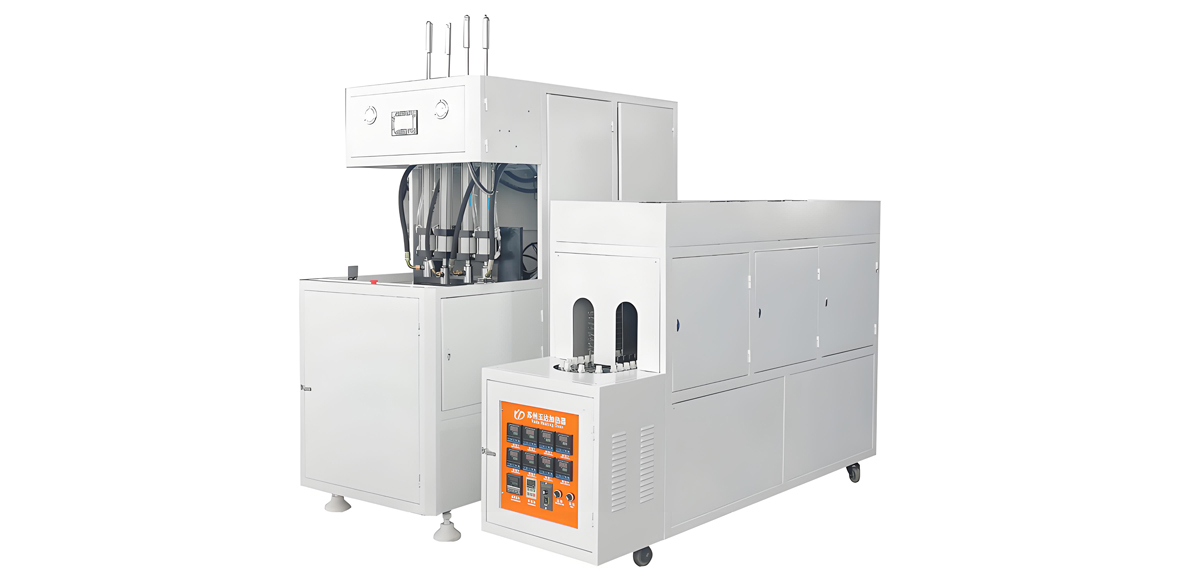
Tier 1, semi-automatic two-step. The operator loads preforms into a heating oven manually or via a simple chain, then transfers heated preforms to a separate one- or two-cavity blowing station. Output ranges up to roughly 2000 BPH. Investment level is Low, labor intensity is High, and flexibility is excellent because changeover means swapping a small mold set. This tier suits startups, seasonal producers, sample production, laboratory work and bottle formats too specialized for a full-automatic line.
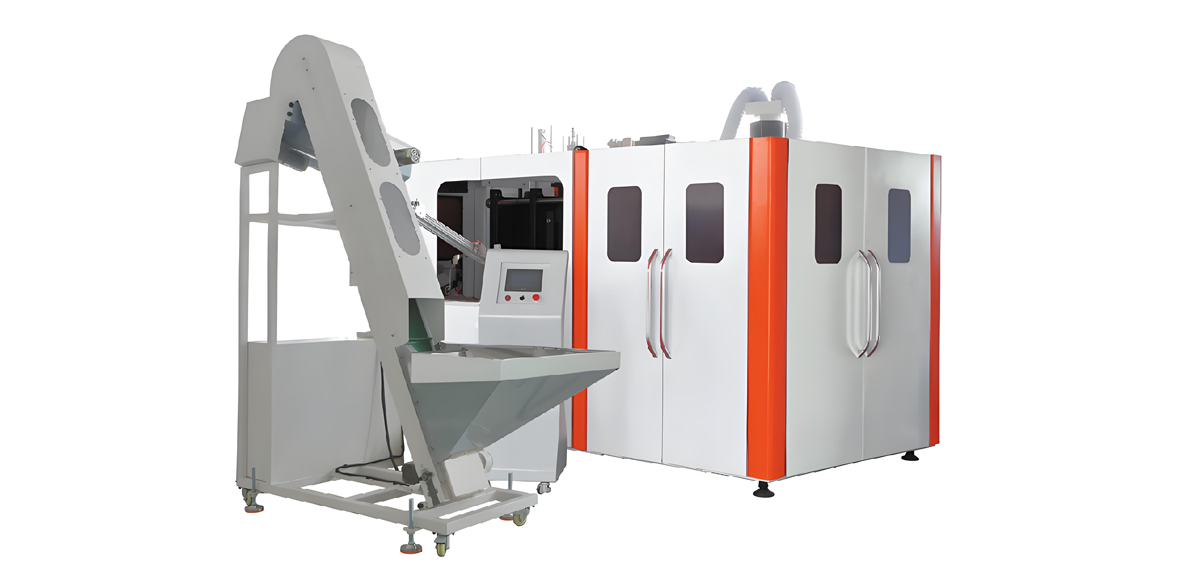
Tier 2, full-automatic linear. Preforms are fed automatically from a hopper through an unscrambler, travel through a linear oven on a chain, and are transferred into a linear clamp holding 2 to 8 cavities that opens and closes in a straight line. Output ranges 4000 to 16000 BPH. Investment level is Medium, labor intensity is Low, flexibility remains very good. This is the workhorse tier for most bottle plants worldwide: edible oil, personal care, wide-mouth jars, pharmaceutical bottles, regional water and CSD production.
Tier 3, full-automatic rotary. Preforms travel continuously through a rotary oven and into a rotating carousel carrying 6 to 20 mold stations, each blowing while the carousel turns. Because the process is continuous rather than indexed, cycle rates are far higher: 12000 to 48000 BPH. Investment level is High to Very High, labor intensity is Low, and flexibility is narrower because changeover means changing many mold sets. This tier belongs to large water and CSD producers with stable, high-volume SKUs.
Tier 4, blow-fill-cap combi. Blowing, filling and capping are integrated into one machine frame with no air conveyor between them. The bottle goes from mold to filler in seconds, which eliminates bottle handling, reduces contamination exposure, saves floor space and removes the need for an accumulation table. Output tracks the blowing section, typically 2000 to 24000 BPH depending on configuration. Investment level is High, but total installed cost including conveyors, rinser and floor space is often favorable compared with separate machines.
| Architecture | Cavities | Output band | Investment level | Changeover flexibility | Line configuration index (6-cavity linear = 100 points) |
|---|---|---|---|---|---|
| Semi-automatic two-step | 1–2 | Up to 2000 BPH | Low | Excellent | 25–40 points |
| Full-automatic linear, 2–4 cavity | 2–4 | 4000–9000 BPH | Medium | Very good | 70–90 points |
| Full-automatic linear, 6–8 cavity | 6–8 | 9000–16000 BPH | Medium to High | Good | 100–140 points |
| Full-automatic rotary, 6–10 cavity | 6–10 | 12000–26000 BPH | High | Moderate | 180–260 points |
| Full-automatic rotary, 12–20 cavity | 12–20 | 26000–48000 BPH | Very High | Limited | 300–480 points |
| Blow-fill-cap combi | 2–12 | 2000–24000 BPH | High | Moderate | 200–380 points |
The configuration index in the final column is a relative planning figure, not a quotation. It benchmarks total line configuration weight — machine scale, utility demand, tooling count and installation complexity — against a six-cavity linear machine set at 100 points, so that a planner can compare architectures on a consistent scale before requesting formal configurations. Actual figures depend on bottle family, automation level and utility scope.
YuDa Machine Platforms and Specifications
YuDa, a Wanplas factory with more than 20 years in PET bottle blow molding machines, more than 20 patents and exports to over 60 countries, builds four platform families that map directly onto the four architectural tiers above. The specifications below describe the platform envelopes; every machine is configured to the customer’s bottle rather than sold from a fixed catalog.
Product block 1: FGX High Speed Series, 8000 to 15000 BPH
The FGX series is YuDa’s high-speed platform, designed for producers whose single SKU volume justifies continuous running. Single-mold speed reaches 2500 to 3000 BPH, so total output scales with cavity count into the 8000 to 15000 BPH band. Three engineering features define the platform. The first is a unique cam linking system that integrates mold opening, mold locking and bottom mold elevation into a single coordinated movement, which removes the sequencing delays that cost cycle time on conventional clamp designs. The second is a high-speed servo driving system on the stretch and clamp axes, giving repeatable rod velocity and position — the precondition for stable thin-wall lightweight bottles. The third is the close-spaced heating oven with heater distance minimized to 38.1 mm, delivering more than 30 percent electricity saving against conventional ovens.
| Specification item | FGX-4 configuration | FGX-6 configuration | Notes |
|---|---|---|---|
| Cavity count | 4 | 6 | Configured to bottle diameter and pitch |
| Single-mold speed | 2500–3000 BPH | 2500–3000 BPH | Format dependent |
| Rated output | Up to about 10000 BPH | Up to about 15000 BPH | Based on lightweight water format |
| Container volume range | 200–2000 mL | 200–2000 mL | Larger formats on request |
| Neck finish range | 28 PCO 1881, 29/25, 30/25, 38 mm | 28 PCO 1881, 29/25, 30/25, 38 mm | Gripper set per finish |
| Heating zones | 6–10 per lane | 8–12 per lane | Independent zone power control |
| Heater distance | 38.1 mm | 38.1 mm | More than 30 percent energy saving |
| Pre-blow pressure | 0.8–1.6 MPa | 0.8–1.6 MPa | Servo-timed valve control |
| High-pressure blow | 2.5–4.0 MPa | 2.5–4.0 MPa | Air recovery available |
| Drive system | High-speed servo | High-speed servo | Cam linking clamp movement |
| Control | PLC with HMI touch screen | PLC with HMI touch screen | Recipe management, remote monitoring |
| Typical applications | Water, CSD, tea | Water, CSD, tea | Heat-set option for hot fill |
Product block 2: Full Automatic Standard Speed Series, 1000 to 7000 BPH
The standard-speed full-automatic series is the platform most bottle plants actually need. It covers 1000 to 7000 BPH, handles a far wider bottle envelope than the high-speed platform, and changes over quickly between SKUs. Advanced heating systems and energy-saving design carry over from the high-speed family, and the modularized construction keeps maintenance and mold changes straightforward. This is the platform of choice for edible oil, personal care, wide-mouth jars, pharmaceutical bottles and regional beverage production, and it is the natural home for the wide-neck and preferential-heating options described earlier in this guide.
| Specification item | 2-cavity | 4-cavity | 6-cavity |
|---|---|---|---|
| Output band | 1000–2800 BPH | 2800–5000 BPH | 5000–7000 BPH |
| Container volume range | 100 mL–5 L | 100 mL–2 L | 100 mL–2 L |
| Max container diameter | Up to about 180 mm | Up to about 120 mm | Up to about 110 mm |
| Neck finish range | 18 mm–100 mm with matched tooling | 18 mm–63 mm | 18 mm–45 mm |
| Preform weight range | 5–140 g | 5–95 g | 5–60 g |
| Heating zones | 6–8 | 8–10 | 8–12 |
| Pre-blow pressure | 0.8–1.6 MPa | 0.8–1.6 MPa | 0.8–1.6 MPa |
| High-pressure blow | 2.5–4.0 MPa | 2.5–4.0 MPa | 2.5–4.0 MPa |
| Mold temperature control | Chilled standard, heat-set optional | Chilled standard, heat-set optional | Chilled standard, heat-set optional |
| Changeover time guide | Short, modular mold sets | Short, modular mold sets | Moderate, more mold sets |
| Typical applications | Oil, jars, chemical, pharma | Water, personal care, oil | Water, CSD, personal care |
Product block 3: Semi-Auto Series and Linear Blowing-Filling-Capping CombiBlock
The semi-automatic series exists for a specific and entirely legitimate business case: low procurement cost, small footprint, ready-to-ship availability and the flexibility to run short runs of unusual bottles. For a new bottle producer testing a market, a contract packer serving a handful of local fillers, or a plant that needs sample bottles for customer approval, a semi-automatic platform delivers real bottles at real quality without the capital commitment of a full-automatic line.
At the opposite end of integration sits the linear blowing-filling-capping CombiBlock and the wider Bottle Blow-Filling-Capping platform. These produce the PET bottle, fill it with drinking water and apply the closure in one continuous process on a single frame. YuDa specializes in the compact mini linear BFC configuration, which is deliberately simple to operate and saves substantial plant area compared with a separate blower, air conveyor, rinser, filler and capper. For a small or mid-size drinking water plant, the CombiBlock route often produces the cleanest project outcome: fewer suppliers, one commissioning event, one control system and a much smaller building.
| Attribute | Semi-Auto Series | Linear BFC CombiBlock |
|---|---|---|
| Output band | Up to about 2000 BPH | 2000 BPH and upward by configuration |
| Investment level | Low | High |
| Labor requirement | High, operator loads preforms | Low, integrated automatic operation |
| Floor space | Very small | Small relative to separate machines |
| Bottle handling between stages | Manual | None, direct transfer |
| Best fit | Startups, samples, short runs, seasonal SKUs | Drinking water plants seeking a compact turnkey line |
| Bottle families supported | Nearly all, with matched tooling | Water and still beverages |
Complete Line Layout and Takt Matching
A blow molding machine is one station in a chain, and the chain runs only as fast as its slowest link with its smallest buffer. The standard PET bottle packaging line sequence is: preform unscrambling and feeding, blow molding, bottle conveying by air conveyor or star wheel transfer, rinsing where required, filling, capping, labeling, date coding, case packing and palletizing. Wanplas supplies the matched upstream and downstream equipment across this chain, so a YuDa blow molder can be delivered as one machine or as part of a complete line under a single project scope.
Takt matching in practice
Takt matching means every station is sized so that no station starves or blocks its neighbors during normal operation, and short stoppages anywhere do not cascade into a full line stop. Three rules apply. First, the filler should be the rate-defining station and the blower should carry roughly 5 to 10 percent nominal capacity headroom above it, because a blower recovering from a preform jam needs to catch up. Second, buffers between stations should hold enough bottles to absorb the typical micro-stoppage duration of the neighboring machine — an air conveyor with 60 to 120 seconds of accumulation between blower and filler is a common, sensible figure. Third, the capper and labeler must match the filler exactly, since these three form a tightly coupled block where accumulation is difficult.
| Station | Sizing rule | Buffer strategy | Common failure mode if undersized |
|---|---|---|---|
| Preform feeding | Blower rate plus 20 percent | Hopper holds 20–40 minutes | Preform starvation stops the oven mid-profile |
| Blow molder | Filler rate plus 5–10 percent | Downstream air conveyor | Filler waits, output target missed |
| Air conveyor | Blower rate | 60–120 seconds accumulation | Blockage backs up into blower discharge |
| Rinser and filler | Rate-defining station | Minimal internal buffer | Defines whole line output |
| Capper | Filler rate, tightly coupled | None practical | Cap misfeed stops the filler |
| Labeler | Filler rate plus 5 percent | Short conveyor accumulation | Roll change stops the line without buffer |
| Coder, case packer, palletizer | Filler rate plus 10 percent | Accumulation table | End-of-line back pressure halts filling |
The combi route sidesteps much of this analysis by eliminating the conveyor and buffer between blowing, filling and capping altogether. That is its principal engineering merit as well as its principal constraint: with no buffer, a stoppage at the capper stops the blower immediately, so combi lines reward reliable closures and disciplined maintenance. For clean, high-uptime products such as still drinking water, the trade is usually worth it.
Utilities and factory planning
Utility planning is where bottle plant projects most often overrun. A PET blowing line needs high-pressure compressed air for blowing, low-pressure air for pneumatic services, chilled water for mold cooling and for the oven cooling plates, and electrical supply sized for the oven lamps, servo drives and compressors combined. The high-pressure compressor is usually the largest single electrical consumer in the room. Specifying air recovery reduces that compressor size before the building is designed, which is far cheaper than adding capacity afterward. Chilled water demand scales with output and preform gram weight, because every gram of hot PET entering the mold must give up its heat somewhere.
rPET, Lightweighting and Energy Metrics in 2026
Three forces shape PET bottle production in 2026: recycled content mandates, continued lightweighting and energy accountability. All three change how a line should be specified, and all three favor machines with process headroom and measurement capability over machines tuned narrowly to one recipe.
Processing rPET: a narrower window
Recycled PET behaves differently from virgin resin in ways that matter at every stage. IV varies between lots and often runs slightly lower after the thermal history of a previous life cycle. The material may contain trace contaminants, colored flake fractions and residual moisture from a washing process. Its infrared absorption differs because of color and residual additives, so a heating profile developed on virgin resin will not transfer unchanged. Blends of 25 to 100 percent rPET are now routine, and the higher the fraction the more the process window narrows.
| Aspect | Virgin PET | rPET blend 25–50 percent | rPET blend 75–100 percent |
|---|---|---|---|
| IV consistency | Tight, lot to lot | Moderate variation | Wider variation, incoming testing advised |
| Drying regime | 160–170 degrees Celsius, 4–6 h | Same, verify moisture per lot | Same, extend residence at the upper end |
| Oven lamp power | Baseline profile | Increase 3–8 percent typical | Increase 8–15 percent, more zone trimming |
| Preform surface temperature | Baseline | Slightly higher or equal | Higher, tighter tolerance band |
| Pre-blow timing | Stable setting | Re-tune after resin change | Re-tune and monitor per shift |
| Color and haze | Water clear | Slight yellow or gray shift | Visible tint, may need optical brightener |
| Gel and black speck risk | Low | Moderate | Elevated, melt filtration upstream matters |
| On-line inspection value | Useful | Important | Essential |
| Practical gram weight floor | Lowest achievable | Slightly higher than virgin | Higher, lightweighting limit rises |
The practical machine consequence is heating headroom. A line whose oven runs at 90 percent of maximum lamp power on virgin resin has nowhere to go when a 75 percent rPET blend arrives. Specifying additional lamp capacity and additional independently controlled zones at the order stage costs relatively little and preserves the option to raise recycled content later. Likewise, per-cavity or per-lane process logging becomes far more valuable with variable feedstock, because the first sign of an out-of-spec resin lot is usually a drift in one measurable parameter rather than a sudden failure.
Energy accountability and the kWh per thousand bottles metric
Buyers increasingly evaluate blow molding lines on kilowatt-hours consumed per thousand bottles rather than on nameplate power. This metric captures what actually matters — oven efficiency, compressed air consumption, servo versus hydraulic drive losses and idle consumption during changeovers. Three design choices dominate the result: close-spaced heating with effective reflectors, air recovery capturing 20 to 35 percent of blowing air, and servo drives on the stretch and clamp axes that consume power only while moving. A line built with all three carries a materially different operating profile from a legacy line built with none, and the difference compounds across every shift of a multi-year machine life.
Lightweighting continues in parallel, but with a caveat worth stating plainly: gram weight reduction and high recycled content pull against each other. The lowest achievable gram weight on 100 percent rPET is generally higher than on virgin resin, because the material has less molecular weight headroom and more variability. A bottle program that targets both simultaneously needs careful validation, on-line thickness measurement and a machine capable of holding a tight temperature profile shift after shift.
Certifications, Food Contact and Documentation
Standards fall into three groups for a PET bottle plant: material and food-contact compliance, machinery safety compliance, and management-system certification. All three are routinely requested during customer audits and export documentation, and none should be discovered late in a project.
For material and food contact, EU 10/2011 governs plastic materials and articles intended to come into contact with food across the European market, setting migration limits and authorized substance lists. FDA 21 CFR provisions cover food-contact substances in the United States market. GB 4806.7 is the Chinese national standard for plastic food-contact materials and articles. For pharmaceutical containers, USP Class VI biological reactivity testing is commonly specified in addition to food-contact clearances. BRCGS packaging certification is frequently requested by food and beverage customers auditing their packaging supply chain, and it applies to the bottle producer’s operation rather than to the machine.
For machinery, CE marking covers conformity with applicable European directives for equipment placed on that market, including guarding, emergency stop function, light curtains where personnel can reach hazardous zones and electrical safety. ISO 9001 quality management certification applies to the manufacturing operation and is the baseline documentation most industrial buyers expect from an equipment supplier.
| Bottle family | Food contact | Additional requirement | Typical audit focus |
|---|---|---|---|
| Drinking water | EU 10/2011, FDA 21 CFR, GB 4806.7 | BRCGS packaging often requested | Air quality, rinsing, closure integrity |
| CSD | EU 10/2011, FDA 21 CFR, GB 4806.7 | Pressure and creep validation | Base stress cracking, burst testing |
| Hot-fill | EU 10/2011, FDA 21 CFR, GB 4806.7 | Thermal stability validation | Shrinkage after filling, panel behavior |
| Edible oil | EU 10/2011, FDA 21 CFR, GB 4806.7 | Migration under fatty simulant | Top load, permeation, shelf life |
| Personal care | Cosmetic regulation as applicable | Compatibility with formulation | Appearance, stress cracking with surfactants |
| Wide-mouth food jar | EU 10/2011, FDA 21 CFR, GB 4806.7 | Neck crystallization validation | Seal integrity, thermal resistance |
| Pharmaceutical | EU 10/2011, FDA 21 CFR | USP Class VI, cleanroom controls | Traceability, environmental monitoring |
| Chemical and agrochemical | Not food contact | Barrier validation, transport testing | Permeation, drop and stack testing |
Defect Troubleshooting by Bottle Family
Most blowing defects have a small number of root causes, and the fastest diagnostic route is to identify where in the sequence the material behaved unexpectedly: heating, stretching, pre-blow, high-pressure blow or cooling. The table below maps the defects that appear most often in each bottle family to the corrective actions that resolve them.
| Defect | Where it appears most | Probable cause | Corrective action |
|---|---|---|---|
| Pearlescence or whitening | Lightweight water, thin sections | Preform too cold, over-stretched cold material | Raise lamp power in affected zone by small steps, extend oven dwell |
| Thin shoulder, thick base | Water, CSD | Pre-blow arrives too early | Delay pre-blow timing, verify stretch rod speed and position sensing |
| Thick shoulder, thin base | Water, oil | Pre-blow arrives too late or pressure too low | Advance pre-blow, raise pre-blow pressure toward 1.2–1.6 MPa |
| Base stress cracking | CSD petaloid base | Gate region over-heated, excess base material, rod bottoming | Cool gate zone, adjust rod stroke, review base insert temperature |
| Bottle grows over shelf life (creep) | CSD | Insufficient orientation, IV too low | Increase stretch ratio, move to 0.82–0.84 dL/g resin |
| Excess shrinkage after hot filling | Hot-fill | Insufficient heat-set crystallinity | Raise mold temperature toward 150–160 degrees Celsius, extend dwell |
| Panel distortion after cooling | Hot-fill, chemical | Vacuum panel geometry or filling temperature mismatch | Review panel design, verify actual filling temperature |
| Uneven wall on oval or flat bottles | Personal care | No preferential heating, orientation lost in transfer | Enable fixed-orientation heating, verify gripper angular registration |
| Unfilled corners or sharp radii | Personal care, household | High-pressure blow too low, mold venting insufficient | Raise blow pressure toward 3.5–4.0 MPa, clean or add mold vents |
| Neck deformation or out-of-round | Wide-mouth jar, all families | Neck overheated in oven, cooling plate ineffective | Improve neck shielding and cooling plate contact, reduce top zone power |
| Bottle sticks in mold | Hot-fill, thick-wall | Insufficient cooling time or high mold temperature | Extend cooling dwell, verify chilled water flow and temperature |
| Black specks and gels | High rPET blends | Contamination in recycled feedstock | Improve upstream melt filtration, tighten incoming flake specification |
| Yellowing and brittleness | All, especially rPET | Wet resin, hydrolytic degradation at injection stage | Verify dew point at minus 40 degrees Celsius and moisture below 50 ppm |
| Cavity-to-cavity variation | Multi-cavity linear and rotary | Single lamp bank, valve or mold cooling circuit drifting | Compare per-cavity logs, service the outlier circuit rather than re-tuning all |
| Blowouts at high speed | Lightweight water | Overheating combined with aggressive pre-blow | Lower lamp power slightly, soften pre-blow ramp, check preform quality |
Requirement-to-Model Selection Guide
The table below converts the technical analysis of this guide into direct platform recommendations. Read it by finding the row that matches the intended bottle family and target output, then confirm the neck finish and volume envelope against the specification tables above.
| Bottle family and volume | Target output | Recommended YuDa platform | Key configuration items |
|---|---|---|---|
| Drinking water, 500 mL lightweight | 8000–15000 BPH | FGX High Speed Series | Servo stretch, air recovery, 28 PCO 1881 grippers, thickness monitoring |
| Drinking water, 500 mL and 1.5 L mixed | 4000–7000 BPH | Full Automatic Standard Speed, 4–6 cavity | Dual mold sets, fast changeover package |
| Drinking water, single SKU startup | Below 2000 BPH | Semi-Auto Series | Two-cavity mold, manual preform loading |
| Drinking water, compact turnkey plant | 2000–8000 BPH | Linear BFC CombiBlock | Integrated blowing, filling and capping, minimal floor area |
| CSD, 500 mL to 2 L | 8000–15000 BPH | FGX High Speed Series | Petaloid base tooling, per-cavity pressure logging, 0.82–0.84 dL/g resin |
| CSD, regional filler | 3000–6000 BPH | Full Automatic Standard Speed, 4 cavity | Petaloid base inserts, extended lamp range |
| Hot-fill juice and tea, 350 mL to 1 L | 3000–8000 BPH | Full Automatic Standard Speed with heat-set option | Mold heating 120–160 degrees Celsius, secondary blow, panel tooling |
| Edible oil, 1–2 L with handle | 4000–9000 BPH | Full Automatic Standard Speed, 4–6 cavity | Long-preform oven, zoned heating, handle mold set |
| Edible oil, 5 L | 2000–5000 BPH | Full Automatic Standard Speed, 2 cavity | Large clamp opening, heavy preform handling, extended cooling |
| Personal care, oval and flat 250–750 mL | 3000–9000 BPH | Full Automatic Standard Speed, 4–6 cavity | Preferential heating, oriented transfer, 24/410 and 28/410 grippers |
| Wide-mouth food jar, 63–100 mm neck | 1000–4500 BPH | Full Automatic Standard Speed, 2–4 cavity wide-mouth | Wide grippers, large mold pitch, neck crystallization unit |
| Pharmaceutical, 30–500 mL | 2000–6000 BPH | Full Automatic Standard Speed, 4 cavity | Cleanroom-compatible enclosure, air filtration, parameter logging |
| Chemical and agrochemical, 500 mL to 5 L | 1500–6000 BPH | Full Automatic Standard Speed, 2–4 cavity | Vacuum panel tooling, in-line fluorination interface, heavy preform oven |
| Small-volume 5–100 mL | Up to 4000 BPH | Semi-Auto or compact Full Automatic | Short oven, fine lamp resolution, small preform feeding |
Application industries served
The bottles produced on these platforms serve a consistent set of end markets. In food and beverage, that means still and sparkling water, carbonated soft drinks, juices, iced teas, isotonic drinks, dairy-based beverages, edible oil, vinegar, sauces, honey, jam, peanut butter, pickles and confectionery jars. In daily chemical and personal care, it means shampoo, conditioner, body wash, liquid soap, lotion, hand sanitizer, household cleaners and detergent bottles. In pharmaceuticals and nutraceuticals, it means syrup bottles, oral solution containers, tablet and capsule bottles, effervescent tubes and supplement jars. In the chemical sector, it means agrochemical containers, automotive fluid bottles, industrial cleaner packaging and solvent-resistant barrier bottles. Leading carbonated soft drink brands, global bottled water producers and multinational personal care manufacturers all draw on regional bottle suppliers running exactly this class of equipment, which is why format flexibility and documented quality matter as much as headline speed.
Service, Commissioning and Long-Term Support
A blow molding machine is a ten-year purchase, and the support structure behind it determines whether years three through ten are profitable. YuDa, as a Wanplas factory, operates under the shared Wanplas service framework built around a small number of concrete commitments rather than vague assurances.
Testing before shipment. Machines are run and tested at the factory before dispatch, using the customer’s own preform and mold where these are supplied in advance. Running the actual bottle before the machine leaves China removes the most common category of commissioning surprise: a machine that works perfectly on a generic test bottle and struggles on the customer’s real format. Customers are welcome to attend the run-off under the open factory policy that applies across all Wanplas factories.
Installation and commissioning. Engineers attend the customer site for installation, utility connection verification, trial production and process parameter establishment. Commissioning includes building the first working recipes for each bottle format so that the plant starts with a documented baseline rather than an empty parameter table.
Spare parts policy. The Wanplas group promise includes USD 500 free parts per year, plus free replacement of parts damaged within the warranty period. This covers the routine wear items that keep a line running — seals, sensors, contact components — and removes the small procurement frictions that otherwise turn a two-hour repair into a two-week wait.
Training. Operator and maintenance training is delivered during commissioning and covers the process logic behind the parameters, not only the button sequence. An operator who understands why pre-blow timing controls material distribution can diagnose a drifting bottle; an operator who only knows which screen to open cannot.
Remote monitoring and support. YuDa machines can be connected to a remote monitoring system that allows engineers at the China headquarters to review PLC data directly and feed abnormality findings back to the client site. For a plant operating in a market without a local service network, this shortens diagnosis from days to hours and often resolves parameter-related problems without a site visit at all.
Group guarantees. The wider Wanplas promises apply to every factory: transportation guarantee, production capacity guarantee, and a quality standards guarantee backed by refund plus 10 percent compensation should delivered equipment fail to meet the agreed standard. These are structural commitments that survive individual project personnel.
Frequently Asked Questions
How many cavities do I need to reach 20000 BPH on 500 mL water bottles?
Output equals cavity count multiplied by cycles per hour, adjusted for line efficiency. On a rotary platform running a 2.0 to 2.2 second cycle, eight to ten cavities reaches roughly 20000 BPH at 95 to 96 percent efficiency for a 9 to 11 g lightweight preform. On a linear platform the same cavity count yields substantially less because the clamp indexes rather than rotating continuously. Always compute the figure against your actual preform weight, because heavier preforms lengthen the oven residence requirement and therefore the achievable rate.
Can one machine run water, CSD and hot-fill bottles?
Water and CSD share the same machine readily — the change is preform weight, resin IV, base tooling and heating profile, all within one platform’s normal envelope. Hot-fill is different. It requires blow molds heated to 120 to 160 degrees Celsius, the associated thermal management and usually a secondary blowing step, so it must be specified at order stage as a heat-set configuration. If hot-fill is in your two-year plan, order the option now rather than retrofitting later.
What intrinsic viscosity should I specify for each bottle type?
Drinking water bottles typically use 0.76 to 0.78 dL/g, since thin walls benefit from easier flow and mechanical duty is light. CSD and hot-fill both use 0.80 to 0.84 dL/g because internal pressure, creep resistance and thermal stability all demand higher molecular weight. Edible oil sits at 0.78 to 0.82 dL/g, personal care at 0.76 to 0.80 dL/g, and wide-mouth jars at 0.80 dL/g or above depending on wall thickness. Remember that IV drops slightly during processing, so start from a correctly dried resin.
How much recycled PET can I run without changing the machine?
Blends up to roughly 30 percent usually run on an existing heating profile with minor lamp trimming. Between 50 and 100 percent, expect to raise total lamp power by 8 to 15 percent, re-tune pre-blow timing, tighten incoming resin inspection and accept a slightly higher gram weight floor. The practical constraint is oven headroom: if your machine already runs near maximum lamp power on virgin resin, high rPET fractions will be difficult regardless of how the profile is adjusted. Specify extra heating capacity and additional independent zones when recycled content is on the roadmap.
Why does my petaloid base crack during storage?
Base stress cracking on carbonated bottles almost always traces to processing rather than resin. The three usual causes are an over-heated gate region that leaves under-oriented material at the petal roots, a stretch rod stroke that bottoms too hard against the base insert, and excess material accumulating in the petal valleys because pre-blow arrived late. Check the base insert temperature, review rod stroke and park position, and compare per-cavity logs to see whether the failures come from one cavity or all of them. Raising resin IV toward 0.84 dL/g helps but will not fix a thermal profile fault.
What is the difference between one-step and two-step PET bottle production?
In the one-step injection stretch blow molding process, the preform is injected and blown in the same machine while it still holds residual heat from injection. In the two-step process, preforms are injected separately — often by a specialist preform supplier — cooled, stored, then reheated and blown on a dedicated stretch blow molding machine. Two-step dominates high-volume beverage production because preforms are compact to buy, transport and store, and because it lets the blowing plant run at its own rhythm without being tied to preform injection cycles.
Do I need a crystallized neck on my wide-mouth jar?
Only if the jar will meet heat. Crystallized necks resist deformation at elevated temperature, so they are needed for hot-filled jars, retort processing and some induction sealing applications where the closure area experiences thermal load. Cold-filled jars for dry goods, confectionery, snacks or powders generally do not need it. Crystallization is an added process step and cost, so specify it against a real thermal requirement rather than by default.
How much compressed air can an air recovery system actually save?
Recovery of 20 to 35 percent of total blowing air is the realistic band, with the higher end achieved on larger bottles blown at high pressure, where the recoverable volume per cycle is greatest. The saving appears twice: a smaller high-pressure compressor at project stage, and a lower kilowatt-hour figure per thousand bottles for the whole machine life. Because compressed air is typically the dominant energy cost in PET blowing, this is usually the highest-return efficiency option on the configuration list.
How long does a mold changeover take between bottle formats?
It depends on architecture and on how much changes. On a semi-automatic or small linear machine, swapping a mold set for the same neck finish is a short operation measured in tens of minutes. On a linear machine with 6 to 8 cavities, allow longer because more mold sets are involved. On a rotary platform with 12 to 20 stations, changeover is a planned event rather than a routine one. Changing neck finish rather than just body shape adds gripper and star wheel changes on any architecture, which is why plants with high SKU diversity should standardize on as few neck finishes as their customers allow.
Conclusion: Specify the Bottle First, the Machine Second
The nine PET bottle families reviewed in this guide share one polymer and one basic process, and almost nothing else. Drinking water rewards relentless lightweighting and raw speed. Carbonated soft drinks demand pressure engineering, petaloid base discipline and creep control through high orientation and 0.82 to 0.84 dL/g resin. Hot-fill requires a fundamentally different thermal architecture with molds at 120 to 160 degrees Celsius and crystallinity managed deliberately. Edible oil is a wall-distribution problem around handles at 28 to 95 g. Personal care is an appearance and preferential-heating problem. Wide-mouth jars are a tooling and neck-crystallization problem. Pharmaceutical is a compliance and environment problem. Chemical bottles are a barrier problem. Small-volume containers are a precision-heating problem.
Because the requirements diverge so sharply, no single machine is correct for all of them, and the sequence of decisions matters more than any individual specification. Define the bottle — volume, neck finish, gram weight, filling condition, mechanical duty, appearance target. Derive the preform — stretch ratios of 2.0 to 3.2 axial and 3.5 to 4.8 hoop, total area ratio of 8 to 16, wall thickness of 2.5 to 4.5 mm, resin IV matched to duty. Confirm the process window — drying at 160 to 170 degrees Celsius with a minus 40 degrees Celsius dew point, preform surface temperature of 95 to 120 degrees Celsius, pre-blow of 0.8 to 1.6 MPa, high-pressure blow of 2.5 to 4.0 MPa. Only then choose the architecture: semi-automatic below 2000 BPH, full-automatic linear from 4000 to 16000 BPH, full-automatic rotary from 12000 to 48000 BPH, or an integrated blow-fill-cap combi where a compact turnkey water line is the goal.
YuDa, a Wanplas factory with more than 20 years of PET bottle blow molding experience, exports to over 60 countries and more than 20 patents, builds each of these tiers: the FGX high-speed series with its cam linking clamp system, high-speed servo drive and 38.1 mm heater spacing delivering more than 30 percent energy saving; the full-automatic standard-speed series covering 1000 to 7000 BPH across the widest bottle envelope; the semi-automatic series for startups and short runs; and the linear blowing-filling-capping CombiBlock for compact integrated water plants. Wanplas supplies the matched upstream and downstream equipment so the blow molder arrives as part of a coherent line rather than an isolated machine.
If you are planning a new bottle program or expanding an existing one, send the specifications that actually determine the answer: bottle volume and drawing, neck finish, target gram weight, filling condition and temperature, resin grade and recycled content plan, required output in bottles per hour, and the SKU list you expect to run over the next several years. From that information the engineering team will return a configured line proposal with cavity count, oven configuration, tooling scope, utility requirements and realistic output figures for your actual bottle rather than a generic one. Sample preforms are welcome for trial runs, and customers are invited to attend the factory run-off before shipment under the open factory policy that applies across every Wanplas factory.